

How Do I Set Up Drip Irrigation for Raised Beds?
A raised bed can look evenly watered while one row stays dry beneath the surface. Drip irrigation gives you a way to reach those roots without standing over the bed with a hose, but the useful part of setup comes after you connect the tubing: checking where the water goes.
Start with one bed, a sketch, and a compatible set of parts. Once its watering pattern works, you can extend the same approach to the next bed.
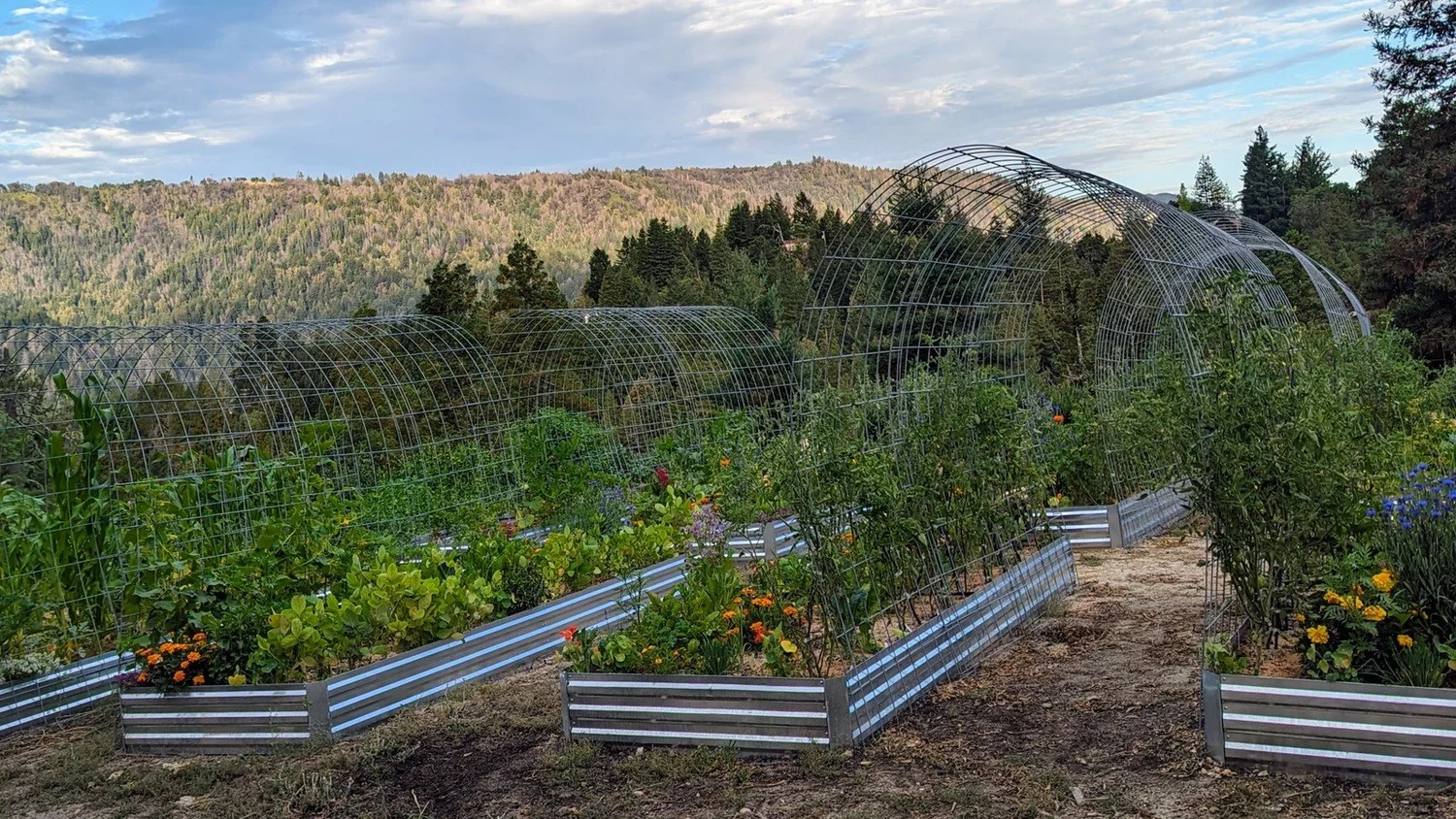
A Boulder Creek garden with multiple raised beds, hoop trellises and mixed seasonal crops. Photo: Adrienne Gaughan / Ambitious Harvest Co
A few links in this article are affiliate links. If you purchase through them, we may earn a commission at no extra cost to you. As an Amazon Associate, we earn from qualifying purchases. Read our full disclosure.
Sketch the bed before buying the parts
Measure the bed and the distance from the faucet. Mark the rows you expect to plant, where the tubing will enter, and how you will reach it for repairs. Keep supply tubing out of walking routes and leave connections accessible.
A bed filled with closely spaced salad greens needs a different watering layout from a few widely spaced tomatoes. Beds with different crops, sun exposure, or soil mixes may need separate control. In Santa Cruz, a sheltered bed near the coast and an exposed inland bed can dry at different rates even when their dimensions match.
Build a compatible system from faucet to bed
A basic setup needs backflow protection, filtration, pressure regulation where required by the equipment, supply tubing, and emitters or dripline. A timer adds automatic control. UC's introduction to drip irrigation explains the role of these components.
- Backflow protection: Ask your water supplier which device and installation are required for the connection. The device protects the drinking-water supply. Follow its instructions, including restrictions on placement and continuous pressure.
- Filter: Match its filtration rating and flow capacity to the drip equipment. Small emitter passages need protection from debris.
- Pressure regulator: Use the pressure specified for your tubing and emitters. A fixed 25 psi recommendation does not fit every system. The Habitech drip-irrigation faucet adapter kit combines a backflow preventer, filter, and regulator. Check its pressure, flow requirements, connections, and backflow-device suitability against your equipment and water supplier's requirements.
- Timer and tubing: Choose compatible fittings and follow the manufacturer's assembly order. Half-inch supply tubing is common; smaller distribution tubing or dripline carries water into the bed. Check maximum line lengths and total flow before adding more beds.
A DIG ML50 raised-bed irrigation kit can provide a starting collection of parts. Compare its layout and included components with your measurements, including any separate backflow protection or timer you need. DripWorks is another supplier to consider when comparing components and system layouts.
Place the water where roots will grow
For rows of vegetables, parallel runs of emitter tubing can create a useful strip of moist soil. Individual emitters suit more widely spaced plants. Secure the lines so cultivation and harvesting do not pull them away from their intended positions.
Choose spacing by the wetting pattern in your bed, not by a universal 12-inch grid. Water spreads differently through coarse and finer-textured soil. Oregon State's vegetable-gardening guide explains why sandy soil tends to need closer emitter spacing than clay soil. Imported raised-bed mix needs its own check.
Flush the lines as the manufacturer directs before closing their ends. Run the system, check every line for leaks and delivery, then inspect the soil between emitters as well as directly beneath them. A damp spot at each outlet does not establish that the spaces between plants are receiving water.
Set the timer from a soil check
Begin with the equipment's guidance, then check how far the water has reached into the root zone. If the surface looks dry, look below it before adding another cycle. If water pools or runs off, adjust the application and investigate drainage.
Emitter flow and run time work together. For example, one emitter rated at half a gallon per hour delivers about a quarter gallon in 30 minutes under its specified operating conditions. That calculation tells you how much left the emitter, not whether the whole bed received enough.
Check again before the next planned watering. Adjust the interval to the crop, root depth, soil moisture, and weather. New seed rows may need gentle supplemental watering until their shallow roots can use the wetted area. As plants grow, check a wider root zone and adjust the layout where needed.
An early-morning schedule is convenient for seeing the system work. Keep watching it through coastal fog, inland heat, and the return of winter rain rather than leaving one summer program running all year. Our water-wise gardening guide covers the wider watering routine, and our guide to watering frequency in California summers explains why daily watering is not a rule for every bed.
Make a quick inspection part of harvesting
While picking vegetables, look for a disconnected line, a dry plant beside a working emitter, or water escaping into a path. Clean the filter and flush lines at the intervals specified for your equipment, sooner if sediment or poor flow calls for it. Replace damaged tubing and check batteries and timer settings before relying on the system during an absence.
For your first step, measure one bed and draw its planting rows. That small plan makes the shopping list clearer and gives you something to test against when you turn on the water.
More help for the bed
Find the Water-Wise Gardening Guide in Your Garden Toolkit, explore Ambitious Harvest, or browse UC Agriculture and Natural Resources for gardening resources. For related problems, read blossom-end rot versus sunscald, blossom-end rot prevention, and how deep a vegetable raised bed needs to be.
Common questions
How long should I run drip irrigation in a raised bed?
Use emitter flow, the size of the wetted area, and a root-zone moisture check to set the run time. Twenty minutes on one layout can deliver a different amount of water from twenty minutes on another. Recheck after changes in weather or crop size.
Do all raised beds need the same emitter spacing?
No. Match the layout to the soil's wetting pattern and the plants' roots. Closely planted crops need coverage between plants; widely spaced crops may work with individual emitters. Test the gaps before settling on the layout.
Does a timer mean I can stop checking the bed?
A timer repeats a schedule. It cannot show you a blocked emitter or tell you that a newly planted row is outside the wet area. Regular soil and equipment checks keep automatic watering useful.
