

Composting Rules in Santa Cruz: SB 1383 and Green-Waste Made Simple
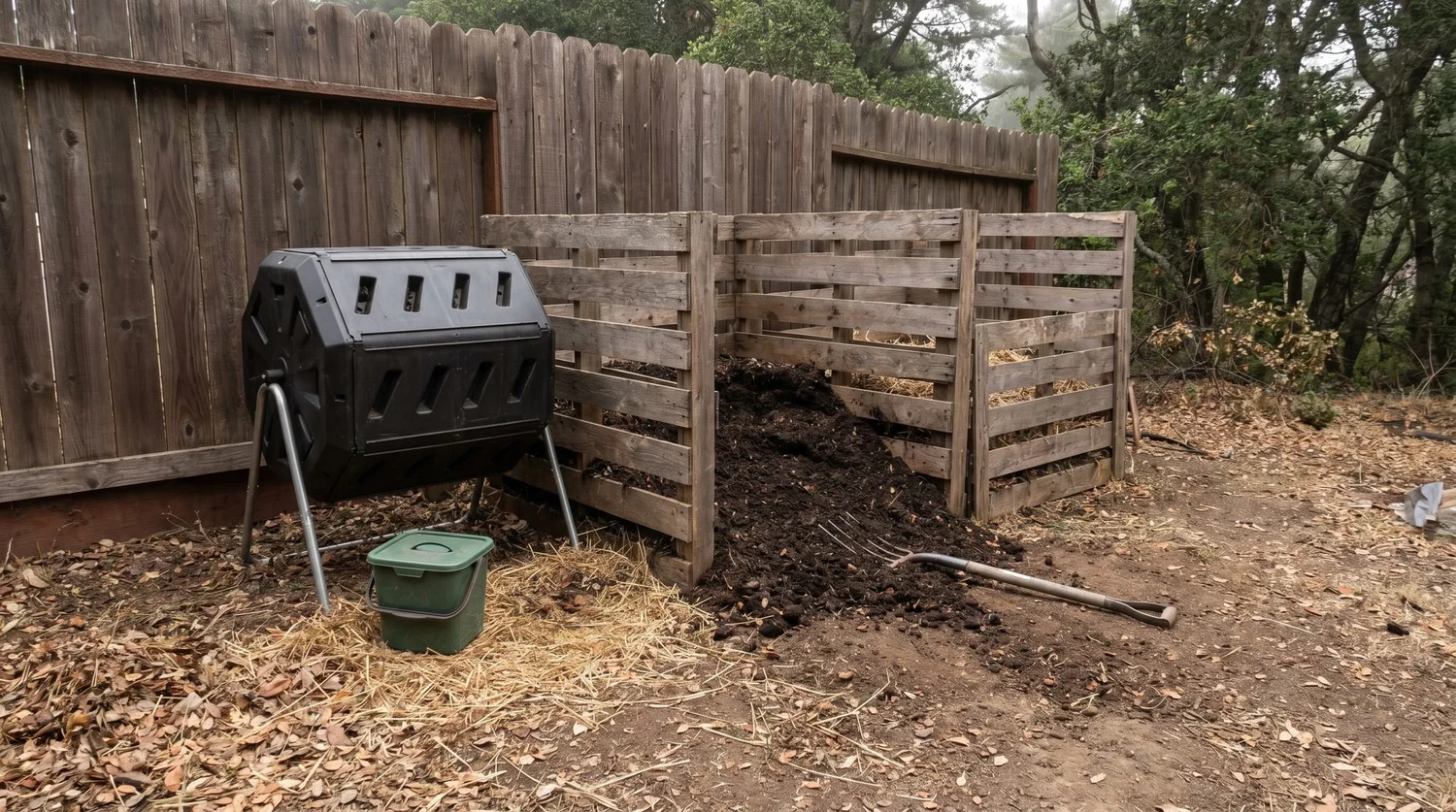
If you have noticed a new bin on your curb or a small pail under your kitchen sink in the last couple of years, you are not imagining a change. California's organics law, SB 1383, reshaped how every household in the state handles food scraps and yard trimmings. For gardeners in Santa Cruz County, the rules can feel confusing, partly because the City of Santa Cruz and the unincorporated county do things a little differently.
This guide is not a how-to on building a compost pile. We cover that thoroughly in our composting 101 guide. This is about the rules: what the law actually requires of you, how the local collection programs work, what goes where, and how your backyard pile fits alongside the curbside bin. The good news is that once you understand the system, it is simple to follow, and it works in your favor as a gardener.
What SB 1383 actually requires of you
SB 1383 is California's Short-Lived Climate Pollutant Reduction law. When organic material like food and yard waste breaks down in a landfill, it releases methane, a greenhouse gas far more potent than carbon dioxide over the short term. The law's goal is to keep that material out of landfills, cutting statewide organic waste disposal by 75 percent and rescuing edible food to redirect to people in need.
For residents, the practical requirements are straightforward. As of January 1, 2022, every household is required to subscribe to organic waste collection service and to separate organic material out of the regular trash. That means your food scraps, yard trimmings, and food-soiled paper need to go into the designated organics container rather than the landfill bin. Jurisdictions gained the authority to issue notices of violation and fines for non-compliance starting in 2024, though local programs have generally focused on education first.
One rule trips people up more than any other: no plastic in the organics bin. This includes bags labeled "compostable" or "biodegradable," because the local facilities cannot reliably process them and they contaminate the finished compost. If you want to line your kitchen pail, use a paper bag or simply rinse the pail out.
Santa Cruz City vs. County: two systems
Here is the part that confuses almost everyone. Where you live determines how you sort, because the City of Santa Cruz and the rest of the county run their programs differently.
If you are a City of Santa Cruz refuse customer, you keep food and yard waste separate. The City provides a small food scrap pail or cart for kitchen scraps, collected weekly, plus a separate green Yard Waste cart for leaves, grass, prunings, and other plant material. Food does not go in the yard waste cart. This split exists because the City's landfill on Dimeo Lane is not permitted to accept food mixed with yard trimmings. So in the city, think of it as two streams: food scraps in the pail, yard trimmings in the green cart. Confirm the current cart sizes and pickup details with City Public Works.
If you live in the unincorporated county or a GreenWaste service area (places like Live Oak, Soquel, Aptos, the San Lorenzo Valley, Capitola, and Scotts Valley), you generally combine food scraps and yard trimmings in one green organics cart. GreenWaste collects it weekly and the material is processed into compost off-site. Cart sizes vary, so confirm the options for your address with GreenWaste.
Because these details, including cart sizes and exact accepted items, can change and vary by neighborhood, the safe move is to confirm your specifics with your hauler or city public works office. The City of Santa Cruz Public Works department and GreenWaste Recovery (831-426-2711) both publish current "what goes where" guides for their service areas.
What goes in the organics bin vs. your backyard pile
The single most important difference between the curbside bin and your backyard pile is what they can handle. The municipal program can take things a home pile should not.
The curbside organics or food-scrap collection accepts a wide range of material: fruits and vegetables, coffee grounds, eggshells, grains and bread, and in the City food-scrap pail even cooked food, dairy, meat, and bones. These are sent to large-scale facilities that reach temperatures high enough to break them down safely.
Your backyard pile is different. A home compost pile rarely gets hot enough to safely handle meat, dairy, bones, or oily food, and those items attract rodents and raccoons, which we have plenty of in this county. Stick to plant-based scraps, coffee grounds, eggshells, and a good balance of dry "brown" material like leaves and shredded paper. The items that do not belong in either place are the same ones banned from the curbside bin: plastics, glass, metal, foil, grease, and so-called compostable utensils.
Backyard composting as a complement, not a replacement
You do not have to choose between the curbside program and a backyard pile. They work beautifully together. Many Santa Cruz gardeners compost their plant-based kitchen scraps and garden trimmings at home, then use the curbside bin for the things a home pile cannot handle, like cooked leftovers, meat, and the volume of yard waste that piles up after a big pruning day.
Composting at home means less material set out at the curb and a steady supply of finished compost for your own beds, which is the part that matters most for your garden. If you are new to it, start with our composting 101 guide, then explore the local-specific methods in our composting techniques for Santa Cruz gardeners. If you are short on space, in-bed vermicomposting with worms is a tidy option that works well in small yards.
Local workshops, rebates, and free bins
This is where Santa Cruz County makes home composting genuinely affordable, and it is worth taking advantage of.
A few things to know. Rebate amounts, bin prices, retailers, and workshop dates change from year to year, and eligibility depends on whether you are a City refuse customer or in a GreenWaste-served county area. Rather than rely on a number that may be outdated by the time you read this, confirm the current offer directly with the City of Santa Cruz Public Works home composting page or with GreenWaste Recovery. The County also maintains composting demonstration sites where you can see different bin systems in person before you commit to one.
Why this matters for your soil
It is easy to think of SB 1383 as just one more rule to follow. But for a gardener, the law is quietly pointing at something we already knew: organic matter is too valuable to bury. Every banana peel and handful of leaves that goes into a bin instead of a landfill is carbon and nutrients headed back toward soil rather than into the atmosphere.
When you compost at home, you close that loop in your own yard. Finished compost feeds the soil life that makes Santa Cruz gardens productive, improves the structure of our heavy clay and sandy soils alike, and holds moisture through our dry summers. If you want to go deeper on building healthy ground, our guides on understanding your soil and California garden soil amendments are good next reads.
Follow the rules, take the free bin, separate your scraps, and let the rest become garden gold. The law and your garden want the same thing.
Frequently Asked Questions
Can I put compostable or biodegradable bags in my organics cart?
No. The rule is no plastic in the organics bin, and that includes bags labeled compostable or biodegradable, since facilities cannot reliably process them. Place food scraps and yard waste in loose, without plastic liners.
Do I keep food scraps and yard waste together or separate?
It depends on where you live. City of Santa Cruz residents must keep food scraps and yard waste separate due to landfill permit rules, while County and GreenWaste service areas like Live Oak, Soquel, Aptos, Capitola, and Scotts Valley combine them in one green cart.
Can the curbside organics cart take things my home compost pile cannot?
Yes. Curbside bins accept cooked food, meat, dairy, bones, and large volumes of yard waste, which home piles cannot safely handle. Keep home composting to plant-based scraps, coffee grounds, eggshells, and brown materials to avoid attracting rodents.
