

Solving Common Garlic and Onion Problems in Santa Cruz County
A few of the product links in this guide are affiliate links. If you buy through one, Ambitious Harvest may earn a small commission at no extra cost to you, which helps keep these guides free. We only point to gear we would use in our own Santa Cruz garden. As an Amazon Associate, we earn from qualifying purchases. Read our full disclosure.
Even experienced gardeners run into issues with alliums. The plant that seemed healthy all winter suddenly develops rust in spring. The garlic you've been nurturing produces bulbs smaller than what you planted. The onions bolt before bulbing.
Most problems have identifiable causes and, more importantly, solutions that prevent the same issues next season. This guide covers the most common troubles Santa Cruz County garlic and onion growers encounter, with practical advice for fixing current problems and preventing future ones.
Why Are Your Bulbs Too Small?
Small Garlic Bulbs
Small bulbs are perhaps the most common complaint. You plant cloves the size of your thumbnail and harvest bulbs not much bigger.
Possible causes:
Planted too late: Garlic planted after November may not have enough time to develop full-sized bulbs. Late-planted garlic misses critical fall root development and may not receive adequate vernalization.
Planted too small: The size of the clove you plant influences the size of the bulb you harvest. Large cloves produce larger bulbs than small cloves.
Crowding: Garlic planted closer than 6 inches apart competes for nutrients and light, reducing bulb size.
Poor soil fertility: Garlic is a moderate feeder but needs adequate nutrition, especially nitrogen in spring for leaf growth (which fuels bulb development).
Inconsistent watering: Periods of drought stress can stunt bulb development, especially during the critical bulbing phase in late spring.
Wrong variety for your climate: Some varieties (particularly hardneck types requiring significant cold) may not bulb properly in mild coastal areas.
Inadequate vernalization: If your winter was unusually warm or you're in the warmest coastal spots, garlic may not have received enough cold to trigger proper bulbing.
Solutions:
Plant in October through early November
Use only the largest cloves for planting
Space cloves 6 inches apart minimum
Amend soil with compost before planting; side-dress with nitrogen in early spring
Maintain consistent moisture (1 inch per week) during the growing season
Choose softneck varieties for mild-winter areas
Plant in the coldest spot in your garden to maximize vernalization
Small Onion Bulbs
Similar factors affect onion bulb size, with one critical addition.
Possible causes (in addition to those for garlic):
Wrong day-length variety: This is the number one cause of small or non-bulbing onions in Santa Cruz. Long-day varieties bred for northern states won't bulb properly here, or will bulb when plants are still small.
Planted too late: Onions need time to develop foliage before bulbing begins. Late-planted onions have less top growth, resulting in smaller bulbs.
Bolting: Onions that flower before bulbing divert energy to seed production rather than bulb development.
Solutions:
Plant fall sets in October or transplants in early spring (February-March)
See variety recommendations in our Onion Growing Guide
Why Are Your Alliums Bolting?
Garlic Bolting
Hardneck garlic is supposed to produce a flower stalk (scape), which you harvest. Softneck garlic occasionally bolts due to stress.
When bolting is normal:
All hardneck varieties produce scapes in late spring. Cut them for culinary use and to direct energy into bulb development.
When bolting indicates a problem:
Softneck garlic bolting suggests stress, usually from extreme temperature fluctuations or planting seed garlic that was stored at temperatures triggering vernalization.
Managing bolting:
For hardneck: Harvest scapes when they make one full curl. This is expected and doesn't indicate a problem.
For softneck: Remove any flower stalks immediately. Bulbs will still form but may be smaller.
Onion Bolting
Onion bolting (flowering before bulbing) is frustrating and usually ruins the crop for storage.
Causes:
Temperature fluctuation: Young onion plants exposed to cold temperatures followed by warmth may vernalize and think they've gone through two seasons, triggering flowering.
Large sets: Onion sets larger than a nickel are more prone to bolting since they contain more stored energy and are more developed.
Wrong variety: Some varieties are more bolt-resistant than others.
Transplant stress: Seedlings or transplants that experienced root disturbance or extreme conditions may bolt.
Solutions:
Use small sets (marble or dime-sized)
Choose bolt-resistant varieties ('Candy', 'Super Star')
Protect young plants from temperature extremes
Transplant carefully without disturbing roots
If bolting occurs, harvest immediately and use fresh (don't store)
What Diseases Affect Garlic and Onions?
Rust (Orange Pustules on Leaves)
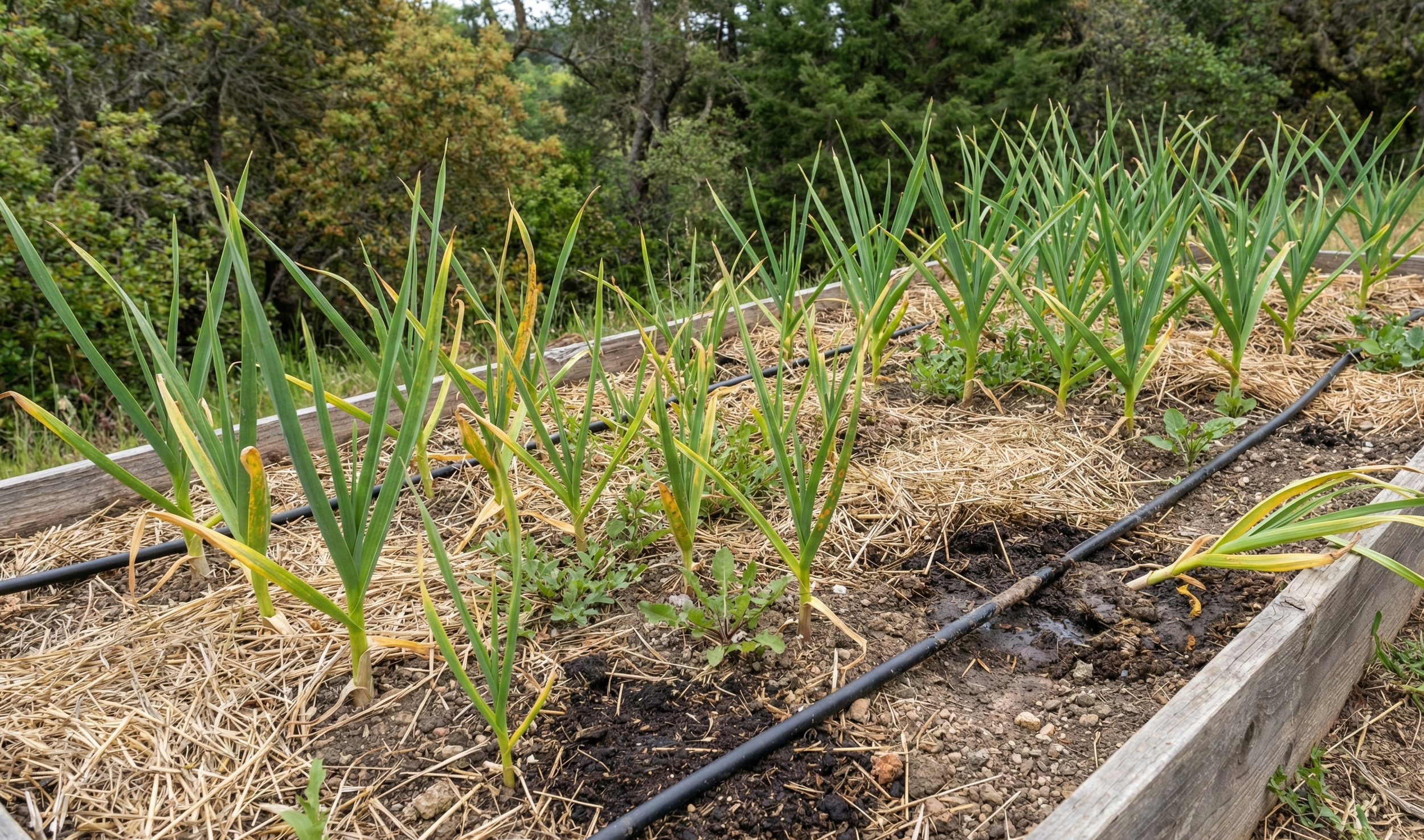
Rust is the most common disease on garlic and onions in Santa Cruz County, especially in foggy coastal areas.
Identification: Orange to reddish-brown raised pustules on leaves, typically appearing in spring. Pustules release powdery spores when touched.
Causes: Fungal disease favored by warm days, cool nights, and high humidity, which describes coastal Santa Cruz spring weather perfectly.
Impact: UC IPM notes that rust rarely kills plants but can reduce yields and bulb size by damaging foliage.
Management:
Space plants adequately for air circulation
Avoid overhead watering; use drip irrigation
Remove and destroy heavily infected leaves (don't compost)
In severe cases, organic sulfur sprays can help if applied early
Rotate allium plantings to different beds each year
White Rot
White rot is a serious fungal disease that persists in soil for decades.
Identification: Plants yellow and wilt. White, fluffy fungal growth appears at the base of the bulb with small, black round structures (sclerotia).
Impact: Affected bulbs rot. The fungus remains viable in soil for 20+ years, making any area with white rot permanently unsuitable for alliums.
Management:
Prevention is key; buy disease-free seed stock from reputable sources
Never plant alliums in areas with known white rot
Remove and destroy all infected plants (do NOT compost)
Solarize soil if infection is confirmed (helps reduce but may not eliminate)
Grow alliums in containers with fresh potting mix if your soil is contaminated
Downy Mildew
Identification: Yellow patches on leaves, gray-purple fuzzy growth on undersides, especially during cool, moist weather.
Management:
Improve air circulation
Avoid overhead watering
Remove affected foliage
Copper fungicides may help preventively in areas with history of infection
Fusarium Basal Rot
Identification: Yellowing leaves, rotting at bulb base, often with pink or white fungal growth.
Management:
Use disease-free seed
Rotate crops (4+ year rotation)
Improve soil drainage
Avoid injuring bulbs during cultivation
What Pests Attack Garlic and Onions?
Onion Maggots
Small fly larvae that tunnel into bulbs, causing rot and entry points for disease.
Identification: Plants wilt unexpectedly. When pulled, bulbs show tunneling damage and may contain small white maggots.
Management:
Use floating row covers from planting through spring to prevent adult flies from laying eggs
Remove plant debris promptly after harvest
Rotate allium plantings
Encourage natural predators (ground beetles, parasitic wasps)
Thrips
Tiny insects that scrape leaf surfaces, causing silvery streaking.
Identification: Silvery patches on leaves. Tiny (1mm) slender insects visible when leaves are examined closely or shaken over white paper.
Impact: Heavy infestations can weaken plants and reduce bulb size. Thrips also transmit viral diseases.
Management:
Spray plants with strong water to dislodge thrips
Insecticidal soap applied thoroughly to leaf surfaces
Blue sticky traps monitor populations
Mulch with reflective material (aluminum foil or silver mulch) to confuse thrips
Gophers
Perhaps the most destructive allium pest in Santa Cruz County. Gophers readily eat garlic and onion bulbs.
Identification: Plants suddenly disappear underground or emerge wilted with bulbs chewed away. Gopher mounds nearby confirm the culprit.
Management:
Plant in gopher baskets (hardware cloth cages)
Use raised beds lined with hardware cloth on the bottom
Trapping is the most effective control method
See our comprehensive Gopher Control Guide for detailed strategies
What Environmental Problems Affect Alliums?
Sunscald
Bulbs exposed to direct sun during harvest or curing can develop scalded patches that turn translucent, then papery or leathery.
Prevention:
Move harvested bulbs to shade promptly
Cure in shaded, ventilated location
Never cure in direct sun
Freezing Damage
While allium foliage tolerates frost, severe freezes can damage plants, especially newly emerged growth.
Symptoms: Leaf tips turn white or brown after hard frost. Plants may look wilted or water-soaked, then dry out.
Management:
Mulch plants heading into winter
Cover with frost cloth during severe cold snaps
Damaged foliage will often regrow if crown is undamaged
Mountain and valley gardeners face higher risk than coastal
Heat Stress
Unusual for alliums, but possible during heat waves.
Symptoms: Premature maturation, smaller bulbs, leaf dieback during hot spells.
Management:
Maintain adequate soil moisture during heat events
Mulch to keep soil cooler
Morning watering prevents heat buildup
How Do You Prevent Storage Problems?
Sprouting in Storage
Causes: Storage too warm, too humid, or inadequate curing.
Solution: Store in cooler (50-60°F for garlic, 35-50°F for onions), drier conditions. Sprouted bulbs are edible but won't store further.
Rotting in Storage
Causes: Incomplete curing, damage during harvest, disease present at harvest, storage too humid.
Solution: Ensure complete curing before storage. Check stored bulbs regularly and remove any showing soft spots or mold.
Shriveling
Causes: Storage too dry, too much airflow, or storage too long for the variety.
Solution: Some moisture loss is normal over months. Significant early shriveling suggests conditions are too dry or warm.
Many apparent problems are just a normal stage of the cycle; compare against our garlic growth stages and onion growth stages guides before you intervene.
Frequently Asked Questions
My garlic has yellow leaf tips in spring. Is this rust?
Yellow tips in late winter/early spring are usually just cold damage or normal senescence of lower leaves, not rust. Rust produces distinctive orange pustules, not just yellowing. If you see pustules, it's rust. Plain yellowing is usually nothing to worry about.
Why did some of my garlic cloves produce rounds (single bulbs without segments)?
Rounds occur when garlic doesn't vernalize properly or when cloves are too small. This is common when planting grocery store garlic or planting too late. Rounds are edible and can be replanted next fall, often producing segmented bulbs after proper vernalization.
Something is eating the tops of my onions. What is it?
Most likely slugs, snails, or earwigs if you see ragged, chewed edges. Thrips cause silvery damage rather than chewing. Check plants at night with a flashlight to identify the culprit. Use iron phosphate bait for slugs/snails, rolled newspaper traps for earwigs.
My stored onions are growing roots. Can I still eat them?
Yes, they're fine to eat but won't store further. Use rooting onions promptly. Rooting indicates storage is too warm or humid.
Is it safe to eat garlic with blue-green discoloration?
Blue-green garlic occurs when compounds in garlic react with trace acids or copper. It's harmless and doesn't indicate spoilage. The flavor is unchanged.
Can I replant garlic that didn't produce well?
You can, but if the poor performance was due to disease or unsuitable variety, you'll likely repeat the problem. For best results, start fresh with certified disease-free seed garlic suited to your climate. Local nurseries stock seed garlic from September through November, and Santa Cruz Garlic sells seed garlic grown here in Santa Cruz.
My leeks have a tough woody core. What happened?
They bolted (went to flower). Once a leek produces a flower stalk, the center becomes woody and inedible. Harvest before any flower stalk appears. Use affected leeks by removing the core and using the outer layers.
Why do my cured onions smell bad?
A strong, unpleasant smell indicates rot, often from bacterial infection during curing. Separate and discard affected bulbs immediately before the problem spreads. Improve curing ventilation and ensure bulbs are completely dry.
Free Resources
Seasonal Planting Calendar: Get planting timing right to prevent many problems
Know Your Microclimate Worksheet: Understand your conditions for better variety selection
