

The Fall Gardener's Guide to Planting Garlic in Santa Cruz County
A few of the product links in this guide are affiliate links. If you buy through one, Ambitious Harvest may earn a small commission at no extra cost to you, which helps keep these guides free. We only point to gear we would use in our own Santa Cruz garden. As an Amazon Associate, we earn from qualifying purchases. Read our full disclosure.
While most gardening attention in fall focuses on putting the garden to bed, experienced Santa Cruz gardeners know autumn is actually planting season for one of the most rewarding crops you can grow: garlic. The window between mid-October and late November is your chance to get cloves in the ground, where they'll quietly establish roots through winter and burst into growth come spring.
Fall-planted garlic consistently outperforms spring-planted attempts in our climate, producing larger bulbs with better developed flavors. The timing aligns perfectly with our Mediterranean weather pattern: cool, moist winters give garlic exactly what it needs to build a strong root system, and our long, gradual springs allow bulbs to size up before summer harvest.
This guide walks through everything you need to know about planting garlic successfully in Santa Cruz County, from selecting the right planting window for your microclimate to preparing beds and getting cloves in the ground correctly.
Why Does Fall Planting Work Best Here?
Garlic needs a period of cold temperatures (vernalization) to trigger proper bulb formation. Without adequate cold, plants may produce rounds (a single undivided bulb) rather than the segmented heads we want. Most garlic varieties need a stretch of winter cold to vernalize properly.
Santa Cruz County reliably delivers this cold period from November through February, even in our mildest coastal areas. By planting in fall, your garlic establishes roots before the coldest weather arrives, then receives vernalization in place rather than trying to provide it artificially.
Spring planting rarely works well here for several reasons. Cloves planted in February or March don't have time to vernalize before warming temperatures push top growth. The resulting bulbs are typically small, poorly formed, or don't segment at all. Save yourself the disappointment and stick with fall planting.
What Are the Optimal Planting Windows by Microclimate?
Timing matters, but the perfect window varies depending on where you garden. Plant too early, and garlic may grow vigorously before winter, making it vulnerable to frost damage. Plant too late, and roots may not establish before cold weather slows growth.
Coastal areas (Aptos, Capitola, Live Oak, westside Santa Cruz): Plant from late October through November. Your mild winters mean garlic won't receive as much vernalization as in colder areas, so planting on the earlier side of the window helps maximize cold exposure. Don't worry about early top growth since hard freezes are rare here.
San Lorenzo Valley sunny exposures (Boulder Creek, Ben Lomond ridges): Plant from mid-October through mid-November. Earlier planting allows root establishment before your first hard frosts. If you plant late November, be prepared to mulch heavily once cloves are in.
Under redwoods (Felton, shaded canyons): Plant in October, earlier in the window. The shorter days and lower light under redwoods mean slower growth overall, so giving garlic a head start helps. Acidic soil is common here; consider adding lime when preparing beds.
Inland valleys (Scotts Valley, Soquel hills): Plant from October through November. You have good flexibility here, with moderate winters that provide adequate vernalization without extreme conditions.
Pajaro Valley (Watsonville): Plant from late October through November. Your warmer microclimate means vernalization happens more slowly, so don't plant too early or garlic may grow too vigorously before cold arrives.
How Do You Select and Prepare Seed Garlic?
The quality of your seed garlic directly affects your harvest. Invest in good planting stock from the start.
Where to source seed garlic: Local nurseries typically stock seed garlic from September through November. Mountain Feed & Farm Supply in Ben Lomond, San Lorenzo Garden Center, and Scarborough Gardens in Scotts Valley all carry quality seed garlic seasonally. Farmers markets often have vendors selling locally-adapted varieties worth trying.
Santa Cruz Garlic is a small local grower selling seed garlic grown right here in Santa Cruz. Recent varieties include Red Sulmona, Carpathian, German Red, Chinese Pink, Lorz Italian, and Inchelium Red, and sales are through the website.
For wider variety selection, order online from companies like Territorial Seed, Peaceful Valley, or Filaree Garlic Farm. Order by early October for best selection since popular varieties sell out quickly.
Avoid grocery store garlic if possible. It may be treated to prevent sprouting, and varieties sold in stores are often poorly suited to California growing conditions. If grocery store garlic is your only option, choose organic heads that are already showing signs of sprouting.
Preparing cloves for planting: Separate your garlic head into individual cloves within a day or two of planting. Do not do this weeks ahead, as exposed cloves dry out and become more vulnerable to disease. Keep the papery skin on each clove; it protects against rot.
Sort cloves by size as you separate them. The largest, healthiest-looking cloves produce the biggest bulbs. Save these for planting and use smaller or damaged cloves in the kitchen. Each clove planted produces one new bulb, so plant your best.
How Should You Prepare Your Garlic Bed?
Garlic needs loose, well-draining soil to form good bulbs. Take time to prepare beds properly before planting.
Site selection: Choose a spot with at least 8 hours of direct sun. Garlic tolerates partial shade better than most vegetables, but full sun produces larger bulbs. Avoid areas where alliums (garlic, onions, leeks, chives) grew in the past three years to reduce disease pressure.
Soil preparation: Loosen soil to at least 8 inches deep. If you have clay soil (common in Santa Cruz County), incorporate 2-4 inches of compost to improve drainage and structure. Garlic sitting in waterlogged soil over winter is prone to rot.
UC IPM recommends keeping garden soil at a pH of 6.0 to 6.5. Many Santa Cruz soils, especially under redwoods, trend acidic. If you haven't tested recently, a simple pH test from the hardware store or a commercial soil lab gives you useful information, since UC Master Gardeners do not offer soil testing. Add agricultural lime several weeks before planting if pH needs raising.
Avoid fresh manure or high-nitrogen amendments when preparing garlic beds. Excess nitrogen encourages leafy growth at the expense of bulb development. Well-aged compost and a moderate application of balanced organic fertilizer (like 5-5-5) provide what garlic needs without overdoing nitrogen.
Consider raised beds if gopher pressure is high in your area. Lining the bottom with hardware cloth protects bulbs from damage. Raised beds also ensure good drainage in areas with heavy clay soil.
How Do You Plant Garlic Step by Step?
With bed prepared and cloves ready, planting is straightforward.
Step 1: Mark your rows Use string or a straight board to mark planting rows. Rows should be 10-12 inches apart, allowing room for mulch and weeding access.
Step 2: Make planting holes Using your finger or a dibble, make holes about 2 inches deep and 4-6 inches apart within rows, the spacing UC Master Gardeners recommend.
Step 3: Orient and place cloves Place each clove in a hole with the pointed end facing UP. This is where the shoot will emerge. Planting upside down forces the shoot to curve around, wasting energy and sometimes producing misshapen bulbs. If you can't tell which end is up, look for the slightly flattened root plate at the base.
Step 4: Cover and firm Cover cloves with soil and press gently to ensure good contact. The tip of the clove should be 2 inches below the soil surface after firming.
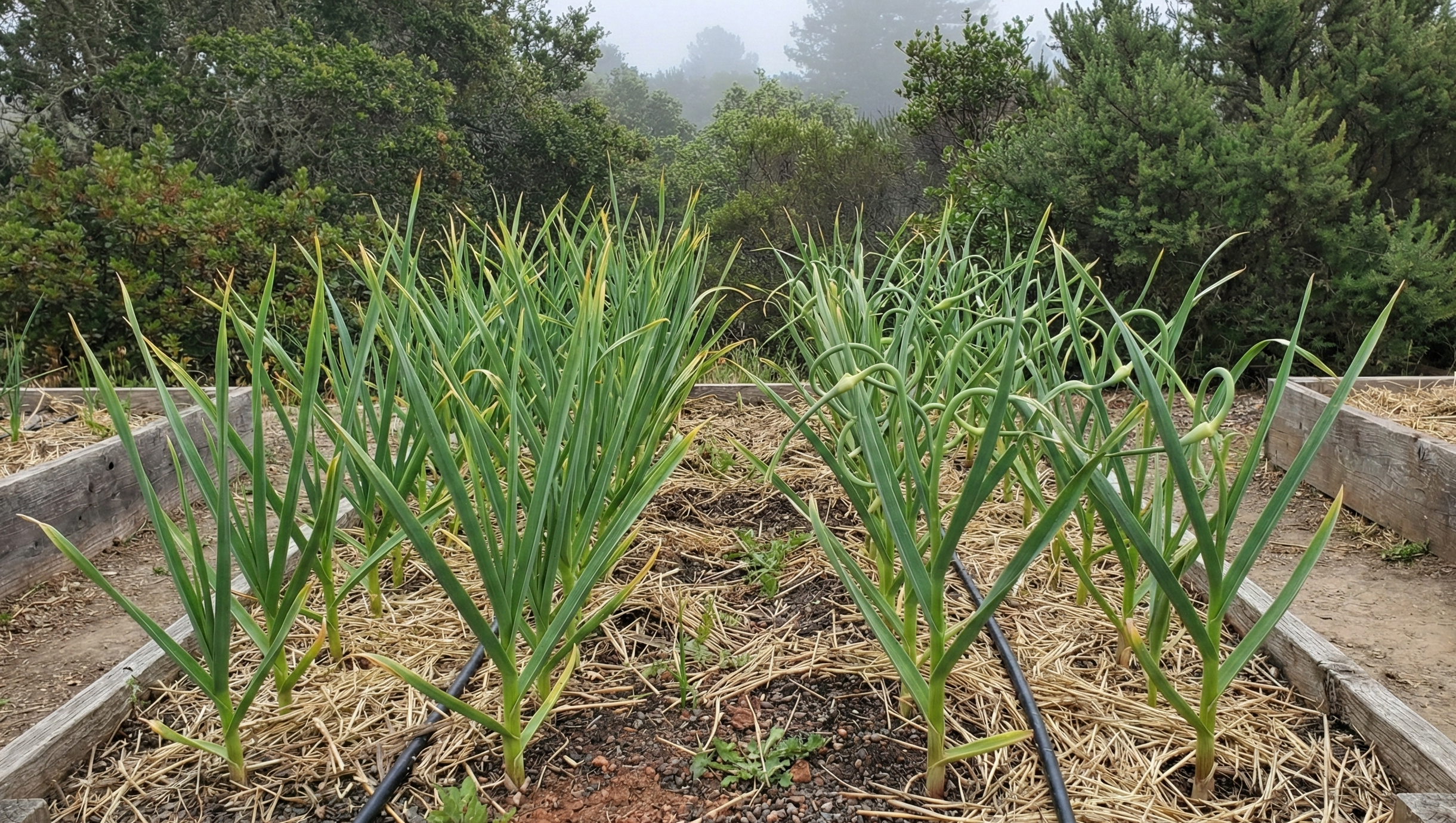
Step 5: Apply mulch Cover the planted area with 3-4 inches of straw, shredded leaves, or other organic mulch. Mulch moderates soil temperature, retains moisture, suppresses weeds, and keeps developing bulbs cleaner. Pull mulch back slightly once shoots emerge in early spring, but maintain a layer around plants throughout the growing season.
Step 6: Water in Water the bed thoroughly after planting to settle soil around cloves and initiate root growth. Continue watering if fall rains don't arrive within a week or so. Garlic needs consistent moisture to establish roots but shouldn't sit in soggy soil.
What Should You Expect After Planting?
Depending on your planting date and weather, you may see green shoots emerging within 2-4 weeks, or growth may wait until spring. Either is fine.
If shoots emerge in fall/early winter: This is normal, especially with earlier planting or mild weather. The shoots can handle light frost. In areas with harder freezes (San Lorenzo Valley, higher elevations), maintain mulch around shoots for protection, but don't bury them.
If nothing appears until spring: Also normal, especially with later planting or cooler conditions. The garlic is developing roots underground. You'll see growth when temperatures warm in late winter.
Winter care is minimal: Keep the bed weeded (competition from weeds reduces bulb size), maintain mulch, and water only if an extended dry spell occurs and winter rains fail. In a normal Santa Cruz winter, rainfall provides adequate moisture.
What Are the Most Common Planting Mistakes to Avoid?
Planting too deep: Cloves buried 4-5 inches deep may rot or produce weak shoots that exhaust energy reaching the surface. Stick to about 2 inches.
Planting too shallow: Cloves barely covered may heave out of soil during freeze-thaw cycles or dry out. The 2-inch minimum depth provides protection.
Skipping the mulch: Mulch is especially important for garlic. It protects against temperature swings, conserves moisture, and keeps soil from splashing onto developing bulbs. Don't skip this step.
Using poor-quality seed garlic: Small, damaged, or diseased cloves produce small, poor-quality bulbs. Use the biggest, healthiest cloves you can find.
Planting in soggy soil: Garlic needs moisture but hates sitting in water. If your soil stays wet after rain, improve drainage with raised beds or heavy compost incorporation.
Fertilizing with high nitrogen at planting: This encourages leaf growth when you want root establishment. Save most fertilizing for spring when bulbing begins.
For more on preparing your soil, see our soil amendments guide. And if you want to understand how your specific location affects planting timing, check our Santa Cruz microclimates guide.
Frequently Asked Questions
What if I can't plant until December?
Plant anyway. Late-planted garlic may produce smaller bulbs, but you'll still get a harvest. Mulch well and hope for a cold January/February to provide some vernalization.
Can I plant garlic in containers?
Yes, using containers at least 8-10 inches deep with excellent drainage. Space cloves 3-4 inches apart. Container garlic typically produces smaller bulbs but still offers good flavor. This works well for balconies or areas with severe gopher problems.
Should I soak cloves before planting?
Some gardeners soak cloves in diluted seaweed solution or plain water for 30 minutes to an hour before planting. This may speed initial root development but isn't necessary. Don't soak longer than a few hours, as cloves may rot.
How many garlic plants can I fit in a 4x4 raised bed?
With 6-inch spacing and 12-inch row spacing, a 4x4 bed holds approximately 32 cloves (4 rows of 8). That's about 4-5 garlic heads worth of seed garlic.
What if squirrels or other animals dig up my cloves?
Lay chicken wire or hardware cloth over the bed after planting, securing edges with landscape staples. Remove when shoots emerge or bend it up to create tunnels. The wire barrier usually deters digging.
Should I add fertilizer at planting time?
A moderate application of balanced organic fertilizer (1-2 pounds per 100 square feet) worked into the bed before planting provides adequate nutrition for fall root establishment. Save the main fertilizing push for spring.
How do I know if my garlic is alive over winter?
Gently brush away mulch and look for green tissue at the base of any shoots, or carefully dig beside one clove to check for white, healthy-looking root growth. Healthy roots and green tissue mean all is well even if no top growth is visible.
When will I harvest garlic planted this fall? Expect to harvest in June or early July, approximately 8-9 months after planting. Early varieties can be ready a little sooner. The exact timing depends on variety and growing conditions. Watch for the harvest signs described in our Harvesting and Curing Guide.
When do I plant garlic in California and when do I harvest it?
In our mild climate, plant garlic cloves in fall, roughly October into November, so they root before winter and overwinter right in the ground. You harvest the following early summer, often June into July, once about half the leaves have browned and half are still green. Cure the bulbs in a dry, airy spot before storing. UC ANR outlines garlic timing at ucanr.edu.
Free Resources
Seasonal Planting Calendar: Complete planting timing for each month and microclimate
Know Your Microclimate Worksheet: Document your specific conditions
