

Beneficial Insects: How to Attract Them to Your California Garden
A few of the product links in this guide are affiliate links. If you buy through one, Ambitious Harvest may earn a small commission at no extra cost to you, which helps keep these guides free. We only point to gear we would use in our own Santa Cruz garden. As an Amazon Associate, we earn from Read our full disclosure.
The most effective pest control system in your garden is not a spray, a trap, or a product you buy. It is the community of beneficial insects that already lives in your neighborhood, waiting for the right conditions to move in and get to work. Ladybugs, lacewings, parasitic wasps, ground beetles, and hoverflies are natural predators of the aphids, caterpillars, mites, and other pests that damage your crops. When these beneficial insects are present and thriving, pest problems stay manageable without chemical intervention.
This guide introduces the most important beneficial insects for Santa Cruz County gardens, explains how to recognize them (including their often-unfamiliar larval stages), and provides practical steps to attract and keep them in your garden year-round.
Key Takeaway: A garden that supports beneficial insects through habitat plants, reduced pesticide use, and nesting sites will have fewer pest problems than one that relies on purchased products or sprays alone.
Why Are Beneficial Insects So Important?
According to UC IPM, biological control by natural enemies (predators, parasitoids, and pathogens) is especially important for reducing the numbers of pest insects and mites in gardens and landscapes. In a balanced garden ecosystem, beneficial insects keep pest populations below damaging levels most of the time, without any intervention from the gardener.
The problem is that many common gardening practices inadvertently harm beneficial insects. Broad-spectrum pesticides (even organic ones like pyrethrin and spinosad) kill beneficials along with pests. Tidy gardens with no weeds, no bare ground, and no flower borders eliminate the food and habitat that beneficial insects need. The result is a garden that requires more intervention, not less.
The approach described in this article, sometimes called conservation biological control, focuses on creating conditions that favor beneficial insects so they do the pest management work for you.
For detailed guidance on supporting natural enemies in your garden, see UC ANR's overview of Biological Control and Natural Enemies of Invertebrates, which covers identification and conservation of predators and parasitoids in home landscapes. UC also provides a practical list of insectary plants that attract beneficial insects, and guidance on protecting natural enemies and pollinators when managing pests.
Which Beneficial Insects Should You Know?
Ladybugs (Lady Beetles)
Everyone recognizes adult ladybugs, but their larvae are the real workhorses of aphid control. Ladybug larvae are small (about 1/2 inch), dark-colored, elongated, and covered with tiny bumps or spines. They look nothing like the adults and are often mistaken for pests. UC IPM puts it at about 400 aphids eaten by a single spotless lady beetle larva over the course of its development.
What they eat: Aphids (primarily), plus mites, scale insects, and small caterpillar eggs.
How to recognize the larvae: Dark gray to black, elongated, alligator-shaped, with orange or red spots. They crawl actively on leaves and stems where aphids are present.
Local species: The convergent lady beetle (Hippodamia convergens) is the most common species in Santa Cruz County. The multi-colored Asian lady beetle (Harmonia axyridis) is also present and is an effective aphid predator, though it can be a nuisance when it enters homes in fall.
Green Lacewings
Adult green lacewings are delicate, pale green insects with large, lacy wings and golden eyes. They are often seen fluttering around porch lights at night. The adults feed primarily on nectar and pollen, but their larvae are ferocious predators known as "aphid lions."
What the larvae eat: Aphids, mites, thrips, whitefly eggs and nymphs, small caterpillars, and insect eggs of many species. Lacewing larvae are generalist predators with an exceptionally broad diet.
How to recognize the larvae: Small (up to 1/2 inch), pale to brownish, flattened, with prominent curved jaws. They move actively through foliage and are sometimes seen carrying debris on their backs as camouflage.
Why they matter: UC IPM lists green lacewings as predators of mites and soft-bodied insects including aphids, caterpillars, lace bugs, leafhoppers, mealybugs, psyllids, scales, and thrips. Their larvae consume large numbers of soft-bodied pests, and adults are attracted to gardens with flowering plants that provide nectar.
Parasitic Wasps
Parasitic wasps are a large and diverse group, and most are so small (many are less than 1/8 inch) that you will never notice them unless you know what to look for. They do not sting humans. Instead, they lay their eggs inside or on pest insects, and the developing wasp larvae consume the host from within.
Key species for garden pest control:
Braconid wasps parasitize tomato hornworms, aphids, and caterpillars. You may see their small white cocoons clustered on the back of a hornworm. Leave parasitized caterpillars in the garden so the wasps can complete their life cycle.
Aphidius wasps parasitize aphids, turning them into swollen, tan-colored "mummies." If you see mummified aphids in an aphid colony, parasitic wasps are working. Do not spray that colony.
Trichogramma wasps parasitize the eggs of many moth and butterfly species, preventing caterpillar damage before it starts.
Why they matter: UC IPM notes that nearly all insect pests have at least one parasitoid attacking them, and that a single female can parasitize hundreds of hosts in her lifetime. Their impact is large but largely invisible because the wasps themselves are so small.
Syrphid Flies (Hoverflies)
Adult syrphid flies look like small bees or wasps (black and yellow striped) but have only two wings (bees and wasps have four) and hover in place in a distinctive manner. They are harmless and do not sting. Adults feed on nectar and pollen and are important pollinators.
What the larvae eat: Aphids, primarily. A single syrphid fly larva can consume 100 to 400 aphids during its development, according to UC researchers.
How to recognize the larvae: Small (up to 1/2 inch), translucent green or yellowish, slug-like, with no visible legs. They are often found directly in aphid colonies, feeding on the aphids.
Ground Beetles
Ground beetles are large (1/2 to 1 inch), dark, fast-moving beetles that hide under mulch, stones, and boards during the day and hunt at night. They are one of the most abundant predatory insects in garden soil ecosystems.
What they eat: Slugs, snails, cutworms, root maggots, insect eggs, and other soil-dwelling pests. Some species also eat weed seeds.
How to attract them: Maintain mulched pathways and garden edges. Permanent ground covers and perennial plantings provide year-round habitat. Reduce soil disturbance in border areas where beetles shelter.
Predatory Mites
These tiny mites (barely visible to the naked eye) feed on spider mites and other pest mites. They are naturally present in many gardens and are also available for purchase as biological control agents. The most commonly used predatory mite, Phytoseiulus persimilis, is bright red-orange and moves faster than the two-spotted spider mites it feeds on.
Minute Pirate Bugs
Very small (1/16 to 1/8 inch), fast-moving, black and white bugs that feed on thrips, spider mites, aphids, and small caterpillar eggs. They are common in Santa Cruz County gardens, especially in and around flowering plants. Despite their small size, a single minute pirate bug can consume 30 or more spider mites per day.
Which Plants Attract Beneficial Insects?
Adult beneficial insects need nectar and pollen for energy and reproduction, even if their larvae are predators. Planting the right flowers in and around your vegetable garden provides the food that draws beneficials in and keeps them resident in your garden.
The Best Habitat Plants for Santa Cruz County
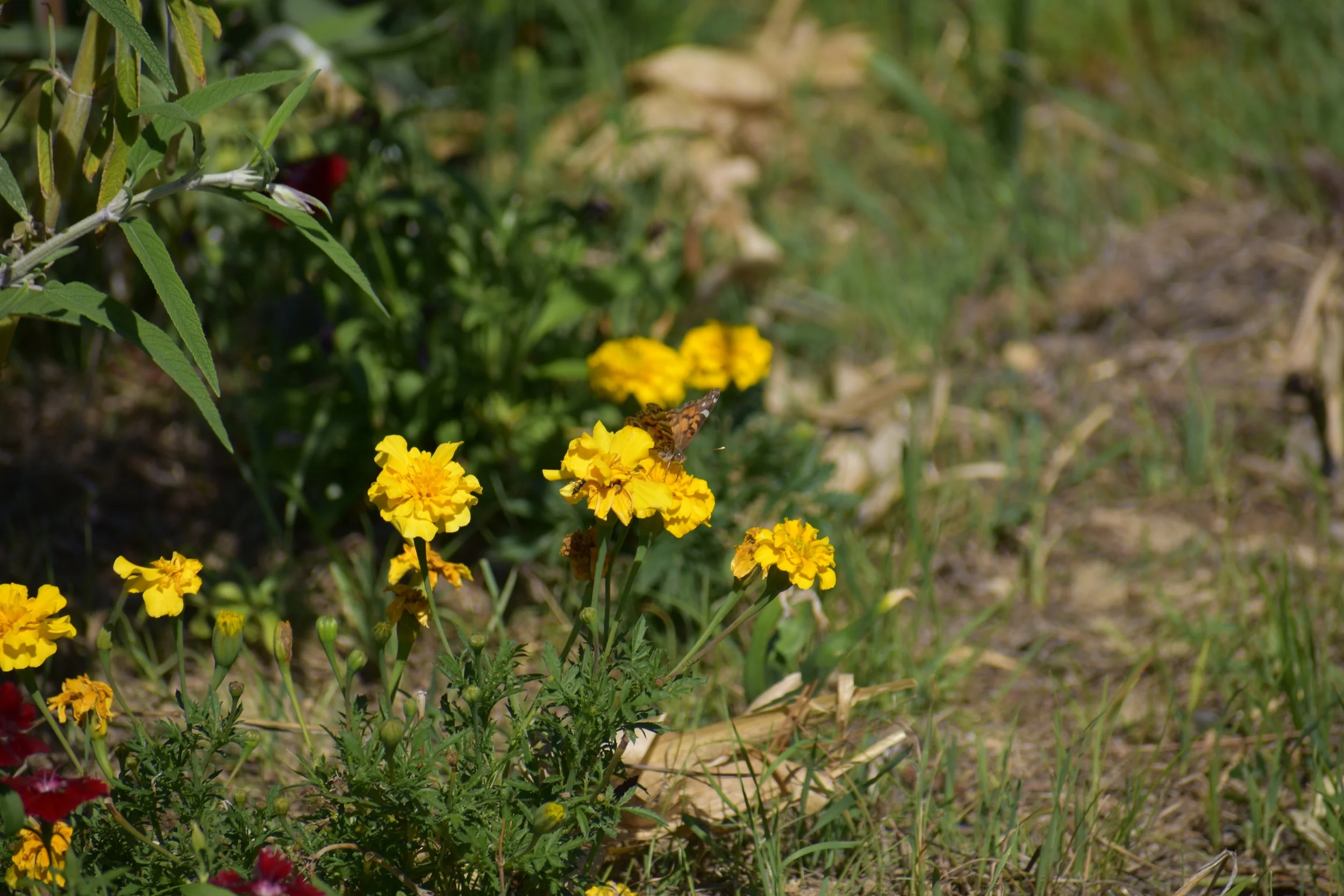
The Xerces Society identifies several plant families, notably the carrot, sunflower, mint, and bean families, as especially attractive to beneficial insects. The following plants grow well in our coastal climate and provide nectar across the growing season.
Umbellifers (carrot family):
Cilantro and dill (let them flower; do not pull them out when they bolt)
Fennel (bronze fennel is especially attractive to beneficial insects)
Parsley (leave some plants to flower in their second year)
Queen Anne's lace (wild carrot)
The small, clustered flowers of umbellifers are perfectly sized for the tiny mouths of parasitic wasps and other small beneficial insects. The Xerces Society notes that plantings including carrot-family flowers support adult parasitic wasps and increase their longevity and reproduction.
Composites (daisy family):
Yarrow (Achillea millefolium)
Calendula
Coreopsis
Cosmos
Sunflowers
California aster (Symphyotrichum chilense)
Low-growing nectar plants:
Sweet alyssum (one of the single best plants for attracting syrphid flies; according to UC research, alyssum planted among vegetable rows significantly reduces aphid populations by attracting hoverflies)
Buckwheat (fast-growing summer cover crop that produces abundant small white flowers)
White clover (useful as a living mulch in pathways)
California natives:
California poppy
California buckwheat (Eriogonum fasciculatum)
Coyote mint (Monardella villosa)
Seaside daisy (Erigeron glaucus)
Native milkweed (Asclepias fascicularis)
How to Plant for Beneficial Insects
Plant flowers within or directly adjacent to your vegetable garden. Beneficials need to be close to both their food (nectar) and their prey (your garden pests). A flower border 20 feet away is less effective than alyssum planted directly between your broccoli rows.
Plan for continuous bloom. Beneficials need nectar from early spring through fall. Choose a mix of plants that flower at different times. In Santa Cruz County, California poppies bloom early (February through May), alyssum and buckwheat bloom through summer, and asters provide fall nectar.
Include variety. Different beneficial insect species are attracted to different flower shapes and sizes. A diverse planting supports a diverse community of beneficials.
Let some herbs bolt. Cilantro, dill, parsley, and basil are magnets for beneficial insects when they flower. Instead of pulling bolted herbs, leave a few to complete their flowering cycle.
What Other Habitat Do Beneficial Insects Need?
Food (nectar and pollen) is essential, but beneficial insects also need water, shelter, and nesting sites. A few simple additions to your garden make it much more welcoming.
Water
A shallow dish or saucer with pebbles or marbles and a thin layer of water provides drinking spots for beneficial insects. Change the water every day or two to prevent mosquito breeding.
Bare Ground
Many native bees and some predatory wasps nest in bare soil. Leave a few patches of undisturbed, unmulched soil in sunny locations, especially on south-facing slopes or banks. According to the Xerces Society, approximately 70% of native bee species nest in the ground.
Overwintering Sites
Beneficial insects need shelter during winter. Leaf litter, bunch grasses, perennial plant stems (left standing through winter rather than cut back in fall), and small brush piles provide overwintering habitat. Resist the urge to do a thorough fall cleanup of every corner of the garden. A little wildness in the borders supports next spring's beneficial insect population.
Mulch and Ground Cover
Ground beetles, rove beetles, and other soil-dwelling predators shelter under mulch, stones, and ground cover plants during the day. Maintaining organic mulch in your garden benefits these predators while also conserving moisture and suppressing weeds.
What Practices Harm Beneficial Insects?
Some common gardening practices are counterproductive because they kill the very insects that would manage your pest problems if given the chance.
Broad-Spectrum Pesticides
This is the single biggest factor. Even organic broad-spectrum products like pyrethrin, spinosad, and neem oil kill beneficial insects along with pests. According to UC IPM, "the use of broad-spectrum pesticides is the most common cause of pest outbreaks in gardens" because killing natural enemies allows pest populations to rebound faster than the predator populations that controlled them.
If you must spray, use the most targeted product available (for example, Bt for caterpillars only), spray only the affected plants, and spray in the evening when pollinators and many beneficials are less active.
Over-Tidy Gardens
Gardens with no weeds, no flower borders, no mulch, and no wild edges offer nothing to beneficial insects. A perfectly manicured garden is a biological desert from the perspective of the insects you want to attract.
Bug Zappers
Electronic bug zappers kill far more beneficial and neutral insects than they do actual pests. Studies have consistently shown that the vast majority of insects killed by bug zappers are moths, beetles, and other non-pest species. Do not use them near your garden.
Removing All "Pest" Plants
A small aphid colony on a non-essential plant (a weed, an ornamental, a finished crop) is a food source for ladybugs, lacewings, and syrphid flies. If you eliminate every last aphid, you also eliminate the food supply that keeps beneficial predators in your garden. Tolerate some pest presence on non-critical plants as "banker plants" that maintain your beneficial insect community.
Should You Buy Beneficial Insects?
Purchasing and releasing beneficial insects can work in specific situations but is generally less effective than creating habitat that attracts wild populations.
When Purchasing Makes Sense
Predatory mites for spider mite control, especially in greenhouses or enclosed growing spaces.
Trichogramma wasps for caterpillar prevention in large plantings.
Beneficial nematodes for soil-dwelling pest larvae (these are applied to the soil, not released as free-living insects).
When It Probably Will Not Work
Purchased ladybugs are wild-collected and typically fly away within hours of release. UC IPM notes that most released ladybugs do not stay in the garden. If you choose to try, release them at dusk in a well-watered garden (they are more likely to stay if water is available), and place them directly on aphid-infested plants.
Green lacewings purchased as eggs or larvae are more likely to stay than adults, but they still need ongoing habitat and food (nectar for adults) to establish a resident population.
The most cost-effective approach is to create the habitat described in this article and let wild beneficial insects colonize your garden naturally. It takes a season or two to build up populations, but the result is a self-sustaining system rather than one that requires repeated purchases.
A Seasonal Guide to Beneficial Insects in Santa Cruz County
Spring (March through May)
Overwintered beneficial insects become active as temperatures warm. Syrphid flies are among the first to appear, drawn to early-blooming flowers like California poppies and mustard. Ladybug adults emerge from overwintering sites in the hills and return to garden areas. Parasitic wasps begin laying eggs in early aphid populations.
What to do: Ensure early-season nectar sources are blooming. Leave overwintering habitat undisturbed until daytime temperatures are consistently above 60 degrees. Be patient with early-season aphid populations; predators are arriving.
Summer (June through August)
Beneficial insect populations are at their peak. Lacewing activity is high, parasitic wasps are abundant, and ground beetles are hunting nightly. This is when the investment in habitat pays off most visibly.
What to do: Maintain blooming plants for continuous nectar. Avoid spraying anything during this period if possible. Monitor pest populations; if beneficials are present, they are usually managing things effectively.
Fall (September through November)
Beneficial insect activity begins to decline as temperatures cool and day length shortens. Many species begin seeking overwintering sites. Fall-blooming plants (asters, goldenrod, late buckwheat) provide critical late-season nectar.
What to do: Leave perennial plant stems standing rather than cutting them back. Do not rake all leaves from garden borders. These provide overwintering shelter for beneficial insects and next year's population depends on it.
Winter (December through February)
Most beneficial insects are dormant, overwintering as adults, pupae, or eggs in leaf litter, soil, plant stems, and bark crevices. Our mild coastal winters mean some species remain somewhat active even in January.
What to do: Minimize garden disturbance in border areas. Plan next year's habitat plantings. Order seeds for beneficial insect plants (alyssum, buckwheat, cilantro, calendula) for spring sowing.
Frequently Asked Questions
How long does it take to attract beneficial insects?
If you plant habitat flowers and stop using broad-spectrum pesticides, you should see increased beneficial insect activity within one growing season. Building a fully balanced ecosystem where beneficials provide consistent pest control typically takes 2 to 3 years of maintaining good habitat.
Will beneficial insects completely eliminate pest problems?
No. The goal is not zero pests but pests managed at levels that do not significantly damage your crops. Beneficial insects keep pest populations in check, but there will always be some pest presence. That is normal and necessary because the predators need prey to survive.
Can I use organic sprays and still have beneficial insects?
It depends on the spray. Bt (Bacillus thuringiensis) is specific to caterpillars and does not harm most beneficials. Insecticidal soap and horticultural oil are less harmful than pyrethrin or spinosad but can still kill beneficial insects on contact. The key is to spray only when necessary, only on affected plants, and only when beneficials are not active (early morning or evening).
Do I need to plant flowers right in my vegetable beds?
Flowers planted directly among vegetables are more effective than flowers in a separate border. Interplanting rows of alyssum, calendula, or cilantro between vegetable rows places nectar sources within feet of where pests live, which means beneficial insects are more likely to find and attack pest colonies. Even a few potted herbs allowed to flower near your vegetable beds make a difference.
What are the tiny wasps hovering around my garden?
They are almost certainly parasitic wasps, and they are among the most valuable beneficial insects in your garden. They do not sting humans. They are there because there are host insects (aphids, caterpillars, whiteflies) for them to parasitize. Their presence is a sign of a healthy garden ecosystem.
Learn to Work With Your Garden's Allies
Related Reading
For free garden planning resources and printable guides, visit Your Garden Toolkit.
