

The Complete Guide to Garlic and Onions for Santa Cruz County Gardeners
A few of the product links in this guide are affiliate links. If you buy through one, Ambitious Harvest may earn a small commission at no extra cost to you, which helps keep these guides free. We only point to gear we would use in our own Santa Cruz garden. As an Amazon Associate, we earn from qualifying purchases. Read our full disclosure.
If you want to grow something that rewards patience, fills your kitchen with homegrown flavor, and actually thrives in our Mediterranean climate, alliums are your answer. Garlic, onions, shallots, and leeks are some of the most satisfying crops you can grow in Santa Cruz County, and they slot perfectly into our fall and winter gardening calendar.
Most gardening advice treats alliums as an afterthought, something to squeeze in between tomato season and spring planting. But for Santa Cruz gardeners, these crops deserve center stage. Our mild winters, reliable rainfall (when we get it), and long, cool springs create ideal conditions for alliums to develop the large bulbs and complex flavors that make homegrown garlic and onions so much better than anything from the grocery store.
This guide covers everything you need to know about growing the allium family in Santa Cruz County, from choosing the right varieties for your microclimate to harvesting and curing for long storage. It covers your first garlic cloves and the move into shallots and leeks, with practical, locally-specific guidance.
Why Alliums Thrive in Santa Cruz County
Our climate matches what garlic and onions actually need: cool temperatures for root establishment, adequate moisture during the growing season, and warming days in late spring to trigger bulb formation.
Garlic needs a stretch of winter cold to initiate proper bulb development. Santa Cruz County reliably delivers this from November through February, even in our mildest coastal areas. This vernalization period is why fall planting works so much better here than trying to plant in spring like gardeners do in cold-winter climates.
Onions respond to day length to form bulbs, and the varieties suited to our latitude (long-day types won't work here) begin bulbing as days lengthen in late spring. Our gradual warming through April and May gives onions time to develop size before the bulbing signal kicks in.
The timing works beautifully with our gardening calendar. You plant garlic and onion sets in fall when summer crops are winding down, they grow steadily through winter with minimal attention, and you harvest in late spring to early summer just as your warm-season garden is hitting its stride.
What Is Allium Types?
Before we get to planting, it helps to understand what you're working with. The allium family includes several crops, each with slightly different needs and uses.
Garlic forms a single bulb divided into cloves. You plant individual cloves in fall, each producing a new bulb by the following summer. Garlic comes in two main types: softneck (stores longer, good for braiding) and hardneck (bigger cloves, produces edible scapes, stronger flavor). Both grow well in Santa Cruz, though your microclimate influences which performs best.
Onions can be grown from seed (slowest but cheapest), sets (small bulbs, fastest), or transplants (best balance of cost and timing). Onions are categorized by day length requirements: short-day (bulb when days reach 10-12 hours), intermediate-day (12-14 hours), and long-day (14-16 hours). Santa Cruz gardeners should focus on short-day and intermediate-day varieties.
Shallots are essentially a type of onion that forms clusters of smaller bulbs rather than one large one. They're planted and grown like garlic (from individual bulbs) but have a milder, more complex flavor prized by cooks.
Leeks don't form bulbs at all. Instead, you harvest the blanched white stem. They take longer than onions (typically 90-120 days from transplant) but offer harvests from late fall through early spring.
When and How Should You Plant Timing by Santa Cruz Microclimate?
The best planting window for garlic and fall-planted onions in Santa Cruz County runs from mid-October through late November, but the exact timing depends on where you garden.
Coastal areas (Aptos, Capitola, Live Oak, westside Santa Cruz): Plant garlic from late October through November. Your mild winters mean garlic won't get as much cold exposure, so planting earlier helps ensure adequate vernalization. For onions, you can plant overwintering sets in October or start onion seeds indoors in late January for spring transplanting.
San Lorenzo Valley sunny exposures (Boulder Creek, Ben Lomond ridges): Plant garlic from mid-October through mid-November. You'll get good cold exposure for vernalization, but avoid planting so late that cloves don't establish roots before your first hard frost. Mulch well after planting.
Under redwoods (Felton, shaded canyons): The good news: alliums tolerate partial shade better than most vegetables. The challenge: acidic soil. Plant in October and consider adding lime to raise pH toward the 6.0-6.5 range UC recommends. Raised beds with imported soil may be your best option.
Inland valleys (Scotts Valley, Soquel hills): Plant garlic October through November. You have more flexibility than mountain gardeners on frost timing but still get adequate cold for vernalization.
Pajaro Valley (Watsonville): Commercial allium production in this area confirms it's excellent territory. Plant garlic October through November. Your warmer temperatures and longer season mean larger bulbs are possible, but don't plant too early or garlic may start growing vigorously before winter.
What Soil Conditions Do Preparation for Alliums Need?
Alliums need loose, well-draining soil to form good bulbs. Compacted or waterlogged soil leads to small, misshapen bulbs and increases disease risk.
Start by loosening the soil to at least 8 inches deep. If you're working with clay soil (common in many parts of Santa Cruz County), incorporate generous amounts of compost. UC ANR recommends 2-4 inches of compost worked into the top 6-8 inches of soil before planting.
Check soil pH if you haven't recently. UC IPM recommends a pH between 6.0 and 6.5. Under redwoods and in many Santa Cruz locations, soil tends toward acidic (below 6.0). Adding agricultural lime a few weeks before planting can help raise pH, but a soil test or a local soil lab gives you specific guidance.
Avoid fresh manure or high-nitrogen amendments when preparing beds for alliums. Excess nitrogen encourages leafy growth at the expense of bulb development. Well-aged compost and a balanced approach work better than pushing growth with fertilizer.
When and How Should You Plant Garlic Step by Step?
Garlic is the easiest allium to start with, and fall is your planting window.
Free planting guide
Know what to plant, and when, in Santa Cruz County
Join the free Ambitious Harvest email list for seasonal planting reminders and practical Central Coast gardening notes. As a welcome, I will send you the one-page California Seed Starting Cheat Sheet, so you always know what to start indoors, what to sow direct, and the right timing for your zone.
Send me the planting guide
One email field, no name needed. Unsubscribe anytime.
Choosing seed garlic: Use seed garlic from a reputable source rather than grocery store garlic, which may be treated to prevent sprouting or may not be suited to our climate. Mountain Feed & Farm Supply in Ben Lomond carries seed garlic in fall, as do San Lorenzo Garden Center and many local nurseries. Online sources like Territorial Seed and Peaceful Valley also ship quality seed garlic.
Separating cloves: Break the garlic head into individual cloves just before planting. Keep the papery skin on each clove. Use the largest, healthiest-looking cloves for planting and save smaller ones for cooking.
Planting depth and spacing: Plant cloves pointed end up, 2 inches deep and 6 inches apart. Rows should be 12 inches apart if planting multiple rows. The pointed end is where the shoot will emerge; planting upside down wastes energy as the shoot must curve around to grow upward.
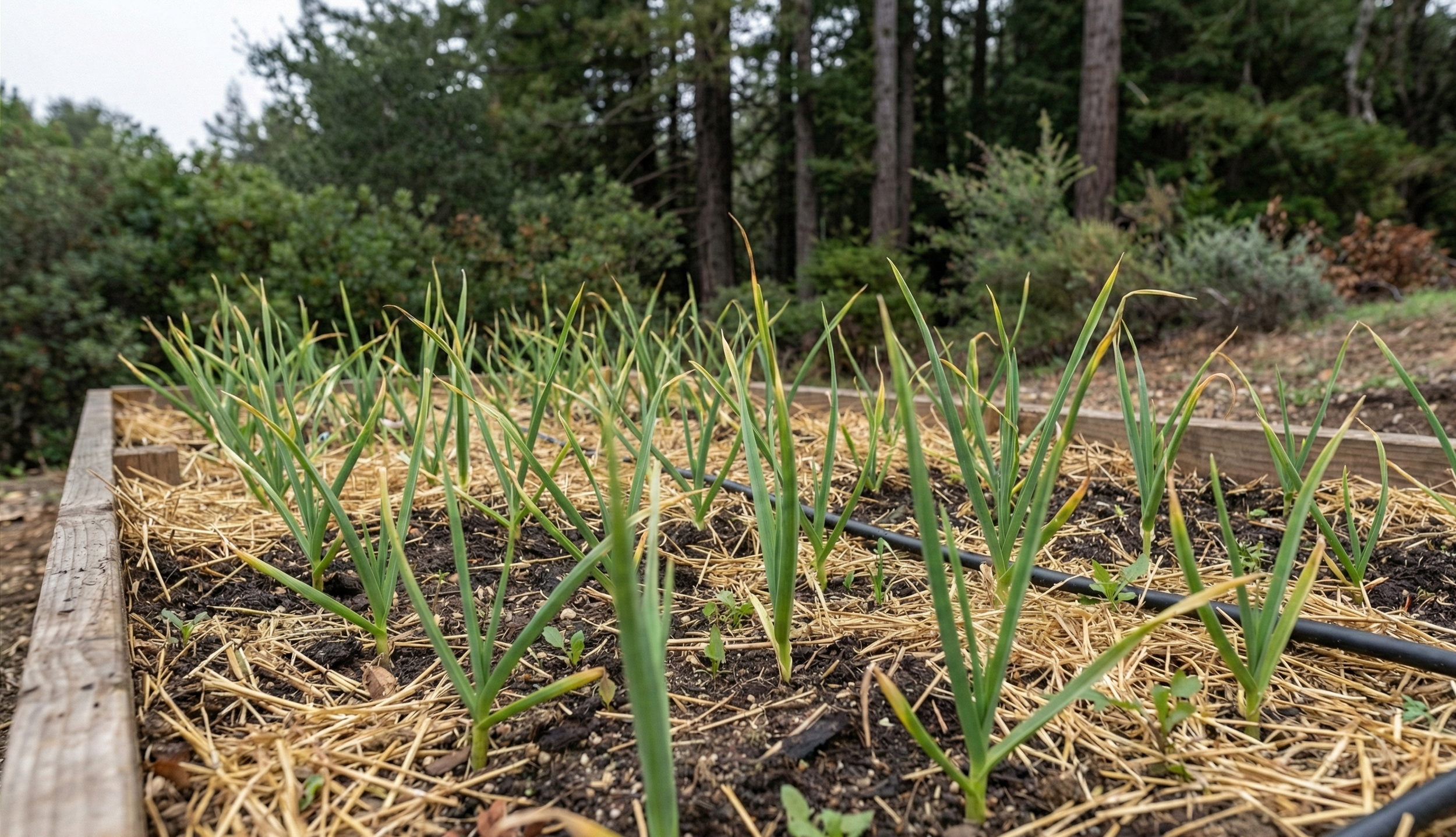
Mulching: After planting, apply 3-4 inches of straw, shredded leaves, or other organic mulch. Mulch suppresses weeds, maintains soil moisture, and moderates soil temperature during cold spells. It also keeps developing bulbs cleaner.
Watering: Water well after planting to settle soil around cloves. Continue watering if fall rains don't materialize. Garlic needs consistent moisture for root establishment but shouldn't sit in waterlogged soil.
How Do You Grow Onions from Seeds, Sets, and Transplants?
Onions offer more options for starting, each with tradeoffs.
From seed (most variety options, slowest): Start onion seeds indoors in late January to early February, about 10-12 weeks before transplanting. Use cell trays or flats with good-quality seed starting mix. Onion seedlings are thin and grass-like at first. Keep them trimmed to 4-5 inches tall to encourage thickening. Transplant outdoors in March when seedlings are pencil-thick.
From sets (fastest, limited varieties): Onion sets are small, dormant bulbs available at nurseries in fall and late winter. Plant fall sets (usually short-day varieties like 'Grano' or 'Granex') in October for late spring harvest. Plant late winter sets in February for early summer harvest. Push sets into soil so the tip is just visible.
From transplants (good balance): Many nurseries sell onion starts (bundles of young plants) in late winter. These transplant easily and grow faster than seed-started onions. Plant so the white base is 1 inch deep.
Regardless of starting method, give onions full sun (at least 6 hours), consistent moisture, and avoid overcrowding. Final spacing should be 4-6 inches apart for full-sized bulbs.
How Do You Grow Shallots and Leeks?
Shallots: Plant shallots exactly like garlic, with individual bulbs going in the ground 2 inches deep and 6 inches apart in fall. Each bulb multiplies into a cluster of 4-8 new shallots by harvest time. Shallots need the same conditions as garlic: loose soil, consistent moisture, and good drainage.
Leeks: Leeks require a longer growing season and different timing. Start seeds indoors in February, transplant in April, and harvest from November through March of the following year. When transplanting, set leeks in trenches or deep holes and gradually fill in around the stems as they grow. This blanches the stem white, which is the edible part.
Caring for Alliums Through the Growing Season
Once established, alliums need relatively little attention, but a few key practices improve your harvest.
Winter care: In Santa Cruz County, garlic and onions grow slowly but steadily through winter. Keep beds weeded (competition hurts bulb size) and maintain mulch. Water only if winter rains fail to provide adequate moisture. Soggy soil in winter causes more problems than dry soil.
Spring fertilizing: As days lengthen in early spring (late February through March), side-dress with a balanced fertilizer or compost. Stop fertilizing once bulbing begins (typically April for onions, May for garlic). Late fertilizing encourages leafy growth when you want energy going into bulbs.
Hardneck garlic scapes: If you're growing hardneck garlic, watch for curly flower stalks (scapes) emerging in late spring. Cut these off to direct energy into bulb development. The scapes are edible and delicious, with a mild garlic flavor perfect for pesto, stir-fries, or grilling.
Reducing water before harvest: UC Master Gardeners say to stop watering garlic in May, when the tops begin to turn yellow. For onions, hold back water once the tops start to fall over. This helps bulbs cure and improves storage life.
When Should You Harvest Garlic, Onions, and Shallots?
Timing the harvest correctly makes the difference between alliums that store for months and those that rot within weeks.
Garlic: Harvest when about half the leaves have turned brown and half are still green, typically June into early July in Santa Cruz. Don't wait until all foliage dies, or the bulb wrappers may deteriorate. Use a digging fork to lift bulbs rather than pulling, which can damage them.
Onions: Harvest when tops fall over naturally and necks feel soft. Gently bend over any stubborn tops to stop growth. Lift with a fork and let bulbs dry on the soil surface for a day or two if weather is dry.
Shallots: Harvest like garlic when foliage begins browning. Each original bulb will have multiplied into a cluster.
Leeks: Harvest as needed once stems reach desired size. Leeks tolerate frost and can stay in the ground through winter in Santa Cruz.
Curing: Cure garlic, onions, and shallots in a dry, shaded, well-ventilated location for 2-3 weeks. A covered porch, garage, or shed works well. Once outer wrappers are papery and necks are completely dry, trim roots and cut stems to 1 inch (or braid softneck garlic). Store in a cool, dry place with good air circulation.
What Are the Most Common Problems and Solutions?
Small bulbs: Usually caused by overcrowding, insufficient water during bulb formation, or planting the wrong variety. Also check soil fertility and ensure you're planting at the right time for your microclimate.
Soft or rotting bulbs: Too much water, especially late in the season or during curing. Improve drainage, reduce watering before harvest, and ensure proper curing conditions.
Onion bolting (flowering before bulbing): Caused by temperature fluctuations or vernalization at the wrong time. Consistent conditions and correct variety selection help prevent this.
Rust (orange pustules on leaves): Common in foggy, humid conditions. Improve air circulation, avoid overhead watering, and remove affected foliage. UC IPM notes that rust rarely kills plants but can reduce bulb size.
Onion maggots: These larvae tunnel into bulbs. Rotate allium plantings, use floating row covers, and remove plant debris promptly after harvest.
Gophers: A serious concern throughout Santa Cruz County. Plant in gopher baskets or raised beds with hardware cloth bottoms. Our Complete Guide to Gopher Control covers strategies in detail.
Where to Buy Seed Garlic, Sets, and Transplants Locally
Fall is the season to source planting material. Here's where to find quality allium starts in Santa Cruz County:
Santa Cruz Garlic, a small Santa Cruz grower, sells locally grown seed garlic through its website each fall
Mountain Feed & Farm Supply in Ben Lomond carries seed garlic, onion sets, and shallots in fall
San Lorenzo Garden Center stocks seed garlic and onion sets seasonally
Scarborough Gardens in Scotts Valley carries transplants and sets
Renee's Garden Seeds, based right here in Felton, offers excellent onion and leek seeds online
Local farmers markets often have vendors selling locally-adapted seed garlic in fall
Check our Garden Events Calendar for seed and plant sales featuring alliums.
To see what both crops should look like month by month, follow our garlic growth stages and onion growth stages guides.
Frequently Asked Questions
Can I plant garlic from the grocery store?
It's not recommended. Grocery store garlic may be treated to prevent sprouting, and it's often a variety not suited to California's climate. You may get some growth, but yields are typically poor. Invest in quality seed garlic from a nursery or seed company for much better results.
Why didn't my onions form bulbs?
The most common cause is planting the wrong day-length variety. Santa Cruz gardeners need short-day or intermediate-day onions. Long-day varieties (bred for northern states) won't receive the day-length signal to bulb here until summer, when heat stress may prevent proper development. Other causes include planting too late and overcrowding.
When should I plant garlic if I missed the fall window?
Plant by mid-December at the latest. Garlic planted after that may still grow but will produce smaller bulbs because it misses adequate vernalization. If you've missed the window entirely, wait until the following October rather than trying spring planting, which rarely works well in our climate.
How do I know which type of garlic grows best in my area?
Softneck garlic is generally more reliable in mild-winter areas like coastal Santa Cruz. Hardneck varieties need more cold and may perform better in the San Lorenzo Valley or other areas with colder winters. When in doubt, try both and see what performs best in your specific microclimate.
Can I grow garlic in containers?
Yes, but containers should be at least 8 inches deep with excellent drainage. Plant cloves 3 inches apart, keep soil consistently moist but not waterlogged, and expect slightly smaller bulbs than in-ground plantings. Containers work especially well if gophers are a problem in your garden beds.
What's the difference between scallions and green onions?
They're the same thing, just different names. Both refer to onions harvested young, before bulbs develop. Any onion variety can be harvested as a scallion if pulled early. Some gardeners grow specific "bunching onion" varieties that don't bulb, making them ideal for continuous scallion harvest.
How long will cured garlic and onions last?
Properly cured softneck garlic stores 6-9 months; hardneck stores 4-6 months. Onion storage varies by variety: sweet onions last 1-2 months, while storage varieties ('Copra', 'Patterson') can last 6-8 months in cool, dry conditions. Shallots store 6-8 months.
Do alliums have any pest-repelling benefits in the garden? Traditionally, gardeners interplant alliums to deter certain pests, and there's some research supporting this. UC IPM notes that allium compounds may repel some insects and animals. While results vary, garlic and onions make excellent companion plants and certainly don't hurt other crops.
Free Resources
Download these guides from our Garden Toolkit to help with your allium growing:
Seasonal Planting Calendar: Includes optimal allium planting windows for each Santa Cruz microclimate
Know Your Microclimate Worksheet: Identify your growing conditions to choose the right varieties
