

Winter Cover Crops in California: What to Sow After Summer Garden Ends
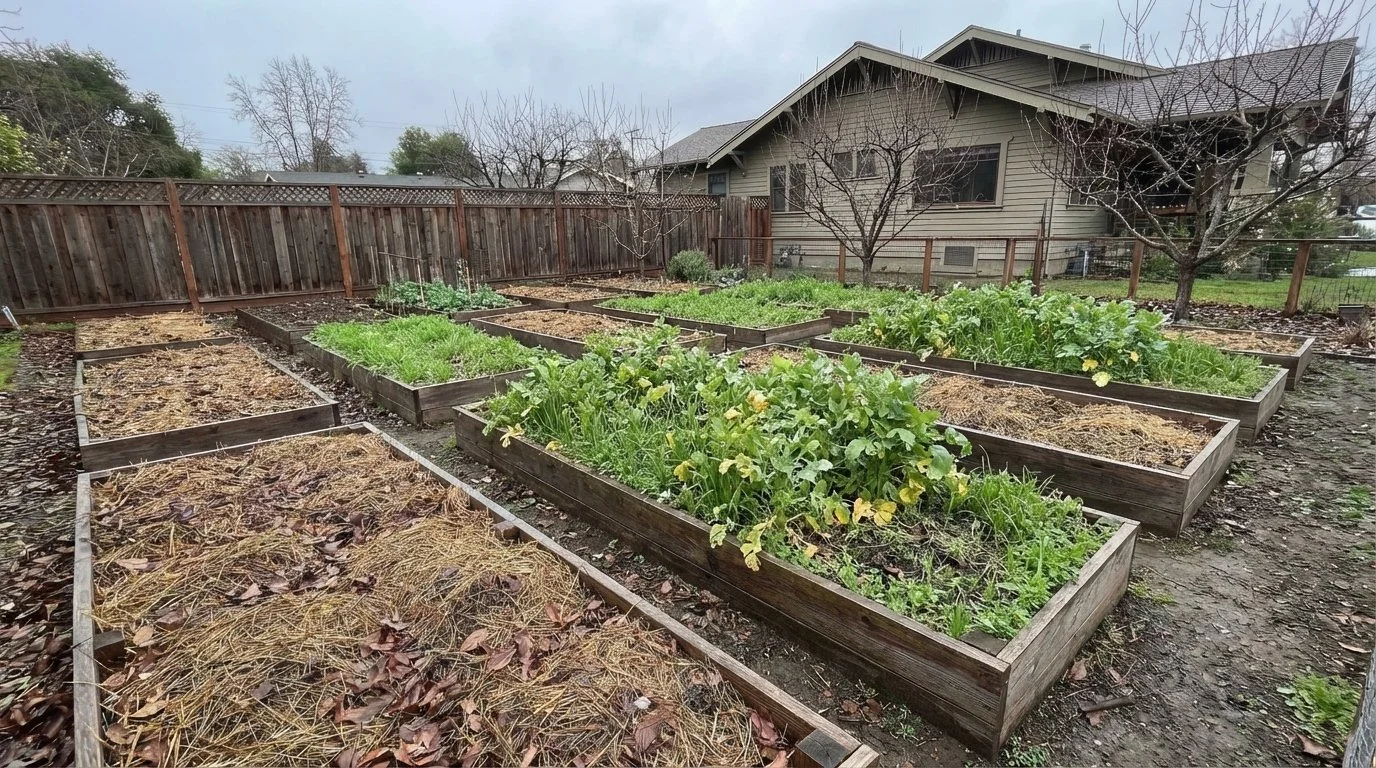
An empty vegetable bed gives you a choice in autumn: cover the soil with mulch, or grow something that will become soil-building material. Winter cover crops take the second route. In Santa Cruz County, sow in autumn while roots still have time to establish before winter slows growth. The UC Sustainable Agriculture Research and Education Program (UC SAREP) explains the benefits and management involved.
Once the last tomato vines come out, rain reaches soil their leaves sheltered all summer. A living cover softens that impact and puts roots through the bed while it rests from vegetables. The reward is not a guaranteed fertilizer dose: it is covered ground and plant material to return to the soil. For another season, see Summer Cover Crops in California.
Choose winter cover crops with spring in mind. A lush stand is only useful if you can end its growth and make room for the vegetables you want next.
What a living cover does for the bed
Look at bare soil after heavy rain. A thin crust, a shallow channel or exposed roots shows where water has been working. Cover crops can reduce that exposure. Mulch is also useful when you cannot spare the time or water for a living crop.
The benefits come from different parts of the plant:
Erosion. Raindrops hit bare soil at significant force. Each drop dislodges tiny soil particles, which wash downhill with surface runoff. Over a single rainy season, a garden bed can lose measurable topsoil to sheet erosion. UC ANR reports that studies in hillside vineyards found soil erosion reduced by 50 to 75 percent under permanent or cut annual cover crops compared with bare soil managed by traditional tillage.
A protected surface. Leaves intercept raindrops and roots hold soil together, helping reduce surface sealing and runoff. That will not undo deep compaction by itself, especially if you keep walking on wet beds.
Nutrients held in plants. Roots take up nutrients that might otherwise move with winter water. Legumes can add nitrogen through compatible bacteria. Some becomes available as their residues decompose; it is not an instant feed.
Less room for weeds. A dense stand competes for light and space. Gaps still need attention, and a cover crop can become a weed if it sheds unwanted seed.
Food for soil life. Roots and residues add organic material. Soil organisms also use compost and other residues, so an empty bed is not biologically lifeless. A cover crop adds another food source.
Start with one bed if you are new to this. A small patch lets you learn how much cutting and residue management you want to take on.
Sow early enough to establish before winter
Buy seed before the bed becomes vacant, then watch weather and soil rather than a single calendar date.
An autumn starting window
October into early November is a useful planning window in many local gardens. Aim for moist, workable soil and enough mild weather for establishment. The first sustained rain varies each year; a shower followed by a long dry spell is not a watering plan.
Why this timing works:
Autumn soil can still be warm enough for establishment before winter slows growth.
Rain may reduce irrigation, provided it continues often enough to support the seedlings.
Roots and leaves have time to develop before heavy storms.
A longer growing period can build more plant material when the crop suits the site.
What If the Rains Come Late?
If the forecast stays dry, decide whether to wait or supply establishment water. One watering is not enough if the emerging seedlings then dry out.
Wait for reliable moisture. Keep seed ready for a suitable wet period. Dry sowing is possible, but birds and uneven showers can reduce success.
Irrigate to establish. Sow if you can keep the seed zone moist through germination. Check it until rain reliably does that job.
If the bed becomes free late
December sowing leaves less growing time before spring. Its usefulness depends on the species, site and next planting date. Expect less plant material from a short, cold window.
For a late opening, ask about quick-establishing, cold-tolerant seed such as cereal rye. If you need the bed again soon, mulch may be more practical.
Prepare the bed without extra digging
Seeds need soil contact, moisture and room. You can provide those without turning the whole bed over.
Step 1: Clear Spent Summer Crops
Remove finished plants and supports that obstruct sowing. Compost healthy residues or chop them for use elsewhere. Handle diseased material according to the problem instead of spreading it over the seedbed. Small roots can remain, but bulky debris should not hold seed above the soil.
Step 2: Remove or Knock Down Weeds
Remove competing weeds, especially those about to shed seed. Cover crops establish more readily on open ground than in an existing mat of weeds.
Step 3: Lightly Rake the Surface
Rake enough to improve seed contact and break large clods. Work from the edge where possible. If soil is sticky and wet, wait instead of compacting it.
Step 4: Broadcast and Cover
Measure the bed and use the supplier's seeding rate. Scatter small seed evenly; place larger beans and peas deliberately. Mixed seed sizes may need separate passes to avoid uneven distribution.
Follow the packet's sowing depth. Tiny clover seed needs much shallower placement than a fava bean. Firm gently without walking over wet soil.
Step 5: Water If Needed
Water gently when rain is not keeping the seed zone moist. Check again during dry spells after establishment; winter does not guarantee adequate water.
Choose a crop for the job you need
Legumes, grasses and mixtures leave different residues. Consider winter light, bed size and the next planting date alongside the soil benefit.
Crimson Clover
Crimson clover adds leafy cover before red flower heads appear. With compatible bacteria it can fix nitrogen, and its flowers provide insect forage. How much nitrogen reaches the next crop depends on growth and residue management.
Give it enough light and time, then watch the plants instead of expecting bloom in a particular local week. A shaded bed can behave very differently from a sunny bed nearby.
Plan cutting before seed matures. UC Marin Master Gardeners describe cutting when roughly 25 to 50 percent of plants are flowering, then incorporating chopped material 3 to 6 weeks before planting. Conditions and residue affect the interval.
Fava Beans
Favas make substantial stems and leaves, giving you plenty of material to handle at the end. They can also provide edible beans. The UC ANR Small Farms Network describes food and green-manure uses.
Decide which harvest matters most. Cutting flowering plants for soil improvement gives up the later bean crop. Waiting for beans occupies the bed longer and leaves tougher stems. Check the variety's height and allow room beside neighboring beds.
For a complete guide to growing favas as both cover crop and food, see Growing Fava Beans: Winter Cover Crop and Food.
Field Peas + Oats (The Classic Mix)
Peas and oats pair a nitrogen-fixing legume with a grass that adds fibrous growth. Oat stems give peas something to climb. Both crops still need to suit the bed.
Oregon State University Extension describes the mixed stands used by experienced organic farmers the author worked with. Legumes and non-legumes, often a grass, combine functions: grasses can establish quickly and reduce erosion, while legume residues can supply nitrogen as they decompose.
Use a labeled mix or the supplier's rate rather than assuming equal weights fit every seed lot. Look for even establishment without crowded clumps.
Cereal Rye
Cereal rye is an option for vigorous cover and fibrous residue. Dense growth can suppress some weeds; it does not eliminate every weed or repair deep compaction by itself.
Extra growth brings extra work. Rye does not fix nitrogen and may regrow after cutting, depending on its stage. Plan how to end growth before sowing, especially if small vegetable seeds will follow.
It may suit a bed with a longer break before vegetables. On a slope, address active erosion as well as choosing cover; scattering seed is not a complete runoff solution.
Bell Beans
Bell beans are small-seeded forms of fava bean used in Central Coast cover-crop mixtures. They can contribute nitrogen and plant material when established and managed well.
Check the seed's stated height. Small seed does not guarantee a short plant. In a raised bed, access for cutting and shade on neighboring vegetables both matter.
Read the winter bed, not just the town name
A sunny slope and a redwood-shaded hollow should not share the same growing expectations just because they have one ZIP code.
Coastal/Fog Belt Gardens (West Side, Natural Bridges, Pleasure Point)
Cold: coastal influence often moderates temperatures, but check the bed's frost history.
Moisture: fog and damp leaves do not show how much water reached the roots. Check the soil.
Light: low winter sun and shade can slow growth.
Choices: consider suitable winter legumes such as favas, bell beans or clover. Sorghum-sudangrass is a warm-season crop, not a winter substitute.
Watch for: slugs around tender seedlings and damp growth.
Inland Gardens (Scotts Valley, San Lorenzo Valley, Bonny Doon)
Cold: valley frost pockets may be colder than nearby slopes.
Light: an open bed may grow strongly while an inland shaded canyon stays slow.
Choices: pea-oat mixtures or cereal rye may fit an open bed. Match cold tolerance and moisture to the site.
Watch for: flowering and coarse stems. Manage according to plant development, not a neighbor's date.
Mountain/Summit Areas (above 1,500 feet)
Cold: exposed sites and frost pockets may see harder freezes. Check variety hardiness.
Establishment: allow roots time to develop before persistent cold.
Choices: cereal rye is cold-tolerant. Peas, vetches and oats differ in hardiness; select seed for the site.
Watch for: delaying sowing to avoid autumn frost also removes establishment time. Seek locally appropriate timing when hard freezes are common.
Work backward from spring planting
Use this sequence, adjusted to rain, crop development and the next use of the bed:
September: choose the seed and bed. Note when you want the space back.
Autumn: clear finished crops and sow with reliable moisture.
After emergence: look for gaps, weeds and damage from slugs or birds before the stand closes.
Winter: check moisture during dry weather and drainage after storms. Low maintenance still needs observation.
Approaching bloom: decide whether to cut for green manure or let an edible crop mature. Compare development with your spring plans.
Before planting: terminate cover crops with enough time for your method and residue management. Check for regrowth.
After cutting: let incorporated material break down. Coarse residues and cold soil can take longer than a few weeks; inspect the bed rather than using a fixed countdown.
At planting: wait for conditions that suit the vegetable. Finishing a cover crop does not make cold soil ready for tomatoes.
Can it share a bed with fall vegetables?
Overseeding, or relay planting, means sowing before the vegetables finish. It can shorten the gap between crops.
Seedlings still need light, soil contact and water. A dense vegetable canopy may leave too little space, and the plants can compete with crops you still want to harvest.
Try a small area with a suitable low-growing clover. Choose a species you can later remove; a persistent groundcover is a different commitment from annual green manure.
Sow only where vegetables leave a real opening. Otherwise wait until harvest, then consider mulch if little establishment time remains.
Avoid making spring harder
Too little growing time. Plan before the bed empties and expect less growth from a late start.
Guessing the rate. Sparse stands leave gaps, but excess seed will not fix poor preparation. Follow the mix directions.
Unwanted seed. Cut before mature seed forms unless you deliberately want volunteers.
Forgetting the finish. Leave time to cut, handle residue and catch regrowth before the next sowing.
Expecting instant fertilizer. Decomposing carbon-rich grass material can temporarily tie up nitrogen. Duration varies; allow breakdown and assess the following crop rather than assuming a fixed interval solves every case.
Wrong inoculant. If suitable bacteria may be absent, use an inoculant matched to the legume. Follow storage and application directions.
Frequently Asked Questions
Can I plant winter cover crops in beds where I am still growing fall vegetables?
Sometimes, where light and space remain. Trial a small area and watch for competition. A seedling struggling beneath a dense canopy will not necessarily take over neatly later.
Do winter cover crops need any fertilizer or amendments?
Do not fertilize automatically. Soil fertility and species needs still matter, and legumes need more than nitrogen. Use soil information to decide on amendments. See our complete guide to cover crops in Santa Cruz.
What if my cover crop gets too tall and unwieldy before I am ready to terminate?
Cutting can reduce height, but regrowth depends on species and stage. If you need the bed soon, choose a method intended to end growth instead of repeatedly trimming it.
Can I use a tarp instead of cutting to terminate winter cover crops?
An opaque tarp can help with no-till termination, but it is not a dependable one-to-three-week shortcut. Species, temperature and stage affect the time. Secure light-blocking material and inspect for living crowns or regrowth before planting.
Will winter cover crops survive a frost in Santa Cruz County?
Cold tolerance varies by crop and variety. Cereal rye is useful for colder sites; oats can be more vulnerable to severe cold. Check local frost conditions and seed guidance. The word winter does not guarantee survival.
How much water do winter cover crops need in a dry year?
Check the root zone during dry spells. Rain may supply enough, but fog and a calendar interval do not tell you whether it has. If water is limited, weigh a living cover against mulch.
Your first season will show how much cover fits the garden and how long clearing takes. Note sowing, flowering and cutting dates. Those observations will help you choose next autumn's crop.
Start with one bed you can spare, and plan its return to vegetables before scattering seed.
For seasonal cover crop reminders and more soil-building strategies, sign up for our free gardening toolkit at Your Garden Toolkit.
