

Cover Crops for Santa Cruz Gardens: Complete Guide to Building Better Soil
Cover Crops for Santa Cruz County Gardens: A Complete Guide to Building Better Soil
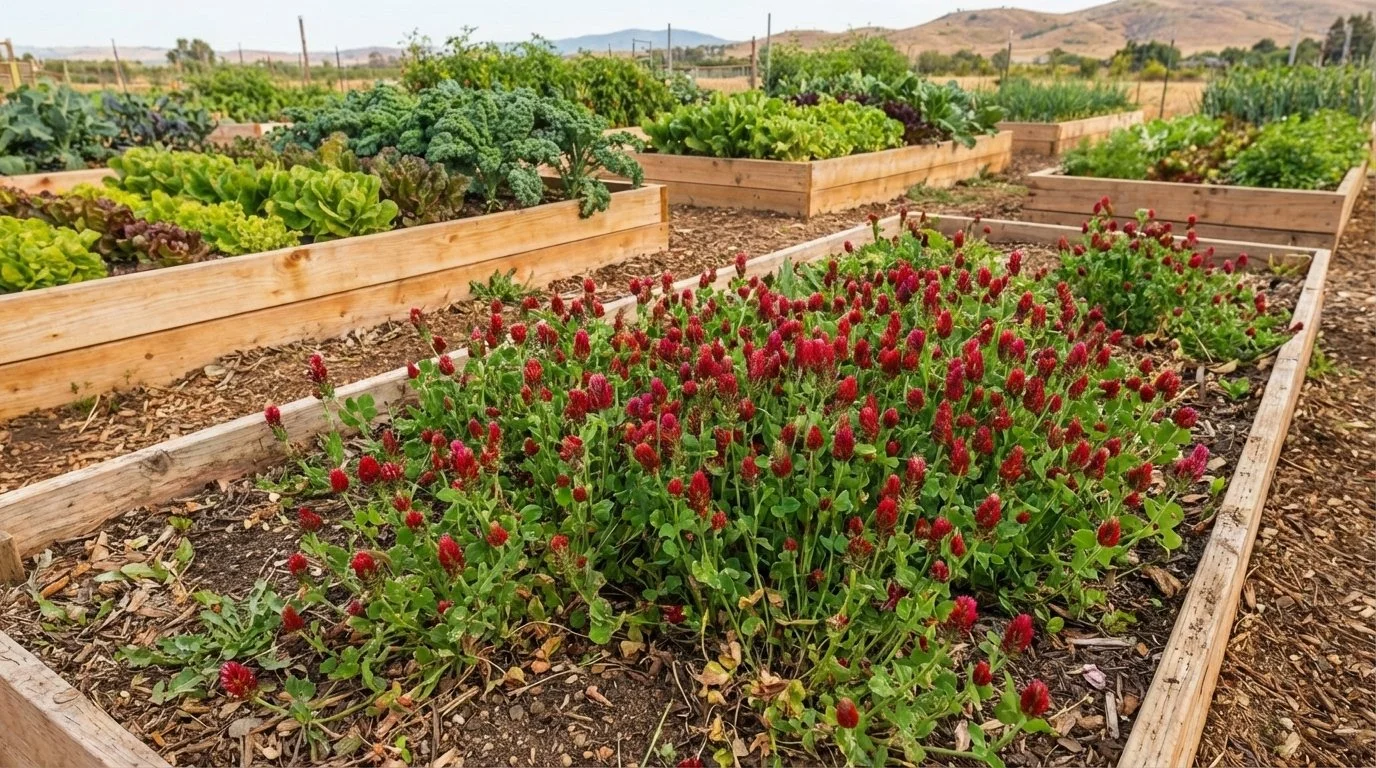
Cover crops are plants grown specifically to improve soil rather than to harvest, and they are one of the most effective tools available to home gardeners in Santa Cruz County. According to the UC Sustainable Agriculture Research and Education Program (UC SAREP), cover crops can add 100 to 200 pounds of plant-available nitrogen per acre annually when legumes are included, while also increasing soil organic matter and reducing erosion.
If you have ever left a garden bed empty over winter and come back in spring to find it compacted, weedy, and washed out, you already know the problem cover crops solve. Here in Santa Cruz County, our mild, wet winters create ideal growing conditions for cover crops. While gardeners in colder climates struggle to get cover crops established before freeze-up, we can sow seeds in October and watch them grow steadily through January and February. That is a genuine advantage, and it is one that too few home gardeners take advantage of.
This guide covers everything you need to know to get started with cover crops in your Santa Cruz garden: what they are, the three main types, why they matter for our specific soils and climate, and how to work them into your garden rotation.
What Exactly Are Cover Crops and Why Should Home Gardeners Care?
Cover crops (sometimes called "green manures") are plants grown not for food but for the benefit they bring to the soil. Farmers have used them for thousands of years. The practice fell out of favor in the mid-20th century as synthetic fertilizers became cheap and widely available, but it has made a strong comeback as growers recognize the limits of chemical-only approaches to soil fertility.
For home gardeners, cover crops serve several purposes at once. They protect bare soil from rain and wind erosion. They suppress weeds by outcompeting them for light and space. They add organic matter when turned into the soil or left on the surface as mulch. And certain types fix atmospheric nitrogen, converting it into a form that plants can use.
The UC Division of Agriculture and Natural Resources (UC ANR) identifies cover cropping as a foundational practice for sustainable soil management in California. Their research shows that even one season of cover cropping can measurably improve soil structure, water infiltration, and biological activity.
In Santa Cruz County, where many of us garden on heavy clay soils near the coast or sandy loams inland, cover crops address our most common soil challenges. Clay soils benefit from the root channels that cover crops create, improving drainage and aeration. Sandy soils benefit from the organic matter that cover crops add, improving water retention.
What Are the Three Main Types of Cover Crops?
Cover crops fall into three broad categories based on what they do best. Most gardeners will eventually use all three types, either individually or in combination.
Nitrogen Fixers (Legumes)
Legumes are the workhorses of the cover crop world. Plants in the pea and bean family form a symbiotic relationship with Rhizobium bacteria in the soil. These bacteria colonize nodules on the plant's roots and convert atmospheric nitrogen (N2) into ammonium (NH4+), a form that plants can absorb.
According to UC SAREP, common legume cover crops can fix between 50 and 200 pounds of nitrogen per acre, depending on species, growing conditions, and how long they grow. For a home garden, even the lower end of that range translates to a meaningful fertility boost.
Popular legume cover crops for Santa Cruz County include:
Crimson clover (Trifolium incarnatum): Beautiful red flowers, excellent nitrogen fixer, attracts beneficial insects
Fava beans (Vicia faba): Heavy biomass, edible beans if you want them, performs well in our cool winters (see our full guide to Growing Fava Beans: Winter Cover Crop and Food)
Field peas (Pisum sativum subsp. arvense): Fast-growing, good in mixes with grains
Bell beans (Vicia faba var. minor): Smaller-seeded fava relative, classic California cover crop
Hairy vetch (Vicia villosa): Vigorous, tolerates poor soils, excellent nitrogen production
White clover (Trifolium repens): Low-growing, perennial option for pathways and living mulch
One important detail: legumes need the right Rhizobium bacteria present in the soil to fix nitrogen effectively. If you have never grown legumes in a particular bed, consider inoculating your seeds with the appropriate rhizobium inoculant before planting. These are inexpensive and widely available at garden centers.
Biomass Builders (Grains and Grasses)
Grains and grasses produce large amounts of organic matter, both above and below ground. Their fibrous root systems are especially valuable for improving soil structure. While they do not fix nitrogen, they excel at scavenging existing soil nutrients (particularly nitrogen) and holding them in plant tissue, preventing them from leaching away during winter rains.
UC SAREP reports that in a Salinas winter trial cereal rye developed extensive fibrous roots reaching about 75 cm, roughly two and a half feet, with older work putting rye roots at 90 to 230 cm, and that rye disked under improves infiltration of irrigation water.
Popular grain and grass cover crops for our area include:
Cereal rye (Secale cereale): The toughest, most versatile grain cover crop, grows in almost any conditions
Annual ryegrass (Lolium multiflorum): Fast establishing, dense root system, good weed suppression
Oats (Avena sativa): Quick to establish, winter-kills in hard freezes (not usually an issue in Santa Cruz), good in mixes
Barley (Hordeum vulgare): Tolerates drier conditions, good for inland gardens
Soil Breakers (Brassicas and Deep-Rooted Species)
The third category includes plants grown specifically for their deep taproots or their ability to break up compacted soil. These are sometimes called "biodrills" because their roots penetrate dense soil layers that other plants cannot reach.
Common soil-breaking cover crops include:
Daikon radish (Raphanus sativus var. longipinnatus): Also called "tillage radish," produces a taproot that can extend 12 inches or more into compacted soil. When the root decomposes, it leaves behind a channel that improves drainage and allows the next crop's roots to follow.
Mustard (Sinapis alba or Brassica juncea): Produces compounds called glucosinolates that, when the plant tissue breaks down, can suppress certain soilborne pathogens and nematodes. This process, sometimes called biofumigation, has been studied extensively by UC Davis researchers.
Phacelia (Phacelia tanacetifolia): Not a brassica, but worth mentioning. It is in its own family (Boraginaceae), which means it does not share disease problems with any common vegetable crops. It is also one of the best pollinator plants you can grow.
Why Are Cover Crops Especially Valuable in Santa Cruz County?
Santa Cruz County has a set of conditions that make cover crops particularly rewarding. Understanding these local factors helps you get the most from your cover cropping efforts.
Our Mild Winters Are a Cover Crop Advantage
In much of the country, cover crops must be planted early enough to establish before the ground freezes, and they stop growing until spring thaw. Here in Santa Cruz, average winter lows stay well above freezing (typically 38 to 45 degrees Fahrenheit along the coast, slightly cooler inland). That means cover crops grow actively through the entire winter season.
A crimson clover planted in mid-October in a Santa Cruz garden will be knee-high by February. A fava bean will be waist-high. That is months of continuous root growth, nutrient cycling, and soil building that gardeners in colder climates simply cannot achieve.
Rain Season Timing Aligns Perfectly
Santa Cruz County receives the vast majority of its annual rainfall between October and April. This is exactly when most cover crops need moisture to establish and grow. You do not need to irrigate winter cover crops here. Just sow before or at the start of the rains, and nature handles the rest.
The timing works beautifully with our garden calendar too. Summer crops (tomatoes, peppers, squash, beans) come out in September or October. You sow cover crops immediately after clearing those beds. The cover crops grow through winter (see our Winter Cover Crops in California guide for species details). You terminate them in late February or March. And by April, your beds are ready for spring planting, enriched with fresh organic matter.
Our Soils Need the Help
Santa Cruz County carries a wide range of soil types, and the USDA soil survey behind UC Davis SoilWeb will show you which series sits under your own address. Both soil types benefit enormously from cover crops, just in different ways.
Heavy clay soils: Cover crop roots create macropores (channels) that improve drainage and aeration. The organic matter added when cover crops decompose helps clay particles aggregate into larger clumps, creating more space for air and water. Over several seasons of cover cropping, gardeners with clay soil often report a dramatic improvement in workability.
Sandy soils: The organic matter from cover crops acts like a sponge, increasing the soil's ability to hold water and nutrients. Sandy soils in Santa Cruz County tend to be low in organic matter, and cover crops are one of the fastest ways to build it up.
If you are not sure what type of soil you have, our guide to Understanding Your Soil: A Guide for Santa Cruz Gardeners can help you figure it out.
How Do Cover Crops Compare to Other Soil-Building Methods?
Cover crops are not the only way to build soil. Compost, mulch, and other organic amendments all contribute to soil health. The question is not which method is best, but how cover crops fit into an overall soil-building strategy.
Cover Crops vs. Compost
Compost is finished, decomposed organic matter. It is stable, it adds nutrients, and it improves soil structure immediately. Cover crops produce fresh organic matter in place, which takes time to decompose but feeds soil biology more actively during the decomposition process.
The two methods complement each other. Compost provides a quick boost of nutrients and organic matter. Cover crops build organic matter over time and provide living root exudates that feed soil microorganisms. Using both is better than relying on either one alone. For more on composting, see our guide to Composting 101: From Kitchen Scraps to Garden Gold.
Cover Crops vs. Mulch
Mulch (wood chips, straw, leaves) sits on the soil surface, suppressing weeds and retaining moisture. Cover crops do some of the same work but also penetrate the soil with roots, fixing nitrogen (if legumes), and creating channels for water and air. Many gardeners use a "chop and drop" approach where terminated cover crop residue becomes surface mulch, giving you benefits of both. Our guide to Back to Eden Gardening: A No-Till, Wood Chip Mulch Method explores mulch-based approaches in detail.
Cover Crops vs. Purchased Amendments
Bagged amendments like blood meal, bone meal, and kelp meal cost money every time you apply them. Cover crop seed is inexpensive (a packet of crimson clover can cover a surprising amount of garden space), and the plants do the work of producing organic matter and cycling nutrients on-site. Over time, regular cover cropping can reduce your need for purchased amendments. For a broader look at soil amendments, see our guide to Soil Amendments for Santa Cruz County Gardens.
What Are the Specific Benefits of Cover Crops for Home Gardens?
Let us look more closely at what cover crops actually do in a home garden setting.
Weed Suppression
A thick stand of cover crop leaves little room for weeds. Oregon State University Extension trials in central Oregon found cover crops competitive against weeds, with radish and Austrian winter pea the strongest spring suppressors, while crimson clover established slowly and its plots were overrun with weeds. For home gardeners who dread the spring weeding marathon, a winter cover crop can make a remarkable difference.
Erosion Prevention
Bare soil erodes. In Santa Cruz County, where winter rains can be heavy and persistent, unprotected garden beds lose topsoil to sheet erosion and runoff. Cover crop roots hold soil in place, and the plant canopy absorbs the impact of raindrops, reducing splash erosion. UC ANR estimates that cover crops can reduce soil erosion by 50 to 90% compared to bare fallow.
Organic Matter Addition
Every cover crop adds organic matter to the soil when it is terminated. According to UC SAREP, a typical winter cover crop in California can produce 3,000 to 8,000 pounds of dry biomass per acre. Even at the lower end, that translates to a meaningful increase in soil organic matter over time. This organic matter feeds earthworms, fungi, bacteria, and other soil organisms that are the foundation of healthy soil.
Improved Soil Structure
Cover crop roots physically break up compacted soil. As roots grow, they push soil particles apart, creating small channels (biopores) that persist even after the root decomposes. Over multiple seasons, this process dramatically improves soil tilth, the crumbly, easy-to-work quality that every gardener wants.
Nutrient Cycling
Grass cover crops are particularly good at "catching" nutrients that might otherwise leach below the root zone during winter rains. The cover crop absorbs these nutrients into its tissue, holding them until the plant is terminated and the tissue decomposes, releasing the nutrients back into the soil in time for the next crop to use them.
Beneficial Insect Habitat
Flowering cover crops (crimson clover, phacelia, buckwheat, mustard) attract and feed pollinators and beneficial predatory insects. A patch of crimson clover in bloom in early spring is a magnet for bees, hoverflies, and parasitic wasps that help control garden pests.
How Do You Get Started with Cover Crops in Santa Cruz?
Getting started with cover crops is straightforward. Here is a basic approach for your first season.
Choose Your Timing
In Santa Cruz County, the primary cover crop season runs from October through February or March. Sow seeds in October, ideally just before or right after the first significant rains. This gives seeds moisture to germinate and allows several months of growth before you need the beds for spring planting.
If you have beds that will not be planted until summer, you can let cover crops grow longer, even into April, which means more biomass and more benefit.
Prepare Your Beds
Cover crop bed preparation is minimal. After removing spent summer crops, rake the bed smooth and scatter seeds evenly across the surface. Lightly rake or tamp seeds into the top half-inch of soil. For larger seeds like fava beans, you can poke them into the soil about an inch deep.
No need for perfect rows or precise spacing. Cover crops are forgiving. A slightly thick stand is better than a thin one when it comes to weed suppression and soil coverage.
Select Your First Cover Crop
If you are new to cover crops, start with one of these beginner-friendly options (and see our Best Cover Crops for Home Gardens in California for a deeper comparison):
Crimson clover: Easy to grow, beautiful, fixes nitrogen. Hard to go wrong.
Fava beans: Big seeds that are easy to handle, impressive growth, dual-purpose (eat some, compost some).
A simple mix of field peas and oats: The classic beginner blend. Peas fix nitrogen, oats add biomass and structure. They support each other physically (peas climb the oats).
Water (or Don't)
If you sow before the rains arrive, give beds a light watering to start germination. Once the rainy season is underway, you should not need to irrigate at all. One of the great things about winter cover crops in Santa Cruz is that they are essentially zero-maintenance once established.
Terminate at the Right Time
This is the step that trips up most beginners. You need to cut or otherwise terminate your cover crop before it sets seed and before you need the bed for planting. For most winter cover crops in Santa Cruz, this means sometime in late February through early April, depending on the crop and your spring planting schedule.
Cut the cover crop at ground level, leave the roots in the soil, and either lay the cut material on the surface as mulch or lightly incorporate it into the top few inches of soil. Wait two to four weeks before planting into the bed to allow some initial decomposition.
For detailed guidance on termination, see our article on How to Terminate Cover Crops.
How Do Cover Crops Fit into a Santa Cruz Garden Calendar?
Here is a simple annual timeline that shows how cover crops integrate with a typical Santa Cruz vegetable garden:
September to October: Summer crops finish. Clear beds, broadcast cover crop seed, rake in lightly. Time sowing with first rains if possible.
November to February: Cover crops grow through winter with no irrigation needed. Enjoy the green beds and know that your soil is being improved.
Late February to March: Terminate cover crops (chop and drop, mow, or tarp). Leave residue on surface or lightly incorporate.
March to April: Wait two to four weeks for initial decomposition. Prepare beds for spring planting.
April to September: Grow your food crops in soil that has been enriched by cover crops.
This cycle repeats each year. Over time, the cumulative effect of annual cover cropping is transformative. Gardeners who commit to the practice typically report noticeably better soil within two to three seasons.
What If You Only Have Small Raised Beds?
Cover crops are not just for large in-ground gardens. They work well in raised beds too. In fact, raised beds benefit particularly because they tend to lose organic matter faster than in-ground beds (more exposed surface area, better drainage means faster decomposition).
In a 4x8-foot raised bed, a handful of crimson clover seed or a dozen fava bean plants is all you need. The investment is minimal: a few dollars in seed, a few minutes of sowing, and the payoff in soil improvement is real.
One tip for raised bed gardeners: if you use a mix, lean heavier on the legume component. Raised beds are already relatively loose and well-structured, so you need the nitrogen-fixing benefit more than the root-breaking benefit.
Frequently Asked Questions
Do cover crops attract pests or create problems in the garden?
Cover crops occasionally harbor slugs or provide cover for voles, especially in dense stands near the coast where moisture is high. These issues are manageable. Terminate the cover crop a few weeks before planting to let the residue dry down and discourage slugs. On the other hand, flowering cover crops attract beneficial insects (ladybugs, hoverflies, parasitic wasps) that help control pest populations. The net effect on pest management is typically positive.
Can I grow cover crops in containers or pots?
You can, but the benefits are modest in very small containers. In large containers (15 gallons or more) or half-barrel planters, a cover crop can meaningfully improve the potting mix over time. Crimson clover and field peas are good choices for containers because they are compact and fix nitrogen. For smaller pots, you are better off simply top-dressing with compost.
How much does cover crop seed cost for a home garden?
Cover crop seed is remarkably affordable. A pound of crimson clover seed (enough to cover roughly 500 square feet at home garden seeding rates) costs between $5 and $10 at most garden centers. Fava beans and field peas are similarly inexpensive. For a typical backyard garden, your annual cover crop seed investment is likely under $20. Local sources in the Santa Cruz area include feed stores and nurseries that carry bulk seed.
Will cover crops reseed themselves if I let them go to seed?
Yes, and this can be either a benefit or a nuisance depending on the species and your garden plans. Crimson clover, annual ryegrass, and mustard will readily self-sow. If you want this, let a portion of the stand go to seed before terminating. If you do not want volunteer cover crops competing with your vegetables, terminate before seed set. In Santa Cruz's mild climate, self-sown cover crops can persist year-round, so be intentional about this choice.
Is there a wrong time to plant cover crops in Santa Cruz County?
The ideal window is October through early November for winter cover crops, timed with the start of the rainy season. You can push into late November, but growth will be reduced. For summer cover crops like buckwheat or cowpeas, plant after the last frost risk (mid-March in most of Santa Cruz) and when soil temperatures reach at least 60 degrees Fahrenheit. The only truly wrong time is the middle of summer without irrigation or the middle of a dry spell without watering.
How do cover crops work with no-till gardening methods?
Cover crops and no-till methods are natural partners. Instead of tilling in your cover crop, you cut it at the soil surface and leave the roots intact. The cut material becomes surface mulch, and the roots decompose in place, creating channels for water and air. This approach preserves soil structure, protects fungal networks, and avoids disturbing earthworms and other soil life. Our guide to Back to Eden Gardening: A No-Till, Wood Chip Mulch Method and Hugelkultur in Santa Cruz County explore related no-till approaches.
Cover crops are one of the best investments you can make in your garden's long-term health. The cost is low, the effort is minimal, and the returns compound year after year. Whether you garden on heavy coastal clay or light sandy loam, whether you have a large plot or a few raised beds, cover crops can make your soil better.
Ready to learn more about building healthy soil? Sign up for our free gardening newsletter at Your Garden Toolkit for seasonal reminders, planting guides, and soil-building tips tailored to Santa Cruz County.
