

When Should I Prune Fruit Trees in Santa Cruz?
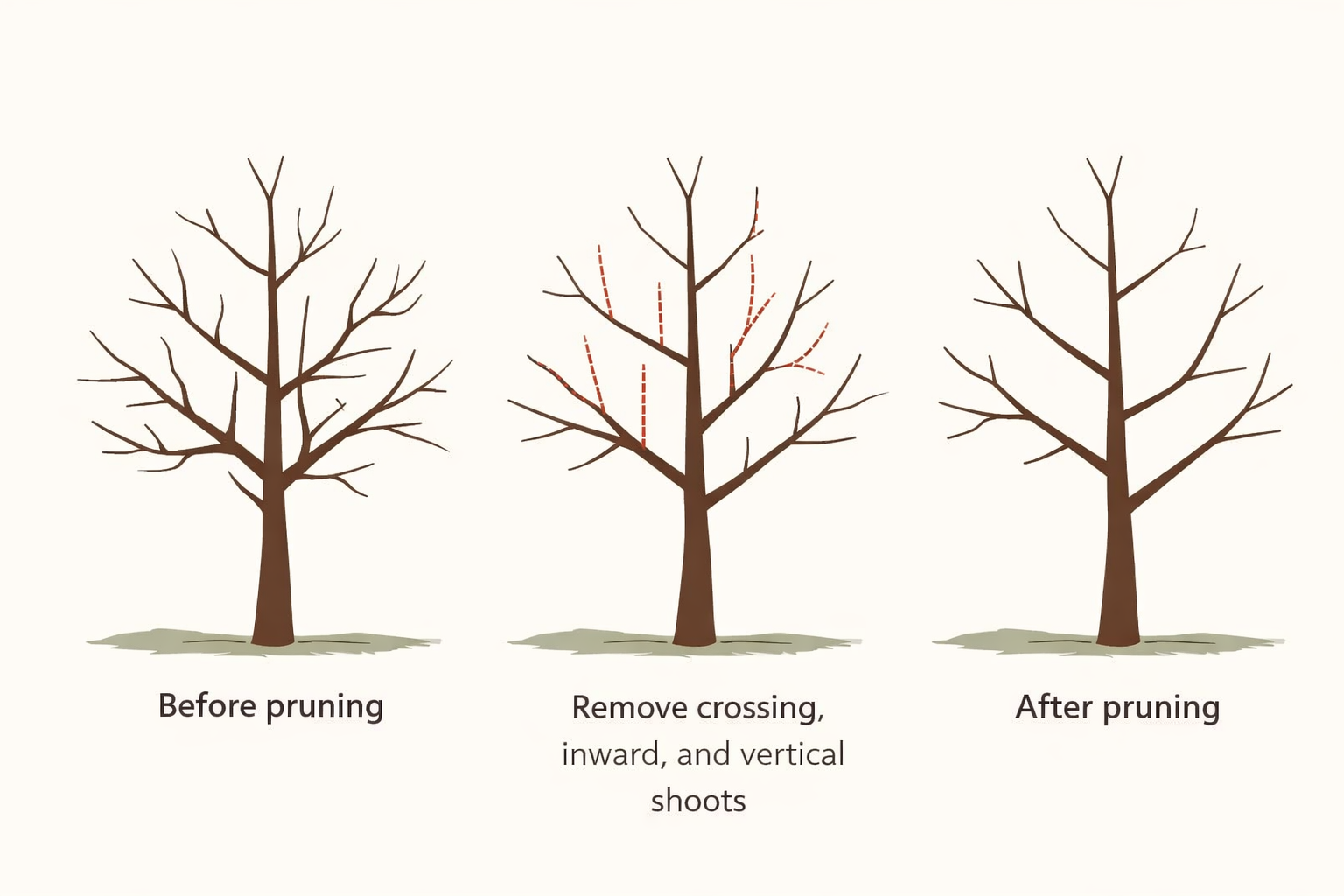
Prune deciduous fruit trees while they are fully dormant, which in Santa Cruz County means late January through mid-February for most varieties.
The goal is to prune after the coldest weather has passed but before the tree breaks dormancy and starts pushing new growth. Pruning too early (December) can expose fresh cuts to freeze damage on cold nights in areas like Scotts Valley or the San Lorenzo Valley. Pruning too late (March) means you're cutting off energy the tree has already invested in new buds. The UC Agriculture and Natural Resources pruning guide recommends pruning stone fruit (peaches, plums, cherries) in late January and pome fruit (apples, pears) in February, since stone fruit breaks dormancy earlier.
The exception is apricots. Prune apricots in late summer, after harvest, to reduce the risk of Eutypa dieback, a fungal disease that enters through wet-season pruning cuts. This is especially important in Santa Cruz's damp winters.
For citrus and other evergreen fruit trees, light pruning can happen almost any time, but avoid heavy cuts during winter when the tree is growing slowly. Wait until after the spring flush for major shaping.
When you prune, focus on removing dead wood, crossing branches, and anything growing straight up (water sprouts). Open the canopy to improve airflow and light penetration, which reduces disease pressure in our foggy climate. If your trees are showing other issues beyond pruning needs, our fruit tree troubleshooting guide covers the most common problems and fixes.
This week: Sharpen your pruning tools and disinfect them with a 10% bleach solution or isopropyl alcohol. Clean cuts heal faster and spread less disease.
Our free Seasonal Tasks Checklist includes a month-by-month pruning schedule for common Santa Cruz fruit trees. For more detail, see our guide to growing figs in Santa Cruz, or explore the full range of pruning and training techniques for Santa Cruz fruit trees.
Keep Reading
Frequently Asked Questions
When is the best time to prune deciduous fruit trees in Santa Cruz?
Prune during dormancy, generally late January through mid-February for most varieties, after the harshest weather but before new growth begins. Stone fruit like peaches and plums can be done in late January, while apples and pears are better in February.
Are apricots pruned at the same time as other fruit trees?
No. Apricots are the exception and should be pruned in late summer after harvest to prevent Eutypa dieback, a fungal disease. Pruning them in the wet dormant season raises the risk of infection.
How should I prepare my tools before pruning?
Sharpen your pruning tools and disinfect them with a 10 percent bleach solution or isopropyl alcohol. Clean, sharp cuts heal faster and reduce the spread of disease, which matters in our foggy climate.
