

When Should I Plant Bare-Root Fruit Trees in Santa Cruz?
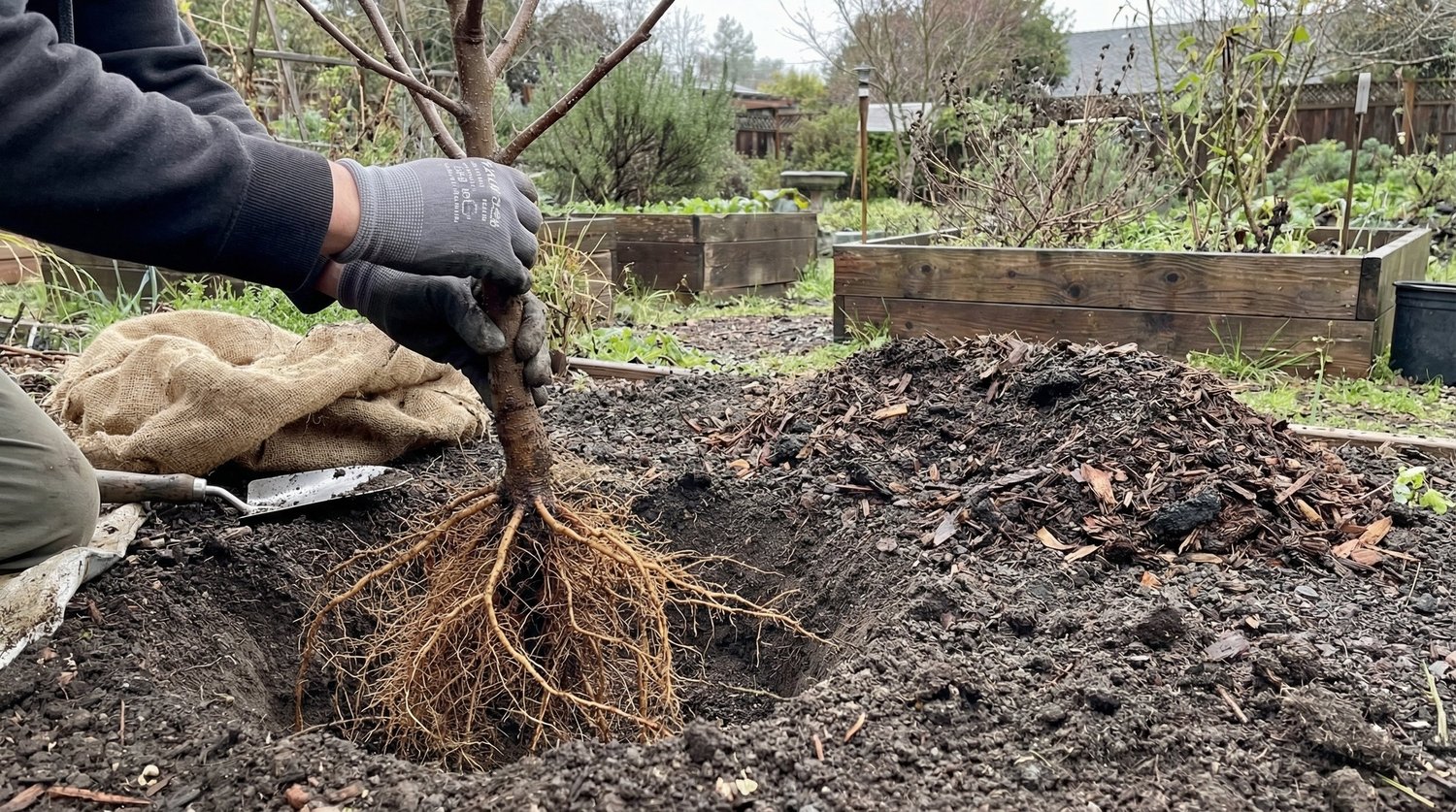
Bare-root fruit trees are dug and sold without any soil around their roots during winter dormancy. That makes them less expensive and easier to establish than potted trees, but it also gives you a short window to get them planted. In Santa Cruz County, that window runs roughly from January through February, sometimes stretching into early March in a cool year.
The bare-root window in Santa Cruz
Local nurseries receive bare-root stock in early winter and sell it while the trees are leafless and dormant. Aim to plant within a few days of buying, during a stretch when the soil is moist but not soggy. Our coastal gardens stay mild all winter, so the limiting factor here is usually wet ground, not cold. Wait for a dry spell rather than planting into mud.
The county spans several microclimates, and they shape your variety choice more than your timing. Along the coast, winters are mild and chill hours are low, so look for low-chill varieties (apples, peaches, and plums bred for roughly 300 to 500 chill hours). In the inland valleys and up in the mountains you get more winter chill and a wider range of options. Pick varieties matched to your spot, then plant them all in the same dormant window.
Why dormant-season planting works
A dormant tree is not pushing leaves or fruit, so it can put its energy into growing roots. Planting now lets the root system settle in and begin establishing before the warmth of spring triggers top growth. The payoff is less transplant shock and a stronger first season than you tend to get from a tree planted while it is actively growing later in the year.
How to choose healthy bare-root stock
- Roots that are firm, moist, and well spread out, not slimy, blackened, or dried up.
- A trunk and branches with plump, dormant buds and no sign of leafing out yet.
- A clean, healed graft union and smooth bark with no cracks or oozing.
- A balanced shape with three to five well-spaced branches if you want a head start on structure.
If you cannot plant the same day you bring a tree home, keep the roots covered and moist (a bucket of damp sawdust, or a tarp over the roots) and out of the sun until you can.
How to plant a bare-root tree
- Soak the roots in a bucket of water for two to six hours before planting.
- Dig a hole as wide as the spread-out roots and only as deep as the root system. Do not dig deep and refill, because firm soil under the tree keeps it from settling too low.
- Build a small cone of native soil in the bottom of the hole and drape the roots over it so they fan out naturally.
- Set the tree so the graft union sits two to three inches above the finished soil line, and the old soil mark on the trunk is at grade.
- Backfill with the native soil you dug out. Skip heavy amendments, since you want roots to grow into your real ground rather than stall in a pocket of soft mix.
- Water deeply to settle the soil, then spread two to three inches of mulch, kept a few inches back from the trunk.
After planting
Through the first dry season, water deeply but not too often, so the roots chase moisture downward. Hold off on fertilizer until the tree has leafed out and is clearly growing. Stake only if the site is windy or the tree cannot stand on its own, and remove the stake after the first year so the trunk can build its own strength.
Not sure what to plant across the rest of your year? Our California planting calendar lays out month-by-month timing for our local zones.
Frequently Asked Questions
When is the best time to plant bare-root fruit trees in Santa Cruz?
January through February, while the trees are fully dormant and local nurseries have bare-root stock in. Plant as soon as the soil is workable and not waterlogged.
How long can a bare-root tree wait before I plant it?
A few days at most. If you cannot plant right away, keep the roots moist and shaded by heeling the tree into damp soil or a bucket of wet sawdust until you can get it in the ground.
Do I need more than one tree to get fruit?
Some fruit trees are self-fertile, but many apples, pears, plums, and sweet cherries set a better crop with a compatible second variety nearby. Check the variety tag before you buy so you know whether you need a pollination partner.
How much should I water a newly planted bare-root tree?
Water deeply at planting to settle the soil, then water deeply but infrequently through the first dry season so the roots are encouraged to grow downward rather than staying shallow.
