

12 Vegetables That Thrive in Partial Shade in California
Some links in this guide are affiliate links. If you buy through them, we may earn a small commission at no extra cost to you. Read our full disclosure.
12 Vegetables That Thrive in Partial Shade in California
Many leafy greens and root vegetables can still produce well with as little as 3 to 4 hours of direct sunlight per day, making them worth trying in California gardens with tree cover, fences, or buildings that block full sun. If your yard does not get the standard 6 to 8 hours of sun, you can still grow a surprising amount of food.
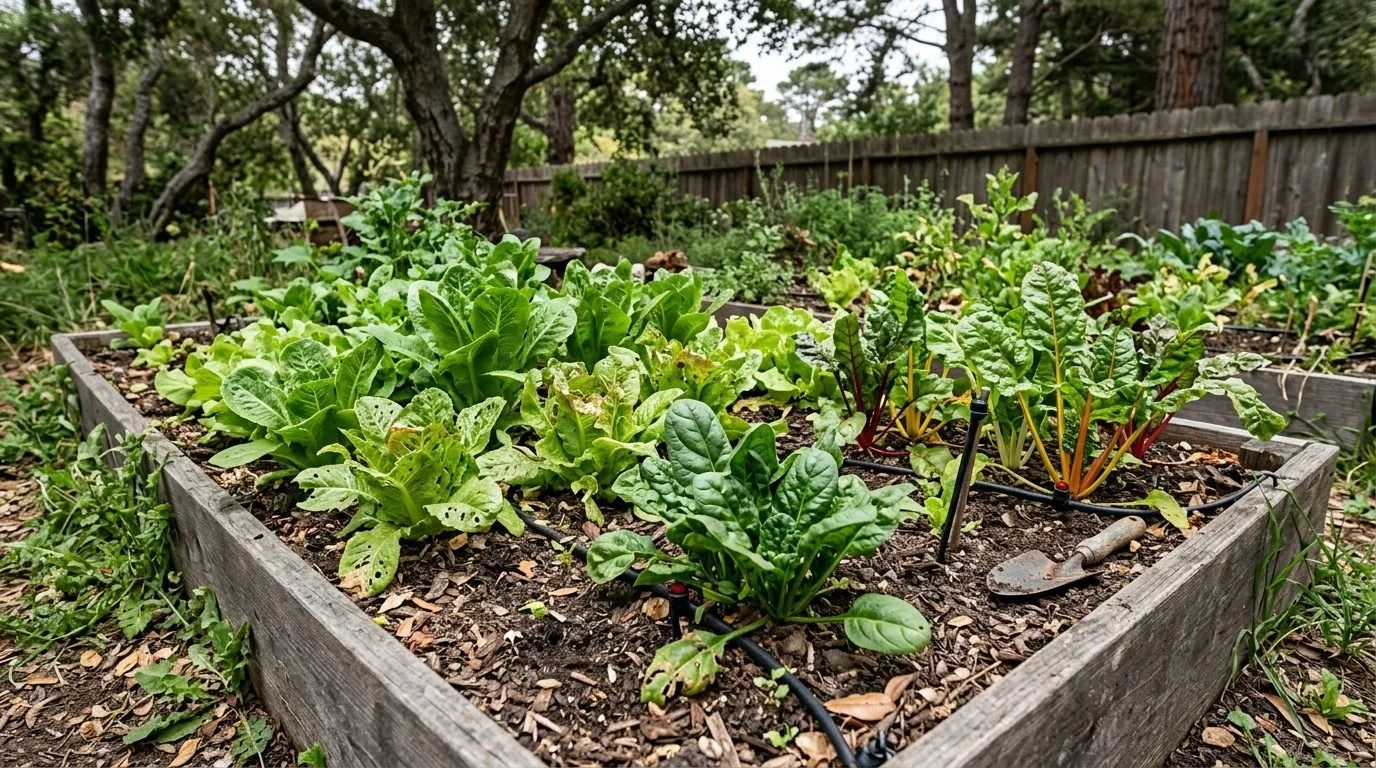
Here in Santa Cruz, partial shade is common. Coastal fog can block direct sun for hours on summer mornings. Mature redwoods, oaks, and fruit trees cast long shadows. North-facing slopes and fenced yards limit exposure. I have grown productive gardens in all these conditions, and these 12 vegetables are the ones that consistently perform well without full sun.
What Counts as Partial Shade?
Before the list, it helps to define terms. UC Master Gardeners define full sun as six or more hours of direct sunlight per day, with partial sun and partial shade generally falling in the two to six hour range. Dappled shade (filtered light through tree canopy) also counts, though it is generally less productive than 3 to 4 hours of unobstructed direct sun.
Full shade (less than 3 hours of direct sun) is challenging for most edible plants. If your space gets fewer than 3 hours, focus on the items at the top of this list, which are the most shade-tolerant. You can also improve conditions by pruning lower tree branches, using reflective mulch, or growing in containers that you can move to follow the sun.
1. Lettuce (3-4 Hours of Sun)
Lettuce is the king of shade-tolerant vegetables. It not only survives in partial shade but actually prefers it during California's warmer months. UC ANR notes that lettuce grown in partial shade is less likely to bolt (go to seed prematurely), which means a longer harvest window and less bitter leaves.
Best varieties for shade: 'Black Seeded Simpson' is a loose-leaf type that thrives in low light. 'Buttercrunch' forms tender heads even with limited sun. Any mesclun or baby lettuce mix performs well in shade when harvested young.
Planting tip: In partial shade, lettuce grows more slowly than in full sun, so allow an extra week or two before expecting harvest. Water consistently, as shaded areas can stay moist longer but may also have more root competition from nearby trees. In Santa Cruz, I grow lettuce under the east side of my fruit trees and harvest it nearly year-round.
Why it thrives in shade: Lettuce evolved as an understory plant. Strong, direct sun actually causes it to bolt and turn bitter. Partial shade replicates its preferred conditions. growing lettuce in California
2. Spinach (3-4 Hours of Sun)
Spinach is even more shade-tolerant than lettuce and handles cool, foggy conditions beautifully. Spinach is a cool-season crop that grows fastest around 60 to 65 degrees F and benefits from afternoon shade in all but the coolest California coastal zones. It needs just 3 to 4 hours of direct sun to produce well.
Best varieties for shade: 'Bloomsdale Long Standing' is a classic savoy type that handles partial shade and is slow to bolt. 'Space' is a smooth-leaf variety with excellent disease resistance. 'Giant Noble' produces large leaves even in lower light.
Planting tip: Spinach bolts quickly in heat and long days, so shade actually extends your growing season. Plant in fall or early spring for best results. In coastal California, a shaded spot can support spinach from October through May. Direct sow seeds half an inch deep and thin to 4 inches apart.
Why it thrives in shade: Like lettuce, spinach is a cool-season crop that suffers in heat and strong sun. Partial shade keeps soil and air temperatures lower, which is exactly what spinach wants. Foggy coastal gardens are ideal spinach territory. our complete guide to growing greens in California
3. Arugula (3-4 Hours of Sun)
Arugula grows quickly in partial shade and produces leaves with a more complex, peppery flavor than when grown in full sun. Shade-grown arugula is less likely to bolt, which lengthens the harvest window. Flea beetles are a common pest on arugula in California, so watch for them in any light.
Best varieties for shade: 'Sylvetta' (wild arugula) is naturally adapted to lower light and has a longer harvest window than cultivated types. 'Astro' is fast-growing and mild. Both perform well with limited sun.
Planting tip: Scatter seeds on the soil surface in shaded areas and press lightly. Arugula is one of the fastest greens to germinate (3 to 7 days) and can be harvested as baby greens in 3 weeks. Succession plant every 2 weeks for continuous harvest. In shade, arugula may produce usable leaves for 6 to 8 weeks before bolting, compared to 3 to 4 weeks in full sun.
Why it thrives in shade: Arugula evolved in Mediterranean climates where it often grows in the shelter of larger plants. California's partial shade mimics those conditions naturally.
4. Swiss Chard (4-5 Hours of Sun)
Swiss chard is remarkably adaptable and produces well in conditions that would stress most vegetables. Chard tolerates a wider range of light levels than almost any other common vegetable, though it does grow more slowly with less sun. It produces well with about 4 to 5 hours of direct light.
Best varieties for shade: 'Bright Lights' produces colorful stems even in lower light. 'Fordhook Giant' has the largest leaves and makes the most of available light. Both varieties are productive for 6 months or longer with regular harvesting.
Planting tip: In partial shade, give chard a bit more space (8 to 10 inches between plants) to reduce competition. Harvest outer leaves regularly to encourage new growth. Chard in shade tends to produce thinner, more tender leaves compared to the thick, crinkly leaves of sun-grown plants. Many people actually prefer the texture.
Why it thrives in shade: Chard is related to beets and evolved in Mediterranean conditions with variable light. Its large leaves are efficient at capturing available light, and it compensates for lower light by growing over a longer season.
5. Kale (4-5 Hours of Sun)
Kale produces well in partial shade, though the leaves may be thinner and more tender than those grown in full sun. Kale tolerates partial shade and produces reliably with about 4 to 5 hours of direct sun, making it a solid choice for partially shaded California gardens.
Best varieties for shade: 'Red Russian' produces beautifully tender leaves in lower light. 'Lacinato' (dinosaur kale) handles partial shade well and maintains its distinctive bumpy texture. 'Winterbor' is cold-hardy and shade-adaptable.
Planting tip: In partial shade, plant kale in fall for a winter harvest when the sun is lower and may reach areas that are fully shaded in summer. The angle of winter sun can change your garden's shade patterns dramatically. Space plants 15 to 18 inches apart to maximize light exposure for each one.
Why it thrives in shade: Kale is a brassica, a family that generally tolerates lower light levels. In partial shade, kale grows more slowly but produces continuously over many months, often yielding as much total harvest as a shorter-lived full-sun planting.
6. Cilantro (3-4 Hours of Sun)
Cilantro is one of the best herbs for partial shade because shade dramatically extends its harvest life. Cilantro bolts quickly in full sun and warm temperatures. In partial shade, especially in foggy coastal gardens, a single planting can produce usable leaves for 2 to 3 months instead of the typical 4 to 6 weeks.
Best varieties for shade: 'Santo' is already slow-bolting in full sun, and in shade it lasts even longer. 'Calypso' is another bolt-resistant variety that does well in lower light.
Planting tip: Direct sow seeds half an inch deep in a shaded area with morning sun (if possible). Afternoon shade is more valuable than morning shade for preventing bolting. Succession plant every 3 weeks. In Santa Cruz, I grow cilantro on the east side of my garden fence, where it gets morning sun and afternoon shade, and it produces from October through May without bolting. our guide to growing herbs
Why it thrives in shade: Cilantro bolts in response to heat and long days. Shade reduces both triggers, keeping the plant in its leafy, productive phase longer.
7. Parsley (4-5 Hours of Sun)
Parsley is a biennial herb that produces well in partial shade for up to a year before bolting. Parsley is one of the most shade-tolerant herbs, producing well with about 4 to 5 hours of direct sun. It grows more slowly in shade but often produces more tender, flavorful leaves.
Best varieties for shade: Italian flat-leaf parsley is more productive and flavorful than curly varieties in any light condition. 'Giant of Italy' has the largest leaves and makes the most of limited sun.
Planting tip: Parsley seeds are slow to germinate (14 to 21 days), so be patient. Soak seeds overnight before planting to speed things up. Once established, parsley is extremely low-maintenance in shade. Harvest outer stems regularly. A single plant can produce for 8 to 12 months before going to seed.
Why it thrives in shade: Parsley is native to the Mediterranean, where it often grows in rocky, partially shaded locations. It handles low light better than most culinary herbs.
8. Green Onions and Scallions (3-4 Hours of Sun)
Green onions are among the most shade-tolerant alliums. While bulb onions need long days and full sun to form large bulbs, green onions can produce usable tops with as little as 3 hours of direct sun. They are one of the easiest crops to grow in limited-light conditions.
Best varieties for shade: 'Evergreen White Bunching' is a classic scallion that does not form bulbs and produces well in shade. 'Red Baron' adds color and tolerates low light. Any variety labeled "bunching onion" is a good choice for shade.
Planting tip: Plant seeds a quarter inch deep and a half inch apart, or transplant grocery store green onion roots (they regrow easily). In shade, green onions grow more slowly but are less likely to bolt. They can be harvested at any size by snipping tops as needed, making them one of the most flexible shade crops. Plant year-round in coastal California.
Why it thrives in shade: You are harvesting leaves, not bulbs. Leaf production requires less solar energy than bulb formation, which is why scallions succeed where bulb onions would fail.
9. Radishes (4-5 Hours of Sun)
Radishes can produce edible roots with 4 to 5 hours of sun, though they will be smaller than those grown in full sun. Shade-grown radishes tend to develop more leaf growth relative to root size, but the roots are still perfectly edible and often milder in flavor.
Best varieties for shade: 'Cherry Belle' is reliable in lower light. 'French Breakfast' is mild and elongated, which means it develops decent root size even with less sun. Avoid large daikon types in shade, as they need more energy to produce their big roots.
Planting tip: In partial shade, allow 5 to 10 extra days for maturity compared to full-sun radishes. Thin carefully to give each root maximum access to available light and nutrients. The greens are edible too, so shade-grown radishes with proportionally larger tops are a bonus, not a failure.
Why it thrives in shade: Radishes are fast-growing cool-season crops that bolt in heat and strong sun. Partial shade keeps conditions cooler and extends the growing window, especially in California's inland zones.
10. Peas (4-5 Hours of Sun)
Peas are a cool-season crop that can produce in 4 to 5 hours of direct sun. As a cool-season crop, peas grow best at average temperatures of 55 to 75 degrees F, and partial shade helps maintain those temperatures in California gardens that would otherwise get too warm for good pea production.
Best varieties for shade: 'Sugar Ann' is a compact bush type that does not need a tall trellis and produces well in lower light. 'Oregon Sugar Pod' is a flat snow pea that is productive in partial shade. 'Cascadia' snap peas have good disease resistance for damper, shadier conditions.
Planting tip: In shade, peas may stretch toward the light more than usual, so a trellis or support is especially important. Plant them where they get morning sun if possible, as morning light is more beneficial for cool-season crops than hot afternoon sun. In Santa Cruz, I grow peas along the north side of my bean trellis, where they get 4 to 5 hours of morning and midday sun.
Why it thrives in shade: Peas are adapted to cool, mild conditions. Excessive sun and heat actually reduces their productivity. Partial shade in California simulates the overcast conditions peas experience in their native habitat. our guide to growing beans and peas
11. Mint (3-4 Hours of Sun)
Mint is one of the most shade-tolerant edible plants you can grow. It thrives with just 3 to 4 hours of direct sun and actually produces more aromatic, tender leaves in partial shade. Mint's bigger challenge is controlling its aggressive spread, not getting it to grow.
Best varieties for shade: Spearmint is the most shade-tolerant variety. Peppermint handles low light well and has the strongest flavor. Chocolate mint is vigorous in shade and has a distinctive aroma.
Planting tip: Always grow mint in a container, even in partial shade. Its underground runners spread aggressively and will take over garden beds. A 5-gallon pot in a shaded corner will produce more mint than most families can use. Harvest regularly to keep the plant bushy and productive. Cut stems back to 2 inches above the soil when they start to look leggy.
Why it thrives in shade: Mint is native to stream banks and woodland edges where it naturally grows in dappled or partial shade. Full sun in California often causes mint to wilt and develop dry, less flavorful leaves.
12. Beets (4-5 Hours of Sun)
Beets can produce edible roots and greens with 4 to 5 hours of sun, though roots will be smaller than those grown in full sun. Beet greens are nutritious and tasty, so even if shade limits root development, the tops add real value to the harvest.
Best varieties for shade: 'Bull's Blood' is grown primarily for its stunning dark red leaves and handles shade well. 'Detroit Dark Red' produces decent roots even in lower light. 'Golden' beets are mild-flavored and more forgiving of imperfect conditions.
Planting tip: In partial shade, space beets a bit farther apart (4 to 5 inches) to reduce competition. Soak seeds for a few hours before planting to speed germination. Expect roots to reach 1.5 to 2 inches in diameter rather than the 3 inches typical of full-sun beets. Harvest and eat the greens regularly, either as baby greens or cooked like chard. growing root vegetables in California
Why it thrives in shade: Beets are related to chard and share its ability to grow in moderate light. The greens are productive even in heavy shade, making beets a dual-purpose crop for low-light gardens.
How Can I Maximize Production in a Shady California Garden?
Even in partial shade, there are strategies to boost your harvest. UC Cooperative Extension recommends several approaches for low-light gardens.
First, maximize the light you have. Prune lower branches on trees that shade your garden. Paint fences and walls white or light colors to reflect light. Use light-colored mulch (straw rather than dark bark) to bounce light up to plant leaves.
Second, use containers. Move pots to follow the sun throughout the day or through the seasons. A lettuce pot that sits in morning sun and afternoon shade will outproduce the same lettuce planted in a permanently shaded bed.
Third, adjust your expectations. Shade-grown vegetables take longer to mature and produce smaller harvests than full-sun crops. But they still produce real, nutritious food. A garden that gives you fresh salad greens 10 months of the year is a success, even if each harvest is modest.
Can I Grow Tomatoes or Peppers in Partial Shade?
Tomatoes and peppers need at least 6 to 8 hours of direct sun to produce fruit reliably. Fruiting vegetables (tomatoes, peppers, squash, eggplant) put their energy into producing fruit, which requires significantly more sunlight than leaf production.
If your sunniest spot gets 5 to 6 hours of direct sun, you might get a modest tomato harvest from a cherry variety like 'Sun Gold,' but yields will be much lower than in full sun. For anything less than 5 hours, stick with the leafy greens and root vegetables on this list. Your energy is better spent growing crops that match your conditions.
Does California's Coastal Fog Count as Shade?
Fog is a form of shade, but it behaves differently than tree shade or building shadow. According to UC Cooperative Extension, fog diffuses sunlight rather than blocking it entirely, which means plants still receive light, just at reduced intensity. Most of the vegetables on this list perform very well in foggy conditions.
In Santa Cruz and other fog-belt communities, morning fog that burns off by noon is common from May through September. This gives most gardens 4 to 6 hours of direct afternoon sun, which is enough for everything on this list and even some sun-loving crops if you choose the right varieties. Cool-season crops like lettuce, spinach, and peas actually thrive in fog because it keeps temperatures moderate and adds moisture to the air. coastal California gardening
Frequently Asked Questions
How many hours of sun do vegetables need at minimum?
According to UC Agriculture and Natural Resources, leafy vegetables like lettuce, spinach, and arugula can produce with as little as 3 hours of direct sunlight per day. Root vegetables like radishes, beets, and carrots need 4 to 5 hours. Fruiting vegetables like tomatoes, peppers, and squash need 6 to 8 hours minimum. In California's coastal fog belt, bright overcast conditions can partially substitute for direct sun.
Will vegetables grown in shade taste different?
Shade-grown vegetables often taste milder and more tender than those grown in full sun. According to UC Cooperative Extension, reduced sunlight means less photosynthesis, which can result in lower sugar content in some crops. Lettuce, spinach, and arugula are actually less bitter when shade-grown. Root vegetables may be smaller but often have a more delicate flavor. Many gardeners prefer the taste of shade-grown greens.
Can I grow vegetables under fruit trees in California?
Yes, growing vegetables under fruit trees is a form of food forest or agroforestry gardening. UC ANR research supports this approach for shade-tolerant crops. Plant lettuce, spinach, arugula, and herbs under deciduous fruit trees, where they receive more sun in winter when the tree is bare and welcome shade in summer. Avoid planting directly against the trunk, and be aware that tree roots will compete for water and nutrients.
Do I need to water more or less in a shaded garden?
Shaded gardens generally need less frequent watering because less evaporation occurs. However, UC Cooperative Extension cautions that tree-shaded gardens may actually need more water because tree roots compete with vegetable roots for moisture. Check soil moisture regularly with the finger test. In California's coastal fog belt, shaded gardens often stay adequately moist with minimal supplemental watering during summer.
What vegetables should I avoid planting in shade?
Avoid fruiting crops that need full sun to produce: tomatoes, peppers, eggplant, squash, melons, and corn. According to UC Master Gardeners, full sun means at least six hours of direct sun a day, and fruiting crops like these need that much to convert enough solar energy into fruit. In shade, they will produce mostly foliage with little to no harvest. Also avoid garlic and bulb onions, which need long days and full sun to form bulbs properly.
Can raised beds help in a shady garden?
Raised beds can help indirectly. Raising the planting surface 12 to 24 inches off the ground can lift plants above low fences or ground-level obstructions, though it does not add sun hours on its own. Raised beds also warm up faster in spring and drain better than ground-level beds in shaded areas, where soil tends to stay cold and wet longer. They do not increase the number of sun hours, but they optimize other growing conditions.
Is morning sun or afternoon sun better for shade-tolerant vegetables?
Morning sun is generally better for most shade-tolerant vegetables. According to UC ANR, morning light is cooler and less intense, which suits cool-season crops like lettuce, spinach, and peas. It also dries overnight moisture from leaves, reducing disease risk. Afternoon sun is hotter and can stress shade-adapted plants. If you have a choice, position shade-tolerant crops where they receive morning sun and afternoon shade.
A shady garden is not a limitation. It is an opportunity to grow some of the most nutritious and delicious crops in the vegetable world. Sign up for our free newsletter for shade gardening tips, variety recommendations, and seasonal planting reminders for California.
