Growing Roma Tomatoes in the Santa Cruz Banana Belt
A few of the product links in this guide are affiliate links. If you buy through one, Ambitious Harvest may earn a small commission at no extra cost to you, which helps keep these guides free. We only point to gear we would use in our own Santa Cruz garden. As an Amazon Associate, we earn from qualifying purchases. Read our full disclosure.
If you garden in the county's warm sunny pocket, the hill belts above the fog around Soquel, Aptos, and the sunnier side of Santa Cruz, this is the good news page. The Banana Belt is the best place in Santa Cruz County to grow a Roma.
Quick verdict: The county's sweet spot. The Banana Belt sits above the worst of the marine layer and collects real heat with mild nights, which is exactly what a paste tomato wants. Romas ripen well here without the heat-stress problems of the inland valleys. Your job is mostly timing: get plants in early enough to use the full warm window, and keep water steady.
Why Romas thrive in the Banana Belt
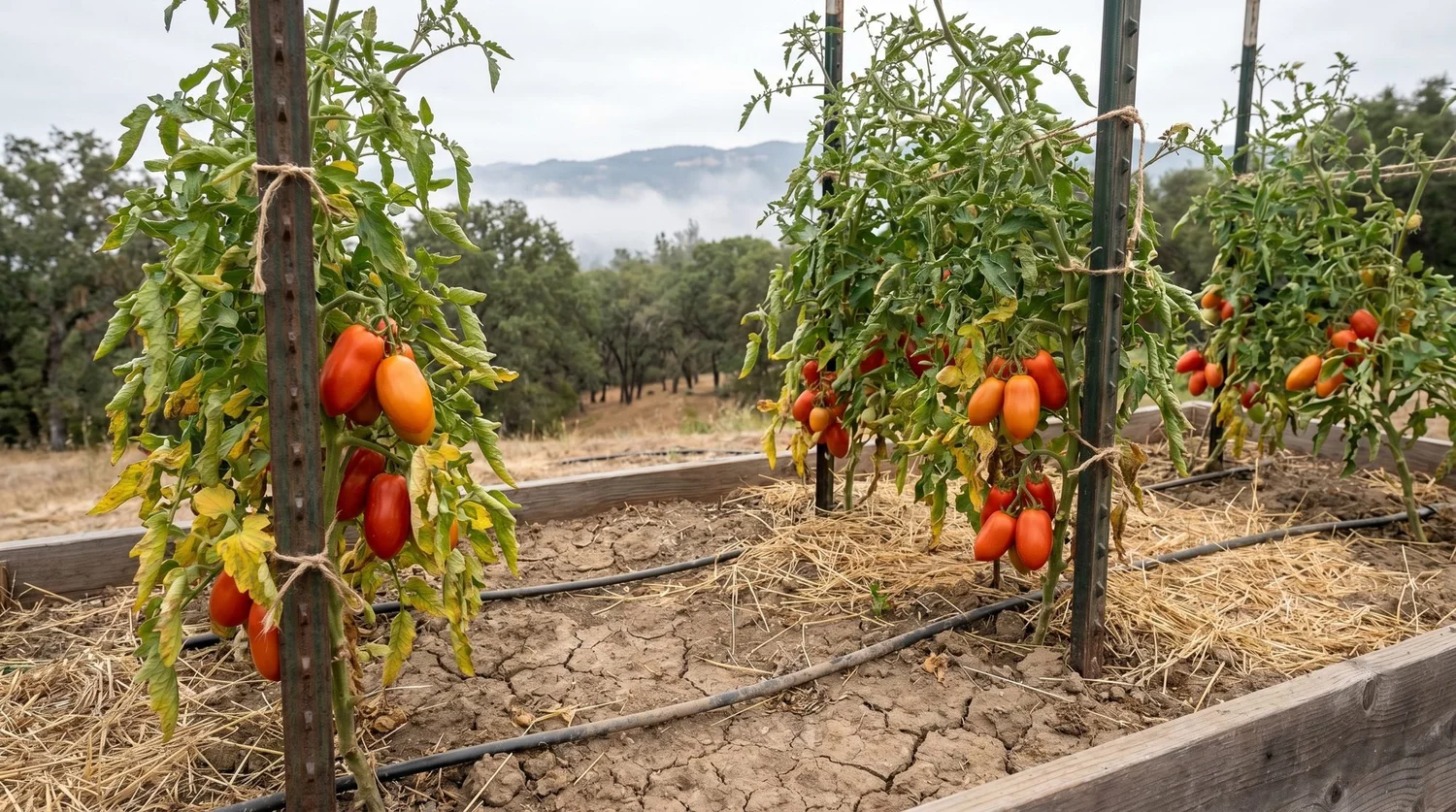
The Banana Belt is the county's goldilocks zone. It sits high enough to escape the daily fog ceiling that smothers the immediate coast, so it banks more sunshine and warmer afternoons, but it is still buffered by the ocean, so it rarely gets the punishing triple-digit spikes that shut tomato pollination down inland. That middle ground is close to ideal for a Roma. The plant gets the steady heat units it needs to fill and ripen its dense paste flesh, and the mild nights, generally in the high 50s to low 60s in summer, keep it setting fruit night after night instead of stalling. You get inland-quality ripening without the inland heat problems. For a paste tomato, it is hard to do better in this county.
When to plant in the Banana Belt
The Banana Belt's frost risk is light and short. A late April or early May transplant clears almost all chance of a cold snap while still using the long warm run ahead. The real prize here is the length of the warm window: warmth that arrives sooner and lingers well into October, often delivering a true Indian-summer ripening stretch. Getting plants established by mid May lets a determinate Roma set its full crop and color it up before the season closes.
Getting the most from the warm window
Because the Banana Belt gives you a generous warm season, the winning strategy is to use all of it rather than waste the early weeks. Plant on time and keep the plant moving without a check. A transplant that sulks in cool May soil loses two or three weeks it never recovers, so warm the soil with a dark mulch and water in with a little diluted fish emulsion to push early root growth. Feed lightly through the first month, then ease off nitrogen once flowers appear so the plant pours its energy into fruit, not leaves. With the heat reliably on your side, a healthy Banana Belt Roma will give you a heavy, even set that is genuinely worth canning.
Sun and water
Sun: Full sun, 6 to 8 hours, which is easy to find on the belt's open sunny slopes. Choose a spot with morning sun to dry the dew fast and limit disease.
Water: Deep and consistent is the rule. The Banana Belt's warmth dries beds faster than the foggy coast, so plan on a steady soak two to three times a week, more in a hot spell, delivered at the base. Even watering is your best defense against blossom end rot. A thick mulch holds that moisture and keeps the root zone steady through warm afternoons.
Roma variety traits
- Determinate habit: stays compact and sets a concentrated crop, ideal for batch canning when the warm window peaks.
- Thick, meaty, low-seed flesh. The classic sauce and paste tomato, and it ripens to full flavor in the belt's heat.
- Choose VFN-resistant strains for soilborne wilt protection.
- Best cooked, not eaten raw. The reward here is sauce and paste quality the fog belt cannot match.
Common problems and fixes
- Blossom end rot (sunken dark bottoms): almost always uneven watering as the belt warms up, not a calcium shortage. Keep moisture steady and mulch well.
- Brief blossom drop in a rare heat spike: uncommon here, but on the hottest belt days a light afternoon shade cloth keeps fruit setting.
- Cracking after an October rain hits ripe fruit: pick the crop ahead of the first fall storm.
- Hornworms in the warm season: hand-pick at dusk or treat with Bt.
Harvesting
Romas ripen in a tight cluster of weeks thanks to the determinate habit, which suits canning perfectly. Let a batch color fully and harvest together for sauce day. The Banana Belt's long warm tail means you can keep picking into October most years, so a few late-set fruit will still finish on the vine after coastal gardens have given up.
Local tip: Plant a week or two earlier than your coastal neighbors. Your warm pocket reaches transplant-safe soil sooner, and the single biggest lever you have is using the whole warm season. An early-May Roma that is flowering by June will out-yield a June planting and still ripen its last fruit comfortably in the belt's long warm October.
Frequently asked questions
Is the Banana Belt really better for Romas than the rest of Santa Cruz County?
For paste tomatoes, yes. It sits above the daily fog so it banks more heat than the coast, yet the ocean keeps it from the extreme inland spikes that stress fruit set. That combination of steady warmth and mild nights is close to ideal for ripening a dense Roma.
How early can I safely transplant here?
Late April to mid May is the sweet spot. By then the belt's nights generally hold above 50F and frost risk has passed, but you still capture the long warm run that follows. Earlier than that and cold soil can stall the plant with no real gain.
Do I still get blossom end rot in such a friendly climate?
You can, but it is a watering issue, not a climate one. As the belt heats up, beds dry faster and uneven moisture triggers the sunken dark bottoms. Keep watering deep and consistent and mulch to steady the root zone, and it largely disappears.
Can I get two crops in the Banana Belt?
Not a full second crop, but the long warm tail lets a single determinate planting ripen heavily and finish late, often into October. Stagger two transplant dates a few weeks apart instead, and you can stretch the fresh harvest rather than racing it all at once.