

Are Banana Peels a Good Garden Fertilizer?
Some links in this guide are affiliate links. If you buy through one, Ambitious Harvest may earn a small commission at no extra cost to you. As an Amazon Associate, we earn from qualifying purchases. Read our full disclosure.
Compost the peel; don't count it as a fertilizer dose
A banana peel can contribute to compost, but it is not a dependable fertilizer prescription for a rose or tomato. It contains potassium and other nutrients; that does not tell you how much your plant will receive or whether the soil needs more. Put the peel into a managed compost system and decide on fertilizer separately.
Why the idea is so appealing
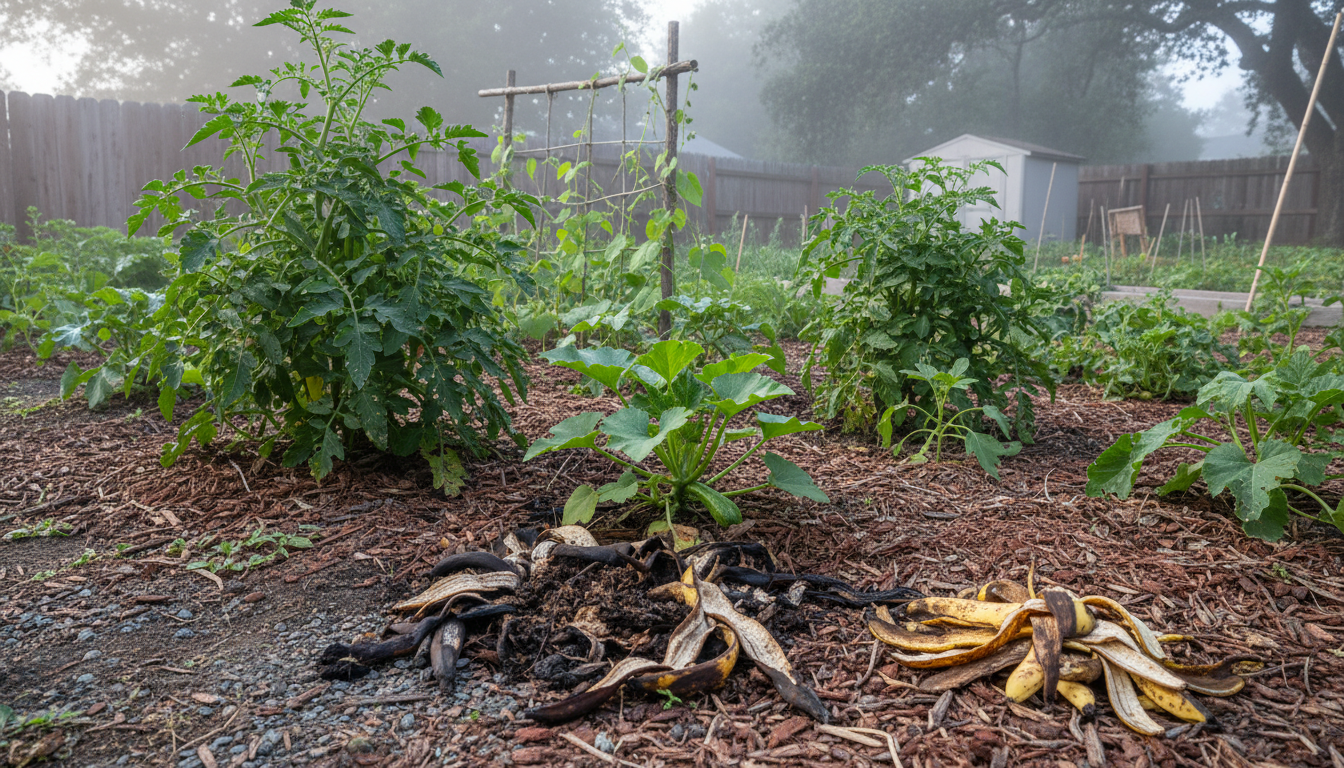
The peel is already on the kitchen counter, and the tomato plant is just outside. Turning one into food for the other feels like a useful way to avoid waste. The missing step is knowing what the plant actually needs. A potassium-containing scrap and a measured nutrient application are different things.
That matters in a Santa Cruz garden where a disappointing crop might prompt an extra feed. More potassium is not automatically the answer, and the fact that a material is free does not make it the right treatment.
What the guidance supports
UC Master Gardener guidance recommends composting bananas and their peels before applying the decomposed material to the garden. Peels do contain useful nutrients. Composting lets them join the rest of the kitchen and garden material instead of treating an individual peel as a dose beside a plant.
The UC article also cautions about nitrogen use during decomposition. That is not a reason to predict that every buried peel will stunt a plant. The practical point is simpler: fresh scraps are decomposing material, with an unmeasured nutrient contribution, rather than a reliable way to correct a deficiency.
What about banana-peel water?
Some potassium can move into water, but a homemade soak does not come with a nutrient analysis or a dependable application rate. University of Maryland Extension does not recommend relying on it as fertilizer and advises basing fertilization on soil-test results. It also says banana water will not make plants more drought-tolerant.
You do not need to conclude that every jar is harmful to decide it is unnecessary. Composting the peel is a more straightforward way to recycle it, and ordinary watering should follow the plant's needs.
Give the peel a useful destination
Add it to a managed compost bin with other suitable kitchen scraps and yard material. Follow the system's instructions for mixing, moisture and covering food scraps. A countertop collection container is just a temporary stop, so empty it regularly. If home composting does not fit your space, check your local organics collection rules.
Finished compost is a soil amendment; its nutrient content varies. It can contribute organic matter and nutrients without being a balanced fertilizer or a complete feeding plan for every crop.
If your plant needs fertilizer, choose the product and rate for the crop, soil information and label directions. A granular organic fertilizer may be appropriate, but neither kelp meal nor a general organic product is automatically needed. Skip a blanket planting-time and midseason dose unless the crop's feeding guidance calls for it. As our related article explains, more fertilizer does not mean more fruit.
Frequently asked questions
Do banana peels contain potassium?
Yes. The uncertainty is the amount delivered to the plant and whether more is needed. There is no dependable number of peels that substitutes for a measured fertilizer recommendation.
Should I bury a peel beside each plant?
That is not a useful fertilizer routine. It gives you no measured dose and puts undecomposed scraps near the roots. Use a managed compost system rather than adopting a blanket burial method. There is no need to assume that one peel inevitably causes plant damage or attracts a particular pest.
What should I do with the next peel?
Add it to your established compost routine or an accepted organics collection. Then tend the plant according to its actual needs. Recycling the scrap and feeding the crop can be two separate, useful jobs.
For the next step, read Composting Kitchen Scraps in California. Visit Your Garden Toolkit for the California Garden Planning Guide and other planning resources.
