

How Do I Keep My Garden Watered During a California Drought?
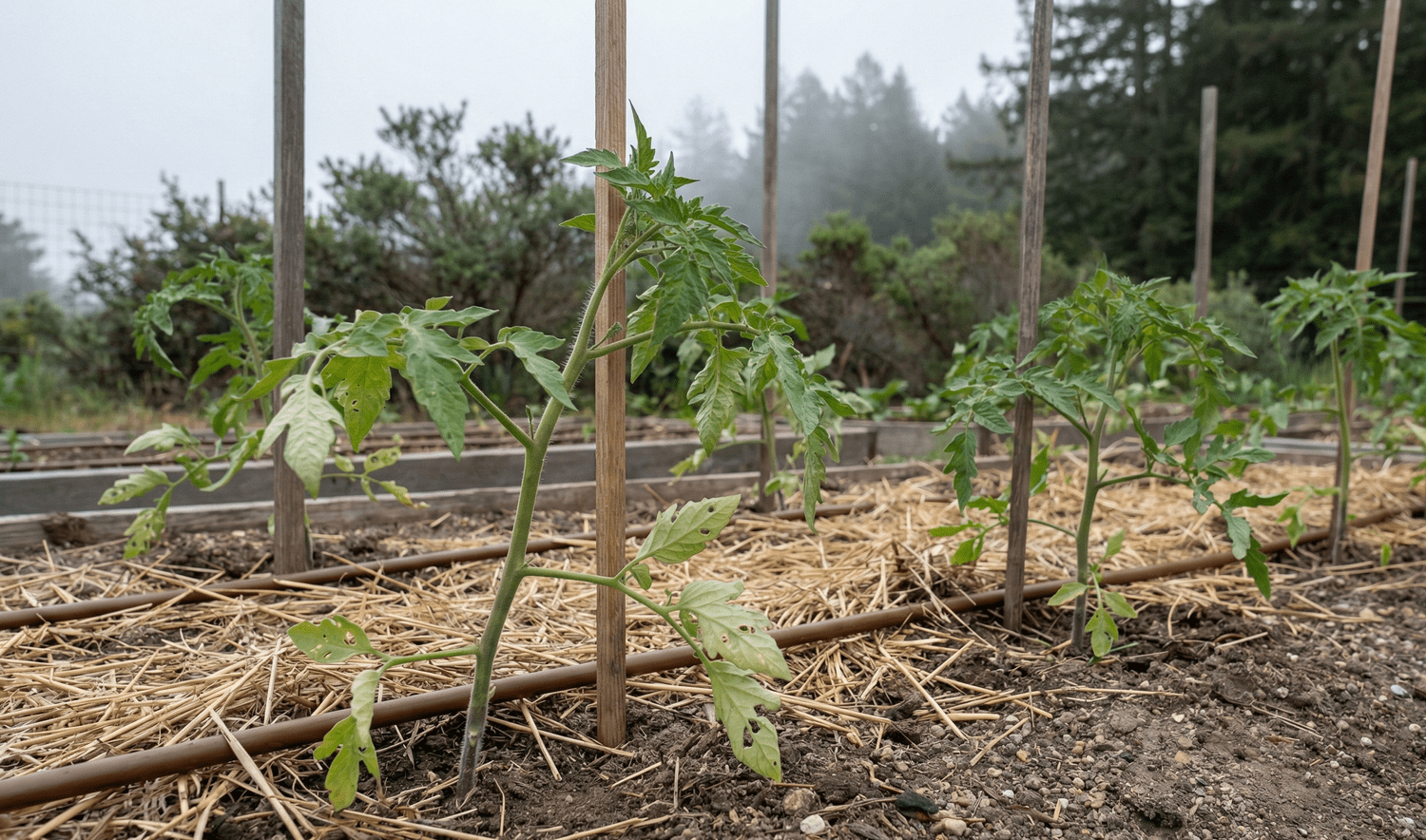
Mulch and drip irrigation. Those two changes will cut your water use by 50% or more while keeping your plants healthier than overhead sprinklers ever did. Drought gardening in Santa Cruz is not about giving up on vegetables; it is about being smarter with every drop.
Start with mulch. A 3 to 4 inch layer of straw, wood chips, or shredded leaves over your soil surface reduces evaporation dramatically. UC ANR research shows that mulch measurably cuts evaporation from the soil surface, with one study documenting a 35% reduction under straw mulch compared to bare ground. It also keeps roots cooler in summer heat, which matters for crops like lettuce and peas that bolt in warm soil.
Drip irrigation delivers water directly to root zones with almost no waste. A basic drip system for a raised bed costs under $30 and takes an afternoon to set up. Pair it with a battery-powered timer set for early morning (before 7 AM) and you eliminate the biggest source of residential garden water waste: midday sprinkler evaporation. If you are on Soquel Creek or Santa Cruz city water, check for rebate programs on drip conversion kits.
Beyond those two essentials, group plants by water need (hydrozoning). Put tomatoes, squash, and peppers together. Keep herbs like rosemary, thyme, and lavender in a separate area with less frequent watering. This prevents the most common drought garden mistake: overwatering drought-tolerant plants because they share a bed with thirsty ones.
This week: Check your existing irrigation for leaks and clogs. Run each zone for 5 minutes and walk the lines. One leaking emitter can waste hundreds of gallons over a summer.
Our free Water-Wise Gardening Guide covers drip setup, mulching strategies, and irrigation scheduling for Santa Cruz microclimates.
