

15 Herbs That Thrive in the Santa Cruz Climate
Some links in this guide are affiliate links. If you buy through them, we may earn a small commission at no extra cost to you. Read our full disclosure.
15 Herbs That Thrive in the Santa Cruz Climate
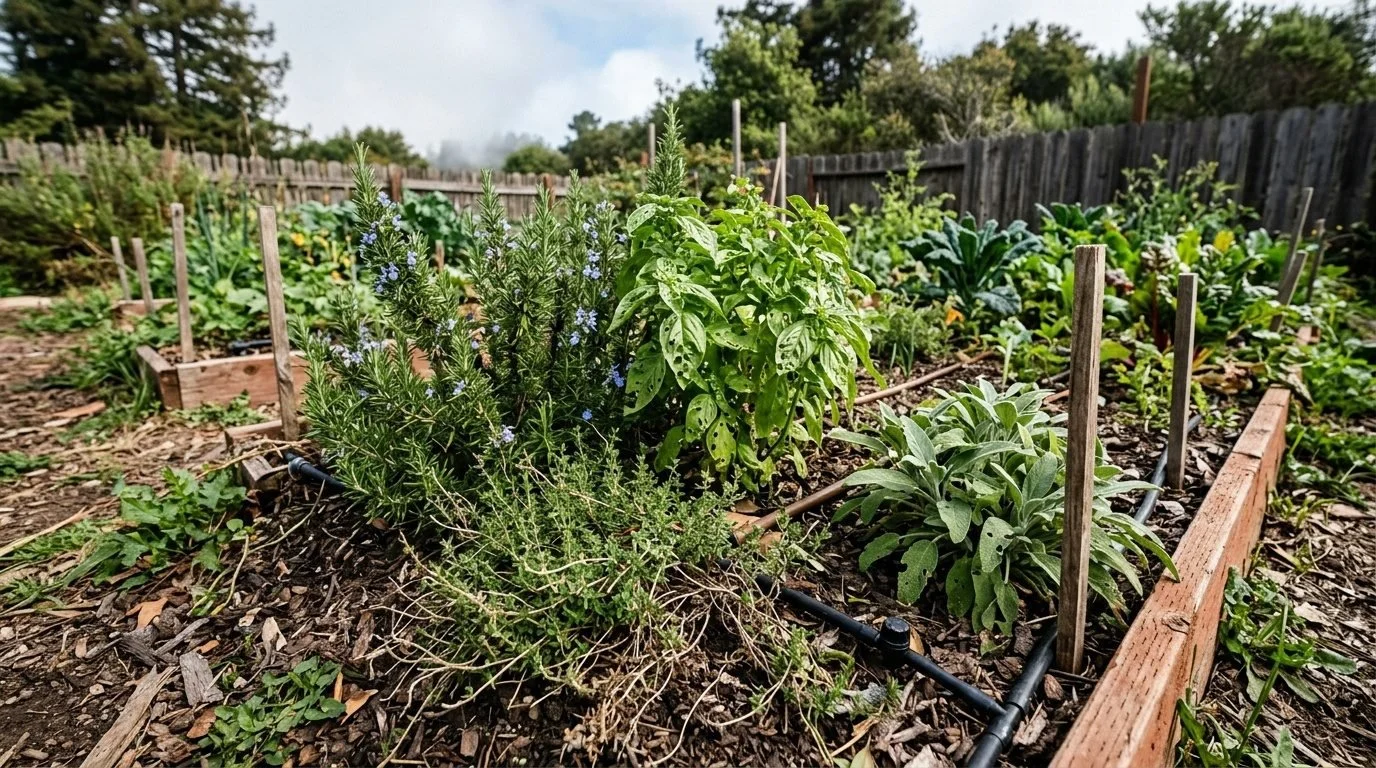
Santa Cruz's Mediterranean climate, with mild, wet winters and cool, dry summers moderated by marine fog, is nearly identical to the native habitat of many culinary herbs. Our coastal areas sit in USDA Zone 9b. This means that Mediterranean herbs like rosemary, thyme, and oregano practically grow themselves here, while our year-round mild temperatures also support herbs that struggle in other parts of the country.
After more than 20 years of growing herbs in Santa Cruz, I can confidently say that a well-planned herb garden here produces more, longer, and more reliably than almost anywhere else in the United States. Here are 15 herbs that genuinely thrive in our climate, with tips on growing, harvesting, and preserving each one.
1. Rosemary (Salvia rosmarinus)
Rosemary is so well-adapted to Santa Cruz that it grows as a landscape shrub throughout the county. You can find massive rosemary hedges along Highway 1, in park plantings, and in neighborhood yards where it has been thriving for decades with zero care. Rosemary is one of the most drought-tolerant and low-maintenance herbs for California's coastal regions.
Best varieties: 'Tuscan Blue' grows upright to 6 feet and has the strongest flavor for cooking. 'Arp' is the most cold-tolerant variety if you garden in the San Lorenzo Valley. Prostrate rosemary ('Huntington Carpet') cascades over walls and raised beds beautifully while producing the same flavorful foliage.
Growing tips: Plant in full sun with well-drained soil. Rosemary hates wet roots, so avoid heavy mulching around the base and never overwater. In Santa Cruz, established rosemary rarely needs irrigation beyond winter rain. It is evergreen here, so you can harvest fresh sprigs year-round.
Harvest and preservation: Cut stems anytime, taking no more than one-third of the plant at once. Rosemary dries beautifully: bundle stems and hang upside down in a warm, dry spot for one to two weeks. Strip dried leaves from the woody stems and store in airtight jars. Dried rosemary retains its flavor for up to a year. drought-tolerant gardening
2. Basil (Ocimum basilicum)
Basil is the one Mediterranean herb that actually needs warmth to thrive, which makes it a warm-season crop in Santa Cruz rather than a year-round staple. But from May through October, basil grows vigorously in our gardens. UC IPM classifies basil as a warm-season annual. It needs warm nights, suffering when temperatures drop below about 50 degrees F, and at least six hours of direct sun, both of which we get from May through October.
Best varieties: 'Genovese' is the classic Italian basil for pesto and caprese. 'Thai' basil has a spicy anise flavor and is more tolerant of our cool coastal evenings. 'African Blue' basil is a perennial in mild Santa Cruz microclimates and provides basil flavor year-round in protected spots. 'Lemon' basil adds a bright citrus note to seafood and Asian dishes.
Growing tips: Start seeds indoors in March or buy transplants in April. Plant outdoors after mid-May when nights are reliably warm. Choose the sunniest, most sheltered spot in your garden. Pinch flower buds as they appear to keep the plant producing leaves. In Santa Cruz, basil grows more slowly than in hot inland areas, so be patient with it.
Harvest and preservation: Harvest by pinching stems just above a leaf pair, which encourages branching and bushier growth. For pesto, harvest large batches in August and September when the plant is at peak production. Freeze pesto in ice cube trays for year-round use. Basil does not dry well (it loses flavor), so freezing is the preferred preservation method. our guide to growing herbs
3. Thyme (Thymus vulgaris)
Thyme is one of the most carefree herbs you can grow in Santa Cruz. It is evergreen, drought-tolerant, pest-free, and grows happily in poor soil. UC ANR describes thyme as a quintessential Mediterranean herb perfectly adapted to California's dry-summer climate. In Santa Cruz, thyme often outlives the gardener who planted it.
Best varieties: Common thyme (T. vulgaris) is the standard culinary variety with the strongest flavor. Lemon thyme (T. citriodorus) adds a bright citrus note to fish and poultry. Creeping thyme (T. serpyllum) makes a fragrant, walkable ground cover between pavers and stepping stones. 'Orange Balsam' thyme has a warm, citrusy fragrance that is wonderful in teas.
Growing tips: Plant in full sun with lean, well-drained soil. Thyme actually produces stronger flavor when grown in poor soil with minimal water. Avoid rich compost and frequent irrigation. In Santa Cruz, thyme grows year-round and can be harvested in any season. Replace plants every 3 to 4 years when they become woody and less productive.
Harvest and preservation: Snip stems just before the plant flowers, when essential oil concentration is highest. Thyme dries exceptionally well: spread stems on a screen in a warm, dry room for a few days, then strip leaves from stems. Store in airtight jars away from light. Dried thyme retains strong flavor for 6 to 12 months and is actually preferred over fresh in many slow-cooked dishes.
4. Oregano (Origanum vulgare)
Oregano is another Mediterranean native that treats Santa Cruz like home. It spreads enthusiastically (sometimes too enthusiastically) and produces more aromatic foliage in our climate than in almost any other region of the United States. UC Cooperative Extension notes that oregano grown in California's coastal areas often has higher essential oil content than the same varieties grown in cooler, wetter climates.
Best varieties: Greek oregano (O. vulgare var. hirtum) has the strongest, most pungent flavor for Italian and Greek cooking. Italian oregano is milder and works well in pizza sauce and tomato dishes. Mexican oregano (Lippia graveolens) is technically a different plant but grows well in Santa Cruz and is essential for authentic Mexican and Southwestern cooking.
Growing tips: Plant in full sun with average to poor soil. Oregano spreads by underground runners, so contain it in a pot sunk into the ground or give it a designated area where spreading is welcome. It is perennial and evergreen in Santa Cruz. Cut plants back hard in late winter to encourage fresh, flavorful new growth in spring.
Harvest and preservation: Harvest just before flowers open for the most intense flavor. Cut stems to within 2 inches of the ground. Oregano is one of the few herbs that tastes better dried than fresh, because drying concentrates the essential oils. Hang bundles in a warm, airy spot for one to two weeks, then crumble leaves into jars. Homegrown dried oregano is dramatically better than the dusty stuff in store-bought jars.
5. Sage (Salvia officinalis)
Garden sage is a woody perennial that thrives in Santa Cruz's dry summers and mild winters. It is closely related to the native white sage (Salvia apiana) that grows wild in California's coastal scrub, which tells you everything you need to know about how well-adapted it is to our climate. UC Master Gardeners list sage as one of the most reliable perennial herbs for California home gardens.
Best varieties: Common sage (S. officinalis) is the classic culinary variety for stuffing, sausage, and butter sauce. 'Berggarten' has broad, rounded leaves and compact growth. Purple sage adds ornamental color while providing the same culinary flavor. Pineapple sage (S. elegans) is a tender perennial with red flowers and a fruity scent that hummingbirds love.
Growing tips: Plant in full sun with well-drained soil. Sage is drought-tolerant once established and dislikes heavy watering. In Santa Cruz, it is evergreen and provides fresh leaves year-round. Prune in spring to remove winter-damaged growth and encourage new stems. Replace plants every 4 to 5 years when they become too woody.
Harvest and preservation: Pick individual leaves or cut stems anytime. Sage dries easily and retains excellent flavor. Bundle stems and hang in a warm spot, or lay leaves flat on a screen. Dried sage is a Thanksgiving staple, and homegrown dried sage tastes remarkably better than commercial. You can also infuse fresh sage leaves in butter (brown butter with sage is one of the simplest, most elegant sauces in cooking).
6. Mint (Mentha spp.)
Mint grows aggressively in Santa Cruz, which is both its greatest strength and its biggest management challenge. Given the mild temperatures and winter moisture, mint can grow year-round here and will quickly colonize any bed where it is not contained. UC Master Gardeners strongly recommend growing mint in containers to prevent it from overtaking your garden.
Best varieties: Spearmint (M. spicata) is the most versatile culinary mint for drinks, desserts, and Middle Eastern dishes. Peppermint (M. x piperita) has a stronger menthol kick and makes the best tea. Chocolate mint has a subtle cocoa undertone. Mojito mint (M. x villosa) is the classic choice for cocktails and has a milder, sweeter flavor.
Growing tips: Plant in a large container (at least 5 gallons) sunk into the ground, or grow in a standalone pot. Mint tolerates partial shade and actually prefers it in Santa Cruz's sunnier spots. It needs more water than other Mediterranean herbs. Cut plants back to the ground in late winter to encourage vigorous new growth.
Harvest and preservation: Harvest mint frequently, taking up to two-thirds of the plant at once. Regular harvesting encourages bushier growth and prevents flowering (which reduces leaf flavor). Mint dries reasonably well for teas: spread leaves on a screen in a warm room for several days. For culinary use, freeze chopped mint in ice cube trays with a little water for the freshest flavor in cooked dishes. container gardening in California
7. Cilantro (Coriandrum sativum)
Cilantro is a cool-season herb that bolts quickly in heat, which makes Santa Cruz an ideal growing location. Our moderate summer temperatures allow cilantro to produce leafy growth for much longer than in hot inland areas. Cilantro is a cool-season herb that grows best in the mild weather covering most of the year in Santa Cruz, and it bolts quickly once summer heat sets in.
Best varieties: 'Santo' is the standard slow-bolt variety and the best choice for leaf production. 'Calypso' bolts even more slowly and is a good option for summer growing. If you want coriander seeds (the dried seed of the cilantro plant), let any variety bolt and flower. 'Delfino' has fern-like leaves and an ornamental quality that looks beautiful in mixed plantings.
Growing tips: Direct sow seeds every 3 to 4 weeks from September through June for continuous harvest. Cilantro does not transplant well, so always sow directly in the garden. In Santa Cruz, you can grow cilantro nearly year-round, with only the warmest weeks of July and August causing reliable bolting. Partial shade extends the harvest in warmer spots.
Harvest and preservation: Cut leaves when the plant is 4 to 6 inches tall. Harvest the entire plant or cut outer stems and let the center continue growing. Cilantro does not dry or freeze well for fresh use, so grow it year-round instead. If the plant bolts, let it flower (the flowers are edible and attract beneficial insects) and then harvest the coriander seeds when they turn brown.
8. Parsley (Petroselinum crispum)
Parsley is a biennial herb that often acts as a perennial in Santa Cruz's mild climate, producing leaves for 12 to 18 months before flowering. Parsley is one of the most productive and nutritious herbs for a California home garden, providing useful amounts of vitamin C, vitamin K, and iron.
Best varieties: Italian flat-leaf parsley (P. crispum var. neapolitanum) has the strongest flavor and is preferred for cooking. Curly parsley is milder and is the classic garnish variety. Both types grow well in Santa Cruz. 'Giant of Italy' is a particularly productive flat-leaf variety with large, flavorful leaves.
Growing tips: Start seeds indoors (parsley germinates slowly, taking 2 to 4 weeks) or buy transplants. Plant in full sun to partial shade. Parsley tolerates more shade than most herbs, making it a good choice for spots that get only 4 to 5 hours of sun. In Santa Cruz, plant in fall or early spring for the longest production window. Water regularly, as parsley prefers more moisture than Mediterranean herbs.
Harvest and preservation: Cut outer stems at the base, leaving the center of the plant to continue growing. Regular harvesting keeps the plant productive and delays bolting. Parsley freezes well: chop leaves and freeze in ice cube trays with a little water or olive oil. Dried parsley loses most of its flavor and is not worth the effort when you can grow it fresh year-round in Santa Cruz.
9. Chives (Allium schoenoprasum)
Chives are one of the most reliable perennial herbs for Santa Cruz gardens. They come back year after year, spread slowly to form attractive clumps, and produce both edible leaves and beautiful purple flowers. UC Cooperative Extension notes that chives are one of the easiest alliums to grow in California and provide a mild onion flavor with minimal garden effort.
Best varieties: Common chives produce thin, hollow leaves with a mild onion flavor. Garlic chives (A. tuberosum) have flat leaves with a garlic-like flavor and bloom with white flowers in late summer. Both types are perennial in Santa Cruz and practically indestructible. Growing both gives you onion and garlic flavors from the same low-maintenance herb family.
Growing tips: Plant from transplants or divisions in full sun to partial shade. Chives tolerate a wide range of conditions and grow well in both garden beds and containers. Divide clumps every 3 to 4 years to maintain vigor. In Santa Cruz, chives produce fresh leaves nearly year-round, with the slowest growth in the coldest weeks of December and January.
Harvest and preservation: Snip leaves with scissors about one inch above the soil line. Chives regrow quickly after cutting. The flowers are also edible, with a mild onion flavor that is lovely in salads and vinegars. Chives do not dry well, but they freeze beautifully: snip into small pieces, spread on a tray, freeze, then transfer to a bag. Use frozen chives directly in cooked dishes. growing edible flowers
10. Bay Laurel (Laurus nobilis)
Bay laurel is a tree-form herb that grows magnificently in Santa Cruz. Left unpruned, it can reach 30 to 40 feet, but most gardeners keep it as a large shrub or small tree through regular harvesting and pruning. Bay laurel is an excellent evergreen tree for California's coastal landscapes, providing both ornamental value and a perpetual supply of bay leaves for cooking.
Best varieties: True bay laurel (Laurus nobilis) is the only species used in cooking. Do not confuse it with California bay (Umbellularia californica), which is a native tree with much stronger, more camphoraceous leaves. California bay can substitute for true bay in a pinch, but use only half the amount.
Growing tips: Plant in full sun to partial shade. Bay laurel is drought-tolerant once established and needs minimal care in Santa Cruz. It grows slowly for the first few years but accelerates as it matures. It makes an excellent container plant and can be grown on a patio or deck for years. Protect from hard freezes in the San Lorenzo Valley by planting near a south-facing wall.
Harvest and preservation: Pick leaves anytime. Fresh bay leaves have a milder, more complex flavor than dried. To dry, spread individual leaves flat on a screen in a warm room for one to two weeks. Dried bay leaves are a kitchen staple in soups, stews, braises, and rice dishes. A single tree provides more bay leaves than any household can use, making it a wonderful sharing plant.
11. Lemon Verbena (Aloysia citrodora)
Lemon verbena is a deciduous shrub that produces the most intensely lemon-scented leaves of any herb. In Santa Cruz's mild climate, it grows into a substantial plant (6 to 10 feet) and provides fragrant leaves from spring through fall. Lemon verbena is a heat-loving shrub that does best in Santa Cruz's warmer microclimates.
Best varieties: The standard species (Aloysia citrodora) is the only variety commonly available, and it is excellent. There are no significant cultivar differences to worry about.
Growing tips: Plant in full sun in the warmest spot you have. Lemon verbena is deciduous and drops its leaves in winter, which is normal. Do not prune it back until new growth appears in spring, as the bare branches are still alive. It needs well-drained soil and moderate water. In the coldest parts of Santa Cruz County, grow it in a large container that can be moved to a protected spot during hard freezes.
Harvest and preservation: Harvest leaves throughout the growing season. Lemon verbena dries beautifully and retains its intense lemon scent for months. It makes exceptional herbal tea (steep a handful of fresh or dried leaves in hot water for 5 minutes). Add fresh leaves to lemonade, cocktails, fruit salads, and baked goods. Infuse into sugar or simple syrup for a natural lemon flavoring.
12. Tarragon (Artemisia dracunculus)
French tarragon is the classic herb for Bearnaise sauce, chicken dishes, and vinegars, and it grows reliably as a perennial in Santa Cruz. UC Cooperative Extension notes that French tarragon (not Russian tarragon, which has little flavor) needs mild winters and moderate summers, making our climate ideal. It can be tricky in hot, humid areas but is straightforward here.
Best varieties: French tarragon (A. dracunculus var. sativa) is the only variety worth growing for culinary use. It must be grown from divisions or cuttings because it does not produce viable seed. Russian tarragon (A. dracunculus) grows from seed but has almost no flavor. If you see tarragon seed for sale, it is Russian tarragon, and you should avoid it.
Growing tips: Buy transplants from a reputable nursery or get divisions from a gardening friend. Plant in full sun with well-drained soil. Tarragon goes dormant in winter and re-emerges in spring. Divide plants every 3 to 4 years to maintain vigor. In Santa Cruz, it produces prolifically from March through November.
Harvest and preservation: Cut stems regularly to encourage bushy growth. Tarragon has a distinctive anise-like flavor that is strongest in fresh leaves. It loses much of its nuance when dried, so preservation is best done by making tarragon vinegar (steep fresh stems in white wine vinegar for 2 to 4 weeks) or freezing chopped leaves in ice cube trays with a little olive oil.
13. Lemongrass (Cymbopogon citratus)
Lemongrass is a tropical grass that overwinters successfully in most of Santa Cruz County thanks to our mild frost conditions. Lemongrass is hardy in USDA Zones 9 to 10, so it overwinters as a perennial across our coastal and lower-elevation areas. It adds a bright, citrusy flavor essential to Thai, Vietnamese, and Indonesian cooking.
Best varieties: West Indian lemongrass (C. citratus) is the standard culinary variety. East Indian lemongrass (C. flexuosus) has a similar flavor and is slightly more cold-tolerant. Both form large, dramatic clumps that add a tropical look to the garden.
Growing tips: Plant in full sun with rich, well-watered soil. Unlike most Mediterranean herbs, lemongrass is a heavy feeder and drinker. It grows 3 to 5 feet tall and wide, so give it plenty of space. In the San Lorenzo Valley and other cooler areas, grow in a large container and move to a protected spot if temperatures drop below 25 degrees F. Cut foliage back to 6 inches in late winter to encourage fresh new growth.
Harvest and preservation: Harvest by pulling or cutting individual stalks from the outer edge of the clump. Use the tender white inner core of the lower 4 to 6 inches for cooking. Lemongrass freezes well: trim stalks, wrap tightly in plastic, and freeze for up to 6 months. You can also dry the leaves for tea, though the stalks must be used fresh or frozen for cooking.
14. Sorrel (Rumex acetosa)
Sorrel is an underappreciated herb that thrives in Santa Cruz's cool, mild conditions. It is a perennial green with a bright, lemony-tart flavor that adds acidity to soups, salads, and sauces without needing lemon juice. UC Master Gardeners note that sorrel is one of the earliest herbs to emerge in spring and one of the last to die back in fall, providing fresh leaves for most of the year.
Best varieties: French sorrel (R. acetosa) is the standard culinary variety with large, arrow-shaped leaves. 'Large de Belleville' is a particularly productive French variety. Red-veined sorrel (R. sanguineus) is more ornamental, with beautiful red-veined leaves, though its flavor is milder. Sheep sorrel (R. acetosella) is a wild species with a more intense sour flavor.
Growing tips: Plant in partial shade to full sun. Sorrel actually prefers the cool, foggy conditions that challenge many other herbs, making it an excellent choice for shadier spots in Santa Cruz gardens. It needs regular moisture and rich soil. Remove flower stalks as they appear to keep the plant focused on leaf production. Sorrel is perennial and returns stronger each year.
Harvest and preservation: Pick individual leaves from the outside of the plant anytime they are large enough to use. Young, small leaves are the most tender and least bitter. Sorrel wilts into a silky puree when cooked, which is the basis of classic French sorrel soup. It does not dry or freeze well for fresh use, but cooked sorrel puree freezes beautifully for soups and sauces throughout the year.
15. Epazote (Dysphania ambrosioides)
Epazote is a Mexican culinary herb that grows like a weed in Santa Cruz (because it essentially is one). It is used in traditional Mexican cooking, particularly in black bean dishes, where it adds a distinctive savory flavor and is traditionally believed to reduce the gas-producing effects of beans. UC Cooperative Extension notes that epazote has naturalized throughout California's coastal regions.
Best varieties: The standard species is the only one commonly available. There are no significant cultivated varieties. You may find it growing wild in disturbed areas, along paths, and in garden beds throughout Santa Cruz County.
Growing tips: Direct sow seeds in spring in full sun. Epazote is extremely low-maintenance and self-sows prolifically, so give it a contained area or be prepared to pull volunteers. It grows 2 to 4 feet tall and tolerates poor soil and drought. In Santa Cruz, it may behave as a short-lived perennial, coming back from the roots in mild winters. One or two plants provide more than enough for a household.
Harvest and preservation: Pick fresh leaves as needed, using them sparingly as the flavor is strong. Add a sprig to black beans, quesadillas, or corn dishes during the last 15 minutes of cooking. Epazote dries well: hang bunches in a warm spot and crumble dried leaves into a jar. Use about half the amount of dried compared to fresh. Only eat cultivated epazote in moderate culinary quantities. our guide to growing herbs
How Do I Design an Herb Garden for Santa Cruz's Climate?
The key to a successful Santa Cruz herb garden is grouping herbs by water needs. Mediterranean herbs (rosemary, thyme, oregano, sage, lavender) need lean soil and minimal water, while moisture-loving herbs (basil, mint, parsley, cilantro, lemongrass) need richer soil and regular irrigation. Mixing these two groups in the same bed leads to either overwatering the drought-lovers or underwatering the moisture-lovers.
Create two distinct zones: a dry Mediterranean section in full sun with sharp drainage, and a richer, moister section (potentially with partial shade) for your water-loving herbs. This approach mirrors how these herbs grow in nature and dramatically reduces maintenance. Place perennial herbs (rosemary, thyme, sage, bay laurel, chives) where they can stay permanently, and reserve space for annual replanting of basil, cilantro, and other short-lived crops. planning your California garden
Which Herbs Grow Best in Shade in Santa Cruz?
Several herbs actually prefer the partially shaded conditions common in Santa Cruz gardens, where tall trees, fences, and buildings create dappled light. Parsley, cilantro, chives, mint, and sorrel tolerate partial shade and still produce well with only three to five hours of direct sun. These herbs grow more slowly in shade but produce tender, flavorful leaves with less bitterness.
Lemon balm, another shade-tolerant herb I did not include in the main list because it spreads even more aggressively than mint, also thrives in Santa Cruz's shady spots. If you have a north-facing garden bed that seems hopeless for growing food, try filling it with a shade herb garden of parsley, cilantro, sorrel, chives, and mint (in containers). You may be surprised by how productive it becomes.
Frequently Asked Questions
Can I grow herbs year-round in Santa Cruz?
Yes. Santa Cruz's mild climate allows year-round herb production. Evergreen perennials like rosemary, thyme, sage, and bay laurel produce fresh leaves in every season. Cool-season herbs (cilantro, parsley) grow best from fall through spring, while warm-season herbs (basil) thrive from May through October. In USDA Zone 9b, you can keep a productive herb garden going in all 12 months by growing a mix of warm-season and cool-season species.
How much sun do herbs need in Santa Cruz?
Most culinary herbs need at least 6 hours of direct sun for the best flavor and growth. Mediterranean herbs (rosemary, thyme, oregano, sage) do best in full sun, ideally six or more hours a day, and their essential oils concentrate most in the sunniest, driest spots. Shade-tolerant herbs (parsley, cilantro, mint, chives, sorrel) can produce well with 3 to 5 hours. In Santa Cruz, southern and western exposures provide the most sun and warmth.
Why do my herbs taste weak compared to dried herbs from the store?
Fresh herbs have a different flavor profile than dried herbs, not necessarily weaker. However, if your fresh herbs seem bland, the most common cause is overwatering and overfertilizing. UC ANR research shows that mild drought stress increases essential oil production in Mediterranean herbs, which intensifies flavor. Try watering less frequently and using minimal fertilizer, especially for rosemary, thyme, oregano, and sage. Harvesting just before flowering also captures peak essential oil content.
What is the best way to preserve herbs for winter?
The best preservation method depends on the herb. UC Cooperative Extension recommends drying for rosemary, thyme, oregano, sage, and bay laurel, as these herbs retain excellent flavor when dried. Basil, cilantro, parsley, and chives preserve better by freezing (chop and freeze in ice cube trays with water or oil). Making herb-infused vinegars, oils, and butters is another excellent preservation strategy that captures fresh flavor for months of use.
Are there any herbs I should avoid planting together?
The main concern is mixing herbs with very different water needs. Drought-loving Mediterranean herbs (rosemary, thyme, oregano, sage, lavender) should not share a bed with moisture-loving herbs (basil, mint, parsley, cilantro, lemongrass). According to UC Master Gardeners, overwatering Mediterranean herbs to accommodate thirsty neighbors is the most common cause of herb garden failure. Group herbs by water needs, and both groups will thrive independently.
How do I start an herb garden if I only have a patio?
Container herb gardening works exceptionally well in Santa Cruz. Most culinary herbs grow well in containers, though pot size should match the plant. Compact herbs like thyme, chives, and parsley are happy in a pot as small as 6 to 8 inches across, while rosemary, mint, and lemongrass need something larger. Use a well-draining potting mix (not garden soil), choose containers with drainage holes, and place them where they receive the appropriate sunlight. A south-facing patio in Santa Cruz provides ideal conditions for nearly all herbs. Rosemary, thyme, basil, parsley, and chives are the best five herbs to start with in containers.
Ready to grow your own herbs in Santa Cruz? Sign up for our free weekly gardening newsletter for seasonal planting reminders, harvest tips, and local growing advice delivered straight to your inbox.
