

Edible Flowers: Growing and Using Flowers in Your Kitchen
A few of the product links in this guide are affiliate links. If you buy through one, Ambitious Harvest may earn a small commission at no extra cost to you, which helps keep these guides free. We only point to gear we would use in our own Santa Cruz garden. As an Amazon Associate, we earn from qualifying purchases. Read our full disclosure.
Why Should You Grow Edible Flowers in Santa Cruz?
Edible flowers blur the line between ornamental garden and kitchen garden in the most delightful way. These plants pull double duty: they brighten your beds with color, attract pollinators, and then end up scattered across your salads, frozen into ice cubes, or decorating a birthday cake.
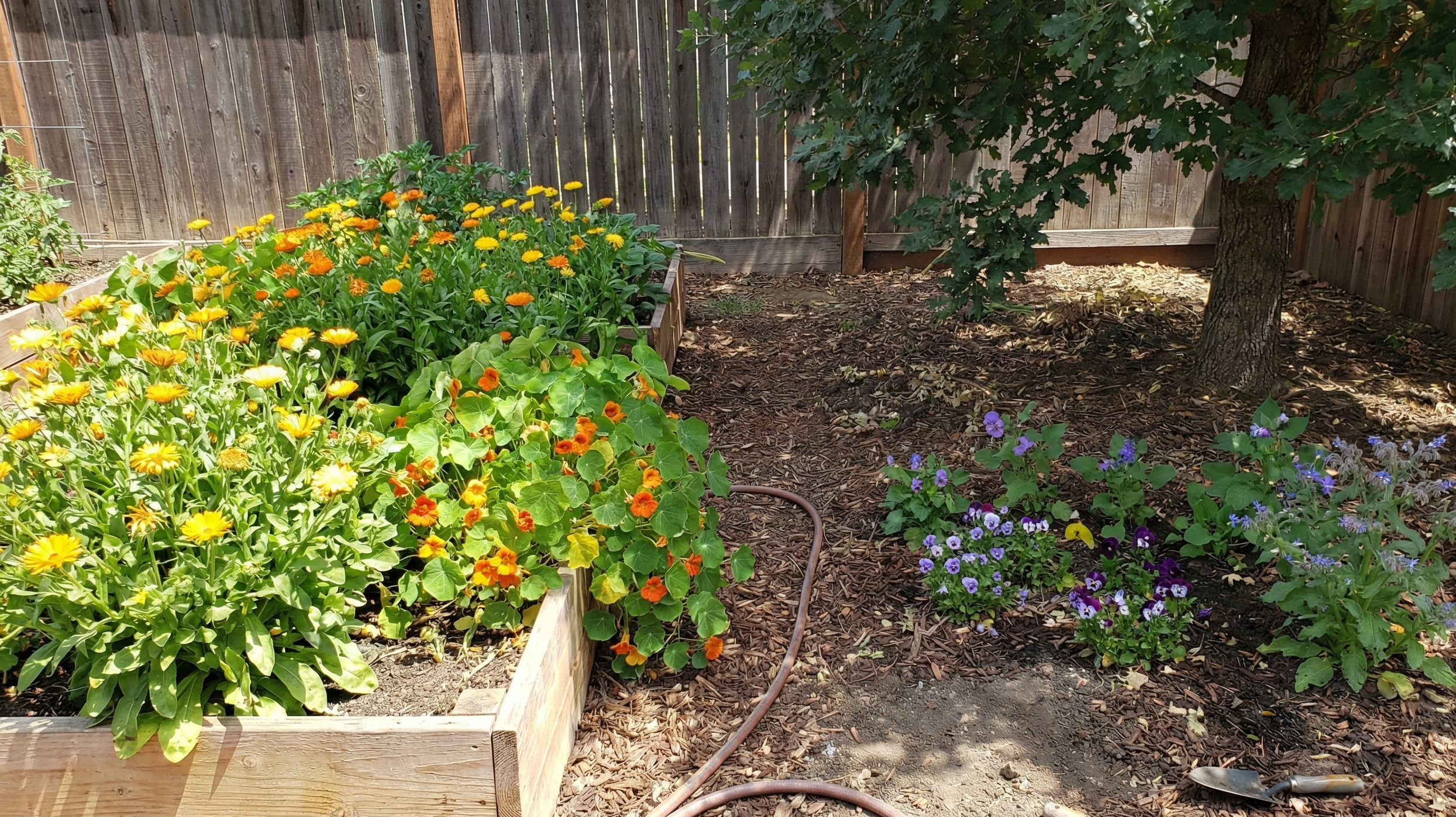
Santa Cruz County's mild climate makes us particularly lucky when it comes to edible flowers. While gardeners in colder regions squeeze flower production into a few summer months, we can harvest edible blooms nearly year-round. Nasturtiums bloom from spring through fall (and sometimes straight through mild winters). Calendula flowers in every month except the hottest. Violas and pansies thrive in our cool seasons when most flowers elsewhere have long since faded.
Growing your own edible flowers also solves a practical problem: flowers sold for eating are expensive and often hard to find, while flowers sold at florists and nurseries are typically treated with pesticides that make them unsafe to eat. When you grow your own, you control what goes on them (nothing, ideally), and you can harvest at the peak of freshness. The UC Master Gardeners note that popular edible flowers for California include calendula, borage, nasturtium, pansies, and squash blossoms, all of which thrive in our climate.
What Are the Best Edible Flowers for Santa Cruz Gardens?
These flowers need positive identification and appropriate preparation. Borage requires additional caution because it contains potentially liver-harmful compounds.
Nasturtiums (Tropaeolum majus)
Nasturtiums are the gateway edible flower, easy to grow, impossible to kill, and genuinely delicious.
Flavor: Peppery and bright, similar to watercress or arugula. The intensity varies by variety and growing conditions; stressed plants tend to be spicier.
What to eat: Flowers (all parts), leaves (peppery, great in salads), and seed pods (pickled, they're called "poor man's capers").
Growing in Santa Cruz: Nasturtiums thrive here with almost no effort. They prefer full sun but tolerate partial shade, especially in warmer inland areas. Plant seeds directly in the garden in early spring (March or April) or fall (September or October). They germinate quickly and grow fast.
The secret to great nasturtiums is neglect. Rich soil and regular fertilizer produce lush leaves but few flowers. Lean soil, infrequent water, and benign neglect yield abundant blooms. This makes them perfect for that sunny spot with poor soil where nothing else thrives.
Colors: Orange, red, yellow, cream, and multicolored varieties. 'Alaska' has variegated leaves. 'Empress of India' has deep red flowers and dark foliage.
When they bloom: Spring through fall, and often through winter in mild coastal areas.
Culinary uses: Toss flowers and leaves into salads for color and peppery bite. Stuff whole flowers with herbed cream cheese for appetizers. Add to sandwiches. Use as garnish on any dish that benefits from a little heat.
Calendula (Calendula officinalis)
Calendula, sometimes called pot marigold, has been used in cooking and medicine for centuries. The cheerful orange and yellow flowers brighten both gardens and plates.
Flavor: Mildly tangy and slightly bitter, with subtle peppery notes. The flavor is subtle enough to use generously.
What to eat: Petals only. The center of the flower is edible but has a stronger, more bitter taste.
Growing in Santa Cruz: Calendula grows easily from seed sown directly in the garden. Plant in fall (September through November) for winter and spring blooms, or in early spring for summer flowers. It prefers full sun and moderate water, tolerating our dry summers better than many flowers once established.
In our climate, calendula often self-sows, creating volunteer plants year after year. Let some flowers go to seed and you'll have a permanent supply.
Colors: Yellow, orange, and cream. Some varieties have contrasting centers or double petals.
When they bloom: Nearly year-round in Santa Cruz, though they may pause during the hottest summer weeks. Fall-planted calendula blooms through winter.
Culinary uses: The petals have been called "poor man's saffron" because they impart golden color to rice, soups, and baked goods. Scatter petals over salads, rice dishes, or soups. Use in compound butters or cream cheese. Add to baked goods for color.
Violas and Pansies (Viola species)
These delicate flowers are the most photogenic edible blooms, perfect for decorating desserts and making any dish look special.
Flavor: Mild and slightly sweet with subtle grassy notes. Some varieties have a faint wintergreen taste.
What to eat: Whole flowers, including the stem if it's tender.
Growing in Santa Cruz: Violas and pansies are cool-season flowers that thrive when temperatures stay below 70°F. Plant transplants in fall (September through November) for winter and spring blooms. They'll flower prolifically from late fall through late spring, then struggle or die when summer heat arrives.
In coastal areas where summer stays cool, violas may bloom nearly year-round. In warmer inland locations, treat them as fall-through-spring flowers and replace them with heat-tolerant options in summer.
Colors: An enormous range, including purple, yellow, orange, white, blue, and multicolored patterns. Johnny jump-ups (Viola tricolor) have the classic purple, yellow, and white "face."
When they bloom: Fall through late spring in most areas; potentially year-round on the cool coast.
Culinary uses: Their delicate beauty makes them ideal for decorating cakes, cupcakes, and other desserts. Freeze into ice cubes for special drinks. Float on soups. Press into soft cheese. Candied violas make stunning cake decorations.
Borage (Borago officinalis)
Borage produces star-shaped blue flowers with a cucumber-like flavor. It contains potentially liver-harmful compounds; NC State Extension advises using its flowers and leaves sparingly and supplies no safe serving size.
Flavor: Cool, fresh, and distinctly cucumber-like. A pleasant surprise for first-time tasters.
What to eat: Flowers only. The leaves and stems are edible but covered in prickly hairs that most people find unpleasant.
Growing in Santa Cruz: Borage is a vigorous annual that grows 2 to 3 feet tall with sprawling branches. Direct sow seeds in spring or fall. It prefers full sun and tolerates drought well once established.
Be aware that borage self-sows enthusiastically. One plant can produce hundreds of seedlings the following year. This is either a feature or a bug depending on your gardening style. Pull unwanted seedlings when young.
Colors: Bright blue (the classic color), with occasional pink or white variants.
When they bloom: Late spring through fall, with peak production in early summer.
Culinary uses: The cucumber flavor makes borage perfect for drinks. Add to gin and tonics, lemonade, or sparkling water. Float on chilled soups. Freeze into ice cubes for visual and flavor impact. Scatter over salads or use as garnish.
Chive Blossoms (Allium schoenoprasum)
If you grow chives (and you should), the purple pompom flowers are a bonus harvest with delicate onion flavor.
Flavor: Mild onion, more delicate than the chive leaves themselves.
What to eat: Individual florets pulled from the flower head, or the entire flower broken apart.
Growing in Santa Cruz: Chives are perennial herbs that thrive here with minimal care. Plant from starts or divisions in a sunny spot with decent drainage. They'll spread slowly over time, forming clumps that can be divided every few years.
Once established, chives are nearly indestructible. They die back slightly in winter but return vigorously each spring. For the best leaf production, harvest flowers promptly, but always leave some to enjoy and to feed pollinators.
Colors: Lavender purple, occasionally white.
When they bloom: Spring, with potential rebloom if flowers are cut back.
Culinary uses: Break apart the flower heads and scatter florets over salads, soups, baked potatoes, cream cheese, omelets, or anywhere you'd use chives. For chive blossom vinegar, follow the complete OSU Extension flavored-vinegar procedure, including sanitation, commercially produced vinegar, straining, and storage. Blend into compound butter.
Squash Blossoms (Cucurbita species)
If you grow zucchini, summer squash, or winter squash, you're already producing some of the culinary world's most prized edible flowers.
Flavor: Mild, slightly sweet, with a delicate squash essence.
What to eat: The entire flower, though the stem and green base are sometimes removed.
Growing in Santa Cruz: You grow these by growing squash. Plant squash seeds or transplants in late spring (May) after soil has warmed. Squash plants produce both male and female flowers. Males appear first and are produced in greater numbers, sitting on long stems. Females have a tiny squash at the base.
Harvest male flowers freely since you only need a few for pollination. Harvest female flowers if you have more baby squash developing than you need (likely, if you're growing zucchini).
When they bloom: Summer, whenever your squash plants are producing.
Culinary uses: Stuffed squash blossoms are a culinary classic. Fill with ricotta, goat cheese, or cream cheese, sometimes mixed with herbs, then batter and fry or bake. Add to quesadillas or pasta. Slice raw into salads or scatter over pizza after baking.
Other Edible Flowers Worth Growing
Lavender: Floral, perfumy flavor. Use sparingly in baked goods, lemonade, and savory dishes. Grows beautifully in Santa Cruz with no summer water.
Rose petals: Fragrant and floral. Use in desserts, jams, and Middle Eastern cuisines. Grow pesticide-free roses or accept limited harvests.
Chamomile: Apple-like flavor. Use in teas, desserts, and as garnish. Easy to grow from seed.
Sunflower petals: Mild, slightly nutty flavor. The petals are edible; the seeds you already know.
Marigold (Tagetes species): Citrusy and slightly bitter. Use petals sparingly. Note: this is different from calendula, which is sometimes called pot marigold.
Dianthus/Pinks: Clove-like spicy flavor. Beautiful in drinks and desserts.
Sage flowers: Taste like milder sage. Purple-blue spikes are attractive on plates.
Rosemary flowers: Milder rosemary flavor. Tiny blue flowers make lovely garnishes.
How Do You Grow Edible Flowers Successfully?
Location and Light
Most edible flowers perform best in full sun (6+ hours daily). Violas and pansies tolerate partial shade and actually prefer it during warm weather. Nasturtiums bloom in partial shade but produce more flowers in sun.
In Santa Cruz's inland areas where summer gets hot, afternoon shade can extend the season for cool-weather flowers like violas and calendula.
Soil and Planting
Most edible flowers prefer well-drained soil with moderate fertility. Nasturtiums are the exception, actively preferring poor soil, while calendula and borage tolerate lean conditions well.
For beds where you'll grow multiple types:
Amend with compost before planting
Ensure good drainage (raised beds help in heavy soil)
Don't over-fertilize (excess nitrogen promotes leaves over flowers)
Direct seeding vs. transplants:
Direct sow: Nasturtiums, calendula, borage (they resent transplanting)
Either method works: Violas, pansies, chives
Best from transplants: Violas and pansies (for instant color)
Watering
Most edible flowers need regular water during establishment, then moderate water once growing. Overwatering promotes lush foliage at the expense of flowers.
Nasturtiums and calendula are notably drought-tolerant once established. Violas and pansies need consistent moisture but not soggy soil.
Water in the morning when possible to let foliage dry before evening, reducing fungal disease risk.
Encouraging Continuous Blooms
The secret to extended flower production is deadheading, removing spent flowers before they form seeds.
When a flower goes to seed, the plant shifts energy from flower production to seed development. By removing faded flowers promptly, you signal the plant to keep trying to reproduce, which means more blooms for your kitchen.
For nasturtiums, you can also harvest the immature seed pods (for pickling), which accomplishes the same thing.
For calendula, leave a few flowers to go to seed so you'll have volunteer plants next year, but deadhead most for continuous production.
When and How Should You Harvest Edible Flowers?
Timing
Harvest flowers in the morning after dew has dried but before the day's heat intensifies. This is when flowers are most turgid (crisp with water) and flavorful.
Pick flowers that are fully open and at their peak. Buds don't have the same visual impact, and fading flowers taste less vibrant.
Technique
Gently pinch or snip flowers from the stem. Handle them as little as possible since petals bruise easily and bruised petals turn brown.
For violas and pansies, you can include the small stem. For calendula, just the petals are typically used.
Cleaning
Inspect flowers for insects. Aphids love hiding in the folds of nasturtium flowers. A gentle shake often dislodges them.
If needed, briefly rinse flowers in cool water and gently pat dry with a paper towel, or let them air dry on a clean towel. Avoid soaking, which damages delicate petals.
Storage
Use edible flowers within a day or two of harvest for best quality. Store in a single layer on a damp paper towel in a container in the refrigerator. They'll keep up to a week this way but lose vibrancy over time.
For longer storage, flowers can be dried (calendula holds color well when dried) or frozen into ice cubes.
How Can You Use Edible Flowers in the Kitchen?
Salads
The most immediate use for edible flowers is scattering them over salads. Nasturtiums add color and peppery bite. Calendula petals contribute golden color. Violas and pansies make any salad look special. Chive blossoms add onion notes.
Add flowers just before serving since dressing wilts delicate petals.
Garnishes
Use flowers to finish any dish. Float on soups, arrange on pasta, scatter over grain bowls, or use to decorate plates.
The rule of thumb: if you'd garnish with herbs, you can garnish with edible flowers.
Desserts
Violas and pansies are the stars of dessert decoration. Use to top cakes, cupcakes, and tarts. Press into frosting. Arrange on cheesecakes.
For candied flowers, use pasteurized egg white or a pasteurized egg product and follow a tested recipe and its storage directions. Drying does not establish shelf stability or justify a weeks-long storage claim.
Drinks
Freeze flowers into ice cubes for elegant drinks. Add borage flowers to gin and tonics or lemonade. Float violas on cocktails. Steep lavender or chamomile in simple syrup for flavored drinks.
Make flower-infused simple syrups by steeping clean petals in hot simple syrup, straining, and cooling.
Compound Butters, Oils, and Vinegars
Blend calendula petals or chive blossoms into softened butter for spreading on bread or melting over vegetables.
For homemade petal-infused oil, refrigerate immediately and use within four days or freeze. This applies to fresh and dried petals; drying or warming does not establish shelf stability.
For chive blossom vinegar, follow the complete OSU Extension flavored-vinegar procedure, including clean ingredients, sterilized containers, commercially produced vinegar, straining, and storage. Refrigeration best preserves quality; use within four to six months for best quality. Discard moldy, bubbling, cloudy, or slimy vinegar without tasting.
Cooking with Squash Blossoms
Squash blossoms deserve their own section. The classic preparation: stuff with ricotta or goat cheese (often mixed with herbs), dip in light batter, and fry until golden. They can also be baked, added to quesadillas, scattered over pizza, or chopped into pasta and risotto.
What Safety Rules Should You Follow?
Know What You're Eating
Only eat flowers that you can positively identify as edible. Many flowers are toxic, including some that look similar to edible varieties. When in doubt, don't eat it.
Common toxic flowers to avoid: Foxglove, oleander, lily of the valley, daffodils, ornamental sweet peas (Lathyrus odoratus), wisteria, hydrangea, azalea, and rhododendron.
Avoid Pesticides
Never eat flowers that have been treated with pesticides, fungicides, or other chemicals. This rules out:
Flowers from florists or garden centers (almost always treated)
Flowers from roadsides or public spaces (unknown treatment history)
Flowers from gardens where chemicals are used
Grow your own organically, or source from farms that grow specifically for eating.
Introduce Gradually
As with any new food, introduce edible flowers gradually. Some people have allergies to certain flowers, particularly those related to ragweed (which includes chamomile and members of the daisy family like calendula). If you have pollen allergies, be cautious with new flowers.
Harvest from Clean Sources
Only harvest flowers from areas that haven't been sprayed, aren't near roadways (exhaust contamination), and aren't visited by pets.
Frequently Asked Questions About Edible Flowers
Which edible flowers are easiest to grow in Santa Cruz?
Nasturtiums are the hands-down easiest. Scatter seeds, ignore them, harvest flowers. Calendula is nearly as foolproof and self-sows once established. Chive blossoms are effortless if you already grow chives. For cool-season color, violas and pansies are reliable when planted in fall.
Can I eat the flowers from my regular garden plants?
Many common garden plants produce edible flowers, including herbs (basil, sage, rosemary, thyme, oregano, mint, cilantro) and vegetables (edible squash (Cucurbita species), identified edible garden beans and garden peas (Pisum sativum), arugula, radishes, and bolted broccoli). The flowers generally taste like milder versions of the plant. However, never eat flowers unless you're certain they're safe, and never eat flowers from plants that have been sprayed.
How do I keep edible flowers fresh for a party?
Harvest the morning of your event if possible. Store in a single layer on damp paper towels in the refrigerator until needed. Keep them away from the back of the fridge where they might freeze. For ice cubes with flowers, make these a day ahead: place flowers face-down in ice cube trays, fill halfway with water, freeze, then top off and freeze again.
My nasturtiums are all leaves and no flowers. What's wrong?
Too much nitrogen and water. Nasturtiums flower best when stressed. Stop fertilizing entirely, reduce watering, and let them struggle a bit. The flowers will come. Very shady conditions can also reduce flowering.
Are all parts of these flowers edible?
It depends on the flower. For nasturtiums, everything is edible (flowers, leaves, stems, seeds). For calendula, just the petals are commonly eaten. For violas and pansies, the whole flower is edible. For chives, the flower florets and stems are both edible. Always research specific flowers before eating.
Can I dry edible flowers to use later?
Calendula dries beautifully and retains its color. Spread petals in a single layer and air dry, or use a dehydrator on low. Dried calendula can be stored for months and used in cooking or tea. Most other flowers lose color and texture when dried, making them less useful culinarily (though still nice in tea blends).
Will harvesting flowers hurt my plants?
No, regular harvesting actually benefits most flowering plants by stimulating more bloom production. The plant keeps trying to produce seeds, so it keeps making flowers. Just don't strip a plant completely; leave some flowers for pollinators and plant health.
Where can I buy edible flower plants or seeds locally?
San Lorenzo Garden Center, Dig Gardens, and Sierra Azul Nursery carry many of these plants. For seeds, Renee's Garden runs its trial gardens from Renee's backyard in Felton, just up Highway 9 from us, and carries a good edible flower selection. Mountain Feed & Farm Supply also carries seeds.
Many edible flowers also attract pollinators. See our guide to pollinator-friendly gardens for more on supporting beneficial insects.
Our companion planting guide covers which flowers support vegetable crops and which combinations work best.
Free Gardening Resources
Download these guides to help you grow edible flowers and more:
Seasonal Planting Calendar - Month-by-month guide to planting times in Santa Cruz County.
Companion Planting Guide - Learn which plants grow well together, including flowers that support vegetables.
Water-Wise Gardening Guide - Strategies for thriving gardens with less water.
Know Your Microclimate Worksheet - Identify your garden's specific conditions for better plant selection.
How Do You Go from Garden to Table?
Growing edible flowers is one of gardening's purest pleasures. These plants ask for little, provide months of beauty in the garden, and then transform ordinary meals into something special with just a scattering of petals.
Start with nasturtiums this season. They're forgiving of mistakes, generous with blooms, and genuinely delicious. Once you've experienced the joy of garnishing your own salad with flowers you grew, you'll find space for more: calendula for winter color, violas for decorating desserts, borage for summer drinks.
Your garden is already producing food. Adding edible flowers just makes it more beautiful, more interesting, and more delicious.
