Growing Melons in Santa Cruz County: Which Microclimates Work (And Which Do Not)
A few of the product links in this guide are affiliate links. If you buy through one, Ambitious Harvest may earn a small commission at no extra cost to you, which helps keep these guides free. We only point to gear we would use in our own Santa Cruz garden. As an Amazon Associate, we earn from qualifying purchases. Read our full disclosure.
Growing Melons in Santa Cruz County: Which Microclimates Work (And Which Do Not)
Melons are among the most climate-dependent crops a Santa Cruz County gardener can attempt, and not every neighborhood can grow them well. According to UC Agriculture and Natural Resources, most melon varieties need sustained daytime temperatures above 80 degrees Fahrenheit and warm nights above 60 degrees for proper sugar development. Parts of our county meet those conditions reliably, while coastal areas rarely do. Knowing which side of that line your garden falls on saves time, money, and frustration.
Why Are Melons So Challenging in Santa Cruz County?
Melons evolved in hot, arid regions of Africa and Central Asia. They want heat, and lots of it. Not just warm days, but warm nights. The sugar content that makes a melon worth eating develops primarily during hot afternoons and mild evenings. When nighttime temperatures drop into the low 50s, as they regularly do along the Santa Cruz County coast from June through September, sugar production stalls.
Our famous coastal fog compounds the problem. Fog blocks sunlight, lowers air temperature, increases humidity, and reduces the heat units that melons need to accumulate. A melon vine in fog-belt Santa Cruz receives significantly fewer growing degree days than the same vine in Watsonville, Corralitos, or the San Lorenzo Valley. That difference shows up directly in fruit quality: melon flavor in cool climates tends toward bland and watery.
This does not mean you cannot grow melons here. It means you need to be strategic. Variety selection, microclimate awareness, and season extension techniques can close the gap between what our climate offers and what melons demand. But there is a threshold below which no amount of cleverness will produce a melon worth eating, and some coastal gardens genuinely fall below it.
Realistically: if your garden regularly sees afternoon fog from June through August and nighttime temperatures in the low 50s, melons will struggle. If you get reliable afternoon sun, warm evenings, and some heat accumulation, you can grow good melons with the right approach. Check your microclimate conditions before investing in melon seeds and bed preparation.
Which Santa Cruz County Microclimates Can Actually Grow Melons?
Santa Cruz County's topography creates dramatic microclimate variation within short distances. A garden in Aptos Village experiences meaningfully different growing conditions than one a mile away on a foggy ridge. Understanding where melons succeed helps you decide whether to plant them or spend your garden space on crops better suited to your specific location.
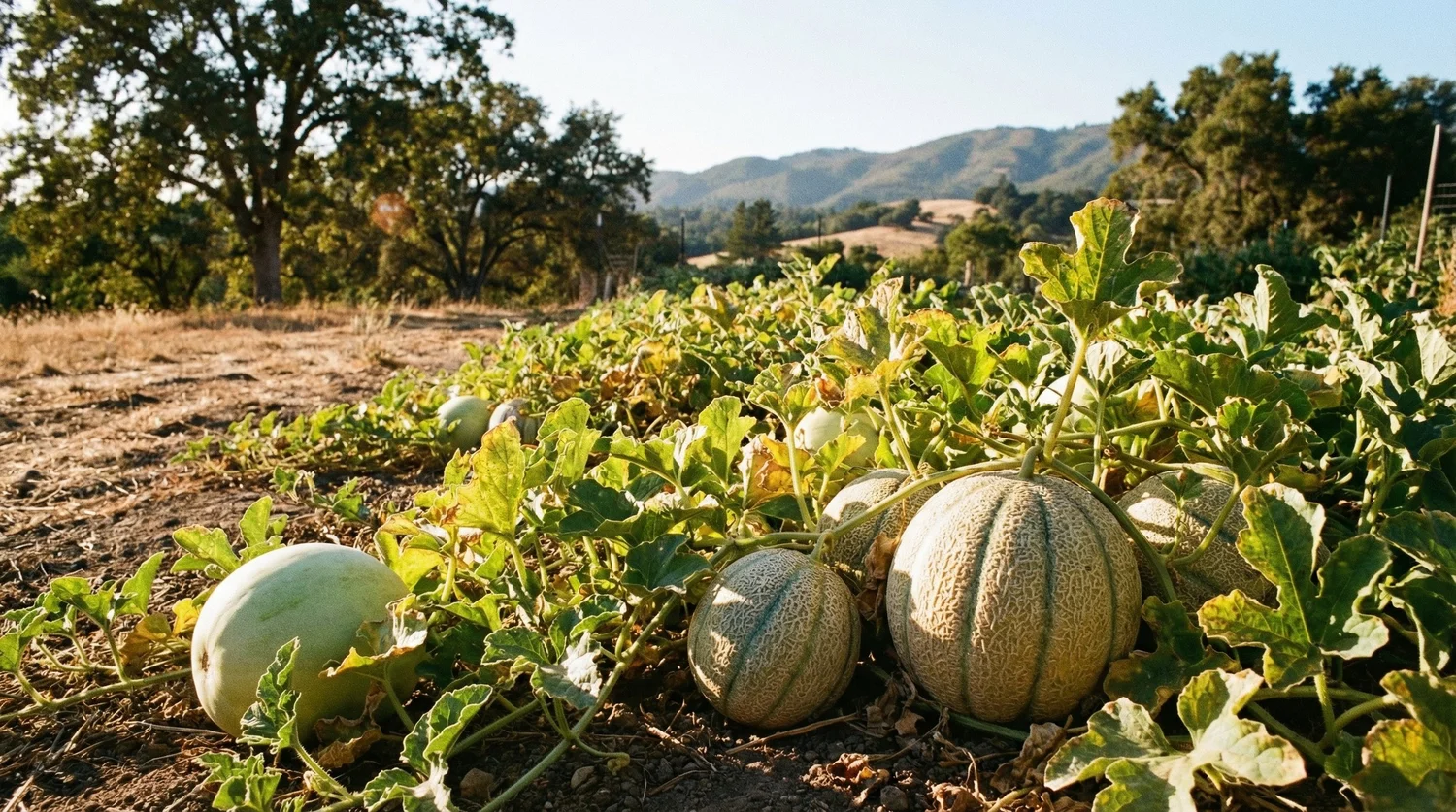
Best melon microclimates: Inland valleys and south-facing slopes that are sheltered from marine influence produce the best melons. Watsonville, Corralitos, and the agricultural flatlands of the Pajaro Valley consistently hit the sustained warmth melons need. Inland neighborhoods of Scotts Valley and the sun-exposed areas of the San Lorenzo Valley also work well. These locations commonly reach the mid-80s to low 90s on summer afternoons, with nighttime lows in the mid-60s.
Marginal melon microclimates: Mid-county neighborhoods that get morning fog but clear by midday can grow short-season melon varieties with season extension help. Parts of Capitola, Soquel, and inland Aptos fall in this category. Success depends on the specific year: warm summers produce decent melons, cool summers produce disappointing ones. Expect to use row covers, black plastic mulch, and wall-of-water protectors for best results.
Difficult melon microclimates: Coastal Santa Cruz, the Westside, areas near Natural Bridges, and exposed hilltops that receive persistent summer fog are genuinely challenging for melons. Gardeners in these areas are better served growing cucumbers (which tolerate cool conditions much better) or focusing on crops that thrive in our marine climate. If you insist on trying, grow melons against a south-facing wall in containers that you can move to catch every available hour of sun.
A simple test: if your tomatoes consistently ripen well outdoors without protection, your garden is warm enough for short-season melon varieties. If your tomatoes struggle to ripen, melons will struggle more.
What Melon Varieties Have the Best Chance in Our Climate?
Variety selection is where you gain the most ground against our cool climate. Forget the 100-plus-day melons bred for Central Valley heat. Focus on short-season varieties that mature in 70 to 85 days and have been selected for cooler conditions.
Cantaloupe/muskmelon varieties: 'Minnesota Midget' is the most reliable melon for cool climates, maturing in just 60 to 70 days. The 4-inch fruits are small but genuinely sweet with good cantaloupe flavor. 'Fastbreak' matures in 65 days with full-sized, 6-inch fruits and good disease resistance. 'Alvaro' is a French Charentais-type melon that matures in 70 to 75 days and develops exceptional flavor even in moderate heat. Charentais melons are widely considered the finest-flavored melons in the world, and they perform better in cooler conditions than most American cantaloupe varieties.
Honeydew varieties: Traditional honeydews need more heat than most Santa Cruz County gardens provide. 'Honey Pearl' is a shorter-season exception at about 80 days. For most local gardeners, Charentais-type melons offer better flavor with less heat requirement than honeydews.
Watermelon varieties: Watermelons are the most heat-demanding melons, but icebox varieties offer a path forward. 'Sugar Baby' matures in 75 to 80 days and produces 8 to 10-pound fruits. 'Golden Midget' is even faster at 65 to 70 days, with a convenient feature: the rind turns golden when ripe, eliminating the guesswork. 'Blacktail Mountain' was bred in Idaho specifically for short, cool seasons and matures in 70 to 75 days. These small watermelons will not match the sweetness of a Bakersfield melon, but they can produce satisfying fruit in our warmer microclimates.
Asian melons: Korean and Japanese melon varieties are often overlooked but well-suited to our conditions. 'Sakata's Sweet' produces small, yellow melons with crisp, mildly sweet flesh in about 70 days. These are eaten differently than Western melons, often lightly chilled and sliced thin. They tolerate cooler conditions better than most cantaloupe types.
Avoid planting any variety that needs more than 85 days to maturity unless you garden in the warmest microclimate in the county and are using aggressive season extension. The math simply does not work for long-season melons in most of our area.
When and How Should You Start Melons in Santa Cruz County?
Starting melons indoors is not optional here. It is essential. Direct sowing in cool soil leads to poor germination and a late start that shortens an already tight growing window. Start seeds indoors 4 to 5 weeks before your planned transplant date.
Sow seeds in 4-inch pots filled with seed-starting mix. Place pots on a heat mat set to 80 to 85 degrees Fahrenheit. Melon seeds germinate in 3 to 7 days at these temperatures. Without a heat mat, germination is erratic and slow. Grow seedlings in a bright, warm location. A south-facing window supplemented with a grow light works well.
The target transplant date for most Santa Cruz County gardens is late May to mid-June, after nighttime temperatures reliably stay above 55 degrees Fahrenheit. That means starting seeds indoors between late April and mid-May. Earlier is better if you have the indoor growing conditions to support it, because every additional day of growth before transplanting counts.
Harden off seedlings for a full week before transplanting. Melon seedlings are more sensitive to temperature shock than tomato or pepper seedlings. Start with 2 hours of outdoor exposure in a sheltered spot and increase by 2 hours daily. Bring seedlings in if temperatures drop below 55 degrees at night during the hardening period.
Transplant on a warm, calm day. Dig planting holes, fill with water, let it drain, then set the seedling at the same depth it grew in the pot. Do not bury the stem deeper. Space plants 24 to 36 inches apart in rows 5 to 6 feet apart for vining types. Bush varieties can be closer at 18 to 24 inches apart.
How Do You Create the Warmth Melons Need in a Cool Climate?
Season extension for melons in Santa Cruz County is about accumulating heat, not extending the calendar. Our growing season is long enough. The problem is that individual days are not warm enough. Every technique that adds heat to the melon microclimate moves you closer to success.
Black plastic mulch is the single most effective tool. UC research shows black plastic raises soil temperature by 5 to 10 degrees Fahrenheit compared to bare soil. Lay it over the planting area 2 to 3 weeks before transplanting to pre-warm the soil. Cut X-shaped slits for transplants. The plastic also suppresses weeds and conserves moisture, reducing two other maintenance tasks.
Row covers (floating or supported) add 4 to 8 degrees of air temperature around the plants. Use lightweight row cover fabric (0.5 oz/sq yard) that transmits 85 to 90 percent of sunlight while trapping heat. Drape it over wire hoops to create a low tunnel over the melon bed. Remove covers when temperatures inside exceed 95 degrees (open the ends for ventilation on hot days) and when female flowers appear so pollinators can access them.
Wall-of-Water protectors (water-filled plastic tepees placed around individual transplants) provide 10 to 15 degrees of frost protection and significant daytime heat accumulation. They act as thermal batteries, absorbing solar energy during the day and releasing it as warmth at night. Use them for the first 3 to 4 weeks after transplanting, then remove as plants outgrow them.
Raised beds warm faster than in-ground soil because they have more surface area exposed to sun and air. A raised bed with black plastic mulch can be 15 degrees warmer than flat, bare ground. For melon growing, this is a substantial advantage.
South-facing walls and fences radiate stored heat in the evening, creating a warm microclimate on the south side. Planting melons within 3 feet of a sun-warmed masonry wall or dark-colored fence gives them several hours of additional warmth after the sun goes down. This is the same principle that makes espaliered fruit trees productive against walls in cool climates.
Combining techniques multiplies the effect. Black plastic plus row cover plus a south-facing wall can create conditions 15 to 20 degrees warmer than ambient. In a marginal microclimate, that combination turns a "probably not" into a "worth trying."
How Do You Handle Pollination for Melons in Foggy Conditions?
Melon pollination faces the same challenges as other cucurbits in Santa Cruz County: foggy mornings reduce bee activity, and melon flowers have a narrow pollination window. Each female flower is receptive for just one day. If no bee visits during that window, the tiny fruit behind the flower withers and drops.
Hand pollination is essential insurance in foggy areas. The technique is the same as for cucumbers and squash. Early in the morning, locate a freshly opened male flower (slender stem, no swelling at the base). Pick it, peel back the petals, and gently dab the pollen onto the stigma inside a female flower (identified by the miniature melon shape at its base). Use pollen from 2 to 3 male flowers per female flower for thorough pollination.
Melons produce male flowers first, often for 1 to 2 weeks before female flowers appear. Do not worry when you see only male flowers. They are building pollen reserves for when the females open. Once female flowers start appearing, pollinate every morning for 2 to 3 weeks to maximize fruit set.
Growing pollinator-attracting flowers near the melon patch helps draw bees during clear spells. Borage is particularly effective because it blooms continuously and produces copious nectar. Sweet alyssum, phacelia, and sunflowers also attract the pollinators you need.
Unlike cucumbers, very few melon varieties are parthenocarpic (self-fruitful without pollination). You generally cannot avoid the pollination challenge by choosing specific varieties. Hand pollination remains your most reliable tool in fog-prone areas.
What Watering and Feeding Schedule Produces the Sweetest Melons?
Water management in melon growing is a balancing act. Too little water stunts growth and reduces fruit size. Too much water, especially near harvest, dilutes sugars and produces bland, watery melons. Getting this right is critical in Santa Cruz County, where fog moisture adds an unpredictable variable.
During vine growth and fruit set, provide 1 to 2 inches of water per week through drip irrigation. Consistency matters. Wild swings between wet and dry stress the plants and can cause fruit cracking. Drip irrigation is strongly preferred over overhead watering to keep foliage dry and reduce powdery mildew pressure.
Reduce watering by half when fruits reach full size and begin ripening. For cantaloupe, this is when the rind starts developing netting (the rough, web-like texture on the skin). For watermelon, it is when the tendril nearest the fruit turns brown. Cutting back water during the final 7 to 14 days concentrates sugars in the flesh and produces the sweetest flavor.
Do not eliminate water entirely during ripening. The vines still need some moisture to function, and sudden drought can cause leaf wilting that stops sugar production. Reduce, but do not stop.
Feed melons with a balanced fertilizer at planting, then switch to a lower-nitrogen, higher-potassium formula when fruits set. Potassium supports sugar production and fruit quality. Excessive nitrogen during fruiting pushes vine growth at the expense of sweetness. Compost tea applied every 2 weeks provides gentle, balanced nutrition throughout the season.
In our foggy climate, be cautious about adding mulch around melon plants. Organic mulch holds moisture near the crown, which in our humid conditions can promote stem rot. Black plastic mulch is better because it warms the soil without trapping moisture against the plant stems.
How Do You Know When Melons Are Actually Ripe?
Ripeness determination is where many gardeners go wrong with melons. Unlike tomatoes, which give obvious color cues, melons require attention to multiple signs that vary by type.
Cantaloupe/muskmelon: The most reliable indicator is the "slip" test. When ripe, a cantaloupe separates from the vine with gentle pressure at the stem end, leaving a clean, round scar. This is called "full slip." If you have to tug or twist, the melon is not ready. The rind under the netting also changes from green to golden-tan at full ripeness, and the blossom end (opposite the stem) gives slightly when pressed and smells fragrant.
Honeydew: The skin changes from green to creamy white or pale yellow. The blossom end softens slightly and develops a sweet aroma. Honeydews do not slip from the vine like cantaloupe; you need to cut them free with pruning shears.
Watermelon: The ground spot (where the melon rests on the soil) turns from white to creamy yellow. The tendril nearest the fruit dries and turns brown. The rind loses its shine and becomes dull. Thumping produces a deep, hollow sound rather than a high-pitched ring. Watermelon ripeness is notoriously hard to judge. When in doubt, wait a few more days. An overripe watermelon is still better than an underripe one.
In our cooler climate, melons may take 7 to 14 days longer to ripen than the seed packet suggests. Add those extra days to your maturity estimate when planning your season. Picking early because you are anxious guarantees disappointing flavor. Patience pays off in sugar content.
What Pests and Diseases Affect Melons in Santa Cruz County?
Powdery mildew is the primary disease concern, just as it is for all cucurbits in our coastal climate. Prevention through good air circulation, drip irrigation, and resistant variety selection is the first line of defense. The UC IPM covers powdery mildew management, and a milk spray of about 40 percent milk to 60 percent water applied weekly is a research-backed home remedy that works well as a preventive treatment.
Aphids colonize melon vines, particularly on the undersides of leaves and on growing tips. They stunt growth and can transmit mosaic viruses. A strong jet of water dislodges most aphids. For persistent infestations, insecticidal soap is effective and breaks down quickly.
Cucumber beetles visit melon plants just as they do other cucurbits. They feed on leaves and flowers and transmit bacterial wilt. Floating row covers protect young plants. Kaolin clay spray on foliage creates a physical barrier that deters feeding.
Blossom end rot can affect melons, showing up as a dark, sunken spot on the bottom of the fruit. It results from calcium deficiency, usually caused by inconsistent watering rather than insufficient calcium in the soil. Consistent drip irrigation is the best prevention.
Fusarium wilt is a soilborne fungal disease that causes wilting and death of melon vines. Once present in the soil, it persists for years. Rotate melon planting locations on a 4 to 5-year cycle. Choose varieties with fusarium resistance, noted as "F" or "FW" on seed descriptions.
Is It Worth Growing Melons in Santa Cruz County?
The answer depends entirely on your specific situation.
If you garden in a warm inland microclimate with reliable afternoon sun and mild nights, absolutely yes. Short-season cantaloupe and small watermelon varieties can produce fruit that rivals farmers' market quality. The satisfaction of eating a sun-warmed melon from your own garden is hard to match.
If you garden in a marginal microclimate with variable fog, growing melons is a fun experiment that pays off in warm years. Use all the season extension tools available, choose the fastest varieties, and accept that some years will produce great melons and other years will produce mediocre ones. Treat it as a bonus crop rather than a staple.
If you garden in a persistently foggy coastal location, your energy is better invested in crops that thrive in your conditions. Cucumbers, summer squash, and Asian greens will outperform melons every season. There is no shame in growing what your climate does well rather than fighting it for a crop that may never develop full sweetness.
For gardeners in the middle ground, one practical approach is to try melons in a small area, maybe 2 or 3 plants, using black plastic and a south-facing wall. If they produce well, expand next year. If they disappoint, you have lost only a few square feet and a few weeks of effort. That kind of informed experimentation is what good gardening is about.
If your microclimate can support melons, our watermelon growth stages guide maps the road from seed to ripe fruit.
Frequently Asked Questions
Can I grow melons in containers in Santa Cruz County?
Yes, and containers may actually improve melon growing in marginal microclimates because you can move them to catch the most sun. Use at least a 15 to 20-gallon container with drainage holes. A dark-colored container absorbs more heat. Place it against a south-facing wall for maximum warmth. Choose compact varieties like 'Minnesota Midget' or 'Sugar Baby.' Water daily in warm weather since containers dry out fast.
How many melons can one plant produce?
In our climate, expect 2 to 4 ripe melons per cantaloupe plant and 1 to 3 per watermelon plant. Warmer inland gardens may see higher numbers. Limiting each vine to 3 or 4 developing fruits (by removing additional female flowers after initial fruit set) can improve the size and sweetness of the remaining melons. The plant concentrates its energy into fewer, better-quality fruits.
Why did my melon vine produce flowers but no fruit?
The most likely cause is poor pollination, especially if you garden in a foggy area where bee activity is reduced. Male flowers appear 1 to 2 weeks before female flowers, so early "no fruit" periods are normal. Once female flowers open, hand-pollinate daily in the morning. Other causes include temperatures too cool for fruit set (below 65 degrees at night) and excessive nitrogen fertilizer that promotes vine growth over reproduction.
What is the difference between a muskmelon and a cantaloupe?
In the United States, the terms are used interchangeably for the netted, orange-fleshed melons sold in grocery stores. Technically, true cantaloupe is a European melon (Cucumis melo var. cantalupensis) with a smooth or lightly ribbed rind, while American "cantaloupe" is actually a muskmelon (Cucumis melo var. reticulatus) with netted skin. Both grow the same way and need similar conditions. Charentais melons are true cantaloupes.
Can I grow melons near my cucumbers or squash?
Yes. Melons (Cucumis melo) cannot cross-pollinate with cucumbers (Cucumis sativus) or squash (Cucurbita species). They are different species and their pollen is not compatible. You can grow all three side by side without affecting fruit quality. Different melon varieties can cross with each other, which matters only if you save seeds.
How do I know if my garden gets enough heat for melons?
Place an outdoor thermometer in the sunniest spot of your garden. Record afternoon high temperatures and nighttime lows for 2 weeks in July. If afternoon highs consistently reach 80 degrees Fahrenheit or above and nighttime lows stay above 55 degrees, short-season melon varieties have a good chance. If your daytime highs rarely break 75 degrees, melons will struggle to develop sweetness regardless of variety choice.
What should I do with melon vines at the end of the season?
Remove all vines and fruit (including unripe fruit) after the first significant cooling in October. Leaving vines in place over winter provides habitat for overwintering pests and disease organisms. Healthy vines can go into the compost. If the vines showed signs of powdery mildew, fusarium wilt, or other diseases, dispose of them in the green waste bin rather than your home compost pile to avoid spreading pathogens.
Are seedless watermelons harder to grow than seeded ones?
Seedless watermelons require slightly more effort because they need a seeded (pollinator) variety planted nearby to trigger fruit set. They also tend to be longer-season varieties (85 to 95 days), which pushes the limits of our coastal climate. For Santa Cruz County, stick with short-season seeded varieties like 'Sugar Baby' or 'Blacktail Mountain' for the most reliable results.
Find Your Melon-Growing Sweet Spot
Growing melons in Santa Cruz County is a climate puzzle that some gardens solve beautifully and others are better off skipping. Know your microclimate, choose fast-maturing varieties, and use every heat-building technique available. The reward for getting it right is one of the garden's greatest pleasures: a ripe, warm, fragrant melon eaten standing in the garden on a summer afternoon. Visit Your Garden Toolkit for planting calendars and crop guides tailored to Santa Cruz County's unique growing conditions.