

Best Zucchini Varieties for Santa Cruz County
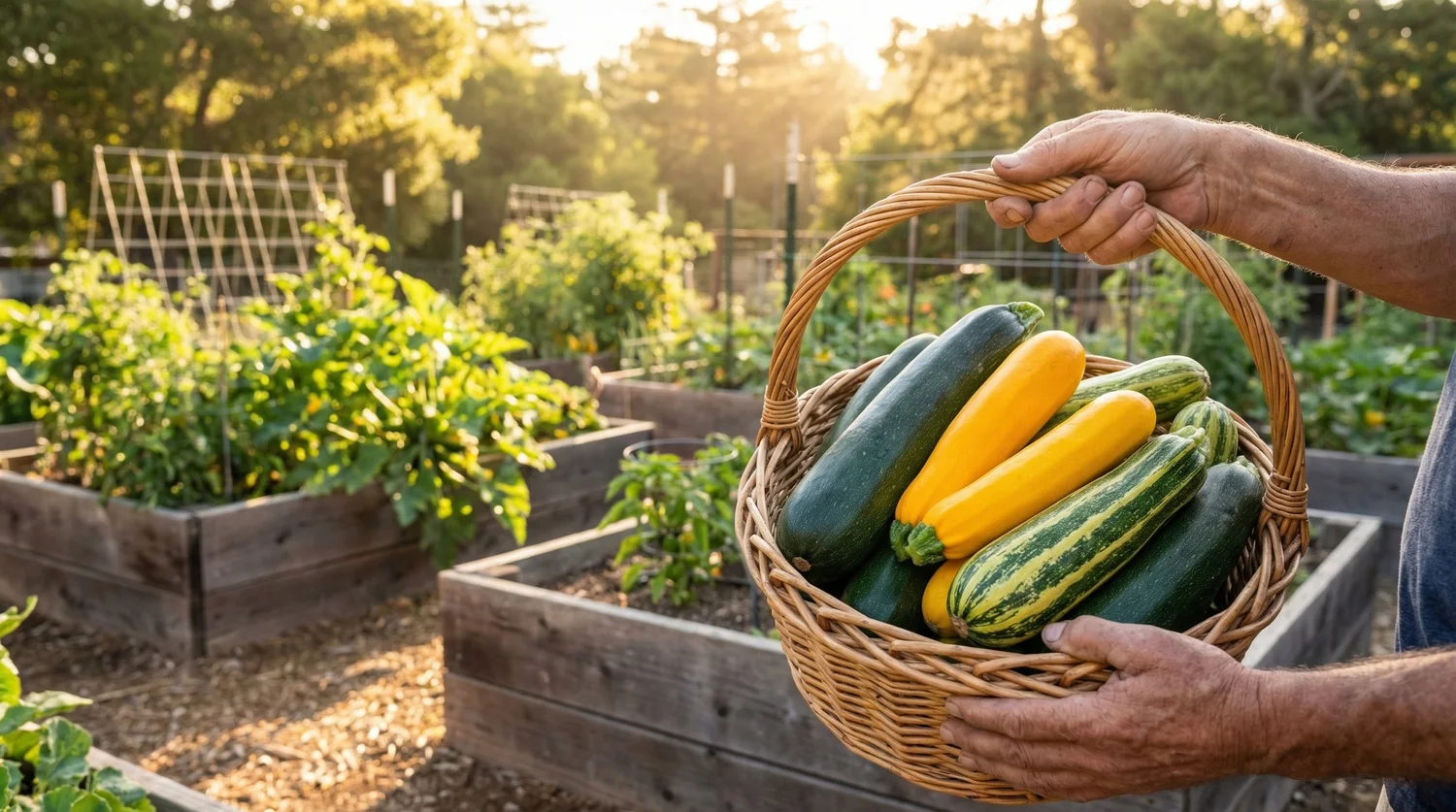
A few of the product links in this guide are affiliate links. If you buy through one, Ambitious Harvest may earn a small commission at no extra cost to you, which helps keep these guides free. We only point to gear we would use in our own Santa Cruz garden. As an Amazon Associate, we earn from qualifying purchases. Read our full disclosure.
What Are the Best Zucchini Varieties for Santa Cruz County Gardens?
Choosing the right zucchini variety for Santa Cruz County means matching disease resistance, growth habit, and harvest timing to our specific conditions of coastal fog, powdery mildew pressure, and a growing season that runs from late spring through fall. UC IPM puts prevention first for powdery mildew: plant resistant varieties where they exist, avoid the most susceptible ones, and site the bed in full sun, which matters in coastal Santa Cruz County gardens where mildew often shuts susceptible zucchini down by late summer. The right variety choice can be the difference between a few weeks of harvest and several months of steady production.
Zucchini is one of the most productive vegetables you can grow, and Santa Cruz County's mild temperatures and long frost-free season provide excellent conditions. But our unique combination of cool nights, morning fog, and powdery mildew means that not all varieties perform equally well here. This guide covers the varieties that have proven themselves in local gardens and explains what makes each one suited to our conditions.
Which Disease-Resistant Varieties Perform Best on the Coast?
Powdery mildew is the primary disease challenge for zucchini in Santa Cruz County. This fungal disease thrives in our conditions of warm days, cool nights, and moderate humidity. Once it establishes on a plant, it reduces photosynthesis, weakens the vine, and ultimately ends the harvest. Choosing varieties with built-in resistance is the single most effective strategy for extending your zucchini season.
'Dunja' (F1 hybrid). This is arguably the best overall zucchini for Santa Cruz County gardens. 'Dunja' has strong powdery mildew resistance, excellent productivity, and produces classic dark green, straight fruits on a compact, open plant. The open growth habit makes fruits easier to spot and harvest before they become oversized. UC Master Gardeners frequently recommend 'Dunja' as a reliable, low-maintenance choice for coastal California. Plants produce well from June through October with proper care.
'Payroll' (F1 hybrid). Another strong performer with powdery mildew resistance. 'Payroll' produces slightly lighter green fruits with a consistent cylindrical shape. The plant is vigorous but not overly sprawling, making it a good choice for gardens with limited space. Productivity is high, with plants yielding steadily for 8 to 10 weeks before any sign of mildew decline.
'Easypick Gold' (F1 hybrid). If you want yellow zucchini, 'Easypick Gold' offers the powdery mildew resistance that most yellow varieties lack. It produces bright golden-yellow fruits on an open plant with fewer spines than traditional varieties, which makes harvesting more pleasant. The open plant architecture also improves air circulation, which further reduces disease pressure.
'Spineless Beauty' (F1 hybrid). True to its name, this variety has smooth, spineless leaf stems that make harvesting a scratch-free experience. It has moderate powdery mildew resistance and produces attractive dark green fruits. While not quite as mildew-tough as 'Dunja,' the comfortable harvesting experience makes it a favorite among gardeners who find traditional zucchini plants unpleasant to work in.
What About Heirloom and Specialty Zucchini Varieties?
While disease-resistant hybrids are the most practical choice for reliable production, several heirloom and specialty varieties bring unique qualities that are worth growing if you accept their limitations.
'Costata Romanesco.' This Italian heirloom produces ribbed, nutty-flavored fruits that are considered by many to be the best-tasting zucchini available. The flavor is noticeably richer and more complex than standard varieties, especially when harvested at 6 to 8 inches and sliced for grilling. The downside: 'Costata Romanesco' has no powdery mildew resistance and will typically decline by August in Santa Cruz County. Plant early (May) to maximize harvest before mildew arrives. This variety also produces fewer fruits per plant than hybrids, so grow 2 to 3 plants if you want a meaningful harvest.
'Tromboncino' (climbing zucchini). Technically a Cucurbita moschata (same species as butternut squash), 'Tromboncino' produces long, curved, pale green fruits on vigorous vines that can climb a trellis or fence. The moschata species has natural resistance to many of the pests and diseases that affect regular zucchini (C. pepo), including powdery mildew and squash vine borer (though vine borer is not a significant pest in our area). The trellising habit saves ground space and keeps fruits clean. Harvest young for zucchini-like texture or let them mature on the vine for winter storage.
'Ronde de Nice.' A French heirloom that produces round, pale green fruits perfect for stuffing. Harvest at baseball size (3 to 4 inches in diameter) for the best texture. This variety lacks mildew resistance but produces abundantly during its healthy period. The round shape and beautiful pale color make it a favorite at farmers markets and dinner tables alike.
'Black Beauty.' The classic dark green zucchini that has been the standard American variety for decades. 'Black Beauty' produces well and has good flavor, but it has no powdery mildew resistance. It remains popular because it is widely available, inexpensive, and familiar. If you plant 'Black Beauty,' expect it to decline earlier in the season than disease-resistant hybrids.
When Should You Plant Zucchini in Santa Cruz County?
Timing your zucchini planting to match our local conditions significantly affects how well your plants establish and how long they produce.
Soil temperature is the key. Zucchini seeds germinate best when soil temperature is at least 60 degrees, with optimal germination at 70 to 90 degrees. In coastal Santa Cruz, soil may not reach 60 degrees until mid-May. Inland gardens in the San Lorenzo Valley and Watsonville area warm earlier, often reaching planting temperature by late April. Use a soil thermometer to check rather than guessing based on air temperature, which can be misleading in our climate.
Direct sowing. Direct sow zucchini seeds 1 inch deep in prepared soil after the soil has warmed to at least 60 degrees. Plant 2 to 3 seeds per hill, spaced 3 to 4 feet apart for bush types and 4 to 6 feet apart for vining types. Thin to the strongest seedling after they develop their first true leaves. Direct-sown zucchini often outperforms transplants because the roots develop without any disturbance.
Transplanting. For an earlier start, sow seeds indoors in 4-inch pots 3 to 4 weeks before your planned transplant date. Zucchini does not like root disturbance, so use biodegradable pots that can be planted directly into the soil, or handle transplants with extreme care to minimize root damage. Harden off transplants for 5 to 7 days before planting out.
Succession planting. For the longest harvest season, make a second planting in late June or early July. This later planting produces fresh, vigorous plants that come into production as your first planting begins declining to mildew or exhaustion in late summer. The second planting often carries harvest through October in our mild fall weather.
How Do You Manage Powdery Mildew on Zucchini?
Even with resistant varieties, powdery mildew is a reality of growing zucchini in Santa Cruz County. Understanding the disease and managing it proactively extends your harvest and keeps plants productive longer.
What powdery mildew looks like. White, powdery patches appear first on older lower leaves, then spread upward through the plant. Affected leaves eventually yellow, dry out, and die. As the canopy thins, fruits are exposed to sunscald and the plant's ability to produce new fruits declines. In Santa Cruz County, mildew typically appears in July or August and progresses through the rest of the season.
Cultural prevention. Space plants generously (at least 3 to 4 feet apart) to maximize air circulation. Water at the base of plants, not overhead. Morning watering is better than evening watering because foliage dries quickly in the sun. Remove and discard (do not compost) leaves that show early mildew infection. This slows the spread to healthy tissue and buys time for continued production.
Organic treatments. If mildew appears despite resistant varieties and good cultural practices, several organic treatments can slow its progression. Potassium bicarbonate (sold as MilStop and similar products) is effective as a preventive and early-infection spray. Neem oil provides some suppressive activity. A homemade spray of 1 tablespoon baking soda plus 1 teaspoon liquid soap per gallon of water can also help when applied at the first sign of infection. According to UC IPM, no spray eliminates established mildew infections but preventive applications can significantly delay onset.
Accepting the inevitable. In most Santa Cruz County gardens, powdery mildew will eventually affect zucchini to some degree. Resistant varieties delay it, cultural practices slow it, and sprays moderate it, but the disease is endemic to our climate. The practical approach is to maximize production before mildew becomes severe, then replace declining plants with a succession planting or transition to fall crops.
How Do You Get the Most Production From Your Zucchini Plants?
Zucchini plants are naturally productive, but a few key practices maximize their output in Santa Cruz County conditions.
Harvest constantly. This is the single most important production tip. Harvest zucchini when fruits are 6 to 8 inches long, checking plants every 1 to 2 days during peak production. Letting fruits grow to baseball bat size signals the plant to slow down flower and fruit production. One overlooked giant zucchini hiding under a leaf can reduce the plant's output for the following week. Cut fruits from the plant with a sharp knife rather than twisting or pulling, which can damage the stem.
Pollination support. Zucchini produces separate male and female flowers. Female flowers have a small fruit at their base; male flowers sit on a plain stem. Male flowers typically appear first, sometimes a week or more before female flowers, which is normal and not a problem. In foggy coastal areas, bee activity can be reduced during cool, overcast mornings when zucchini flowers are open. If you notice flowers dropping without setting fruit, hand-pollinate by transferring pollen from a male flower to the center of a female flower using a small paintbrush or by removing the male flower and dabbing its pollen directly onto the female flower's stigma.
Watering. Zucchini needs consistent, deep watering. Provide 1 to 2 inches of water per week, delivered through drip irrigation or soaker hoses at the base of the plant. Inconsistent watering causes misshapen fruits, blossom end rot, and reduced production. Mulch around plants with straw or compost to maintain even soil moisture.
Fertilization. Zucchini is a heavy feeder. Work compost and a balanced organic fertilizer into the soil before planting. Side-dress with additional fertilizer when plants begin flowering and again 3 to 4 weeks later. Fish emulsion or a balanced liquid organic fertilizer applied every 2 weeks during peak production keeps plants vigorous and productive. Yellowing lower leaves (beyond normal mildew) often indicate nitrogen deficiency.
What Pests Should Santa Cruz County Zucchini Growers Watch For?
Zucchini in Santa Cruz County faces a different pest profile than in other parts of the country. Some nationally common pests are absent here, while others are more prevalent.
Aphids. These cluster on the undersides of leaves and on young flower buds. Moderate infestations cause leaf curling and honeydew deposits but rarely kill the plant. Strong water spray dislodges most aphids. Beneficial insects, particularly ladybugs and lacewings, provide excellent natural control in gardens that avoid broad-spectrum pesticides.
Squash bugs. Gray-brown shield-shaped insects that feed on foliage and stems, causing wilting and plant decline. Squash bugs overwinter in garden debris, so cleaning up old squash plants at the end of the season reduces next year's population. Check the undersides of leaves for clusters of bronze-colored eggs and destroy them. Hand-pick adults in the early morning when they are sluggish. Squash bugs are present in Santa Cruz County but are generally less severe than in hotter inland California regions.
Cucumber beetles. Small, spotted or striped beetles that feed on leaves, flowers, and fruits. More importantly, they can transmit bacterial wilt disease. Row cover over young plants prevents beetle damage during the critical early growth period. Remove row cover when plants begin flowering to allow pollination. Cucumber beetle populations in Santa Cruz County are moderate compared to warmer regions, but monitoring is still important.
Slugs and snails. Young zucchini transplants and seedlings are vulnerable to slug and snail damage, especially in coastal gardens. Iron phosphate bait applied at planting protects young plants during establishment. Once plants are actively growing and producing large leaves, slug damage is rarely significant.
How Does Zucchini Fit Into a Larger Squash Garden Plan?
Zucchini is just one member of the squash family, and it works well alongside other squash crops in a Santa Cruz County garden plan. However, planning is needed to manage space, pollination, and disease.
Combining summer and winter squash. Growing winter squash alongside zucchini extends your squash harvest from summer through winter storage. Plant both types in the same general area but give each enough space (minimum 3 to 4 feet between plants). Winter squash vines are typically more expansive than bush zucchini, so plan accordingly.
Growing cucumbers nearby. Cucumbers share the same family as squash and benefit from similar growing conditions. While cucumbers and squash will not cross-pollinate (they are different genera), they can share the same powdery mildew strains. Space them apart for better air circulation and choose mildew-resistant cucumber varieties to complement your mildew-resistant zucchini.
Crop rotation. Do not plant zucchini or any squash family member in the same bed two years in a row. Rotate with non-cucurbit crops like beans, tomatoes, or brassicas to break disease cycles and maintain soil health. A 3-year rotation is ideal for managing soil-borne pathogens.
Saving seeds. If you want to save zucchini seeds, be aware that different varieties of Cucurbita pepo (including zucchini, yellow squash, pattypan, acorn squash, and some pumpkins) can cross-pollinate. To save true-to-type seeds, grow only one C. pepo variety or hand-pollinate and bag flowers to prevent cross-pollination. Seeds from hybrid varieties will not produce plants identical to the parent.
Frequently Asked Questions
How many zucchini plants does a family need?
For most families, 2 to 3 plants provide more than enough zucchini during the summer months. A single healthy plant can produce 6 to 10 pounds of fruit per week during peak production. Growing 2 plants with a third planted 4 weeks later for succession gives you a long harvest window without overwhelming you with more zucchini than you can eat, preserve, or give away. One plant of a specialty variety like 'Costata Romanesco' rounds out the selection nicely.
Why are my zucchini fruits rotting on the end before they mature?
This is blossom end rot, caused by inconsistent water supply that prevents the plant from transporting calcium to developing fruits. It is not caused by a lack of calcium in the soil in most cases. The solution is maintaining even, consistent soil moisture through regular watering and mulching. Drip irrigation on a timer is the most reliable prevention. Once a fruit develops blossom end rot, remove it so the plant directs energy to healthy fruits.
Can I grow zucchini in a container?
Yes, but use a large container. Bush-type zucchini varieties need at least a 15-gallon container (roughly 18 inches in diameter and 18 inches deep) to produce well. Fill with quality potting mix, not garden soil. Container zucchini needs more frequent watering and fertilization than in-ground plants, often daily watering during warm weather. 'Dunja' and 'Patio Star' are good container choices due to their compact growth habit.
Why do my zucchini flowers fall off without producing fruit?
The most common reason is that only male flowers are present. Male flowers appear first and fall off after releasing pollen, which is normal. Female flowers (identifiable by the small fruit at their base) typically begin appearing a week or two later. If female flowers are present but still dropping, the likely cause is poor pollination due to insufficient bee activity. Hand-pollinate in the morning when flowers are open to solve this problem. Cool, foggy weather in coastal Santa Cruz can reduce bee visits.
When should I pick zucchini for the best flavor?
Harvest zucchini at 6 to 8 inches long for the best combination of flavor and texture. At this size, the skin is tender, the seeds are small and soft, and the flesh is moist without being watery. Smaller fruits (4 to 6 inches) are more tender and ideal for eating raw or in delicate preparations. Fruits larger than 10 inches become seedy and watery, with tougher skin. Check plants every 1 to 2 days during peak production because zucchini grows remarkably fast in warm weather.
Is it true that zucchini plants stop producing in cold weather?
Zucchini slows production significantly when nighttime temperatures drop below 50 degrees consistently. In Santa Cruz County, this typically happens in late October or November. The plant does not die at 50 degrees, but flower production slows and fruit development takes much longer. The first frost kills zucchini outright. In our mildest coastal microclimates, zucchini can sometimes produce into December if frost holds off, though production is minimal compared to summer.
Can I eat zucchini flowers?
Yes, zucchini flowers are a delicacy. Harvest male flowers (the ones on plain stems without a fruit at the base) in the morning when they are fully open. Stuff them with ricotta cheese, batter and fry them, or add them to pasta and risotto. Leave enough male flowers on the plant to pollinate the female flowers. As a general rule, harvest no more than half of the male flowers at any one time. Female flowers can also be eaten, but each one you pick is a zucchini you will not harvest.
Do zucchini plants need a trellis?
Standard bush zucchini varieties do not need trellising and grow best on the ground with plenty of space. However, vining types like 'Tromboncino' benefit greatly from a sturdy trellis or fence, which keeps fruits clean, saves ground space, and improves air circulation. If you have limited space, growing a vining zucchini variety vertically can free up significant garden real estate for other crops.
Pick Your Varieties and Start Planning
The right zucchini variety makes all the difference in a Santa Cruz County garden. Choose a powdery mildew-resistant hybrid like 'Dunja' or 'Payroll' for reliable, long-season production, then add an heirloom like 'Costata Romanesco' for unbeatable flavor. Plant after soil warms in May, harvest relentlessly, and make a succession planting in late June for fall production. With this approach, you will have quality zucchini from June through October without the midsummer crash that mildew causes on susceptible varieties.
Want help planning your complete vegetable garden? Visit Your Garden Toolkit for planting calendars, variety guides, and growing resources tailored to Santa Cruz County.
