

Growing Cut Flowers in Partial Shade
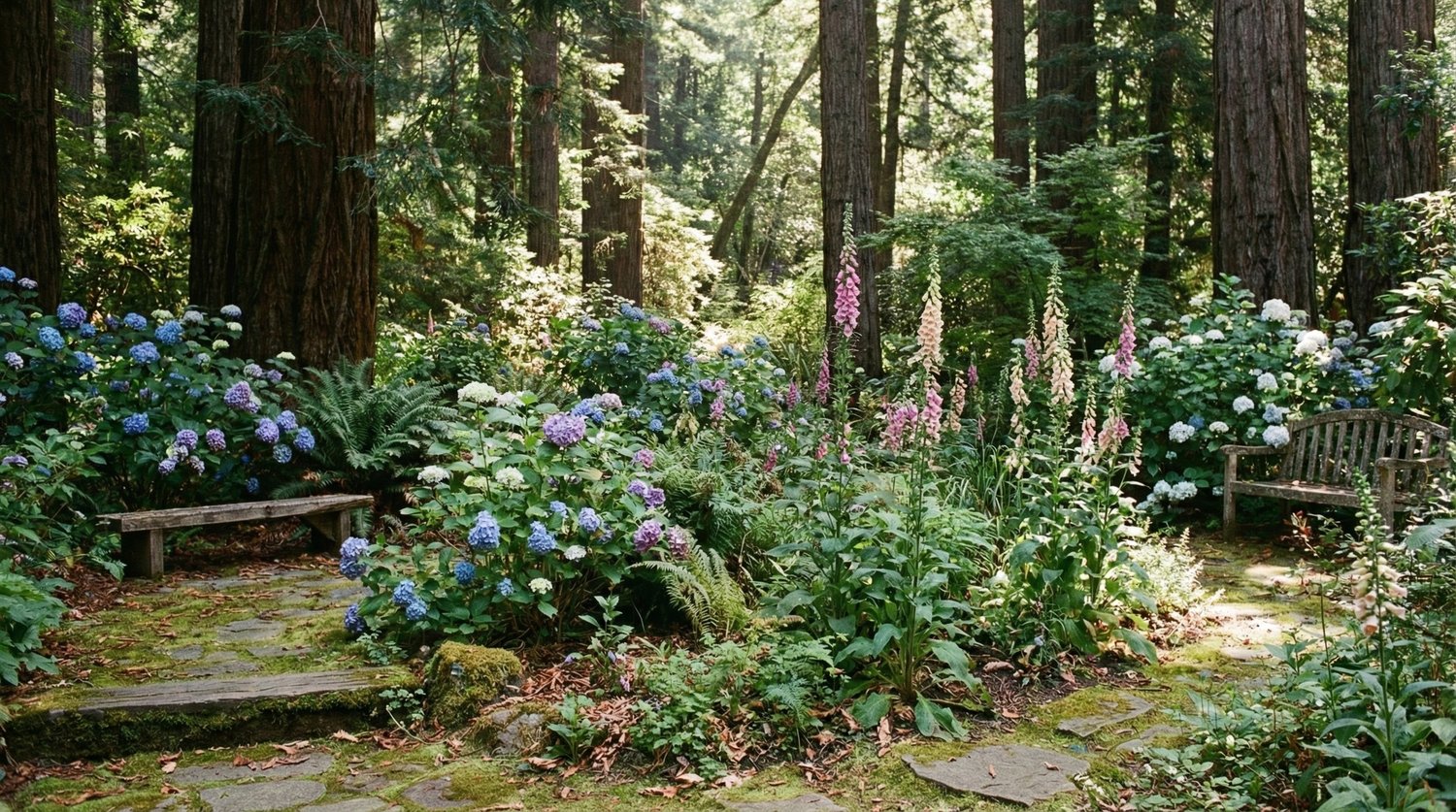
Not every garden is blessed with full sun. If your cutting garden space receives less than six hours of direct sunlight, you might wonder whether growing cut flowers is even possible. The answer is yes, though with realistic expectations and smart variety choices.
While most cut flowers prefer full sun, several beautiful options tolerate or even prefer partial shade. And in Santa Cruz County's coastal areas, "partial shade" often comes with cool temperatures that some flowers appreciate more than blazing heat.
This guide covers the best cut flowers for shadier spots, strategies to maximize light in less-than-ideal conditions, tips on succession planting for continuous blooms,, and realistic expectations for production in partial shade.
Understanding Shade in Santa Cruz County
Not all shade is created equal. Understanding your specific conditions helps you choose appropriate flowers (the UC Master Gardeners recommend carefully assessing light levels before planting):
Dappled shade: Filtered light through trees throughout the day. Many flowers tolerate this well, especially if overall light is adequate.
Morning sun / afternoon shade: Often ideal in warmer areas. Flowers get the gentler morning light without harsh afternoon heat.
Morning shade / afternoon sun: More challenging. Plants miss the cool morning light but get blasted with afternoon heat.
Deep shade: Less than 3 hours of direct sun. Very few cut flowers will produce well. Consider focusing on foliage plants instead.
Coastal fog shade: Our famous marine layer creates a unique type of "shade." On foggy mornings, light is diffused but still present. Many flowers adapted to Mediterranean climates handle this well.
Measure your light: Before planning a shade garden, actually observe your space throughout a full day (and ideally, at different seasons). Morning shade in summer might be full sun in winter when the sun angle is lower.
The Best Cut Flowers for Partial Shade
These flowers produce reasonably well with 4-6 hours of direct sun, or dappled light throughout the day:
Astilbe (Astilbe spp.)
Feathery plumes in pink, red, white, and lavender. Actually prefers partial shade and moist soil. Classic shade garden perennial.
Light needs: Partial to full shade (actually struggles in full sun)
Bloom: June-August
Notes: Needs consistent moisture; deer-resistant
Hydrangeas (Hydrangea spp.)
Large, showy flower heads perfect for arrangements. Many varieties thrive with morning sun and afternoon shade.
Light needs: Morning sun, afternoon shade ideal
Bloom: June-September
Notes: Shrub; well-suited to our acidic coastal soils; mophead and lacecap varieties. UC Master Gardeners note that inland gardens need more shade for hydrangeas, while coastal gardens can tolerate more sun
Sweet William (Dianthus barbatus)
Clusters of spicy-scented flowers in red, pink, white, and bicolors. Tolerates light shade better than most dianthus.
Light needs: Full sun to partial shade
Bloom: May-July
Notes: Biennial or short-lived perennial; fragrant
Foxglove (Digitalis purpurea)
Tall spires of tubular flowers that light up shady corners. Dramatic vertical element for arrangements.
Light needs: Partial shade to full sun
Bloom: May-July
Notes: Biennial; all parts toxic; self-sows readily
Bells of Ireland (Moluccella laevis)
Unusual green spires prized by florists. Tolerates light shade.
Light needs: Full sun to light shade
Bloom: July-September
Notes: Challenging from seed but worth it; dries well
Japanese Anemones (Anemone × hybrida)
Elegant flowers on tall, wiry stems. Pink or white blooms in late summer when shade gardens need color.
Light needs: Partial shade to full sun
Bloom: August-October
Notes: Perennial; may spread; excellent late-season flower
Hellebores (Helleborus spp.)
Sophisticated flowers in unusual colors that bloom in late winter to early spring. Perfect for shady spots.
Light needs: Partial to full shade
Bloom: January-April
Notes: Perennial; deer-resistant; evergreen foliage
Columbine (Aquilegia spp.)
Delicate, spurred flowers in many colors. Native species and hybrids available. Naturalizes in shady gardens.
Light needs: Partial shade to full sun
Bloom: April-June
Notes: Perennial; self-sows; hummingbird favorite
Impatiens (Impatiens walleriana)
While primarily a bedding plant, tall varieties can provide cutting material. True shade lovers.
Light needs: Partial to full shade
Bloom: May-October
Notes: Annual; not drought-tolerant; smaller blooms than most cut flowers
Shade-Tolerant Foliage for Arrangements
Don't forget foliage. Shade gardens often excel at producing greenery for arrangements. The UC Master Gardeners' cut flower guide highlights the value of textured foliage in arrangements:
Hostas (large, textured leaves)
Ferns (delicate, airy texture)
Solomon's seal (arching stems)
Heuchera (colorful foliage)
Lady's mantle (chartreuse flower sprays)
Flowers That Tolerate Light Shade
These flowers prefer full sun but will produce (with reduced yield) in light shade (4-5 hours of direct sun):
| Flower | Notes on Shade Performance |
|---|---|
| Snapdragons | Tolerant; may be leggier |
| Cosmos | Reduced flowering; taller stems |
| Zinnias | Some production; more disease |
| Sweet peas | May do better than in full sun during warm weather |
| Calendula | Tolerates some shade |
| Stock | Good in light shade |
| Larkspur | Some shade tolerance |
| Bachelor's buttons | Moderate production |
Strategies for Shady Cutting Gardens
Maximize available light:
Remove lower tree branches to allow more light through
Prune overhanging branches
Use reflective mulch (white fabric, light-colored gravel) to bounce light onto plants
Paint nearby fences or walls white to reflect light
Position plants where they'll catch any available sun
Work with shade patterns:
Plant sun-lovers in the brightest spots
Reserve shadiest areas for true shade plants
Use containers that can be moved to follow the sun
Adjust expectations:
Expect fewer flowers per plant than in full sun
Allow more space between plants (they'll stretch toward light)
Accept that some popular cut flowers simply won't work
Focus on varieties bred for shade tolerance
Improve air circulation:
Shade gardens can be humid, promoting disease
Space plants generously
Prune surrounding vegetation for airflow
Avoid overhead watering
Feed appropriately:
Don't over-fertilize (produces weak, stretched growth)
Focus on bloom-promoting fertilizers over nitrogen
Maintain good soil health with compost
Partial Shade by Microclimate
Coastal fog belt gardens:
Our fog creates diffused light that many plants tolerate better than true shade. (For more on local conditions, see our guide to Santa Cruz County microclimates.)
Morning fog followed by afternoon sun works well for most cut flowers
Coastal gardens often have "partial shade" from fog that's actually quite bright
Many "full sun" plants perform fine in foggy conditions
Under redwoods:
The deepest shade in the county:
Very few cut flowers will produce well
Focus on hydrangeas, astilbe, hellebores, and foliage
Accept that this isn't ideal cutting garden territory
Consider a separate sunny area for cut flowers
Afternoon shade from buildings/fences:
Often beneficial in inland areas:
Morning sun + afternoon shade is ideal for many flowers
Protects from heat stress
May actually improve production compared to brutal full sun
Creating a Shade Cutting Garden Plan
Small shady area (under 50 sq ft):
Focus on 2-3 shade-tolerant flowers plus foliage:
Hydrangeas (1-2 shrubs provide many stems)
Astilbe (fill between)
Hostas and ferns (foliage)
Medium shady area (50-100 sq ft):
Add more variety:
Hydrangeas
Japanese anemones
Foxglove
Hellebores (winter interest)
Columbine
Shade-tolerant foliage
Light shade area:
Can grow many standard cut flowers with reduced expectations:
Snapdragons
Cosmos (may actually bloom better with some shade in hot weather)
Sweet William
Larkspur
Bachelor's buttons
Where to get flower seeds: For cut-flower and pollinator varieties that do well here, we like Seeds Now, a California company selling non-GMO, open-pollinated, and heirloom seed. (Affiliate link, see our disclosure.)
Frequently Asked Questions
Can I grow dahlias in partial shade?
Dahlias really need full sun (6+ hours). In partial shade, they'll be leggy, produce fewer flowers, and may not bloom until very late season. Better to grow shade-tolerant alternatives.
Why are my shade-garden flowers so tall and floppy?
Plants stretch toward light in shade. This is called etiolation. Provide support (staking or netting), choose naturally short varieties, and accept some legginess as inevitable.
Will cut flowers produce at all in shade?
Yes, but significantly less than in full sun. A flower that produces 20 stems in full sun might produce 5-10 in partial shade. Adjust expectations accordingly.
What's the minimum light for cut flowers?
Most need at least 4 hours of direct sun for reasonable production. Below that, focus on shade-loving plants that happen to work in arrangements (hydrangeas, astilbe) rather than traditional cut flowers.
Are there any cut flowers that actually prefer shade?
Astilbe genuinely prefers partial shade and struggles in full sun. Hydrangeas do best with morning sun and afternoon shade. Hellebores thrive in shade. These are the true shade-lovers.
Can I grow a shade cutting garden under trees?
Under deciduous trees, you may have decent light in spring before leaves emerge. Time your plantings accordingly. Under evergreens, options are more limited.
Free Resources
Download these guides to help plan your garden:
Seasonal Planting Calendar: Timing for all flower types
Microclimate Worksheet: Assess your garden's conditions
Visit our Garden Toolkit for more downloadable resources.
Related Articles
Growing a Cut Flower Garden in Santa Cruz County: A Complete Guide
Growing Snapdragons in Santa Cruz County
Growing Dahlias in Santa Cruz County
