

Put Your Flock to Work: Natural Pest Control for a Coastal Santa Cruz Garden
A few of the product links in this guide are affiliate links. If you buy through one, Ambitious Harvest may earn a small commission at no extra cost to you, which helps keep these guides free. We only point to gear we would use in our own Santa Cruz garden. As an Amazon Associate, we earn from qualifying purchases. Read our full disclosure.
Put Your Flock to Work: Natural Pest Control for a Coastal Santa Cruz Garden
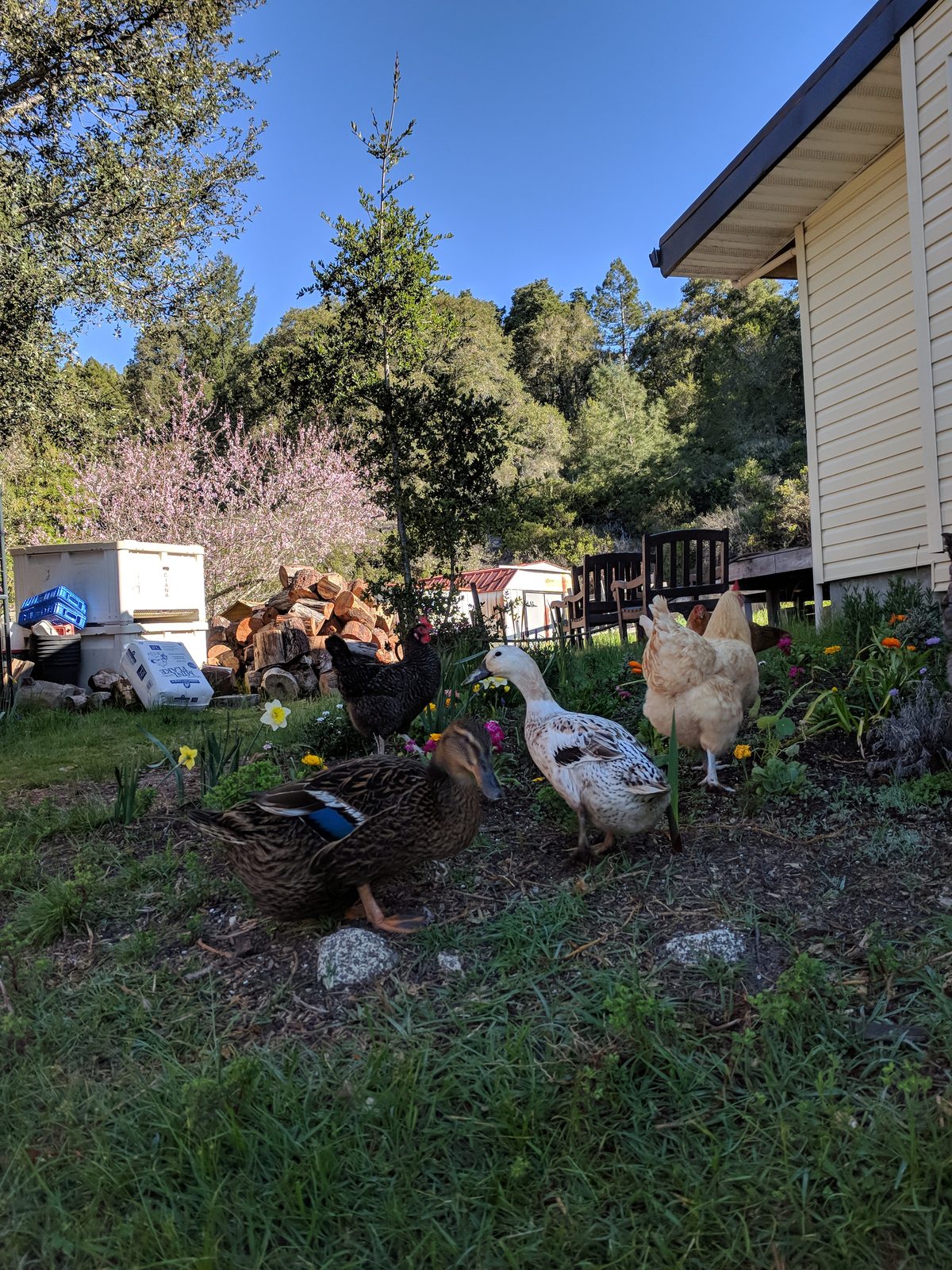
Yes, chickens and ducks genuinely reduce garden pest pressure, but they do it differently. Ducks are the superior choice for slugs, snails, and sowbugs because they forage low and slow without scratching up beds. Chickens excel at earwigs, grubs, larvae, and weed seeds. UC IPM calls snails and slugs among the most destructive pests found in gardens and landscapes, and notes they are most active at night and on cloudy or foggy days, which is most of a Santa Cruz County year. A mixed flock addresses both problems at once.
Why Are Slugs and Snails Such a Problem in Coastal Santa Cruz Gardens?
The coastal fog belt that gives Santa Cruz County its mild climate also creates near-perfect slug and snail habitat. Fog keeps humidity high through morning, delays soil drying, and prolongs the damp nighttime conditions these mollusks need to move and feed. UC IPM identifies the brown garden snail (Cornu aspersum, formerly Helix aspersa) as the dominant snail pest in California gardens, noting that it was introduced from Europe in the 1850s and has no natural predators capable of keeping populations in check without intervention.
In a Santa Cruz garden, slug and snail pressure peaks from October through May, when fog and rain combine with cooler soil temperatures. Summer is slightly better along the coast, but in foggy neighborhoods near the ocean (think the flats of Santa Cruz, Aptos, or the west side), these pests are active year-round. UC IPM calls snails and slugs among the most destructive pests found in gardens and landscapes, and notes that because they prefer succulent foliage and flowers they are primarily pests of seedlings and herbaceous plants.
Control options are real: copper barriers, iron phosphate baits, hand-picking under boards at night. But the most satisfying long-term approach may be the one that also gives you eggs: deploying ducks.
What Do Ducks Actually Eat in the Garden, and How Effective Are They?
Ducks are exceptional at hunting mollusks. Their bills are designed for rooting through leaf litter, mulch, and soil surface debris, which is exactly where slugs and snails hide. Khaki Campbells, Indian Runners, and Welsh Harlequins are all known as active foragers and are frequently used in market garden pest control settings. A pair of Runners working a garden bed will locate and consume slugs and snails that are invisible to the gardener's eye, including the small gray-brown soil-dwelling slugs that do significant damage without being noticed.
Beyond mollusks, ducks target sowbugs and pillbugs (crustaceans, not insects; they are land-dwelling isopods), which are another common coastal garden pest. According to UC IPM, sowbugs feed primarily on decaying organic matter but will damage seedlings, roots, and ripening strawberries in high-population years. Ducks consume sowbugs readily and can significantly reduce populations in areas with heavy mulch cover where sowbugs concentrate.
What ducks do not do well: they do not scratch or dig like chickens, so they miss subsurface grubs and larvae. They are less interested in weed seeds. And they are not precise. A duck patrolling a bed of kale seedlings will eat the seedlings as readily as the slugs. Effective duck deployment requires either mature, established plants or physical barriers around vulnerable areas. More on that below.
One caveat: ducks reduce slug and snail populations; they do not eliminate them. UC IPM does not endorse any single biological control as a complete solution, and that applies here. A well-managed duck flock combined with good garden sanitation (removing debris piles, boards, and other daytime hiding spots) will produce noticeably better results than either approach alone. For guidance on which duck breeds work best in a California backyard, see Keeping Ducks in Your California Garden.
What Do Chickens Actually Eat in the Garden, and How Effective Are They?
Chickens are generalist foragers and opportunistic hunters. In the garden, they target earwigs, beetle grubs, cutworm larvae, crane fly larvae (leatherjackets), and a wide range of other soil-dwelling insects. UC IPM notes that earwigs (Forficula auricularia) are a persistent coastal pest that damages seedlings, dahlias, and strawberries, and that control typically requires physical traps or barrier methods. Chickens are natural earwig hunters, working through leaf litter and debris with the same energy that earwigs use to hide in it.
Grubs are another area where chickens shine. A flock scratching through a cleared bed between planting seasons can significantly reduce populations of white grubs (larvae of various beetle species) and cutworm pupae that overwinter in the soil. This is one of the most practical uses of a chicken tractor: park it over a bed you plan to replant in four to six weeks, let the birds work through the soil, then move them on before planting.
Chickens also eat weed seeds, which has a cumulative benefit over years of rotational garden access. This is not as visible or immediate as slug control, but Santa Cruz gardeners who have kept backyard flocks for a decade often report noticeable reductions in weed pressure in areas where chickens have had regular access.
The limitation: chickens scratch and dig aggressively. They will uproot seedlings, disturb mulch, compact soil in concentrated areas, and eat anything that looks like food, including your lettuce and your strawberries. They are not careful. Managing chicken garden access is about timing and containment, not free-range trust. Learn more about building that balance in How Your Flock Can Work Your Garden.
How Do You Deploy Your Flock Without Destroying the Garden?
The most common mistake is letting birds into an active garden without any structure. One unsupervised afternoon with four chickens in your vegetable beds will teach you the limits of free-range optimism. The solution is not to give up on flock pest control; it is to deploy birds with intention.
Chicken tractors for cleared beds: A portable chicken tractor is the most controlled approach. Move it over a bed that has been harvested and cleared but not yet replanted. Leave it in place for three to five days, then move the flock and let the bed rest before planting. The birds eat the pests, deposit manure, and scratch the surface without being able to reach active plantings.
Supervised access to established beds: Once plants are mature, chickens can move through them for short periods (fifteen to thirty minutes) under observation. Mature kale, chard, squash, and tomatoes can handle some chicken traffic without significant damage. Seedlings cannot. The rule is simple: if it can survive being bumped by a large chicken, it is probably fine for a supervised visit.
Ducks on patrol in active beds: Ducks are gentler than chickens. They do not scratch, and their bills are designed for scooping rather than digging. A pair of Runners in a mature vegetable bed does far less structural damage than a pair of hens. The trade-off is that ducks are messier with water and will trample low-growing plants. Keep ducks out of seedling trays and freshly planted areas, but they can work relatively freely through established beds with some monitoring.
Fencing vulnerable plants: Rather than fencing the entire garden against the flock, fence the areas that matter most. A simple ring of chicken wire around a bed of young transplants, or around a strawberry patch in fruiting season, lets the birds work the surrounding paths and borders while protecting the vulnerable area. This is more flexible than full perimeter exclusion and lets you adjust zone by zone as the season changes.
Timing with pest pressure: On the coast, slug and snail activity peaks on foggy mornings from October through April. Letting ducks out early on foggy mornings to patrol paths and bed edges is the most effective timing for mollusk control. For earwig hunting, chickens are most effective after you have removed debris piles, boards, and anything else that serves as daytime shelter. Remove the shelter first, then let the birds work the exposed area. For more on managing your flock's access to the garden safely, read Managing Free-Range Time: Protecting Plants and Best and Worst Garden Plants for a Free-Range Flock.
What Are the Real Trade-Offs and Limits of Flock Pest Control?
Anyone who tells you that a backyard flock will solve your garden pest problems is overstating the case. The trade-offs are real, and good pest management planning accounts for them.
They eat beneficial insects too. Ground beetles (Carabidae), which are voracious predators of slug eggs and insect larvae, live in the same leaf litter that chickens and ducks work through. Rove beetles, ground-nesting bees, and predatory wasps are all at risk in areas where poultry have unrestricted access. A flock working through the garden indiscriminately reduces the beneficial insect population alongside the pest population. This is why rotation and containment matter: clear defined areas, let the birds work, then give the land time to recover and recolonize with beneficials before introducing the birds again.
They eat your seedlings. This is not a minor inconvenience. Chickens and ducks do not distinguish between pest-damaged lettuce and healthy transplants. Young seedlings are particularly vulnerable because they are tender and small enough to be consumed quickly. The solution is strict exclusion until plants are established, not optimism about bird behavior.
They compact soil. A flock of four chickens working the same bed for a week will compact the top few inches of soil noticeably. This matters more in clay-heavy soils (common in parts of Santa Cruz County) than in well-amended raised beds. Rotate birds through areas rather than leaving them concentrated in one spot.
They do not control everything. UC IPM's integrated pest management framework makes clear that no single tactic controls all pests, and this applies to poultry. Aphids, spider mites, whiteflies, tomato hornworm, and many other common garden pests are either too small, too high up the plant, or simply not on a duck or chicken's preferred menu. Poultry pest control is one layer of a broader IPM strategy, not a replacement for it.
Manure management matters. Chicken and duck manure is high in nitrogen, which is a benefit in the right quantities and a problem if birds concentrate in one spot. Fresh poultry manure can burn plant roots and in excess creates nutrient runoff. Allow manure to compost before using it directly on beds, and rotate bird access to distribute deposits evenly.
How Does Flock Pest Control Fit into an Integrated Pest Management Approach?
UC IPM defines integrated pest management as combining biological, cultural, physical, and chemical controls in a coordinated strategy, using the least disruptive methods first. Poultry fit cleanly into the biological and cultural control categories, but they work best when supported by the other components.
Cultural controls alongside your flock: Good sanitation removes the conditions that pest populations depend on. Removing boards, dense leaf debris, and moist hiding spots from garden beds reduces slug and earwig habitat before your birds ever get involved. Watering in the morning rather than the evening means beds are drier by nightfall, when slugs and snails are most active. These practices make your flock's pest control work more effective because they concentrate the pests in accessible areas.
Physical controls: Copper tape barriers on raised bed edges slow snail movement into beds. Iron phosphate slug bait (brands like Sluggo, which are certified for organic use) can be applied in high-pressure periods without harming poultry when dry. UC IPM notes that iron phosphate baits degrade into fertilizer components and are among the lowest-risk molluscicides available. Use bait in areas where your birds cannot access, such as inside fenced beds during peak seedling vulnerability.
Monitoring: Walk your garden at dusk or early morning during fog season. Place a board flat on the soil and check it at dawn; you will get a census of what is actually living in your beds. This tells you whether your flock is making a dent in the population and where the remaining pressure is concentrated.
The most effective pest management approach in a Santa Cruz coastal garden combines: ducks for slug and snail patrol in paths and mature bed areas, chickens in a tractor for grub and earwig reduction in cleared beds between seasons, iron phosphate bait for seedling protection during establishment, good sanitation to concentrate pests in accessible areas, and monitoring to track what is working. See Chickens or Ducks for a Santa Cruz Backyard for help deciding which bird to start with. If you are still building your flock, visit /build-your-flock for breed guidance and setup resources.
What Plants Should You Protect When Your Flock Is Working the Garden?
Some plants are more vulnerable than others, and knowing which ones need protection lets you deploy your flock confidently in areas where they can do the most good.
Always fence these from birds: seedlings and transplants under six weeks old; strawberries during fruiting; leafy salad greens (chickens strip them to the stem); young bean seedlings; and any area freshly seeded. These are not negotiable. The risk of loss is too high to experiment.
Generally safe for supervised access once established: mature squash, pumpkins, tomatoes, peppers, kale (established plants handle light chicken browsing), and perennial herbs like rosemary and sage, which most birds find unpalatable.
Grow flock-friendly plants near working areas: Planting borage, calendula, comfrey, and clover along bed edges and in garden paths gives your birds a forage resource while they work the pest population. These plants also attract beneficial insects when your birds are not in the area, creating a balanced habitat. For complete guidance on pairing garden crops with your flock, see Growing Flock Treats: Best Garden Crops for Chickens, Ducks, and Geese.
A note on beneficial insects: avoid deploying birds in areas where you have established flowering habitat for native bees or predatory wasps. Ground-nesting bees, which are common in Santa Cruz County's open soils, are particularly vulnerable to scratching. Designate "no poultry zones" around your insectary plantings and maintain them strictly. This is not a reason to avoid flock pest control; it is a reason to plan your garden layout with both strategies in mind from the start.
How Do You Get Started with Flock-Based Pest Control?
If you already have birds, you can begin integrating them into your garden pest control strategy this season with minimal setup. If you are still deciding on what to keep, a pair of Indian Runner ducks is one of the most practical starting points for a coastal Santa Cruz garden specifically because of the slug and snail problem. Two Runners require relatively little space, are friendly and manageable, and will make a visible dent in mollusk populations within a few weeks of regular morning access to garden paths.
The practical starting sequence: set up fencing around your most vulnerable beds first, so birds cannot access seedlings even if they escape containment. Then introduce birds to one cleared or fallow area and observe their foraging behavior for a week. Watch what they prioritize, where they concentrate, and whether they are finding food. Move them to a new area once they have worked through the first. Build the rotation from there.
Track results simply: before introducing birds to a new area, do a quick slug count under boards at dusk. Do the same count two weeks after bird access. The change will be visible in high-pressure areas and modest in areas with lower baseline populations. This monitoring habit connects your flock management to your actual pest pressure and helps you make better decisions over time.
For more on integrating your flock with your food garden, the How Your Flock Can Work Your Garden guide covers rotation planning, soil management, and the year-round rhythm of coordinating birds and beds. Your flock is a resource, and like any resource, the results improve when you use it with intention. The full toolkit for food garden planning is at Your Garden Toolkit.
Frequently Asked Questions
Do ducks really control slugs and snails in the garden?
Ducks are genuinely effective at reducing slug and snail populations, particularly in the low-growing, moist conditions that coastal Santa Cruz gardens provide. They forage actively through mulch and leaf litter with their bills, locating mollusks that are invisible at a casual glance. UC IPM notes that snails and slugs have many natural enemies but that most are rarely effective enough to provide satisfactory control in the garden, and that ducks, geese, or chickens penned in an infested area can be effective snail predators. Ducks reduce populations; they do not eliminate them, especially in high-pressure coastal fog conditions.
Will chickens kill my garden if I let them in?
Chickens can cause significant damage to active garden beds, particularly to seedlings, leafy greens, and loose-mulched areas where they scratch intensively. The key variable is timing and plant maturity. A flock in a cleared bed between plantings does excellent pest control work with minimal harm. The same flock in a bed of lettuce transplants will strip it within minutes. The solution is clear containment of vulnerable areas, not avoiding chicken garden access altogether. UC ANR's Small Acreage Landowners guide shows ducks grazed in a rotational duck tractor, moved around in portable electric fence pastures with a portable coop for shelter and laying.
What is the best duck breed for slug control in a Santa Cruz garden?
Indian Runners, Khaki Campbells, and Welsh Harlequins are the most consistently recommended duck breeds for garden pest control. Runners in particular are active, upright-postured foragers that cover a lot of ground efficiently. All three breeds are good egg layers as well, making them practical dual-purpose birds for a backyard situation. Muscovies are also used for pest control but have different temperament and space requirements. For detailed breed comparisons suited to California backyard conditions, see Keeping Ducks in Your California Garden.
Is it safe to use iron phosphate slug bait in a garden where ducks forage?
Iron phosphate slug baits such as Sluggo are considered low-risk compared to metaldehyde baits, which are toxic to birds and mammals. UC IPM notes that some iron phosphate formulations are listed as acceptable for organic systems and calls them a good choice for an integrated pest management program in the garden. However, ingesting large quantities of any bait is inadvisable for birds. Apply iron phosphate bait in enclosed raised beds during the seedling establishment phase when birds are excluded anyway, and allow the bait to degrade before reintroducing ducks. This targeted approach eliminates the exposure risk while protecting your most vulnerable plants.
How do I protect ground-nesting native bees from my chickens and ducks?
Ground-nesting bees, including alkali bees, sweat bees, and digger bees that are common in Santa Cruz County's exposed soils, are vulnerable to scratching by poultry. The most practical approach is to designate no-poultry zones around any areas with established native bee nesting sites, which are usually identifiable as small holes or mounds in bare or sparsely vegetated soil. Fence these zones permanently. About 70 percent of California's native bees nest in the ground, so the UC Master Gardener Program of Alameda County sets aside ground nesting sites of relatively soft, bare dirt kept free of grass and mulch.
How do chickens compare to chemical pesticides for earwig control?
For garden earwig control, chickens offer a non-toxic alternative that targets the pest in its daytime hiding spots without leaving chemical residues. UC IPM's earwig management guide notes that chemical controls are rarely necessary and that physical removal and trapping (using moist rolled newspaper or cardboard traps) is effective for most gardens. Chickens accomplish similar results more systematically when they have access to debris areas where earwigs shelter. The combination of removing cover, setting traps, and allowing supervised chicken access during the morning hours when earwigs are returning to shelter is the most integrated approach.
Can I use a chicken tractor year-round in a coastal Santa Cruz garden?
A chicken tractor works year-round in coastal Santa Cruz County, but winter use requires attention to soil conditions. Our wet winters saturate garden soil, and a heavy tractor with four birds concentrated in one area will compact wet clay soils significantly more than the same setup on summer soil. Move the tractor every two to three days rather than weekly during rainy periods, and place it on beds with good drainage or raised bed construction when possible. The pest control value in winter is primarily surface-level: earwigs, some slugs, and overwintering larvae are accessible even in cold, wet conditions.
