

Best and Worst Garden Plants for a Free-Range Flock
A few of the product links in this guide are affiliate links. If you buy through one, Ambitious Harvest may earn a small commission at no extra cost to you, which helps keep these guides free. We only point to gear we would use in our own Santa Cruz garden. As an Amazon Associate, we earn from qualifying purchases. Read our full disclosure.
The Best and Worst Garden Plants for a Free-Range Flock
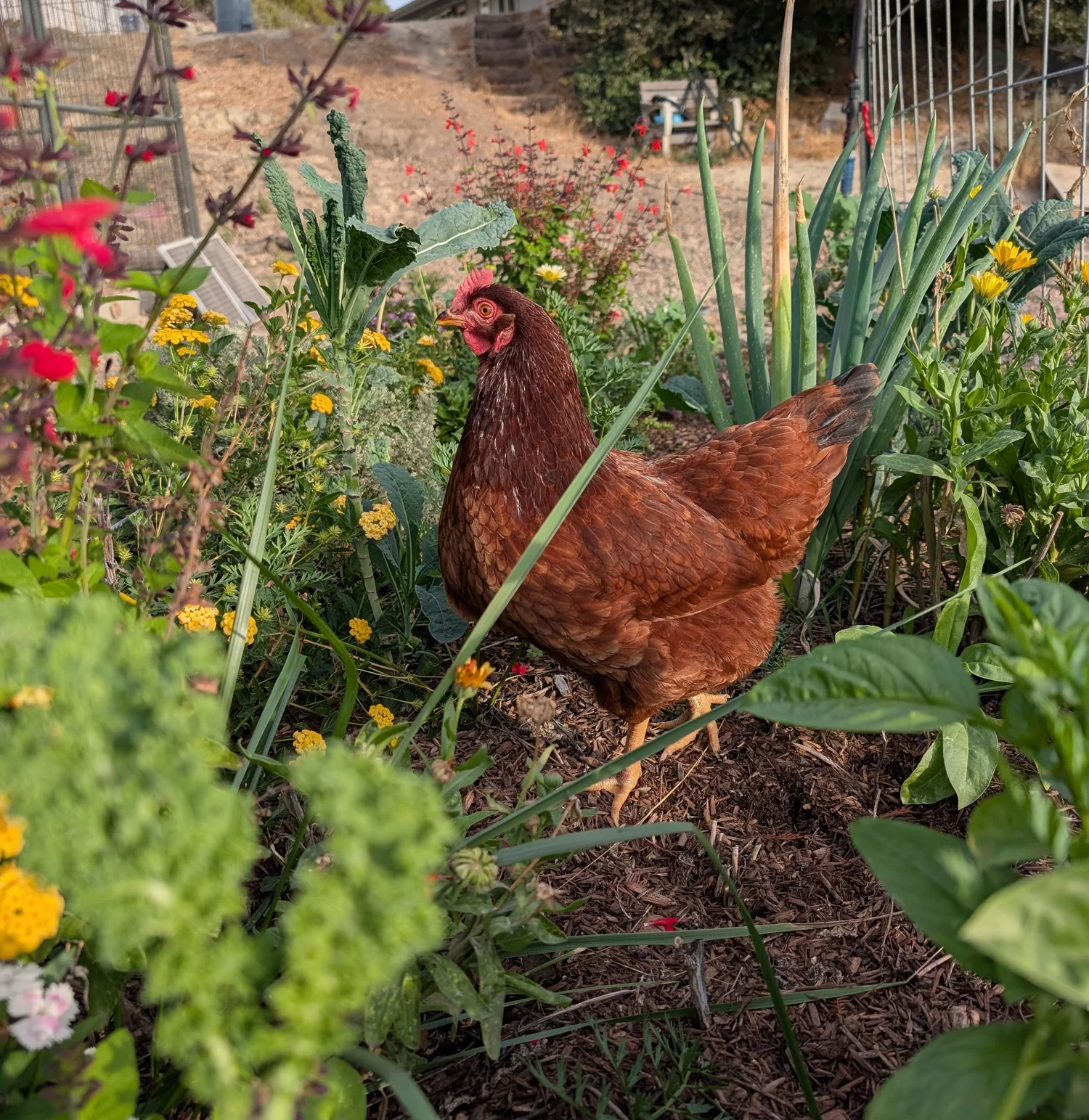
Established woody herbs, ornamental grasses, and mature shrubs survive free-range poultry with little damage, while tender annuals, leafy greens, and ground-cover fruits are consistently destroyed. A UC ANR Master Gardener account of gardening with free-range chickens found that most plant damage came not from what the birds ate but from their scratching and dust bathing, so plan on fencing the vegetable beds.
Why Does Plant Selection Matter When You Keep a Garden Flock?
If you keep chickens, ducks, or geese and also garden, your plant choices determine how much conflict you will have between the two activities. Some plants coexist beautifully with a free-range flock. Others will be destroyed within hours of the birds gaining access. And a handful of common garden plants are genuinely toxic to poultry and should be removed from any area where birds forage.
After years of keeping a mixed flock in our Boulder Creek garden (chickens, ducks, and a Toulouse goose), I have a clear picture of what survives, what dies, and what thrives alongside poultry. This is not theoretical. These are direct observations from watching our birds interact with hundreds of different plants in our garden.
Understanding these categories lets you design a garden that works with your flock rather than against it. You can plant the survivors in areas where the flock free-ranges, protect the vulnerable plants with fencing or exclusion, and remove the dangerous plants entirely.
What Plants Do Free-Range Birds Leave Alone?
These plants consistently survive flock access in our garden and in the gardens of other Santa Cruz County flock keepers I have talked with. They are either too tough, too aromatic, or too unpalatable for poultry to bother with.
Woody herbs
Rosemary, lavender, sage, oregano, and thyme are the champions of flock-compatible planting. Their strong aromatic oils make them unappetizing to most poultry. Established rosemary bushes are essentially flock-proof. Even our goose, who will sample almost any green plant, walks past the rosemary without a second glance.
These herbs also provide functional benefits in a flock garden. They attract beneficial pollinators, their aromatic compounds may have mild pest-repellent properties around the coop, and some (particularly oregano and thyme) have antimicrobial properties that may benefit flock health when birds nibble them occasionally. According to Penn State Extension, oregano and thyme contain compounds (carvacrol and thymol) that have shown antimicrobial activity in poultry research.
Ornamental grasses
Established clumping grasses (like fountain grass, deer grass, and blue fescue) survive flock traffic well. Their dense root systems resist scratching, and the foliage is tough enough that birds mostly leave it alone. The exception is very young grass plantings, which chickens can scratch out before they establish. Protect new ornamental grass plantings with wire cages until the root system is well established (about one growing season).
Mature shrubs and perennials
Most established shrubs are too woody and tough for poultry to damage. California natives like ceanothus, manzanita, toyon, and coffeeberry are excellent choices for flock areas. They provide shade and cover (which birds appreciate) without being damaged by scratching or browsing. Native shrubs also support the local insect populations that your birds forage on.
Established perennial flowers like rudbeckia, echinacea, salvias, and yarrow handle flock traffic well. Their deep root systems survive chicken scratching, and the plants regrow quickly even if top growth is damaged. Plant these in drifts along fence lines and garden borders where the flock free-ranges.
Fruit trees and established vines
Mature fruit trees are excellent in flock areas. The trees provide shade for birds (reducing heat stress in summer), and the birds provide pest control and fallen-fruit cleanup under the trees. Apple, pear, plum, citrus, and fig trees all coexist well with poultry once the trunk is thick enough to resist pecking (generally 3 inches in diameter or more).
Established grape vines, kiwi vines, and passion fruit vines are also flock-compatible. The vine growth is above bird reach, and the birds clean up fallen fruit and forage for insects in the mulch beneath.
Young fruit trees need trunk protection (hardware cloth wraps) and root zone protection (a wire cage around the base) until established. Chickens will scratch up the soil around young tree roots, which can damage or kill newly planted trees.
Tough ground covers
Some ground covers withstand moderate flock traffic: creeping thyme, white clover, and native strawberry (Fragaria vesca, though birds will eat the small fruit). These are good choices for pathways and open areas in the free-range zone. They provide a living surface that handles foot traffic and regrows from scratching damage.
White clover is particularly valuable in a flock garden. It fixes nitrogen in the soil, provides forage for bees, stays green through our mild Santa Cruz County winters, and regrows aggressively after chicken scratching. Our Toulouse goose enjoys grazing white clover, which keeps it at an attractive height.
What Plants Will a Free-Range Flock Destroy?
These are the plants that consistently suffer or die when exposed to flock access. If you grow them, protect them with fencing.
Leafy greens
Lettuce, spinach, chard, arugula, and other tender greens are top-tier poultry food. Chickens eat them, ducks eat them, and geese eat them with particular enthusiasm. Geese will prioritize tender greens over almost any other food source. There is no variety of leafy green that survives unrestricted flock access.
If you grow greens in a flock garden, they need permanent physical protection: fencing around the bed, row cover tunnels, or raised beds with hinged netting covers.
Young seedlings and transplants
Any plant under about 6 inches tall is at risk. Chickens scratch them out of the soil. Ducks step on them. Geese eat them. It does not matter what species the seedling is. Anything small and tender is vulnerable to physical damage even if the plant itself is not something birds would eat.
Strawberries
Every poultry species loves strawberries. Every single one. Chickens peck them, ducks gobble them, geese demolish them. If you grow strawberries and keep poultry, the strawberry bed must be completely enclosed. This is non-negotiable. Even a single afternoon of flock access will strip a strawberry patch.
Peas and beans
Young pea and bean plants are eaten by chickens and geese. Once established and climbing on supports, the upper growth may survive, but the lower leaves and any ground-level growth will be stripped. Pea shoots are a particular favorite. If you grow peas in a flock garden, fence them until they are well established and climbing (at least 12 inches tall).
Brassica transplants
Young broccoli, cauliflower, cabbage, and kale transplants are extremely vulnerable. Chickens will peck the leaves and scratch around the base. Geese will eat the entire plant. Once brassicas are well established (large, sturdy plants with thick stems), they can tolerate some chicken traffic, but young transplants need protection.
Interestingly, mature kale and collard greens can survive moderate flock access. The lower leaves may get eaten, but the plants continue to grow from the top. Some gardeners deliberately leave the lower leaves for their flock and harvest the upper growth for themselves.
Low-growing fruits
Melons, ground cherries, cucumbers, and squash with fruit resting on the ground are all at risk. Birds will peck holes in melons, eat ground cherries, and sample cucumbers. Trellising these crops (vertically growing cucumbers and small melons on supports) keeps the fruit out of bird reach while allowing the flock to patrol for pests at ground level.
Newly applied mulch
While not a plant, mulch deserves mention. Chickens will scatter freshly applied mulch across paths and into other beds within hours. They scratch through mulch searching for insects, and their powerful backward-kicking motion sends material flying. Wait 2 to 3 weeks after mulching before allowing flock access, or use heavy mulch materials (wood chips larger than 2 inches) that chickens cannot easily move.
What Toxic Plants Should You Remove From Flock Areas?
Most poultry have a natural instinct to avoid genuinely toxic plants, and poisoning from garden plants is uncommon in well-fed flocks with diverse foraging options. However, several common garden plants are toxic enough that removing them from the free-range area is a sensible precaution.
UC Davis Veterinary Medicine lists oleander and castor bean among plants toxic to birds and poultry, and the plants below are all worth keeping out of any area your flock forages:
Nightshade family (green parts): The leaves and stems of tomato, potato, eggplant, and pepper plants contain solanine, which is toxic to poultry. The ripe fruits are safe (and chickens love tomatoes), but do not let your flock eat the green foliage. In practice, most chickens leave tomato and potato foliage alone due to its bitter taste, but young or curious birds may sample it.
Oleander: All parts of oleander are highly toxic to poultry and most other animals. If you have oleander growing anywhere in your flock's range, remove it. This plant is common in California landscapes, and while birds usually avoid it, the consequences of ingestion are severe (cardiac arrest).
Foxglove: Another cardiac toxin. All parts of the foxglove plant are poisonous. If you grow foxglove as an ornamental, keep it in an area the flock cannot access.
Azalea and rhododendron: These contain grayanotoxins that cause digestive and cardiac problems. Common in Santa Cruz County landscapes, especially in shaded, acidic-soil areas. Remove from flock range areas or fence them off.
Castor bean: Contains ricin, one of the most toxic naturally occurring substances. Castor bean plants grow readily as volunteers in Santa Cruz County. Remove any you find in or near the flock area.
Rhubarb leaves: While the stalks are edible for humans, rhubarb leaves contain oxalic acid at concentrations toxic to poultry. If you grow rhubarb, fence it from the flock or remove fallen leaves promptly.
Yew: All parts of yew (Taxus) are highly toxic. The berries' fleshy coating is the only non-toxic part, but the seeds within are lethal. Remove yew from any area where poultry forage.
A general rule: if you are unsure whether a plant is toxic to poultry, keep it fenced from the flock until you can verify. The ASPCA Animal Poison Control Center and UC Davis Veterinary Medicine maintain lists of plants toxic to animals, and these are good references for flock keepers.
How Can You Design a Garden That Works With Your Flock?
The most successful flock gardens are designed with bird access in mind from the start, rather than trying to retrofit flock management into an existing garden layout.
Zone-based garden design
Divide your garden into three zones:
Zone 1: Always open to the flock. This includes pathways, under fruit trees, fence lines, lawn areas, and established ornamental beds planted with flock-compatible species. These areas are permanently available for free-ranging. Plant them with the survivors listed above: woody herbs, native shrubs, ornamental grasses, and tough perennials.
Zone 2: Seasonally open to the flock. These are your vegetable beds, which alternate between growing (flock excluded) and fallow (flock welcomed for soil work and pest cleanup). Equip these beds with removable fencing or covers so you can quickly open or close them to the flock based on planting status.
Zone 3: Always protected from the flock. This includes the strawberry patch, the salad greens bed, the seedling nursery, and any permanent plantings that birds would destroy. These areas have permanent fencing or netting. The flock never accesses them.
Buffer plantings
Plant flock-resistant species around the edges of protected zones. A border of rosemary, lavender, or ornamental grasses along the fence line of your protected vegetable garden serves as both a visual screen and a foraging zone for the flock. Birds tend to forage along edges and borders, so providing attractive foraging at the boundary of a protected zone keeps them engaged there rather than looking for ways through the fence.
Shade and cover plantings
Free-ranging birds need shade, especially during our warm Santa Cruz County summers. Plant deciduous fruit trees or install shade structures in the free-range area. Birds that have access to shade are calmer, less stressed, and less likely to seek out your garden beds for shade and shelter. A row of fruit trees along the edge of the free-range area provides shade, fruit for gleaning, and an insect-rich foraging zone.
Cover plantings (dense shrubs or ornamental grasses that birds can duck into) provide predator protection during free-range time. Hawks are less likely to strike near cover, and birds instinctively seek cover when they see a raptor shadow. Plant dense shrubs at intervals across the free-range area so no bird is ever more than 10 to 15 feet from cover.
For more on integrating your flock into garden work, see How Your Flock Can Work Your Garden: Pest Control, Composting, and Soil Prep.
What Bird-Friendly Plantings Benefit the Flock?
Beyond plants that merely survive flock access, some plants actively benefit your birds.
Comfrey: This deep-rooted perennial accumulates minerals from the subsoil and produces large, protein-rich leaves that poultry enjoy. Plant comfrey along fence lines where you can cut leaves and feed them to the flock. Chickens, ducks, and geese all eat comfrey leaves readily. Comfrey also makes an excellent compost activator and mulch material.
Sunflowers: Grow sunflowers for the seeds, which are a high-fat, high-protein treat for all poultry species. Let the seed heads dry on the stalk, then cut and offer to the flock. The tall stalks also provide summer shade during the growing season.
Calendula and nasturtium: Both are edible flowers that chickens enjoy, and both reseed readily. Plant them in the flock's free-range area as a rotating self-sowing treat. Nasturtium also has mild antiparasitic properties and is sometimes added to poultry feed as a natural health supplement.
Elderberry: Established elderberry bushes are flock-resistant (birds leave the woody growth alone) and produce berries that some poultry enjoy. Blue elderberry (Sambucus nigra ssp. caerulea) is native to the Santa Cruz Mountains and grows well in our climate. The berries are ripe in late summer and fall.
Cover crops: Annual cover crops like crimson clover, fava beans, and annual ryegrass serve double duty: they improve soil during the growing season and provide forage for the flock when terminated. Let chickens scratch through recently mowed cover crops to eat seeds and insects.
For strategies on managing your flock's garden time, see Managing Free-Range Time: Protecting Plants While Your Birds Work.
Frequently Asked Questions
Will chickens eat tomato plants?
Chickens generally leave tomato plant foliage alone because of its bitter taste, but they will eagerly eat ripe tomatoes. The green parts of tomato plants (leaves, stems, unripe fruit) contain solanine, which is mildly toxic to poultry. Fence the flock away from young tomato plants and other nightshade foliage.
Are any common California native plants toxic to poultry?
Most California native plants are safe around poultry. Ceanothus, manzanita, toyon, coffeeberry, California fuchsia, and native grasses are all non-toxic and flock-compatible. Angel's trumpet (Brugmansia), sometimes found in California gardens though not native, is highly toxic to all animals. Check specific plants against the ASPCA toxic plant database if uncertain.
Can you grow a food garden and keep free-range poultry?
Absolutely. The key is physical separation during growing periods and strategic access during fallow periods. Many productive vegetable gardeners in Santa Cruz County also keep flocks. Temporary fencing, rotational access, and strategic plant selection make it work. The pest control and soil benefits the flock provides can actually increase garden productivity.
Do geese eat different plants than chickens?
Yes. Geese are primarily grazers and prefer grass, clover, and broadleaf weeds over most garden plants. They will eat leafy greens, young seedlings, and grain crops but generally leave mature, woody plants alone. According to the Livestock Conservancy, geese were historically used as weeder birds in crop fields because of their preference for grass over many broadleaf crops.
Will ducks damage garden plants?
Ducks cause far less plant damage than chickens because they do not scratch the soil. They forage by probing with their bills and walking through beds. The main risk is trampling of small seedlings and eating of low-growing soft fruits (strawberries, ground cherries). Established plants with sturdy stems survive duck access with minimal damage.
How do you protect herbs from a flock?
Most woody, aromatic herbs (rosemary, lavender, sage, thyme, oregano) do not need protection because birds avoid them. Tender, leafy herbs (basil, cilantro, parsley, dill) are eaten readily by chickens and need the same protection as lettuce and greens. Grow vulnerable herbs in a protected zone or in containers on a raised surface above bird reach.
Can free-range poultry damage established perennial beds?
Chickens can damage perennial beds through scratching, which displaces mulch and can uproot shallow-rooted perennials. Ducks and geese cause less damage. Established, deep-rooted perennials (rudbeckia, echinacea, daylilies, ornamental grasses) typically survive chicken traffic. Shallow-rooted perennials, recently divided plants, and newly planted perennials need temporary protection until established.
Is it safe for birds to eat fallen fruit from garden trees?
Yes, fallen fruit from apple, pear, plum, citrus, fig, and most other common fruit trees is safe and nutritious for all poultry species. In fact, letting the flock clean up fallen fruit is beneficial because it removes pest habitat (codling moth and other fruit pests overwinter in fallen fruit). According to UC IPM, sanitation of fallen fruit is a key component of organic orchard pest management.
