

Keeping Ducks in Your California Garden: Water, Ponds, Slug Patrol
Some links in this guide are affiliate links. If you buy through them, we may earn a small commission at no extra cost to you. Read our full disclosure.
Keeping Ducks in Your California Garden: Water, Ponds, and Slug Patrol
Garden ducks reduce slug and snail populations by up to 90 percent through natural foraging, with Indian Runner ducks consuming an estimated 100 or more slugs per day during peak activity. According to UC Agriculture and Natural Resources, integrated pest management strategies that incorporate duck foraging in garden systems significantly reduce the need for chemical slug controls, particularly in the damp coastal conditions common along the Central California coast (UC ANR Integrated Pest Management Program).
Why Are Ducks the Best Garden Poultry for Coastal California?
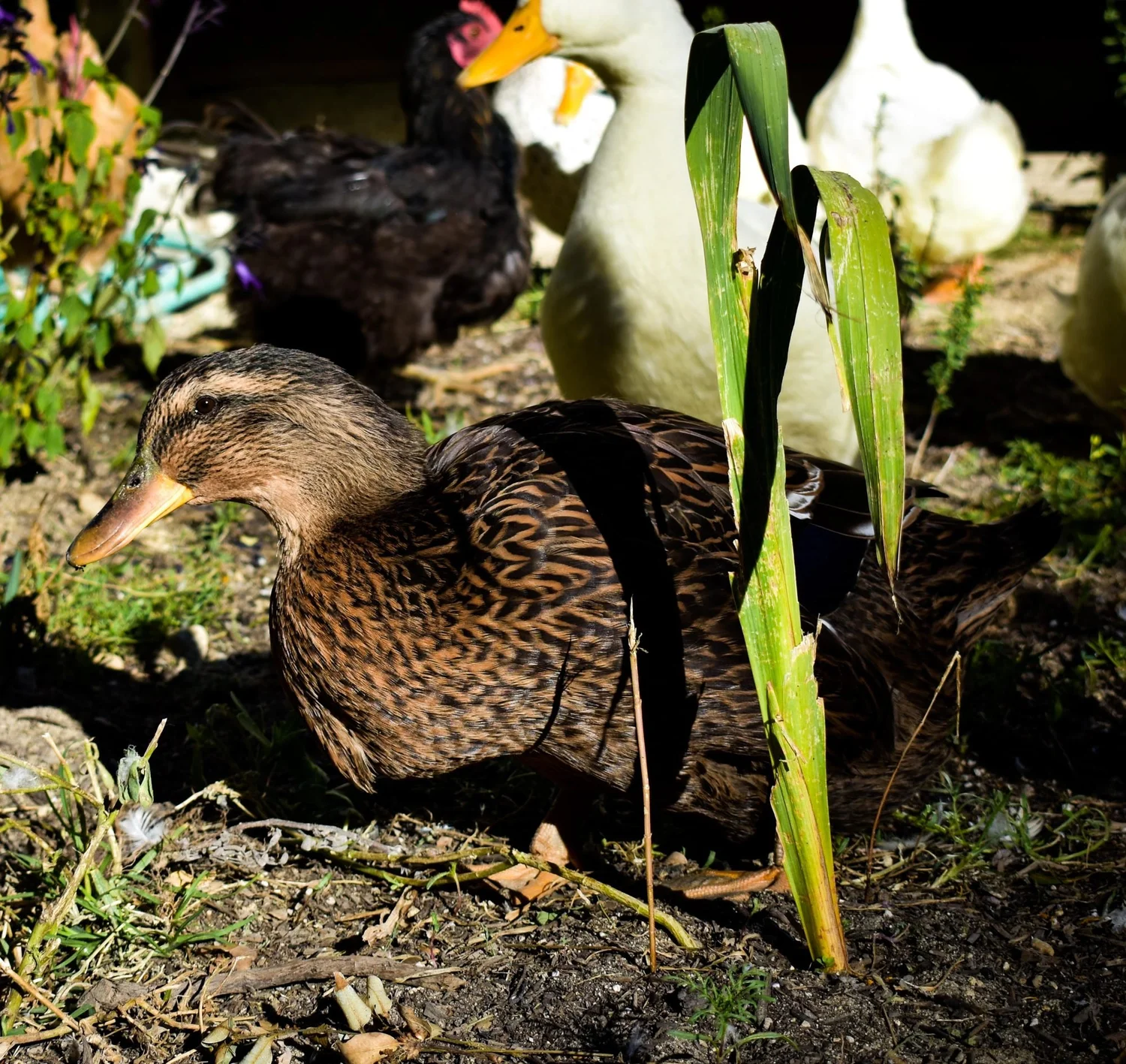
If you garden in Santa Cruz County and struggle with slugs (which is almost everyone who gardens in our fog belt), ducks should be at the top of your consideration list. I keep a Black Runner duck and a Mallard duck alongside our chickens and Toulouse goose in Boulder Creek, and the ducks have transformed our slug management from a nightly battle into a background task the birds handle themselves.
Ducks offer several advantages over chickens for garden integration, though they come with their own management challenges. Understanding both sides helps you decide whether ducks belong in your garden.
The advantages are significant. Ducks do not scratch the soil like chickens, so they cause dramatically less damage to garden beds. Their flat, webbed feet walk over soil without the destructive backward-kicking that chickens do. Ducks probe the soil surface with their bills rather than digging, which means they remove pests without disturbing root systems or displacing mulch. They are quieter than chickens (hens quack but drakes only whisper a raspy sound), calmer in temperament, and more disease-resistant in our damp climate.
The challenges center on water. Ducks need water. Not just drinking water, but water deep enough to submerge their heads, and ideally water to swim and bathe in. Managing duck water in a garden setting is the primary management task, and it is ongoing. If you are not willing to deal with water (refilling, draining, managing mud), ducks may not be the right choice.
What Duck Breeds Work Best for Garden Pest Control?
Not all duck breeds are equal when it comes to garden work. The best garden ducks are active foragers that cover ground efficiently and have strong instincts for finding and eating slugs, snails, and insects.
Indian Runner ducks
Runners are the gold standard for garden slug control. They are the most active foragers of any domestic duck breed, with an upright, bowling-pin posture that lets them move quickly through garden beds. They are light (3.5 to 5 pounds), which means less soil compaction than heavier breeds. They lay well (150 to 200 eggs per year) and are hardy in our coastal climate.
Our Black Runner duck is relentless about slug hunting. She works through beds methodically, probing under leaves, along board edges, and in every damp corner where slugs hide. Her slug consumption is visibly reflected in the condition of our garden plants: beds she patrols regularly show dramatically less slug damage than areas she cannot access.
The trade-off with Runners is that they are more nervous and flighty than other duck breeds. They startle easily, and a scared Runner will bolt in unpredictable directions. They calm down with regular, gentle handling, but they will never be as docile as a Pekin or a Rouen.
Khaki Campbell ducks
Khaki Campbells are excellent layers (250 to 340 eggs per year, one of the highest rates of any duck breed) and active foragers. They are slightly heavier than Runners (4 to 4.5 pounds) and have a calmer temperament, making them easier to manage in a garden setting. Their foraging instincts are strong, and they are effective for slug and snail control.
Welsh Harlequin ducks
Welsh Harlequins combine good laying (200 to 300 eggs per year) with a calm, friendly temperament. They are active foragers but less intense than Runners, making them a good choice for gardeners who want pest control without the nervous energy. They are also one of the more attractive duck breeds, with distinctive silver-and-brown plumage.
Mallard-derived breeds
Standard Mallards and Mallard crosses are excellent foragers with strong instincts for finding aquatic and garden pests. Our Mallard duck is an enthusiastic slug hunter, though slightly less systematic than the Runner. Mallards are small (2 to 3 pounds), hardy, and well-adapted to our climate. They are also the most likely to fly, so wing clipping is usually necessary.
Heavy breeds for garden use
Larger breeds (Pekins, Rouens, Muscovies) can work in garden settings but are less active foragers than the lighter breeds. Muscovy ducks are an exception. Muscovy hens weigh 6 to 8 pounds, while drakes can reach 10 to 15 pounds, but despite their size, Muscovies are excellent foragers and effective at pest control. They are also the quietest domestic duck, produce lean meat, and can perch like chickens (they have functional claws). In Santa Cruz County's mild climate, all these breeds do well year-round.
For breed comparisons across all garden poultry, see Choosing the Right Breeds for Coastal California Gardens.
What Water Setup Do Garden Ducks Need?
Water management is the core of duck keeping. Understanding the different levels of water access helps you plan a setup that works for your garden and your budget.
Essential: Head-dipping water
At minimum, ducks need water deep enough to fully submerge their heads. This is not optional. Ducks use head-dipping water to clean their nostrils and eyes, which prevents sinus infections and eye problems. A rubber feed pan or bucket with at least 6 inches of water depth satisfies this need. Place it on a drainage pad (gravel under wire mesh) to manage the splash zone.
Change head-dipping water at least once daily. Ducks dunk their food in water before eating, wash their bills constantly, and generally treat any water source as a multi-purpose cleaning station. The water gets filthy fast.
Recommended: Bathing water
Beyond head-dipping, ducks benefit greatly from water they can climb into and bathe. Bathing allows ducks to clean their feathers, distribute the waterproofing oils from their preen gland across their plumage, and engage in natural behaviors that keep them healthy and content. A rigid plastic kiddie pool (the hard-sided type, not inflatable) or a stock tank provides adequate bathing water for a small group of ducks.
Key considerations for bathing water:
- Size: A 40-to-50-gallon rigid kiddie pool works for 2 to 4 ducks. Larger flocks need a stock tank or multiple pools.
- Depth: 8 to 12 inches is sufficient. Ducks do not need deep water.
- Access: Ducks need to get in and out easily. A slightly submerged edge or a ramp helps, especially for heavier breeds. Smooth, slippery pool walls are difficult for ducks to navigate.
- Drainage: You will change this water every 1 to 2 days. Position the pool where you can drain it easily, ideally onto garden beds (the nutrient-rich water is a mild fertilizer). A pool on a slight slope with a drain plug simplifies water changes enormously.
Optional: In-ground pond
A permanent in-ground pond is the deluxe option. Ducks love it, it provides the most natural water environment, and it can be a beautiful garden feature. But it comes with significant management requirements.
For a garden duck pond, consider:
- Size: Minimum 4 by 6 feet for a small flock (2 to 4 ducks). Larger is better.
- Depth: 12 to 18 inches is adequate. Deeper is fine but unnecessary and harder to clean.
- Lining: EPDM rubber pond liner over a sand base is the standard for garden ponds. Rigid preformed pond shells also work and are easier to install.
- Filtration: A biological filter with a pump keeps the water cleaner longer. Without filtration, you need to drain and refill the pond regularly (every 3 to 7 days depending on duck population and pond volume).
- Predator safety: An in-ground pond in an unfenced area is an invitation for raccoons, who will hunt ducks in the water at night. Only install an in-ground pond within your predator-proof run or fenced area.
- Plants: Ducks will eat most aquatic plants. Hardy species like water hyacinth and duckweed can survive duck pressure if the pond is large enough, but in a small garden pond, expect the ducks to consume any plants you introduce.
Water conservation in California
Water use is a legitimate concern in California. Duck water management can use significant amounts of water, particularly if you are draining and refilling pools daily. Two strategies help:
First, reuse duck water on the garden. Dump pools and tubs onto garden beds, fruit trees, or lawn areas. The nutrient content makes it a mild liquid fertilizer, so the water does double duty.
Second, manage pool size to your flock size. Two ducks do not need a 200-gallon stock tank. A 40-gallon kiddie pool changed every other day uses roughly 20 gallons per day, all of which can go to garden irrigation.
How Do You Set Up Duck Housing in a Garden?
Duck housing differs from chicken housing in several important ways.
No roosts needed: Ducks do not perch. They sleep on the ground, usually piled together in a group. Provide a clean, flat floor with generous bedding (straw or pine shavings, 4 to 6 inches deep).
Wide doors: Ducks do not navigate narrow openings well. Their wide bodies and waddling gait need a door at least 14 inches wide and 14 inches tall. A duck trying to squeeze through a standard chicken pop door will get stuck or refuse to enter.
Ground level: Ducks cannot climb ramps well, especially steep ones. House them at ground level or on a very gentle ramp (less than 30 degrees, with cleats for traction). Some breeds (Muscovies) can handle steeper ramps, but most domestic ducks struggle with anything other than near-level access.
Ventilation: Duck housing needs more ventilation than chicken coops because ducks produce wetter droppings and carry water into their shelter. Good airflow prevents ammonia buildup and respiratory problems. In Santa Cruz County's mild climate, a three-sided shelter with the open side facing away from prevailing wind works well for most of the year.
Predator security: The same predator-proofing rules apply to duck housing as to chicken coops: hardware cloth over all openings, secure latches, and a solid floor or buried hardware cloth apron to prevent digging. Our Boulder Creek predator list (raccoons, foxes, coyotes, bobcats, ringtail cats, weasels) applies equally to ducks.
For complete predator-proofing details, see Designing a Predator-Proof Run for Your Garden Flock.
How Do Duck Eggs Compare to Chicken Eggs?
Duck eggs are larger, richer, and have different culinary properties than chicken eggs. Understanding these differences helps you appreciate (and use) what your garden ducks produce.
Size: A typical duck egg weighs 2.5 to 3.5 ounces, compared to 2 to 2.5 ounces for a large chicken egg. One duck egg is roughly equivalent to 1.5 chicken eggs in volume.
Nutrition: Duck eggs contain more fat, more protein, and more cholesterol per egg than chicken eggs. According to USDA nutritional data, a duck egg has approximately 130 calories, 9 grams of protein, and 10 grams of fat, compared to about 72 calories, 6 grams of protein, and 5 grams of fat in a large chicken egg.
Cooking: Duck eggs have a thicker shell and a larger yolk-to-white ratio than chicken eggs. This makes them exceptional for baking. The higher fat content produces richer pastries, fluffier cakes, and more tender baked goods. Many professional bakers prefer duck eggs for this reason.
For scrambling and frying, duck eggs work the same as chicken eggs but produce a richer result. The white is slightly more elastic than chicken egg white, which some people notice in fried eggs. The flavor is similar to chicken eggs but slightly richer and more full-bodied.
Allergies: Some people who are allergic to chicken eggs can tolerate duck eggs because the protein profiles differ. However, this is not universal, and anyone with a severe egg allergy should consult an allergist before trying duck eggs.
Laying patterns: Ducks tend to lay in the early morning (often before dawn), and they lay wherever they happen to be standing. Unlike chickens, who typically seek out a nest box, ducks drop eggs on the ground, in the run, in their shelter, or wherever they are when the egg is ready. Check the run and shelter first thing in the morning to collect eggs before they get dirty or stepped on.
How Effective Are Ducks for Slug and Snail Control?
This is the primary reason many Santa Cruz County gardeners add ducks to their gardens, and the results are genuine. Ducks are remarkably effective at reducing slug and snail populations through natural foraging.
How ducks find slugs
Ducks locate slugs and snails primarily by touch, using the sensitive nerve endings in their bills to detect prey hiding under leaves, mulch, and in soil crevices. They also use sight, spotting slug trails and following them to the source. Our Runner duck works edges, board margins, and the shady sides of raised beds with particular intensity, which are exactly the areas where slugs concentrate.
Effectiveness by season
In Santa Cruz County, slug pressure is highest during the cool, wet months (October through April). This coincides with ducks' most active foraging period. Ducks forage enthusiastically in light rain and overcast conditions that chickens dislike. On a foggy morning when slugs are still active on plant surfaces, ducks will patrol and feed continuously.
During the dry summer months, slug populations decline naturally, and duck foraging shifts more toward insects, earwigs, and other invertebrates. The ducks remain effective foragers year-round, but their slug-control impact is most dramatic during the peak slug season.
Deployment strategy
For maximum slug control effectiveness:
- Release ducks into target beds in the early morning or evening when slugs are most active
- Focus duck access on beds with established plants (where slugs are hiding but the plants can handle duck traffic)
- Clear new beds with ducks before transplanting seedlings to reduce the slug population before vulnerable plants go in
- Maintain duck access along garden borders and fence lines where slugs migrate from surrounding areas
What ducks cannot do
Ducks will not eliminate every slug. Very large slugs (banana slugs, common in the Santa Cruz Mountains) may be too big for some duck breeds to eat. Slugs that hide deep in soil crevices or under heavy objects may escape duck attention. And a garden surrounded by wild habitat will receive continuous slug migration from outside the duck-patrolled area.
Duck slug control works best as part of an integrated approach: ducks reduce the population, mulch management reduces slug habitat, and hand-removal addresses any remaining problem areas. The combination is far more effective than any single method.
For more on integrating your flock into garden pest management, see How Your Flock Can Work Your Garden: Pest Control, Composting, and Soil Prep.
What Health Issues Are Specific to Garden Ducks?
Ducks are generally hardier than chickens, with stronger immune systems and fewer common diseases. However, garden ducks face some specific health considerations.
Bumblefoot: This staph infection of the foot is caused by bacteria entering through small cuts or abrasions. Garden ducks walking on rough surfaces (gravel, wood chips, rough concrete) are at higher risk. Provide smooth ground or grass areas for regular walking, and inspect duck feet weekly for dark spots or swelling on the pad.
Niacin deficiency: Ducks require more niacin (vitamin B3) than chickens. Standard chicken feed may not contain sufficient niacin for ducks. The Merck Veterinary Manual reports that ducks with a niacin deficiency show severe bowing of the legs and enlargement of the hock joint, and that ducks are affected far more severely than chickens. Supplement with brewers yeast (1 tablespoon per cup of feed) or provide niacin-rich treats like peas.
Angel wing: A developmental condition where the last joint of the wing twists outward. Caused by a high-protein diet during growth (above 20 percent protein after 3 weeks of age). Prevent by switching ducklings from starter feed to a lower-protein grower feed by 3 weeks of age.
Aspergillosis: A fungal respiratory infection that thrives in damp, poorly ventilated conditions. Garden ducks in damp housing with old bedding are at risk. Prevent by maintaining clean, dry bedding and good ventilation in duck housing. This is particularly important during our wet Santa Cruz County winters.
Egg binding: Female ducks, especially high-production breeds, can become egg-bound (unable to pass an egg). Ensure laying ducks have adequate calcium (free-choice oyster shell) and are not overweight. Egg binding is an emergency requiring veterinary care.
Frequently Asked Questions
How many ducks do you need for effective garden slug control?
Two to three ducks provide meaningful slug reduction for a typical home garden (500 to 1,000 square feet of beds). A single dedicated forager like an Indian Runner can patrol a small garden effectively, but a pair is better because ducks are social animals and a lone duck can become stressed. According to UC ANR, ducks can be effective snail and slug predators, though they will also eat seedlings, and natural enemies on their own rarely give satisfactory control in a garden.
Can you keep ducks without a pond?
Yes. Ducks need water deep enough to submerge their heads (about 6 to 8 inches) for cleaning their nostrils and eyes, but a full pond is not required. A rubber feed pan or bucket for head-dipping and a rigid kiddie pool for bathing satisfy ducks' water needs at a fraction of the cost and maintenance of an in-ground pond.
Are ducks noisy?
Female ducks quack, sometimes loudly, particularly when excited, hungry, or calling to their flock. Male ducks (drakes) are much quieter, producing only a soft, raspy whisper. Overall, ducks are quieter than chickens with a rooster. If noise is a concern (urban or suburban settings), keep only drakes or choose quieter breeds like Muscovies, which rarely vocalize.
Do ducks need a heat lamp in winter?
Not in Santa Cruz County. Our winter temperatures rarely drop below the mid-20s Fahrenheit, and ducks are extremely cold-hardy. Most duck breeds are comfortable well below freezing as long as they have dry shelter and unfrozen drinking water. Heat lamps in coops are a fire hazard and are generally unnecessary for adult ducks in our climate.
Can ducks and chickens eat the same food?
Yes, with adjustments. An all-flock or flock raiser feed (16 to 18 percent protein, unmedicated) works for both species. Add brewers yeast for ducks' higher niacin needs and free-choice oyster shell for laying hens. Do not use medicated chicken feed for ducks, as amprolium is not FDA-approved for waterfowl and ducks are generally less susceptible to coccidiosis.
How long do ducks live?
Well-cared-for domestic ducks typically live 8 to 12 years, with some reaching 15 years or more. They lay productively for 3 to 5 years, after which egg production declines gradually. According to the Livestock Conservancy, heritage duck breeds tend to have longer productive lives than commercial strains bred for maximum early production.
Will ducks fly away?
Most domestic duck breeds are too heavy to sustain flight. Pekins, Rouens, and other heavy breeds cannot fly at all. Indian Runners and Khaki Campbells can flutter a few feet off the ground but cannot achieve sustained flight. Mallards and Mallard crosses can fly and will need wing clipping (trimming flight feathers on one wing) to prevent escape. Muscovy ducks can fly strongly and also require wing clipping.
How do you clean a duck pool or pond?
For kiddie pools and stock tanks, drain completely, scrub with a stiff brush and plain water (no soap), and refill. Do this every 1 to 3 days depending on the number of ducks and the weather. Drain the dirty water onto garden beds for irrigation and fertilization. In-ground ponds with filtration need less frequent draining but require filter maintenance (cleaning or replacing biological filter media monthly).
