

How Your Flock Can Work Your Garden: Pest Control and Soil Prep
A few of the product links in this guide are affiliate links. If you buy through one, Ambitious Harvest may earn a small commission at no extra cost to you, which helps keep these guides free. We only point to gear we would use in our own Santa Cruz garden. As an Amazon Associate, we earn from qualifying purchases. Read our full disclosure.
How Your Flock Can Work Your Garden: Pest Control, Composting, and Soil Prep
Backyard poultry can put a real dent in garden pest populations through natural foraging, with ducks being especially effective against slugs and snails. Chickens and ducks eat a wide range of soft-bodied pests and larvae, which reduces your reliance on other controls while their manure feeds the soil.
Why Are Garden Flocks More Than Just Egg Producers?
Most people start keeping chickens or ducks for the eggs. That is a perfectly good reason. But if you garden in Santa Cruz County, your flock can earn its keep in ways that go far beyond the egg basket. Every hour your birds spend in the garden, they are doing work that would otherwise fall to you or to purchased products.
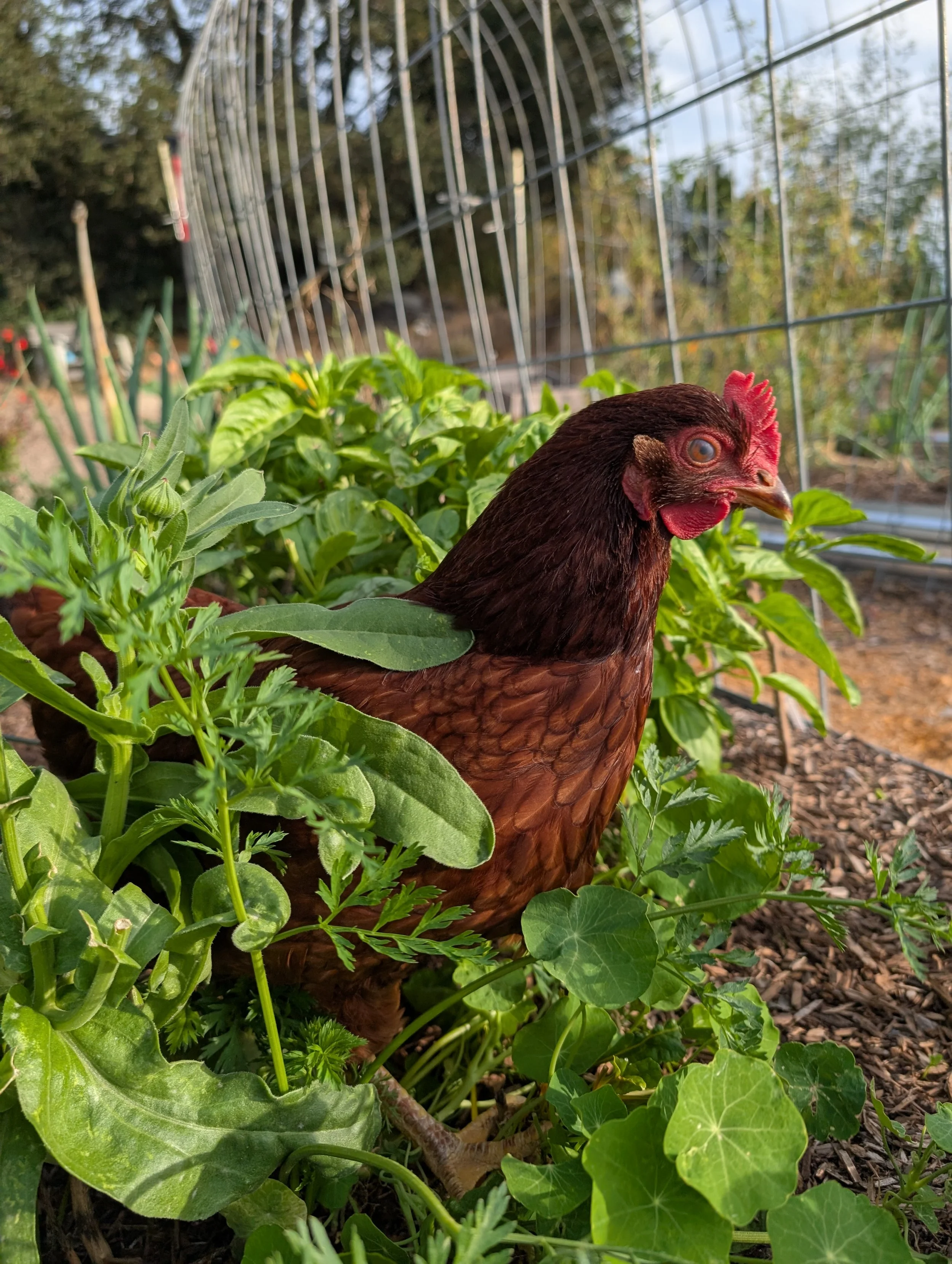
In my Boulder Creek garden, our mixed flock of chickens, ducks, and a Toulouse goose handles slug patrol, soil turning between planting seasons, compost acceleration, and grass management. I did not plan for all of these benefits when I started keeping poultry, but once you see a Runner duck systematically clear a bed of slugs in twenty minutes, or watch chickens turn a spent bed into loose, worked soil in an afternoon, you start thinking about your flock as garden partners rather than just garden residents.
The key is understanding what each species does well, managing their access to protect plants you want to keep, and timing their garden work to match your planting schedule. Unmanaged poultry in a garden will destroy it. Managed poultry will improve it.
How Do Ducks Handle Slug and Snail Control?
If you garden anywhere in coastal Santa Cruz County, you know the slug problem. Our fog belt creates ideal conditions for slugs and snails, and they can devastate seedlings, strawberries, leafy greens, and just about anything else tender and close to the ground.
Ducks are the answer. Specifically, duck breeds with strong foraging instincts like Indian Runner ducks, Khaki Campbells, and Welsh Harlequins are exceptional slug hunters. Our Black Runner duck treats slug hunting like a professional sport. She works systematically through beds, probing under leaves, along edges, and in the damp spots where slugs hide during the day.
Why ducks over chickens for slug patrol? Several reasons:
Bill shape: A duck's flat bill is designed for probing wet soil and grabbing soft-bodied invertebrates. Chickens peck. Ducks grab and swallow. The duck's bill is simply a better tool for slug removal.
Soft feet: Ducks have webbed feet that cause less soil compaction and less damage to plant roots than chicken feet. They walk over beds without the destructive scratching that chickens do.
Appetite: An adult duck can eat 100 or more slugs in a day when populations are high. They will also eat snails, earwigs, pill bugs, and other common garden pests.
Timing: Ducks are active foragers in the early morning and evening, which aligns perfectly with slug activity patterns. Slugs come out in the cool, damp conditions that ducks also prefer.
Use ducks for slug patrol in non-food areas or after harvest on beds reserved for a later planting that meets the UC raw-manure interval below. Their gentler foraging does not eliminate manure contamination. Keep ducks out of active food beds, including beds of mature kale, chard and squash.
For detailed duck-keeping guidance, see Keeping Ducks in Your California Garden: Water, Ponds, and Slug Patrol.
What Garden Work Do Chickens Do Best?
Chickens are scratchers. It is their defining garden behavior. A chicken scratches the soil surface with both feet in a backward-kicking motion, turning over the top 2 to 4 inches of soil as it searches for insects, larvae, seeds, and other food. This scratching behavior is simultaneously the chicken's greatest garden contribution and its greatest garden liability.
Soil turning and bed preparation
Between growing seasons, chickens are the best free labor you can get for bed preparation. After you pull spent crops in late fall or early spring, let your chickens into the beds. Over a few days, they will:
Turn the top layer of soil, incorporating surface organic matter
Break up soil clumps and aerate compacted areas
Remove overwintering insect larvae and pupae from the soil
Eat weed seeds sitting on or just below the soil surface
Deposit manure as they work, adding nitrogen and organic matter
After chickens work through a spent bed, their manure needs more than a short rest before the next food crop. UC Master Gardeners advise incorporating raw manure at least 120 days before planting crops that grow in or near soil, or 90 days before planting trellised crops. That home-garden advice differs from the federal organic production standard, 7 CFR 205.203, which measures its 90/120-day intervals before harvest.
Insect and grub removal
Chickens eat an impressive range of garden pests. Oregon State University Extension found that free-ranging chickens forage hard enough on insects, weed seeds, and seedlings to reduce orchard pest pressure, which is the same behavior working for you in a home garden. In our garden, chickens have been particularly effective against:
Japanese beetle grubs: Chickens dig for and eagerly eat the white C-shaped grubs in the soil
Earwigs: Our chickens hunt earwigs under mulch and in leaf litter
Caterpillars: Including tomato hornworms, cabbage loopers, and armyworms
Aphids: Chickens pick aphids off lower plant stems and leaves
Grasshoppers and crickets: These are chicken favorites, and the birds will chase them across the garden
The trade-off is that chickens do not discriminate between pest insects and beneficial insects. They will eat earthworms (which you want in your soil), ladybugs (which eat aphids for you), and ground beetles (which prey on slugs). This is why timed, rotational access is better than permanent free-range in garden beds. Let chickens do their intensive pest cleanup during transition periods, then exclude them during the growing season when you want beneficial insect populations to establish.
Weed seed consumption
Chickens eat weed seeds with enthusiasm. A flock working through a bed will significantly reduce the weed seed bank in the top few inches of soil. This is most effective after you have cleared a bed and before weed seeds have a chance to germinate. The chickens scratch up seeds, eat what they find, and their scratching also exposes buried seeds to light and air, where many will desiccate rather than germinate.
This does not eliminate weeds (deep-buried seeds and perennial weed roots survive chicken attention), but it noticeably reduces the volume of annual weeds in beds that chickens have worked.
How Can Geese Help With Grass and Weed Management?
Geese are the overlooked garden workers. While chickens scratch and ducks probe, geese graze. A goose eats grass and broadleaf weeds with the steady, methodical dedication of a small lawn mower.
Our Toulouse goose keeps the grass around the garden beds trimmed during the growing season, reducing the need for mowing in areas where she has access. Geese prefer grass and tender broadleaf weeds over most garden plants, which makes them surprisingly compatible with some garden settings. Historically, "weeder geese" were used commercially in cotton, strawberry, and asparagus fields because they eat grass and weeds while leaving the crop plants alone.
According to the Livestock Conservancy, Chinese and African geese were the traditional weeder goose breeds due to their smaller size and active grazing habits. Heavier breeds like Toulouse and Embden graze less aggressively but still contribute meaningful weed control in a backyard setting.
The practical application for a Santa Cruz County garden is to let your goose graze pathways between beds, orchard areas, and lawn borders. They will keep these areas trimmed and reduce your mowing workload. Just protect young vegetable plants with temporary fencing, because while geese prefer grass, they will sample lettuce, peas, and other tender greens if given the opportunity.
How Does Flock Manure Improve Your Soil?
Every bird in your flock is a small but continuous fertilizer machine. As they forage through the garden, they deposit manure that adds nitrogen, phosphorus, potassium, and organic matter to the soil. This is one of the most underappreciated benefits of garden-integrated poultry.
Chicken manure supplies nitrogen, phosphorus and potassium, with nutrient content varying by diet and bedding. Fresh manure can burn plants and carry pathogens. A thin scattering of droppings is still raw manure; plant size, dilution and lack of visible damage do not remove the food-safety concern.
Duck and goose manure is slightly less concentrated than chicken manure but is produced in larger volumes, especially from geese. Waterfowl manure is also wetter, which means it breaks down faster in the soil. In our garden, the areas where the ducks and goose spend the most time show noticeably darker, richer soil over time.
For a full guide to composting poultry waste for raised beds, see Composting with Chicken and Duck Waste for Your Raised Beds.
When Should You Schedule Flock Access to Garden Beds?
Timing is everything when using poultry in the garden. Unscheduled, unrestricted access will result in destroyed plants, over-fertilized soil, and frustrated gardening. Scheduled, rotational access turns your flock into a productive part of your gardening system.
Best times for flock garden work
Post-harvest cleanup (fall and late winter): This is the ideal time for intensive chicken access. After you pull tomatoes, squash, beans, or other spent crops, let your chickens work the beds for 3 to 7 days. They will clean up fallen fruit, eat pest insects and larvae, turn the surface soil, and deposit manure. This is the single most productive period for garden-flock integration.
Pre-planting preparation (early spring): Plan chicken access months ahead of planting, using the UC raw-manure intervals above. The birds can scratch up weeds and loosen the surface, but a few days of chicken work does not make a bed ready for food crops. If spring planting is close, keep the birds out and use finished plant-based compost instead.
Between crop rotations (summer): A gap of a few weeks between food crops is too short for chicken access under the UC guidance above. Keep the birds out of beds with a quick summer turnaround. Reserve their work for beds with a long enough planting interval, or non-food areas.
Orchard gleaning (late summer through fall): Let your flock clean up fallen fruit under fruit trees. They eat the fruit (which reduces pest habitat) and the insects attracted to it. This is particularly valuable for managing codling moth and brown rot in stone fruit.
Times to restrict access
After seeding: Keep poultry out of active food beds throughout the growing season. Established plants may resist scratching or trampling, but that does not protect food crops from fresh manure.
During tender growth: Seedlings, transplants, and young plants are vulnerable to chicken scratching and duck trampling. Exclude the flock from beds with young plants.
When plants are fruiting at ground level: Strawberries, ground cherries, and low-growing tomatoes will be eaten by foraging birds. Protect these with temporary fencing or netting.
For strategies on protecting plants while your birds work, see Managing Free-Range Time: Protecting Plants While Your Birds Work.
How Do You Use Poultry for Compost Acceleration?
Chickens are natural compost turners. If you place your compost bin or pile within your flock's range area (or bring compost materials to your flock), they will do much of the turning work for you.
The process works like this: spread a thin layer of compost materials (kitchen scraps, garden waste, partially decomposed bedding) in an area your chickens can access. They will scratch through it searching for edible bits, effectively turning and mixing the material. They add their own manure to the mix, boosting nitrogen content. And their scratching aerates the pile, which speeds decomposition.
Some chicken keepers use a "deep litter" method in their run, continually adding bedding while birds scratch through it. This material breaks down over time, but fresh droppings are still being added. Treat collected litter as manure-containing material requiring separate processing and the planting precautions below.
Material gathered from an active chicken run should be treated as manure-containing material, even when the lower layers look dark and crumbly. Move it to a separate composting system and keep fresh droppings out while it is processed. Appearance alone does not confirm pathogen reduction. UC Master Gardeners of Napa County distinguish composting from aging and advise waiting 90 days after adding composted manure before planting food crops.
Geese contribute to composting by eating fresh green material and depositing processed manure, which breaks down faster than raw plant material. Their grazing effectively pre-processes grass and weeds into a form that composts more rapidly than if you simply piled the raw material.
What Tools and Fencing Help Manage Garden Flock Work?
Successful garden-flock integration requires some infrastructure beyond the permanent coop and run. Here is what works for managing rotational garden access.
Portable poultry netting: Electric poultry netting (like Premier1 PoultryNet) is the most versatile tool for rotational garden access. It sets up in minutes, defines a temporary grazing or working area, and provides predator deterrence through the electric charge. Standard heights (42 to 48 inches) contain most chicken breeds. Flighty breeds may need taller netting or wing clipping.
Temporary garden fencing: For non-electric containment, lightweight wire garden fencing (2 to 3 feet tall) attached to garden stakes creates temporary barriers. This contains most heavy-breed chickens and ducks but will not stop a determined bantam or a bird that flies. It also provides zero predator protection, so use it only during supervised free-range time.
Hardware cloth plant protectors: For individual plants or small areas you want to protect while the flock works around them, simple hardware cloth cages work well. Bend a piece of hardware cloth into a cylinder and place it over a plant. The flock works the soil around it without accessing the protected plant.
Row cover frames: Low tunnel frames covered with bird netting or floating row cover protect entire bed sections. These also serve double duty for frost protection in cooler Santa Cruz County microclimates.
Can Different Species Work Different Garden Areas Simultaneously?
Yes, and this is one of the greatest advantages of a mixed flock. You can deploy different species to different garden zones based on what each does best.
A practical rotation for a Santa Cruz County garden:
Ducks in the slug-prone areas: Use ducks in non-food areas or empty beds with enough time before the next food planting to meet the UC raw-manure interval. Keep them out of active food beds.
Chickens in the fallow beds: Let chickens work beds that are between plantings. They will scratch, turn, and clean the soil.
Goose on the pathways: Let your goose graze the paths, grass borders, and orchard areas while the other birds work the beds.
This approach maximizes the benefit of each species while minimizing damage. It does require some fencing infrastructure to separate the areas, but once you have portable fencing in your tool kit, deploying it becomes second nature.
Frequently Asked Questions
How many chickens do you need for effective pest control in a garden?
For a typical Santa Cruz County home garden (500 to 1,000 square feet of beds), 3 to 5 chickens provide meaningful pest reduction during their supervised foraging sessions. Fewer birds can still help but take longer to cover an area. More than 5 chickens in a small garden creates diminishing returns and increases plant damage risk.
Will chickens eat tomato hornworms?
Yes, chickens readily eat tomato hornworms and consider them a high-value protein treat. However, chickens may also damage tomato plants through scratching at the base. The best approach is to hand-pick hornworms and toss them to your chickens rather than letting the flock free-range in an active tomato bed.
How long should chickens work a bed before planting?
For home food gardens, UC Master Gardeners of Napa County advise incorporating raw manure at least 120 days before planting crops that grow in or near the soil, or 90 days before planting trellised crops. The federal organic-production standard, 7 CFR 205.203, uses 120 or 90 days before harvest instead. These are different recommendations; this guide follows the UC before-planting intervals for home gardens. Keep birds off beds needed for near-term planting. If a bed has already received raw manure, raking away visible manure or moving it to a compost pile does not replace the waiting interval. Use a dated bed plan instead of relying on appearance, nitrogen burn subsiding, or a later harvest date.
Do ducks damage garden soil like chickens do?
Ducks forage without the scratching chickens do, though they can still trample seedlings. Less physical damage does not mean less food-safety risk: ducks deposit raw manure too. Keep them out of active food beds and use the same manure intervals before planting.
Can you use poultry in raised beds?
Yes, and raised beds actually make management easier. The raised sides help contain soil that chickens kick around, and you can place lightweight covers over beds to exclude birds when needed. Chickens will jump into raised beds up to about 2 feet tall. For higher beds, you may need to provide a ramp or simply lift birds in and out.
Is poultry manure safe to use on edible crops?
Poultry manure can be used with appropriate treatment and timing, but aging alone is not the same as composting. UC Master Gardeners of Napa County advise incorporating raw manure at least 120 days before planting crops that grow in or near soil, or 90 days before planting trellised crops. They also recommend waiting 90 days after adding composted manure before planting food crops. These home-garden recommendations differ from the federal organic before-harvest intervals; do not substitute a few months of storage or an unverified hot-compost cycle for a dated bed plan.
What time of day is best for supervised garden foraging?
Late afternoon (2 to 3 hours before sunset) is ideal for supervised garden foraging in Santa Cruz County. Birds are active but calming down, predator risk from hawks is lower as daylight fades, and the birds will put themselves back in the coop at dusk. Morning sessions work well for duck slug patrol since slugs are still active from overnight.
How do you prevent poultry from eating your compost worms?
If you maintain a worm bin or vermiculture system, keep it covered and inaccessible to your flock. Chickens will eat every red wiggler they find. You can still use the poultry compost system described above alongside a separate worm bin. Just ensure the worm bin has a solid lid or is located in an area the flock cannot access.
