

Chickens or Ducks for a Santa Cruz Backyard?
A few of the product links in this guide are affiliate links. If you buy through one, Ambitious Harvest may earn a small commission at no extra cost to you, which helps keep these guides free. We only point to gear we would use in our own Santa Cruz garden. As an Amazon Associate, we earn from Read our full disclosure.
Chickens or Ducks for a Santa Cruz County Backyard?
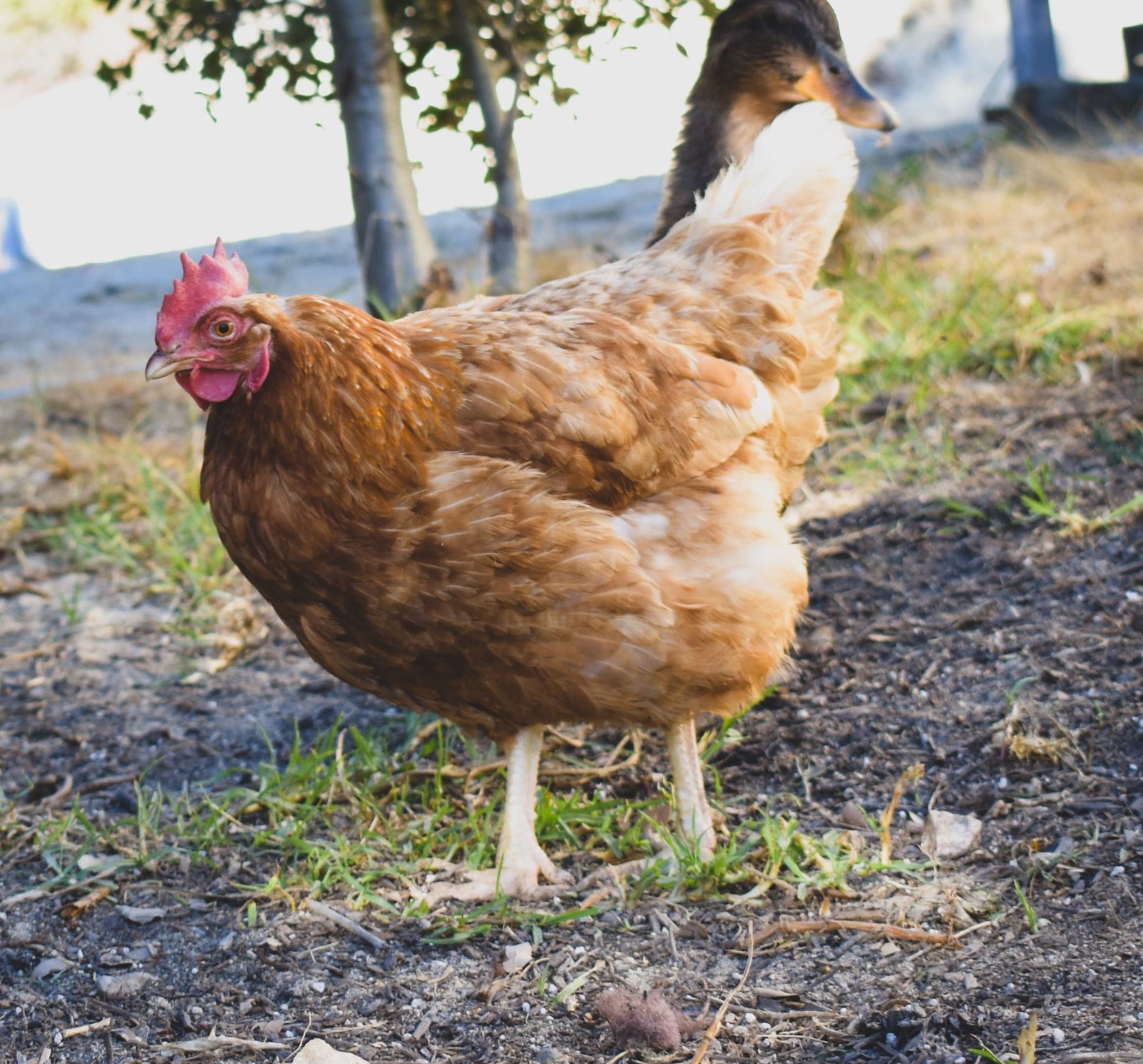
For most Santa Cruz County beginners, chickens are the more practical starting point: they need less daily water management, cost less to house, and produce eggs more reliably through winter. That said, ducks have a genuine edge in our slug-heavy coastal gardens and tolerate our wet, foggy winters better than you might expect. Both chickens and ducks do well in a Santa Cruz backyard, but each comes with trade-offs that matter more or less depending on your lot size, garden situation, and neighbors.
How Do Their Eggs Compare in Quantity, Flavor, and Baking?
Egg production is often the primary reason people start a backyard flock, so this is a reasonable place to begin the comparison.
A well-bred production chicken, such as a Rhode Island Red, Golden Comet, or Black Star, will lay 250 to 300 eggs per year. Heritage breeds popular with Santa Cruz County keepers, including Orpingtons and Plymouth Rocks, lay 200 to 280 eggs per year. Laying tapers off in winter for chickens: shorter days reduce production significantly, and unless you add supplemental light, expect a noticeable drop from November through February.
Ducks, particularly Khaki Campbells and Indian Runners, are among the most productive layers in the poultry world. Khaki Campbells average 250 to 340 eggs per year, and unlike chickens, ducks are far less sensitive to day length. According to The Livestock Conservancy, Khaki Campbell ducks often continue laying through winter with minimal production drop, which gives them a real advantage for year-round egg supply in Santa Cruz County's short-day winters.
Duck eggs are larger than chicken eggs, with a higher fat and protein content. The yolks are richer and the whites are firmer. Bakers who discover duck eggs often become loyal converts: cakes and pastries rise higher, and custards are silkier. The flavor is noticeably richer, which most people find pleasant. Some people with sensitivities to chicken eggs tolerate duck eggs well, though this is not universal and is worth discussing with a healthcare provider.
For raw eating (scrambled, fried, poached), chicken eggs are more familiar and more neutral in flavor. Duck eggs are excellent but have a distinctly richer taste that takes some adjustment.
What Are the Space and Housing Differences?
Housing requirements differ in ways that matter for Santa Cruz County's typical small urban and suburban lots.
Chickens can be kept in a relatively compact coop and run. UC ANR recommends a minimum of 4 square feet of coop space and 10 square feet of outdoor run per bird. Chickens roost at night, so a secure elevated sleeping area is essential. They are content in a well-designed small run if they cannot free-range.
Ducks do not roost. They sleep on the ground, which means their housing needs are a low, well-ventilated shelter rather than a raised coop with perches. A simple, predator-proof duck house with dry bedding works well. The footprint can be similar to a chicken coop, but the design is different. If you are converting an existing chicken coop for ducks, remove the roosts and lower any ramps to gentle angles.
The significant housing difference for ducks is water access. Ducks need water deep enough to submerge their whole bill. This is not optional: it is how they clean their nostrils and eyes and stay healthy. A small kiddie pool or deep tub works well, but it will need to be dumped and refilled regularly. In a compact Santa Cruz County yard, managing duck water is a real logistical consideration.
For more on setting up housing for multiple species, see Keeping a Mixed Flock: Chickens, Ducks, and Geese Together.
How Messy Are Ducks Compared to Chickens in a Coastal Yard?
This is the question that often decides the matter for small-lot keepers: ducks are significantly messier than chickens, and the mess is amplified by Santa Cruz County's wet coastal winters.
Ducks have a unique relationship with mud. Wherever they have water access, they will splash it out and work it into the surrounding ground. In our rainy season, which runs roughly November through April, a duck yard can become genuinely unpleasant. The combination of daily water dumping and winter rainfall turns a duck run into a muddy wallow within days. This is not a problem if you plan for it with drainage, woodchip ground cover (replenished frequently), and designated wet areas. But it requires active management and is not a set-it-and-forget-it situation.
Chickens scratch and create dust, but they do not create the same water-based mud problem. A chicken run with good drainage stays manageable through even our wettest winters. Chickens can be frustrating in garden beds, where they scratch vigorously and can uproot seedlings quickly, but their physical footprint on the overall yard is smaller than ducks'.
Duck droppings are also larger, wetter, and more frequent than chicken droppings. Ducks do not concentrate their waste in a nighttime coop the way chickens do; they scatter it everywhere, including in their water. If you plan to use poultry manure in your garden (which is excellent fertilizer after composting), ducks produce a very high volume.
If your yard is small, your neighbors are close, and you have limited tolerance for mud management, chickens will be significantly easier to keep clean.
Which Bird Is Better at Garden Pest Control?
This is where ducks shine in a Santa Cruz County garden, and it is a genuinely important consideration given our slug and snail pressure.
Santa Cruz County's coastal fog and moderate rainfall create ideal conditions for slugs and snails year-round. These pests cause significant damage in vegetable gardens and ornamental beds. Ducks, particularly Indian Runners and Khaki Campbells, are extraordinarily effective slug and snail hunters. They forage low to the ground with their bills, reaching into mulch and under leaves where slugs hide. A pair of ducks working a garden can dramatically reduce slug populations within a few weeks.
UC Cooperative Extension publications on integrated pest management for gardens acknowledge waterfowl as one of the most effective non-chemical controls for slug pressure in wet coastal climates. This is a practical tool for Santa Cruz County gardeners who deal with slug damage as a persistent seasonal problem.
Chickens also eat slugs and snails, but they are less methodical about it. Chickens scratch and peck, which is effective for turning soil and finding grubs and beetles, but they are not the focused slug hunters that ducks are. Chickens in a garden bed will scratch vigorously and can cause significant plant damage in the process. Ducks, by contrast, forage with their bills without the destructive scratching behavior, making them more compatible with established garden beds (though they will eat low-growing plants and seedlings if given unrestricted access).
For protecting specific garden areas while allowing pest control benefits, use portable fencing to rotate both species through the garden at appropriate times: after harvest, before planting, and along garden edges where slugs congregate.
How Do Chickens and Ducks Compare for Noise and Neighbors?
Noise is a legitimate concern in Santa Cruz County's dense neighborhoods. City of Santa Cruz municipal code allows backyard hens and ducks but prohibits roosters within city limits. Most unincorporated county areas follow similar guidelines, though local zoning varies, so check the Santa Cruz County Code and your parcel's zoning designation before acquiring birds.
Hens without a rooster are relatively quiet. They produce a soft, conversational clucking through the day and a brief "egg song" (a series of excited clucks) after laying. This is generally low enough to not disturb neighbors at distances of 20 feet or more. A rooster is a different matter entirely. Their crowing carries across an entire neighborhood and violates municipal codes in Santa Cruz.
Female ducks (hens) quack, and the quack can be persistent when ducks are excited, feeding, or startled. However, many people find duck vocalizations less piercing than rooster crowing, and drake ducks (males) produce only a quiet, raspy sound. A small flock of duck hens at the back of a yard is typically manageable for neighbors in most Santa Cruz County suburban settings.
If neighbor relations are a priority concern, consider female Muscovy ducks. Muscovies are nearly silent compared to other duck breeds, though they are also very different in temperament and appearance from the familiar Pekin or Runner duck.
How Do They Handle Santa Cruz County's Fog, Rain, and Heat?
Our coastal climate is mild by most standards, but the combination of summer fog, marine layer mornings, and wet winters creates specific conditions that affect how each species performs.
Ducks are waterfowl by nature and genuinely thrive in damp conditions. Their feathers are waterproofed by oil from a preen gland, which keeps them warm and dry even in persistent rain. Our wet winters, which can bring weeks of light rain and heavy marine layer, do not stress ducks the way cold and wet can affect other birds. Ducks in Santa Cruz County winters need only a dry place to sleep; they will spend rainy days outside contentedly.
Chickens are more vulnerable to prolonged damp conditions. Their feathers are not waterproof, and a chicken that gets thoroughly wet and cannot dry out can become chilled and stressed. Our coastal fog and drizzle are usually manageable, but coop ventilation is critical: good airflow prevents the ammonia buildup from damp droppings that leads to respiratory illness. Choose chicken breeds suited to our climate: heavy feathered breeds like Orpingtons and Wyandottes handle damp winters better than light Mediterranean breeds like Leghorns.
Heat tolerance is the reverse. Our coastal summers are mild, and heat stress is rarely a concern for either species in Santa Cruz. Inland valleys get significantly hotter, and if you are in Gilroy, Morgan Hill, or the Pajaro Valley's warmer zones, provide shade and cool water for both species during heat events.
For help choosing the right breeds for Santa Cruz County's coastal conditions, see Choosing the Right Breeds for Coastal California Gardens.
What Are the Real Costs of Starting with Each Species?
Startup costs are more similar than most beginners expect, with a few duck-specific additions.
Day-old chicks from a local hatchery or feed store cost $4 to $10 each for common breeds. Ducklings cost $8 to $15 each. Both prices go up for heritage breeds and rare varieties. You can find local birds and hatching eggs through agricultural classifieds, local 4-H groups, and the Santa Cruz County Farm Bureau. A good starting point for local sources is our Build Your Flock resource page.
A basic chicken coop suitable for 4 to 6 hens costs $150 to $400 built from plans or materials, or $400 to $800 for a quality prefab. Duck housing of similar capacity costs about the same. The difference is in water infrastructure: a proper duck water system (a large tub or kiddie pool on a drain, or a gravity-fed setup with overflow drainage) adds $50 to $200 to your initial setup.
Ongoing feed costs are similar: both species eat $15 to $30 per month for a small flock of 4 birds. Ducks on all-flock feed (recommended over layer feed for waterfowl) may eat slightly more due to their higher production level. For detailed guidance on what to feed either species through the year, see What to Feed Your Backyard Flock Year-Round in California.
Veterinary costs are difficult to predict, but both species are generally hardy when properly housed and fed. Finding a vet who sees poultry in Santa Cruz County requires some searching; not all small animal vets handle poultry. Identify a poultry vet before you need one.
When Does a Mixed Flock Make Sense?
Many experienced Santa Cruz County keepers end up with both chickens and ducks, and the combination can work well when managed thoughtfully. Chickens provide reliable, familiar eggs and effective pest control in open areas. Ducks handle the slug work in garden beds and add the winter laying consistency that chickens lack.
The challenges of a mixed flock are real. Duck water management affects the chicken area if not separated. Chickens and ducks can usually share space as adults, but introducing them requires care. Feed management is slightly more complex: all-flock formula (18% protein, lower calcium) works for both species, with free-choice oyster shell for the laying birds. See Keeping a Mixed Flock: Chickens, Ducks, and Geese Together for detailed integration guidance.
A practical approach for beginners interested in both: start with 3 to 4 chickens for one year, learn their management rhythms, then add 2 ducks when you have established routines and understand your yard's drainage situation.
For detailed information on keeping ducks specifically in a California garden context, see Keeping Ducks in Your California Garden.
What Should Beginners Know Before Getting Started in Santa Cruz County?
A few practical considerations specific to our area before you acquire birds:
Santa Cruz County has robust predator pressure. Raccoons, opossums, skunks, and the occasional coyote or hawk are all active in both urban and rural areas of the county. Both chickens and ducks require fully enclosed, predator-proof housing at night. Hardware cloth (1/2-inch gauge) rather than chicken wire is the appropriate material for runs, since chicken wire keeps chickens in but does not keep determined raccoons out. A raccoon can reach through standard chicken wire and grab a bird through the fence.
Ducks are particularly vulnerable at water sources. A raccoon that locates a duck's nighttime pond will return repeatedly. Keep water access areas secured or move water inside the sleeping shelter at night.
Water availability for ducks in a drought year requires consideration. Our wet winters refill local water tables, but summer water bills for duck pools add up. A simple gravity drain and refill setup, connected to a drip timer, can reduce the daily labor of water changes significantly.
Finally, talk to your neighbors before acquiring birds of either species. A dozen fresh eggs delivered occasionally goes a long way toward maintaining good relations in a dense neighborhood. Proactive communication about your flock is far easier than responding to a complaint after the fact.
For a complete guide to starting out, see Starting a Backyard Flock in Santa Cruz County. And when you are ready to build your flock out with the right tools and resources, the Ambitious Harvest Garden Toolkit has guides, checklists, and planning resources to make your first season go smoothly.
Frequently Asked Questions
Can I keep just one duck or one chicken?
Neither species does well in isolation. Chickens are highly social and suffer from stress and behavioral problems when kept alone. Ducks are equally social and will become anxious and vocal when kept as a single bird. The minimum practical flock size is two birds of the same species. Three to four is a more stable group that provides social resilience if one bird is lost to illness or predation. Chickens form a social hierarchy, so extension poultry specialists advise keeping birds in a small group rather than alone, and expect friction whenever a new bird joins an established flock.
Do ducks really control slugs that much better than chickens in a Santa Cruz garden?
Yes, meaningfully so. Ducks forage with their bills in low, sweeping motions that are well-suited to finding slugs in mulch, under boards, and along plant stems. Indian Runner and Khaki Campbell ducks in particular are known for efficient slug hunting. UC Integrated Pest Management notes that domesticated fowl, including ducks, geese, and chickens, kept penned in an infested area can be effective snail and slug predators, though seedlings need protection from the birds themselves. Two ducks working a garden bed system can reduce slug damage noticeably within a season.
Are duck eggs better for baking than chicken eggs?
Many home bakers prefer duck eggs for specific applications. Duck eggs have a higher fat content in the yolk and firmer whites, which can improve the rise and texture of cakes, pastries, and custards. The stronger emulsifying properties of duck egg yolks make them particularly useful in recipes that rely on fat for structure. The flavor is richer and more pronounced, which is an asset in egg-forward baked goods and a matter of personal preference for everyday eating. Duck eggs produce baked goods with notably richer texture due to their higher fat content and firmer whites compared to chicken eggs.
How much space do I actually need for ducks in a Santa Cruz County yard?
UC ANR lists a minimum area of 4 square feet per duck, and notes that ducks need a shelter with bedding changed regularly rather than roosts or nest boxes. The more critical space consideration for ducks is access to adequate water: a container of at least 8 to 10 inches deep allows ducks to submerge their bills for proper hygiene. Factor in the area around the water source, which will need drainage management. A compact but well-drained area of 100 to 200 square feet can comfortably house two to three ducks.
Do I need a permit to keep backyard chickens or ducks in Santa Cruz County?
Permit and animal rules vary by jurisdiction and parcel zoning. In the City of Santa Cruz, do not assume that every duck is treated like a hen: city zoning definitions distinguish hens from roosters and certain noisy fowl, including common quacking ducks and geese. Unincorporated Santa Cruz County and the other incorporated cities use different standards. Check the current municipal code and the local animal-law summary, then confirm the parcel with the appropriate planning department before acquiring chickens or ducks.
Which is easier to care for on a daily basis, chickens or ducks?
Chickens require less daily time and management for most keepers. Their water system is simpler, their housing stays drier, and their droppings concentrate in the coop for easier cleanup. Ducks require daily water changes (their water becomes fouled quickly), management of the wet areas around their water source, and attention to mud in the wet season. Most beginners find chicken care more intuitive because the infrastructure is well-established and the management routines are more widely documented. Ducks are not difficult, but they do require more active water management as a daily task.
Editor’s note, July 2026: This article was reviewed and materially updated against current primary sources. Earlier wording was removed or corrected. Source links and the review date are included so readers can verify the guidance.
