

15 Easy Vegetables to Grow From Seed in California
A few of the product links in this guide are affiliate links. If you buy through one, Ambitious Harvest may earn a small commission at no extra cost to you, which helps keep these guides free. We only point to gear we would use in our own Santa Cruz garden. As an Amazon Associate, we earn from Read our full disclosure.
15 Easy Vegetables to Grow From Seed in California
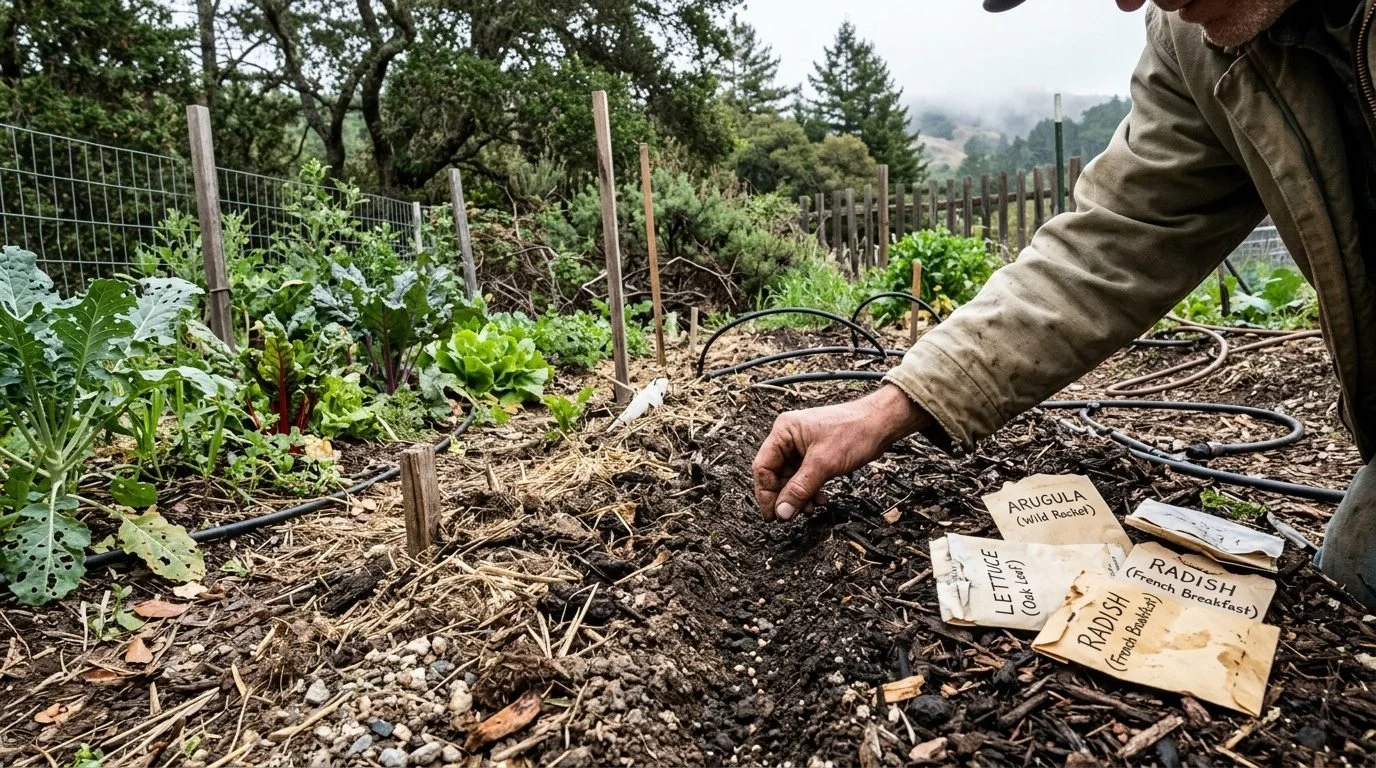
Direct-sowing is an economical way to grow many vegetables, and crops like beans, peas, and root vegetables actually do better sown right where they will grow, because they do not transplant well. Here are 15 vegetables that germinate easily and grow reliably from seed in California's diverse climate zones.
Growing from seed is one of the most satisfying things you can do in a garden. It costs a fraction of buying transplants, gives you access to hundreds more varieties, and connects you to the full life cycle of your food. These 15 crops are the best place to start because they germinate quickly, tolerate beginner mistakes, and do not require any special equipment.
1. Radishes
Radishes are the gold standard for seed-starting success. They germinate in 3 to 7 days and are ready to harvest in just 25 to 30 days for most varieties. UC Master Gardeners frequently recommend radishes as a first crop for children and new gardeners because the results are almost immediate.
Best varieties: 'Cherry Belle' (25 days, classic round red), 'French Breakfast' (28 days, mild and elongated), 'Daikon' (60 days, large Asian radish that grows well in California's fall).
Planting window: September through May in coastal zones, October through April in inland valleys, March through May and September through October in mountain areas. Avoid summer planting in hot zones, as radishes bolt and turn woody in heat.
Germination tip: Sow seeds half an inch deep in loose soil. Keep the surface moist until sprouts appear. Thin to 1 inch apart for small varieties, 4 inches for daikons. Radishes need consistent moisture to develop smooth, tender roots. Uneven watering produces tough, pithy radishes.
2. Green Beans
Beans are among the most reliable direct-sow crops in California. Bean seeds germinate best when the soil is 60 to 85 degrees F, and they do best direct-sown because they resent being transplanted. Germination takes 7 to 10 days.
Best varieties: 'Blue Lake' bush beans (55 days, the California standard), 'Provider' (50 days, cold-tolerant, good for coastal zones), 'Kentucky Wonder' pole beans (65 days, long production on a trellis).
Planting window: April through August in coastal zones, March through September in inland valleys, May through July in mountain areas. Wait until the soil feels warm to the touch.
Germination tip: Plant seeds 1 inch deep and 3 inches apart. Do not soak bean seeds before planting, as this can cause them to crack. Beans fix their own nitrogen, so they need little to no fertilizer. Inoculating seeds with rhizobium bacteria (available at garden centers) can boost nitrogen fixation. our guide to growing beans and peas
3. Lettuce
Lettuce seeds are tiny but mighty. They germinate in 5 to 10 days and can be harvested as baby greens in as few as 21 days. UC Cooperative Extension notes that lettuce seeds need light to germinate, so they should be pressed into the soil surface rather than buried deeply.
Best varieties: 'Black Seeded Simpson' (45 days, loose-leaf, heat-tolerant), 'Buttercrunch' (55 days, tender butterhead), 'Red Sails' (45 days, beautiful color, slow to bolt).
Planting window: Year-round in coastal zones (with shade cloth in summer), September through April in inland valleys, April through June and September through October in mountain areas.
Germination tip: Scatter seeds on the soil surface and press gently. Cover with a thin layer of vermiculite or fine compost. Lettuce seeds will not germinate if soil temperature exceeds 80 degrees F, which is why summer planting fails in hot areas. For year-round salads, sow a short row every 2 to 3 weeks. growing lettuce in California
4. Zucchini and Summer Squash
Zucchini seeds are large, easy to handle, and germinate reliably in 5 to 10 days. Summer squash is one of the most productive crops for the space it takes, and a single healthy plant can produce more than most households can eat over the season.
Best varieties: 'Black Beauty' (50 days, the standard dark green zucchini), 'Costata Romanesco' (55 days, ribbed Italian heirloom), 'Yellow Crookneck' (50 days, classic summer squash).
Planting window: April through July in coastal zones, March through August in inland valleys, May through June in mountain areas. Soil temperature should be at least 60 degrees F.
Germination tip: Plant seeds 1 inch deep in small hills or mounds spaced 3 to 4 feet apart. Plant 3 seeds per hill and thin to the strongest seedling. Squash seeds germinate fastest in warm soil, so wait for consistently warm weather. Covering the soil with black plastic for a week before planting can warm it up earlier in the season.
5. Sugar Snap Peas
Peas are a cool-season treasure that California gardeners can enjoy while most of the country is still frozen. Seeds germinate in 7 to 14 days and prefer cool soil (45 to 75 degrees F). UC ANR notes that peas are one of the few crops that actually prefer to be direct-sown in cool soil rather than started in warm conditions indoors.
Best varieties: 'Sugar Snap' (60 days, the original and still one of the best), 'Cascadia' (60 days, disease-resistant, excellent for the Pacific Coast), 'Sugar Ann' (55 days, compact bush type, no trellis needed).
Planting window: September through February in coastal zones, October through January in inland valleys, March through May in mountain areas. In Santa Cruz, I plant peas in October and harvest from December through March.
Germination tip: Plant seeds 1 inch deep and 2 inches apart. Provide a trellis for climbing varieties. Peas can be planted closer together than most crops because they support each other as they grow. Like beans, they fix nitrogen and need little fertilizer.
6. Carrots
Carrots are one of the most rewarding root crops to grow from seed, though they do require patience. Germination takes 14 to 21 days, which is longer than most vegetables. According to UC Master Gardeners, the key to carrot success is keeping the soil surface consistently moist during that long germination period.
Best varieties: 'Nantes' (65 days, sweet and cylindrical, good in heavy soils), 'Danvers' (75 days, sturdy and adaptable), 'Thumbelina' (60 days, round, perfect for clay or rocky soil).
Planting window: Year-round in coastal zones, September through March and again in August in inland valleys, April through July in mountain areas.
Germination tip: Sow seeds a quarter inch deep in loose, rock-free soil. Carrot seeds are tiny, so mix them with sand for more even distribution. Cover with a thin layer of vermiculite and mist daily until sprouts appear. Covering the row with a damp burlap cloth or floating row cover helps retain moisture. Thin seedlings to 2 inches apart once they have their first true leaves. growing root vegetables in California
7. Cucumbers
Cucumber seeds are large, easy to plant, and germinate in 5 to 10 days when soil is warm. The UC Vegetable Research and Information Center notes that cucumbers are one of the most productive warm-season crops when given adequate water and warm conditions.
Best varieties: 'Marketmore 76' (58 days, reliable slicing type), 'Lemon' (65 days, round yellow fruit, prolific in California), 'Armenian' (55 days, technically a melon, heat-tolerant and never bitter).
Planting window: May through July in coastal zones, April through August in inland valleys, May through June in mountain areas. Soil must be at least 65 degrees F for reliable germination.
Germination tip: Plant seeds 1 inch deep in hills or along a trellis. Cucumbers germinate fast in warm soil but will rot in cold, wet conditions. If you want an early start, pre-warm the soil with black plastic. Once growing, water deeply and consistently. Irregular watering is the primary cause of bitter cucumbers.
8. Swiss Chard
Swiss chard is one of the easiest greens to grow from seed and one of the longest-producing. Seeds germinate in 7 to 14 days, and a single planting can produce for 6 months or longer. UC ANR lists chard as one of the best year-round crops for California's mild-winter areas.
Best varieties: 'Bright Lights' (55 days, multicolored stems, stunning in the garden), 'Fordhook Giant' (50 days, large leaves, mild flavor), 'Rhubarb' (55 days, deep red stems, cold-hardy).
Planting window: Year-round in coastal zones, March through May and August through October in inland valleys, May through July in mountain areas.
Germination tip: Chard "seeds" are actually clusters of multiple seeds, so expect multiple sprouts from each one. Plant a half inch deep and thin to 6 inches apart. Soak seeds for a few hours before planting to speed germination. Harvest outer leaves regularly to keep the plant producing new growth from the center.
9. Beets
Like chard (they are actually the same species), beet seeds are multi-germ clusters that produce several sprouts each. Germination takes 7 to 14 days. According to UC Cooperative Extension, beets are a dual-purpose crop because both the roots and the greens are nutritious and delicious.
Best varieties: 'Detroit Dark Red' (55 days, the classic beet, reliable everywhere), 'Chioggia' (55 days, beautiful candy-striped interior), 'Golden' (55 days, mild and sweet, does not stain).
Planting window: Year-round in coastal zones, September through March in inland valleys, April through July in mountain areas. Beets tolerate light frost.
Germination tip: Soak seeds for 2 to 4 hours before planting to soften the hard seed coat. Plant half an inch deep and thin to 3 inches apart. Beets need consistent moisture for smooth root development. Irregular watering produces tough, woody roots with white rings. Harvest when roots are 2 to 3 inches across for the best flavor.
10. Sunflowers
Sunflowers are not a vegetable in the traditional sense, but their seeds are edible, they attract pollinators, and they are the single most confidence-building crop a new gardener can grow. Seeds germinate in 7 to 10 days and grow visibly every day. UC ANR recommends sunflowers as companion plants for vegetable gardens because they attract beneficial insects.
Best varieties: 'Mammoth Grey Stripe' (80 days, classic tall sunflower with edible seeds), 'Teddy Bear' (65 days, compact and ornamental), 'Autumn Beauty' (70 days, multi-branching with varied colors).
Planting window: April through July in all California zones. Sunflowers are heat-loving and frost-sensitive.
Germination tip: Plant seeds 1 inch deep and 12 inches apart in full sun. Sunflowers are one of the few crops that do not need rich soil. They grow fine in average garden soil with no amendments. Stake tall varieties once they reach 3 feet to prevent wind damage. In coastal areas, plant in your most sheltered, sun-drenched spot.
11. Arugula
Arugula is one of the fastest greens from seed to harvest. It germinates in 3 to 7 days and can be picked as baby greens in as few as 21 days. UC Master Gardeners recommend arugula as an ideal crop for succession planting because it matures so quickly.
Best varieties: 'Astro' (35 days, mild and fast-growing), 'Sylvetta' (wild arugula, 40 days, more peppery, slower to bolt), 'Wasabi' (40 days, extra spicy, fast-growing).
Planting window: September through May in coastal zones (nearly year-round in Santa Cruz), October through March in inland valleys. Avoid summer planting in hot areas, as arugula bolts within weeks.
Germination tip: Scatter seeds on the soil surface and press lightly. Arugula seeds need light to germinate. Sow thickly and harvest as baby greens, or thin to 4 inches for full-sized leaves. Plant a short row every 2 weeks for continuous harvest. Arugula self-seeds readily, so you may find volunteers popping up for years after your first planting.
12. Cilantro
Cilantro is famously quick to bolt in California's warm weather, but choosing the right variety and planting at the right time solves this problem. Seeds germinate in 7 to 14 days. According to UC Cooperative Extension, cilantro is a cool-season crop that should be treated more like lettuce than basil in California planting schedules.
Best varieties: 'Santo' (50 days, very slow to bolt, the best choice for California), 'Calypso' (50 days, another bolt-resistant option), 'Delfino' (55 days, ferny leaves, ornamental and productive).
Planting window: September through April in coastal zones, October through March in inland valleys, April through May in mountain areas. In Santa Cruz, fall-planted cilantro can produce for 4 months before bolting.
Germination tip: Gently crush cilantro seeds before planting to split the outer husk, which speeds germination. Plant half an inch deep. Succession plant every 3 weeks for continuous harvest. Once cilantro bolts, let it flower and set seed. The dried seeds are coriander, and the flowers attract beneficial insects. our guide to growing herbs
13. Kale
Kale is tough, nutritious, and remarkably easy from seed. It germinates in 5 to 10 days and can be harvested as baby greens in 25 days or as full-sized leaves in 55 to 65 days. Kale is both cold-hardy and heat-tolerant, which makes it one of the most adaptable crops in the California garden.
Best varieties: 'Lacinato' (60 days, dark bumpy leaves, mild and versatile), 'Red Russian' (55 days, tender and sweet), 'Winterbor' (55 days, curly, extremely cold-hardy).
Planting window: Year-round in coastal zones, August through March in inland valleys, April through August in mountain areas. In Santa Cruz, fall-planted kale produces through winter and into spring.
Germination tip: Plant seeds half an inch deep and thin to 12 to 18 inches apart. Kale seeds germinate easily in a wide range of soil temperatures (45 to 85 degrees F). Start harvesting outer leaves when the plant has at least 10 leaves, always leaving the center growing point intact. A single kale plant can produce for 6 months or longer with regular harvesting. our complete guide to growing greens in California
14. Turnips
Turnips are an overlooked gem for California gardeners. Seeds germinate in 3 to 7 days, and fast varieties are ready to harvest in just 35 to 45 days. UC Master Gardeners of Santa Clara County note that turnip leaves are edible and are sold as turnip greens, so one planting gives you both roots and greens.
Best varieties: 'Hakurei' (38 days, Japanese salad turnip, sweet and crisp, no cooking needed), 'Purple Top White Globe' (55 days, the classic storage turnip), 'Tokyo Cross' (35 days, fast and tender).
Planting window: September through March in coastal and inland zones, April through June in mountain areas. Turnips are cool-season crops that turn woody and bitter in heat.
Germination tip: Plant seeds half an inch deep and thin to 4 inches apart. Turnips germinate remarkably fast in cool, moist soil. Harvest 'Hakurei' types when they reach golf-ball size for the sweetest flavor. Larger turnips become woody. Succession plant every 3 weeks for a continuous supply.
15. Nasturtiums
Like sunflowers, nasturtiums blur the line between vegetable and flower. Every part of the plant is edible, from the peppery leaves to the bright flowers to the caperlike seeds. UC ANR recommends nasturtiums as a companion plant because they attract aphids away from vegetable crops (serving as a trap crop) and draw beneficial pollinators.
Best varieties: 'Jewel Mix' (55 days, compact mounding habit, mix of warm colors), 'Empress of India' (55 days, deep red flowers, dark foliage), 'Tall Single Mix' (65 days, trailing, great for edges and fences).
Planting window: March through June in all California zones. In coastal areas, nasturtiums can also be planted in September for winter blooms.
Germination tip: Nick or soak the large seeds overnight before planting 1 inch deep. Nasturtiums actually prefer poor, unfertilized soil. Rich soil produces lots of leaves but few flowers. Plant in full sun for the most blooms. They are one of the few crops that thrive on neglect, making them perfect for the hands-off gardener.
What Seeds Can I Plant Right Now in California?
The answer depends on your zone and the current season. In general, if nighttime temperatures are above 50 degrees F and rising, you can plant warm-season seeds (beans, squash, cucumbers, sunflowers). If temperatures are below 70 degrees F and falling, plant cool-season seeds (lettuce, radishes, peas, carrots, arugula). UC ANR's California Garden Web (cagardenweb.ucanr.edu) offers region-based vegetable gardening guidance for California, and our own California planting calendar breaks planting down by month and zone.
In Santa Cruz, March through May is the transition period when both cool and warm-season seeds can go in the ground. It is the busiest and most exciting time in the garden. our California planting calendar
Do I Need Special Equipment to Start Seeds?
For the 15 crops on this list, you need nothing but seeds, soil, water, and sunlight. All of them are direct-sow crops, meaning you plant the seeds right in your garden bed or container. No seed trays, grow lights, heat mats, or greenhouse needed.
That is what makes direct-sowing so appealing for beginners. You skip the fussy indoor phase entirely. Just prepare your soil, plant at the right depth, keep the surface moist until sprouts appear, and let California's climate do the rest.
Direct sowing works better than many gardeners expect; see whether you really have to start seeds indoors.
Frequently Asked Questions
What is the fastest vegetable to grow from seed in California?
Radishes and arugula are the fastest vegetables to grow from seed, both germinating in 3 to 7 days and reaching harvest size in 21 to 30 days. Radishes are a classic first crop, and Master Gardeners often suggest them for children and beginners because results come so fast. In California's mild climate, you can succession-plant radishes every 2 weeks from September through May for a nearly continuous harvest.
Can I save seeds from my California-grown vegetables?
Yes, many vegetables are excellent candidates for seed saving. According to UC ANR, the easiest crops to save seeds from are tomatoes, peppers, beans, peas, and lettuce because they are primarily self-pollinating. Let fruit fully ripen on the plant, then extract and dry the seeds. Crops in the squash and brassica families cross-pollinate easily, so saved seeds may produce unexpected results. Store dried seeds in a cool, dry place in labeled envelopes.
Why are my seeds not germinating in California?
The most common reason for germination failure is incorrect soil temperature. Each crop has an optimal soil temperature range for germination. Cool-season crops like lettuce germinate poorly in soil above 80 degrees F, and warm-season crops like beans are prone to rotting in soil below 60 degrees F. Other common causes include planting too deep, letting the soil dry out before sprouts emerge, and using old seeds.
How deep should I plant vegetable seeds?
A good general rule is to plant seeds two to three times as deep as their diameter. Tiny seeds like lettuce and arugula should be pressed into the soil surface. Medium seeds like radishes and beets go half an inch deep. Large seeds like beans and squash are planted 1 inch deep. Planting too deep is a more common mistake than planting too shallow, especially for small seeds.
Should I soak seeds before planting?
Soaking helps for some crops but not all. Soaking beet and chard seeds for a few hours before planting can soften their tough seed coats, and nasturtium seeds do better with an overnight soak. Peas benefit from an overnight soak. However, do not soak bean seeds, as they can crack and rot. Small seeds like lettuce and carrots do not need soaking. Cilantro seeds benefit from being gently crushed rather than soaked.
What is succession planting and should I do it?
Succession planting means sowing small batches of seeds every 2 to 3 weeks instead of planting everything at once. This technique extends your harvest over months instead of producing one large glut. It works especially well for fast-maturing crops like lettuce, radishes, arugula, and cilantro. In California's long growing season, succession planting can keep these crops on your table nearly year-round.
Can I direct-sow seeds in containers?
Absolutely. All 15 of these crops grow well in containers when direct-sown. Use a container at least 12 inches deep for root crops like carrots and beets, and at least 5 gallons for larger plants like squash and cucumbers. Use potting mix (not garden soil) for containers, and water more frequently since containers dry out faster than garden beds, especially during California's dry summers.
Starting from seed is one of gardening's great pleasures. Sign up for our free newsletter for seasonal planting reminders and variety recommendations tailored to California gardeners.
