

When to Plant What: Understanding Our Year-Round Season

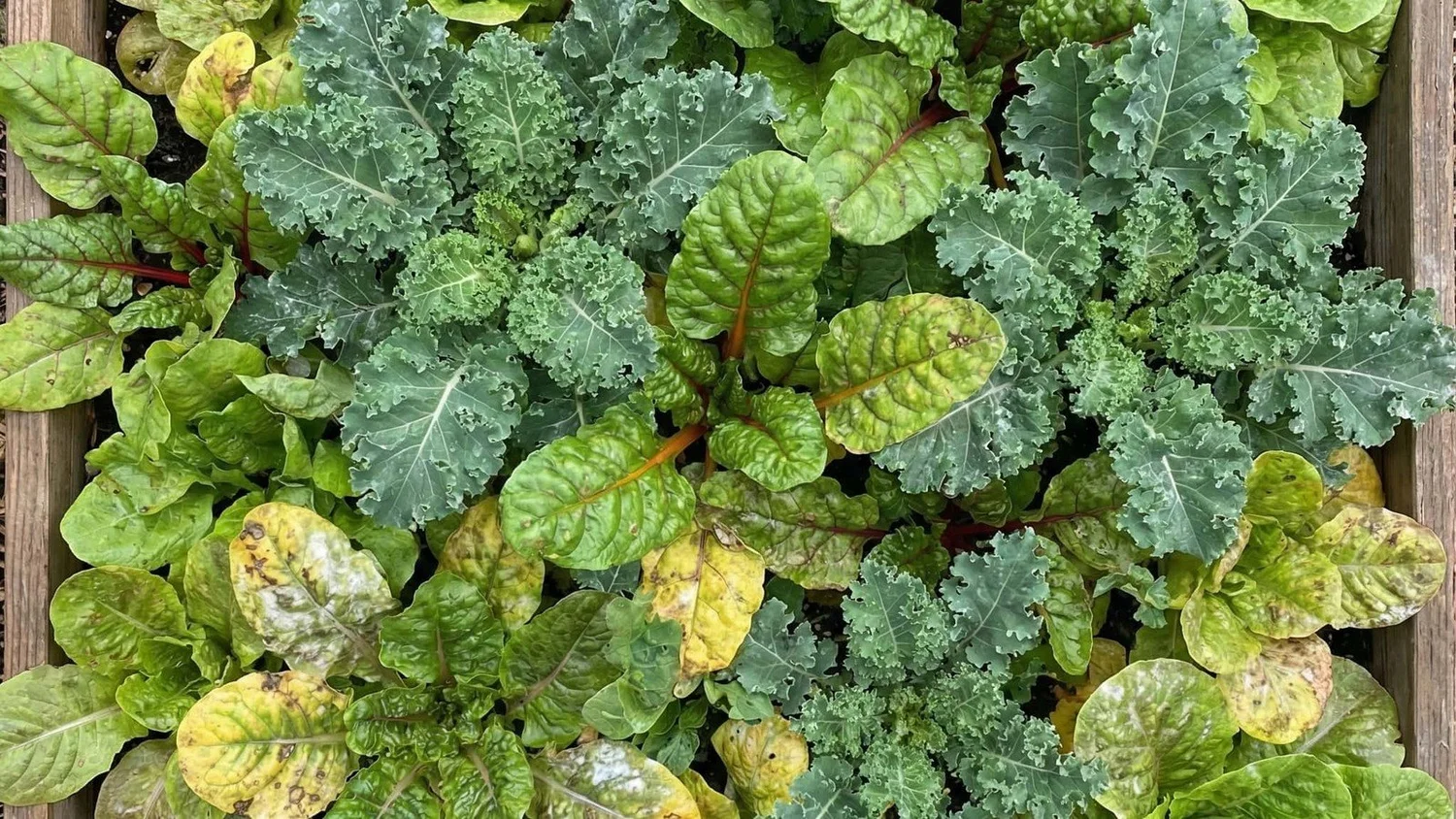
Winter kale, chard and lettuce growing in a Boulder Creek raised bed, with ordinary weather and leaf wear visible. Photo: Adrienne Gaughan / Ambitious Harvest Co
One of the best things about gardening in Santa Cruz County is that we can grow food almost every single month of the year. No harsh winter shuts down production. No frozen ground prevents planting. We have a Mediterranean climate that allows nearly continuous gardening if you understand the rhythm of our seasons.
But this gift also creates confusion for new gardeners. National seed packets and gardening guides assume you live somewhere with four distinct seasons. That advice doesn't translate here. Planting "after last frost" means something completely different in Santa Cruz than it does in Vermont or even Sacramento.
This guide will help you understand when to plant what in Santa Cruz County, and more importantly, why those timing windows matter.
Why Don't Traditional Planting Calendars Work Here?
Most gardening advice is written for continental climates with cold winters and hot summers. Those places have clear start and stop dates. Last frost in spring signals the beginning of the growing season. First frost in fall signals the end.
We don't have that.
Santa Cruz has:
Mild winters where temperatures rarely drop below 32°F
Cool, foggy summers along the coast
Dry summers and wet winters (Mediterranean pattern)
Year-round growing potential for cool-season crops
Two distinct planting seasons rather than one
If you follow generic advice, you'll plant tomatoes in March (too early for most of us), miss the fall planting window entirely, and wonder why your summer lettuce bolts immediately.
What Are the Santa Cruz Growing Seasons?
Instead of thinking in traditional spring, summer, fall, winter terms, think of our year in two main growing seasons.
Cool Season (September through May)
This is prime time for leafy greens, brassicas, root vegetables, peas, and herbs like cilantro and parsley. Days are shorter and cooler. Rainfall provides most or all irrigation. Growth is steady but slower than summer.
Characteristics:
Temperatures: 40°F to 70°F
Natural rainfall handles most watering needs (October through April)
Longer nights, shorter days
Less pest pressure
Lower disease risk
Best crops: Lettuce, kale, chard, spinach, arugula, broccoli, cabbage, cauliflower, peas, carrots, beets, radishes, turnips, cilantro, parsley
Warm Season (May through September)
Heat-loving crops thrive now. Tomatoes, peppers, squash, cucumbers, beans, and basil need warm soil and long days to produce. No natural rainfall means you're responsible for all irrigation.
Characteristics:
Temperatures: 55°F to 85°F (cooler at coast, warmer inland)
No rain (May through October typically)
Long days, short nights
More pest pressure (aphids, caterpillars, gophers)
Higher disease risk (powdery mildew, blight)
Best crops: Tomatoes, peppers, eggplant, summer squash, winter squash, cucumbers, melons, beans, basil, oregano, thyme
Transition Periods
April and October are transition months. Cool-season crops are finishing while warm-season crops are getting started (April), or vice versa (October). These months require flexibility and observation.
What Are the Two Planting Windows?
Most vegetables fall into one of two planting windows. Understanding which window your crops need is the key to timing success.
Spring Planting Window (March through June)
What to plant:
March: Cool-season crops that need a long growing season (broccoli, cabbage, cauliflower as transplants)
April: Quick cool-season crops (lettuce, spinach, peas, carrots), early herbs
May: Warm-season crops (tomatoes, peppers, squash, beans)
June: Last chance for warm-season crops, succession planting for beans and squash
Coastal vs inland timing:
Coastal areas (Aptos, Capitola, Santa Cruz beaches) should wait until late May or June to plant heat-loving crops. Morning fog keeps things cool through May.
Inland areas (Boulder Creek, Scotts Valley, Watsonville) can plant tomatoes and peppers in early May once soil warms up.
Fall Planting Window (August through November)
This window gets overlooked by beginners but offers some of the best gardening of the year. Fall vegetables mature during cooler weather, suffer less pest pressure, and often taste sweeter after light frosts.
What to plant:
August: Start brassica seeds indoors (broccoli, cabbage, cauliflower, kale)
September: Transplant brassicas, direct seed lettuce, plant garlic, sow cover crops
October: More lettuce, spinach, arugula, peas, fava beans
November: Last plantings of lettuce and greens before growth really slows
Why fall planting works:
Vegetables planted in fall mature in winter and early spring when the garden would otherwise be empty. Overwintered broccoli planted in September produces heads in February. Garlic planted in October harvests in June. Fall-planted lettuce provides salads all winter long.
What Should You Plant Each Month?
Here's what you can plant each month in Santa Cruz County. Remember, these are general guidelines. Your microclimate (coastal vs inland, sunny vs shady) will shift timing by 2 to 4 weeks.
January
Plant: Bare-root fruit trees, peas, lettuce, spinach, arugula, fava beans (if not already planted)
Why now: Dormant-season tree planting. Cool-season crops handle winter rains and occasional frost. Growth is slow but steady.
Notes: Soil may be too wet to work. Wait for a dry spell. Coastal fog is heavy, so growth will be slower than inland.
February
Plant: More peas, lettuce, spinach, radishes, beets, carrots, onion sets, early potatoes
Why now: Days are getting longer. Soil is warming slightly. Cool-season crops accelerate growth.
Notes: Start tomato and pepper seeds indoors late in the month if you're inland. Coastal gardeners can wait until March.
March
Plant: Lettuce, kale, chard, brassica transplants (broccoli, cabbage, cauliflower), peas, carrots, beets, potatoes, onions, cilantro, parsley
Why now: This is a major planting month. Cool-season crops thrive. It's warm enough for brassicas to establish before summer heat.
Notes: Don't plant tomatoes or peppers outside yet, even though nurseries are selling them. Soil is still too cold. You can start seeds indoors or buy transplants to harden off in April.
April
Plant: Last cool-season plantings (lettuce, brassicas), first warm-season seedlings for hardening off, succession plant carrots and beets, herbs (cilantro, parsley, dill)
Why now: Transition month. Cool weather lingers, but warming trend begins. Still too early for frost-sensitive crops at night.
Notes: Start hardening off tomato and pepper transplants late in the month. Set them outside during the day, bring them in at night.
May
Plant: Tomatoes, peppers, eggplant, summer squash, winter squash, cucumbers, melons, beans, basil, corn
Why now: Soil temperature finally reaches 60°F+, critical for warm-season crops. Frost risk is over (except in high elevation SLV).
Notes: Coastal gardeners should wait until late May or June for tomatoes and peppers. Inland gardeners can start early May. This is THE month for warm-season planting.
June
Plant: More tomatoes (if you want a late crop), beans (succession plant every 3 weeks), summer squash, cucumbers, basil
Why now: Soil is warm. Days are long. Warm-season crops establish quickly.
Notes: Start thinking about fall crops. Brassica seeds can go into flats late in the month for transplanting in August/September.
July
Plant: Beans (last succession), summer squash, fall brassica seeds (indoors), lettuce (if you're coastal and have shade)
Why now: Warm-season crops are in full production. Planning ahead for fall garden.
Notes: Inland gardens are too hot for lettuce. Coastal gardens can grow heat-tolerant varieties in partial shade. Start broccoli, cabbage, kale, and cauliflower seeds indoors in flats.
August
Plant: Transplant brassicas started in July, direct seed lettuce and greens (late in month), plant cover crops in empty beds
Why now: Fall garden begins. Brassicas planted now will mature in late fall and winter.
Notes: Transition month. Summer crops are winding down. Cool-season crops starting up. Heat-loving crops (tomatoes, peppers) are still producing.
September
Plant: Lettuce, spinach, arugula, kale, chard, more brassicas, garlic (late in month), fava beans, peas, cilantro, parsley
Why now: This is the second major planting month of the year. Fall is ideal for cool-season crops. They mature during cooler weather and handle light frost.
Notes: Replace tired summer beds with fall greens. Plant garlic after the first rain, typically late September or early October.
October
Plant: Garlic (early in month), fava beans, peas, lettuce, spinach, arugula, brassicas, radishes, turnips, cover crops
Why now: Still warm enough for quick germination, but cooling down for steady growth. Overwintering crops go in now.
Notes: First meaningful rains usually arrive this month, reducing irrigation needs. Fall-planted crops will produce through winter and spring.
November
Plant: Lettuce (last plantings), spinach, arugula, fava beans (if not already planted), cover crops
Why now: Growth slows dramatically as days shorten, but cool-season crops can still germinate and establish.
Notes: Focus on quick crops like lettuce. Slow growers (broccoli, cabbage) planted now won't mature until late spring.
December
Plant: Not much. Focus on maintaining existing crops and planning next season.
Why now: Shortest days of the year. Growth stalls almost completely, though plants don't die.
Notes: Harvest winter crops. Weed when soil is workable. Order seed catalogs. Dream about next year.
How Does Succession Planting Provide Continuous Harvest?
One of the best techniques for year-round abundance is succession planting. Instead of planting all your lettuce in March, plant a small amount every 2 to 3 weeks from September through May. This gives you continuous harvest rather than a glut followed by nothing.
Best crops for succession planting:
Lettuce and salad greens (plant every 2 weeks)
Radishes (plant every 2 weeks)
Bush beans (plant every 3 weeks, May through July)
Carrots (plant every 3 weeks, March through August)
Beets (plant every 3 weeks, March through September)
Cilantro (plant every 2 weeks, September through March)
Succession planting spreads out harvest, reduces waste, and ensures fresh produce rather than all-at-once overwhelming abundance.
How Do Frost Dates Affect Planting?
"Last frost date" and "first frost date" are less relevant in Santa Cruz than in cold-winter climates, but they still matter for timing warm-season crops.
Last spring frost:
Coastal (Aptos, Capitola, Santa Cruz): Rare, typically late February if at all
Inland valleys (Scotts Valley, Soquel): Mid to late March
San Lorenzo Valley (Boulder Creek, Ben Lomond): Early to mid April
High elevation SLV: Late April
First fall frost:
Coastal: November or later, sometimes no frost all winter
Inland valleys: Late October to early November
San Lorenzo Valley: Mid to late October
These are averages. Microclimates vary dramatically. Low-lying areas frost sooner than hillsides. Spots under tree canopy or near buildings stay warmer.
Track frost in your specific garden. Write it down. Over several years, you'll learn your exact frost window.
How Do Microclimates Shift Your Planting Timing?
Santa Cruz County's microclimates create different planting windows even within a few miles.
Coastal gardeners:
Wait 2 to 4 weeks longer to plant heat-loving crops
Can grow cool-season crops almost year-round
Focus on fog-tolerant tomato varieties
Extend harvest season for lettuce into summer
Inland gardeners:
Plant warm-season crops 2 to 4 weeks earlier
Have hotter summers, better for tomatoes and peppers
Need to take a break from lettuce in July/August (too hot)
Earlier frost risk in fall
Under-redwood gardeners:
Focus on shade-tolerant crops (leafy greens, herbs)
Longer cool season due to canopy shade
May struggle with heat-loving crops
Excellent for year-round greens
Learn your microclimate. Observe what your neighbors grow and when. Keep notes on what works in your specific garden.
What Are the Most Common Timing Mistakes?
Planting tomatoes too early. Nurseries sell them in March. That doesn't mean you should plant them. Cold soil stunts growth. Wait until May, or June if you're coastal.
Missing the fall planting window. September through November is critical for fall and winter crops. If you only plant in spring, you're missing half the year.
Not succession planting. Planting all your lettuce at once leads to feast or famine. Plant small amounts every 2 weeks.
Ignoring your microclimate. Generic advice doesn't account for coastal fog or inland heat. Adjust timing based on your specific location.
Following seed packet instructions blindly. Most packets are written for cold-winter climates. Their "plant after last frost" doesn't apply the same way here.
Frequently Asked Questions About Santa Cruz Planting Times
Why don't national seed packet instructions work in Santa Cruz?
National gardening advice assumes cold winters with distinct start/stop dates. Santa Cruz has a Mediterranean climate with mild winters, cool foggy summers along the coast, and year-round growing potential. "Plant after last frost" means something completely different here than in Vermont. Following generic timing leads to planting tomatoes too early (March), missing the fall window entirely, and watching summer lettuce bolt immediately.
What are the two main planting seasons in Santa Cruz?
The cool season (September through May) is prime time for leafy greens, brassicas, root vegetables, peas, and herbs like cilantro. Rainfall handles most irrigation. The warm season (May through September) is for heat-loving crops: tomatoes, peppers, squash, cucumbers, beans, and basil. You provide all irrigation. April and October are transition months where seasons overlap. Understanding which season your crops need is key to timing success.
When should I plant tomatoes in Santa Cruz County?
Inland areas (Boulder Creek, Scotts Valley, Watsonville) can plant tomatoes in early May once soil reaches 60°F. Coastal areas (Aptos, Capitola, Santa Cruz) should wait until late May or even June because morning fog keeps soil cool through May. Don't be fooled by nurseries selling tomato transplants in March. Cold soil stunts growth. Patience pays off with healthier, more productive plants.
What is succession planting and why does it matter?
Succession planting means sowing small amounts of the same crop every 2-3 weeks instead of all at once. This spreads harvest over months rather than creating an overwhelming glut followed by nothing. Best crops for succession: lettuce (every 2 weeks September-May), radishes (every 2 weeks), bush beans (every 3 weeks May-July), carrots and beets (every 3 weeks March-August), and cilantro (every 2 weeks September-March).
When is the fall planting window?
August through November is your fall planting window, and it's often overlooked by beginners. Start brassica seeds indoors in July-August, transplant in August-September. Direct seed lettuce and greens starting late August. Plant garlic in late September to early October after the first rain. Sow fava beans and peas in October. Fall vegetables mature during cooler weather with less pest pressure and often taste sweeter.
How do frost dates differ across Santa Cruz County microclimates?
Last spring frost varies dramatically: coastal areas (late February if at all), inland valleys like Scotts Valley (mid to late March), San Lorenzo Valley (early to mid April), high elevation SLV (late April). First fall frost: coastal (November or later), inland valleys (late October to early November), San Lorenzo Valley (mid to late October). Low-lying areas frost sooner than hillsides. Track frost in your specific garden over several years.
What can I plant in winter in Santa Cruz?
Cool-season crops grow all winter here, though slowly. December and January are best for harvesting existing crops rather than starting new ones (short days stall growth). You can plant lettuce, spinach, arugula, peas, and fava beans in January-February. Bare-root fruit trees go in during dormant season (December-February). Focus on maintaining existing crops and planning next season during the slowest months.
How do I adjust planting times for my microclimate?
Coastal gardeners wait 2-4 weeks longer for heat-loving crops but can grow cool-season crops almost year-round. Inland gardeners plant warm-season crops 2-4 weeks earlier but take a break from lettuce in July-August (too hot). Under-redwood gardeners focus on shade-tolerant crops and have an extended cool season. Observe what neighbors grow successfully and when. Local farmers markets and nurseries stock what's appropriate to plant now.
Local Resources for Timing Guidance
UC Master Gardeners of Monterey Bay offer planting calendars and advice specific to our area. Visit mbmg.ucanr.edu or call their help line.
Farmers markets are your best real-time guide. What are local farmers selling as starts right now? If they're selling tomato transplants in May, that's your signal to plant. If they're selling brassica starts in September, follow their lead.
Nurseries stock what's appropriate to plant now. If Sierra Azul, Dig Gardens, or San Lorenzo Garden Center are carrying pepper plants, it's time to plant peppers.
Understanding your specific microclimate is essential for getting planting timing right. You can also boost productivity by learning which crops grow well together in our companion planting guide.
Start Observing
Timing becomes intuitive with experience. For now, use this guide as a framework. Keep notes on what you plant and when. Track first and last harvest dates. Observe when neighbors' tomatoes ripen or when their lettuce bolts.
Over time, you'll develop an instinct for when to plant what in your specific garden. Until then, refer back to this guide and adjust based on your microclimate.
Free Planting Calendar Resources
Download these free guides to time your Santa Cruz plantings perfectly:
Seasonal Planting Calendar: Complete month-by-month reference showing what to plant, what to prepare, what to observe, and what to skip each month. Print and keep by your garden.
Vegetables by Season : Quick reference chart showing which vegetables belong to cool season vs warm season. Helpful for planning crop rotation and succession planting.
Know Your Microclimate Worksheet: Assess your specific growing conditions to adjust timing for your garden. Coastal vs inland makes a 2-4 week difference in planting dates.
Seasonal Tasks Checklist: Season-by-season checklist of garden tasks beyond planting: pruning, soil prep, irrigation setup, and harvest timing.
