

Do I Need a Permit for a Garden Shed in Santa Cruz? (City + County)
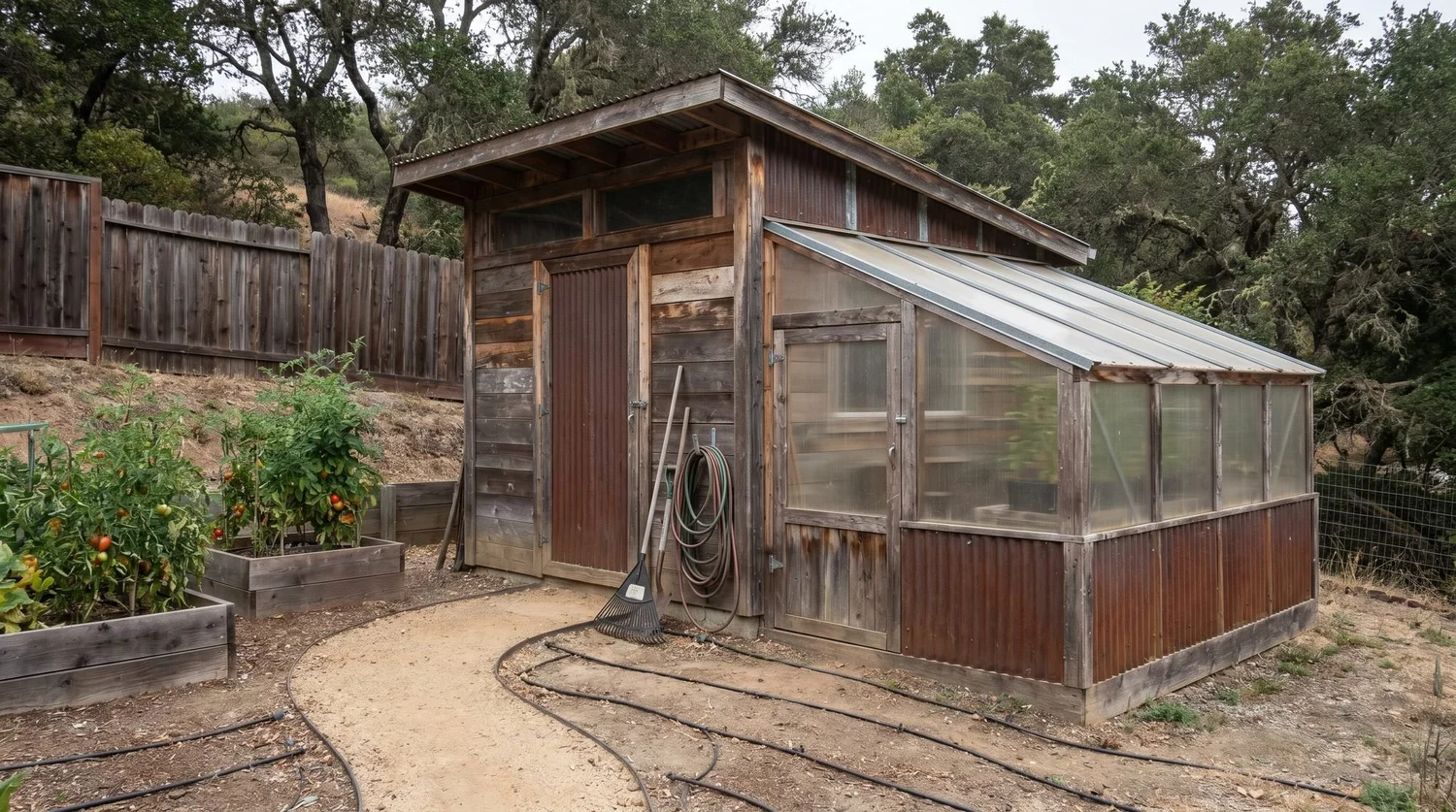
You found the perfect corner of the yard, you have a shed picked out, and now a small voice asks: do I need a permit for this? It is a fair question, and a smart one to ask before you pour a footing or assemble a kit. Getting it right up front is far easier than explaining an unpermitted structure later when you sell the house or a neighbor calls it in.
The short answer for most garden sheds in Santa Cruz is encouraging: small, simple storage sheds usually do not need a building permit. But "usually" is doing some work in that sentence. The rules depend on the size of the structure, where you put it, whether you run power or water to it, and crucially, whether your property sits inside the City of Santa Cruz or in the unincorporated County. Those two jurisdictions have different departments and somewhat different rules. Here is how to tell which applies to you and what to expect.
First, why this matters before you build
A building permit exists to confirm a structure is safe and meets code. A separate layer, zoning, controls where structures can go and how big they can be. A shed can be small enough to skip a building permit and still violate a setback rule, so both questions matter. Building without checking can mean a stop-work order, fees, or being told to move or remove the structure. None of that is fun, and all of it is avoidable with one phone call or counter visit before you start.
One more reason to get this right: an unpermitted structure can surface during a home sale and slow or complicate the transaction. A little diligence now protects you later.
The general California rule
California's building code includes a statewide exemption that most local jurisdictions adopt. Under it, a one-story detached accessory building used as a tool or storage shed, playhouse, or similar use does not require a building permit when the floor area does not exceed 120 square feet. That 120 square foot figure is the common threshold you will see across California cities and counties, and both the City and County of Santa Cruz use it.
Two things the statewide exemption does not waive, anywhere in California:
- Zoning still applies. Setbacks from property lines, height limits, and rules about where structures can sit apply to a shed whether or not it needs a building permit.
- Utilities still need permits. If you run electrical, plumbing, or mechanical (heating or cooling) work to the shed, that work needs its own permit even when the structure itself is exempt.
So "no building permit" is not the same as "no rules." Now to the local specifics.
City of Santa Cruz specifics
If your property is inside city limits, the City of Santa Cruz Planning and Community Development Department (Building and Safety) is your authority. Based on the City's accessory structure guidance, a detached storage shed generally does not need a building permit when it meets all of these:
- One story, with floor area not exceeding 120 square feet
- Not exceeding 10 feet in height, measured to the top of the roof sheathing
- Non-habitable and not heated or air conditioned
- Kept at least six feet from any other structure
- Compliant with the setback requirements for your parcel's zoning, even though no building permit is required
Note that the City ties shed placement to your parcel's zoning setbacks rather than a single fixed number, so the required distance from a property line depends on your zone. The City also advises that a shed with electrical wiring or plumbing beyond a simple hose bib will require permits for that work. Because setbacks and any parcel-specific limits vary, the City recommends checking with Planning before you build and bringing a simple site plan showing your property lines, existing and proposed structures, and the distances between them. Confirm the current numbers with the City directly, as codes are updated periodically.
County of Santa Cruz specifics
If you are in the unincorporated County, which includes much of the area outside city limits, your authority is the County of Santa Cruz Community Development and Infrastructure Department (Building and Planning). The County also exempts one-story detached accessory buildings used as tool sheds and similar uses from a building permit when the floor area does not exceed 120 square feet, and when the parcel already has a primary dwelling. A few County details worth knowing:
- Setbacks: A detached accessory structure under 120 square feet and 10 feet or less in height may be built as close as three feet from side and rear property lines, unless a special building envelope has been established for the parcel.
- Height: The exemption is for one story or 10 feet, measured to the top of the roof sheathing. Anything larger or taller must meet the standard setback and height rules for your zone district.
- Separation: Structures generally must sit at least three feet apart, or whatever the California Building or Fire Code requires, whichever is greater.
- No primary dwelling, no shed: Accessory structures are not allowed on a vacant parcel that has no main residence.
- Utilities: If you add electrical, plumbing, or mechanical work, those permits are required even though the shed itself is exempt.
As with the City, the County recommends a quick check with the Zoning Counter before you build, because land use restrictions tied to your zoning designation, fire zones, environmentally sensitive areas, or coastal rules can change the answer. Verify your specific parcel's requirements with the County.
What actually triggers a permit
It helps to think in terms of what pushes a simple shed over the line. Any one of these can mean you need a permit:
- Size. Floor area over 120 square feet moves you out of the exemption and into needing a building permit.
- Height and stories. More than one story, or taller than the 10 foot limit, triggers a permit and standard zoning height rules.
- Electrical. Running power for lights, outlets, or a potting bench means an electrical permit, even if the structure itself is exempt.
- Plumbing. A sink or water line beyond a basic hose bib means a plumbing permit.
- Heating or cooling. Conditioning the space can make it habitable in the code's eyes, which changes everything.
- Setbacks and placement. Even an exempt shed has to sit the right distance from property lines and other structures, and the right distance depends on your zone.
If you are planning a shed that doubles as a workshop or a small studio with power and a sink, assume you are in permit territory and plan for it. It is a normal, manageable process.
Greenhouses and hoop houses
Gardeners often ask whether a greenhouse counts the same as a shed. The County treats greenhouses generously: greenhouses up to 1,000 square feet are allowed in all residential zones with a building permit, and larger ones may be possible in certain rural and agricultural zones with a use permit. Note that this is a building-permit pathway rather than a flat exemption, so a greenhouse is handled a bit differently than a 120 square foot tool shed.
A small, temporary hoop house, the kind with a pipe or PVC frame and a poly cover that you put up seasonally, generally reads as a temporary or minor structure rather than a permanent building. Many gardeners use them without a permit, but classification can hinge on size, how permanent the anchoring is, and your zone. Because the line between "season extender" and "structure" is genuinely gray, this is exactly the kind of question worth a quick call to your building department before you commit. If you are weighing protected growing because of our cool coastal summers, our guide to Santa Cruz microclimates can help you decide whether you even need the extra warmth.
How to actually check and apply
Here is a simple sequence that works for either jurisdiction:
- Confirm your jurisdiction. Look up your parcel by address on the County Assessor or GIS map, or simply ask. Knowing whether you are City or unincorporated County tells you which department to call.
- Sketch a site plan. A simple drawing showing your property lines, existing structures, the proposed shed, and the distances between them answers most of the staff's questions in one go.
- Call or visit the counter. For the City, contact Santa Cruz Planning and Community Development. For unincorporated areas, contact the County Community Development and Infrastructure Department. Ask specifically about your parcel's zoning, setbacks, and any overlay like fire or coastal zones.
- Pull any utility permits. If you are adding power or water, line up the electrical or plumbing permit even if the shed itself is exempt.
- Keep your records. Save any written confirmation, permit numbers, and your final site plan. Future you, especially at resale, will be grateful.
While you are planning placement, it is worth thinking about how the shed will interact with the rest of your garden. A shed that shades your beds or blocks airflow can cause problems down the line, so it pairs well with a look at your warm and cool spots and where your raised beds will go. And if the goal is mostly to corral tools, our take on the tools you actually need might right-size the whole project.
When in doubt, call
Building codes and zoning rules change, and the details that matter most are the ones specific to your exact parcel: your zone, your setbacks, any fire or coastal overlay, and whether your lot already has a primary dwelling. Nothing in this article replaces a direct answer from your building department, and a single call usually settles the question in a few minutes.
So treat the rules here as a confident starting point: a small, simple, one-story shed under 120 square feet with no power or plumbing is very likely fine in both the City and the County, as long as you respect your setbacks. Anything bigger, taller, wired, or plumbed deserves a conversation first. Make that call, get it in writing if you can, and then go build the shed. Your future garden self will thank you. If you are also thinking about fire-safe materials and placement, our notes on fire-wise materials are a good companion read for any new structure in our wildland-adjacent county.
Frequently Asked Questions
How big can my shed be before I need a building permit?
Both the City and unincorporated County exempt detached storage sheds under 120 square feet from building permits, as long as they meet other conditions like a single story and a height no more than 10 feet. Keep in mind that no building permit does not mean no rules.
Does adding power or water to my shed change anything?
Yes. Adding electrical wiring, plumbing, heating, or cooling triggers separate permits regardless of the shed's size exemption. A bare storage shed is treated very differently from one set up as a workspace.
Do setback rules still apply to an exempt shed?
Yes. Zoning setbacks always apply, and they vary by jurisdiction and zone. In the unincorporated County a shed may sit as close as 3 feet from side or rear property lines, while the City requires at least 6 feet from other structures, so confirm your specific zone in writing first.
