

Powdery Mildew vs. Downy Mildew Identification
A few of the product links in this guide are affiliate links. If you buy through one, Ambitious Harvest may earn a small commission at no extra cost to you, which helps keep these guides free. We only point to gear we would use in our own Santa Cruz garden. As an Amazon Associate, we earn from qualifying purchases. Read our full disclosure.
These two diseases look similar at first glance but have different causes, different conditions that trigger them, and different treatments. The quickest way to tell them apart: powdery mildew appears as a white, dusty coating on the upper surface of leaves, while downy mildew shows as yellowish patches on top with fuzzy gray or purple growth underneath. According to UC Integrated Pest Management, powdery mildew thrives in warm, dry conditions with cool nights (exactly Santa Cruz's summer climate), while downy mildew needs prolonged leaf wetness and cooler temperatures. Getting the diagnosis right determines whether your treatment will work.
How to Identify Powdery Mildew
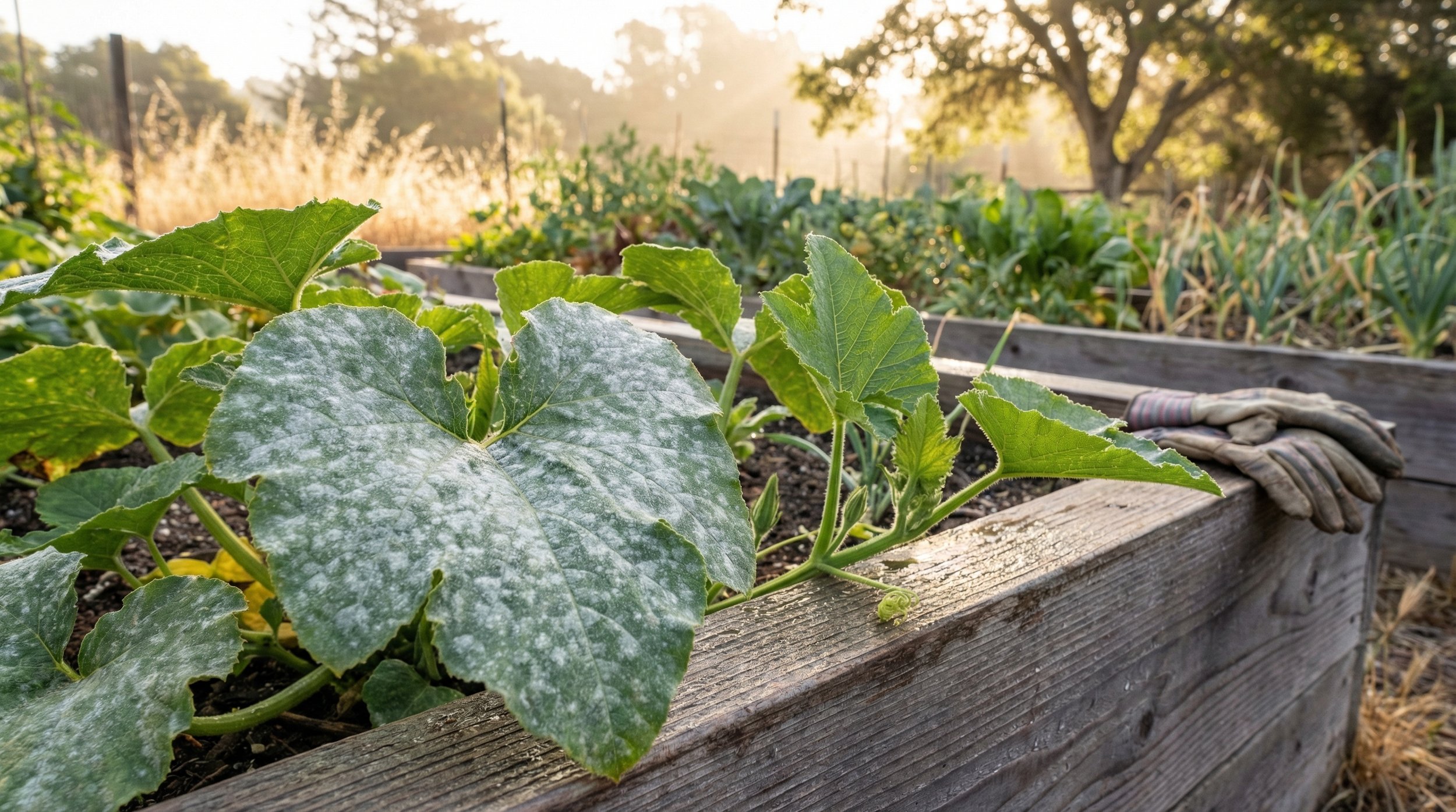
Powdery mildew is the number one fungal disease in Santa Cruz gardens. It appears as a white or grayish-white powder on leaf surfaces, stems, and sometimes flower buds. You can usually wipe it off with your finger, which distinguishes it from mineral deposits or other surface marks. It starts as small circular spots and spreads to cover entire leaves.
In our climate, powdery mildew peaks in late summer and early fall when warm days and cool, foggy nights create ideal conditions. It does not need wet leaves to spread, which is why it thrives here even during our dry summers. Squash, cucumbers, peas, roses, and apple trees are the most commonly affected plants in local gardens. Severely infected leaves turn yellow, curl, and eventually drop.
How to Identify Downy Mildew
Downy mildew is less common in Santa Cruz than powdery mildew but appears during cool, wet periods, especially in late winter and spring. Look for angular yellow or pale green patches on the upper leaf surface that follow the leaf veins. Flip the leaf over and you will see a fuzzy, grayish-purple growth on the underside. This is the key diagnostic: the fuzzy underside.
Downy mildew is not actually a true fungus (it is an oomycete, more closely related to algae), which is why fungicides that work on powdery mildew often fail against it. It affects lettuce, spinach, basil, and onions most commonly in Santa Cruz gardens. Infected lettuce heads develop brown, sunken areas and become unmarketable or unappetizing quickly.
The Bottom Line for Santa Cruz Gardeners
In Santa Cruz, powdery mildew is the disease you will encounter most often. Treat it with sulfur spray or a potassium bicarbonate solution (1 tablespoon per gallon of water) applied every 7 to 10 days at the first sign of white powder. For downy mildew, remove affected leaves immediately, improve air circulation, and switch to drip irrigation to keep foliage dry. Prevention is the best strategy for both: choose resistant varieties (look for "PM resistant" on squash and cucumber seed packets), space plants for airflow, and water at the soil level.
This week: Walk your garden and check squash, cucumber, and rose leaves for white powder on top or yellow patches with fuzzy undersides. Identifying the problem correctly is the first step to treating it.
For more on managing common garden diseases, check out our free Pest and Disease Quick Guide at [/your-garden-toolkit].
Frequently Asked Questions
How do I tell powdery mildew from downy mildew?
Powdery mildew appears as a white, dusty coating on the upper surface of leaves that you can usually wipe off with your finger. Downy mildew shows as yellowish patches on top with fuzzy gray or purple growth on the underside, which is the key diagnostic.
Which mildew is more common in Santa Cruz?
Powdery mildew. Per UC Integrated Pest Management, it thrives in warm, dry days with cool nights, exactly Santa Cruz's summer climate, and peaks in late summer and early fall. Downy mildew is less common and appears during cool, wet periods in late winter and spring.
How do I treat powdery mildew?
Use a sulfur spray or a potassium bicarbonate solution at 1 tablespoon per gallon of water, applied every 7 to 10 days at the first sign of white powder. Neem oil and milk spray are also listed options.
Why do fungicides that work on powdery mildew fail on downy mildew?
Downy mildew is not a true fungus; it is an oomycete, more closely related to algae. For it, remove affected leaves immediately, improve air circulation, and switch to drip irrigation to keep foliage dry. Copper fungicide is the listed treatment.
