

Why Are My Tomato Seedlings Leggy?
A few of the product links in this guide are affiliate links. If you buy through one, Ambitious Harvest may earn a small commission at no extra cost to you, which helps keep these guides free. We only point to gear we would use in our own Santa Cruz garden. As an Amazon Associate, we earn from qualifying purchases. Read our full disclosure.
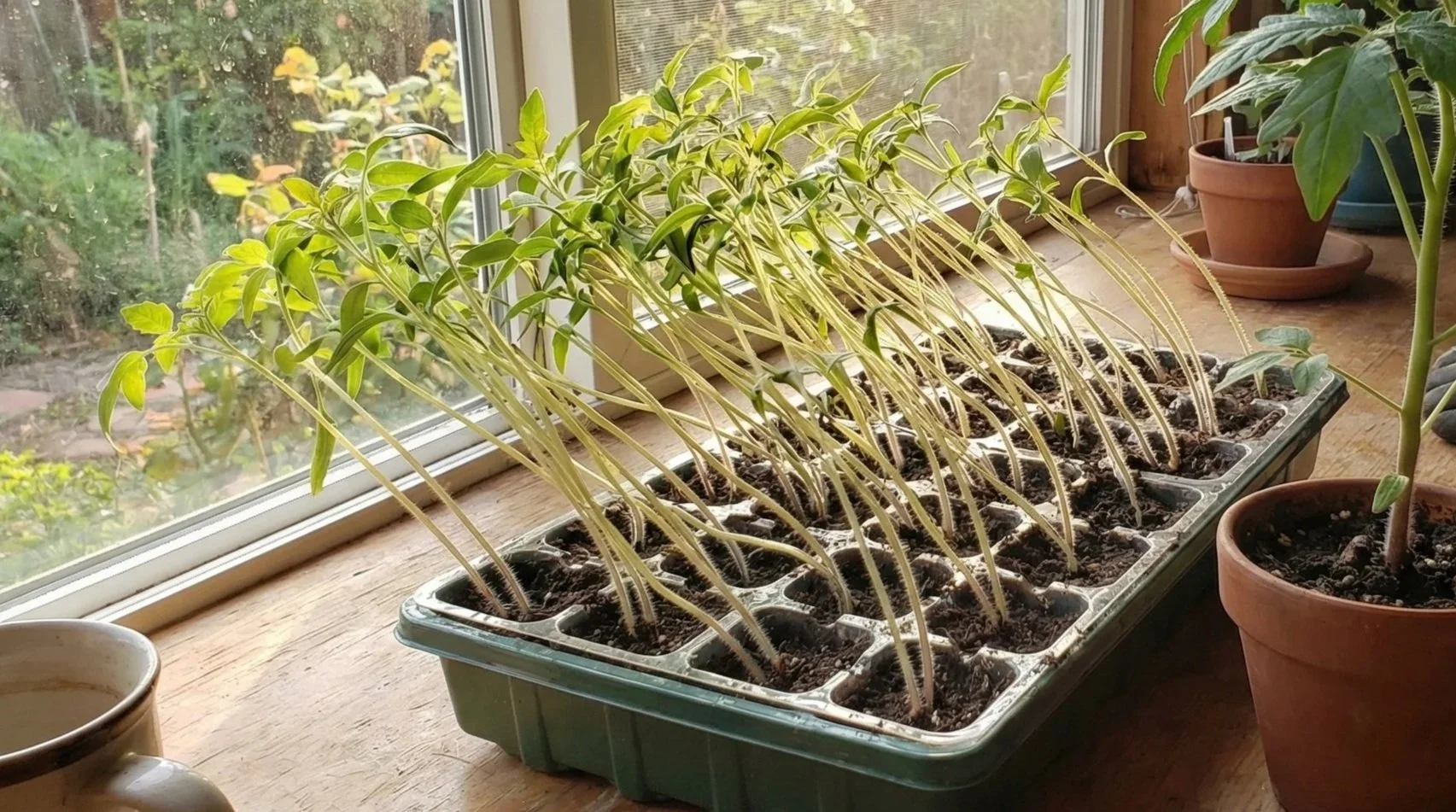
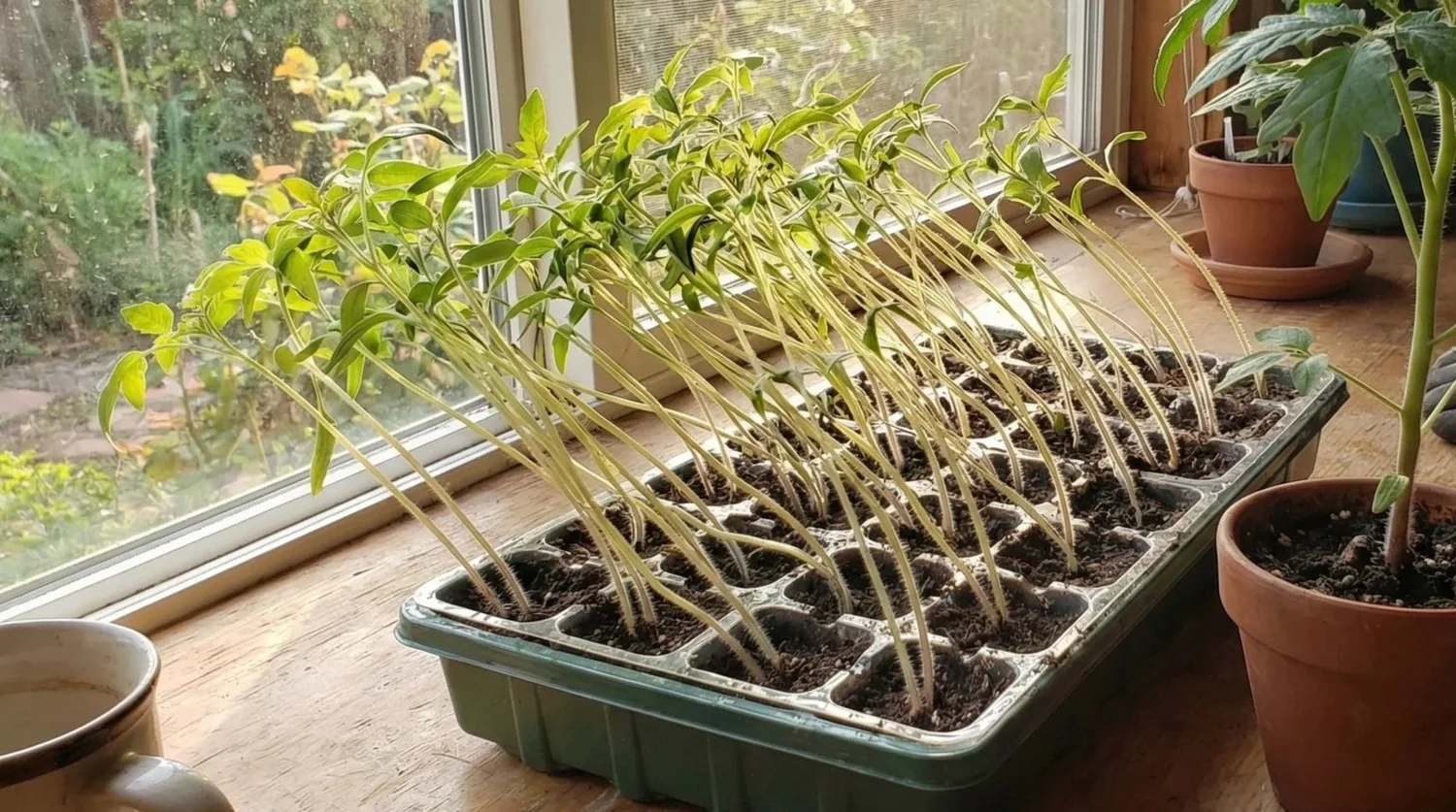
They are not getting enough light. Leggy seedlings (tall, thin stems with wide spacing between leaves) are stretching to reach a light source that is too far away or too dim.
This is the most common seedling problem on the California coast, where winter light levels are lower than most people realize. A south-facing windowsill feels bright to you, but it delivers a fraction of the light intensity that tomato seedlings need. UC ANR's seed-starting resources confirm that insufficient light is the primary cause of leggy growth and recommend supplemental grow lights for indoor seedlings, especially in coastal areas with frequent overcast skies.
To fix the problem going forward, position grow lights 2 to 3 inches above your seedlings and run them 14 to 16 hours per day. As the plants grow, raise the lights to maintain that distance. If you are using a windowsill, add a reflective surface (aluminum foil or a white board) behind the tray to bounce light back toward the plants. A small fan running on low nearby also helps: the gentle air movement strengthens stems by simulating wind.
Here is the good news: leggy tomato seedlings are salvageable. When you transplant, bury the stem up to the lowest set of healthy leaves. Tomatoes are one of the few plants that grow roots along buried stems, which actually creates a stronger root system than a stocky seedling planted at surface level. Pinch off any leaves that would end up underground.
Temperature matters too. Seedlings grown in warm rooms (above 75F) with insufficient light get leggy faster. After germination, keep the room around 65F to 70F to slow top growth while roots develop.
This week: Measure the distance between your grow light and your seedling leaves. If it is more than 3 inches, lower the light today. If you are relying on a window, order an inexpensive shop light with daylight-spectrum bulbs.
Our free Seed Starting Guide covers light setup, temperature management, and transplanting techniques for stronger seedlings. For more on troubleshooting indoor starts, see our Tomato Seedling Troubleshooting Guide.
Keep Reading
- When Should I Start Tomato Seeds Indoors on the California Coast?
- Is January Too Early to Start Seeds Indoors in Coastal California?
- What Are the First Five Vegetables a Beginner Should Grow in Santa Cruz?
Where to get seeds: For varieties that do well in our climate, we like Seeds Now, a California company selling non-GMO, open-pollinated, and heirloom seed. (Affiliate link, see our disclosure.)
To see what healthy development looks like beyond the seedling phase, follow our tomato growth stages guide through the whole season.
Frequently Asked Questions
Why are my tomato seedlings tall and spindly?
They are stretching toward a light source that is too dim or too far away, which is common during our overcast coastal weather. Positioning grow lights just 2 to 3 inches above the seedlings and running them 14 to 16 hours a day usually fixes it.
Can I save leggy seedlings, or should I start over?
You can usually save them. Tomatoes grow roots along their buried stems, so when you transplant, bury the stem up to the lowest set of healthy leaves, removing any leaves that would end up underground.
How can I prevent legginess in the first place?
Keep the room around 65 to 70 degrees after germination, since warmer rooms speed up stretching, and run a small fan on low to strengthen the stems. Raising your lights as the plants grow keeps them close enough to stay stocky.
