

Artichokes vs. Cardoon: Which Thistle to Grow
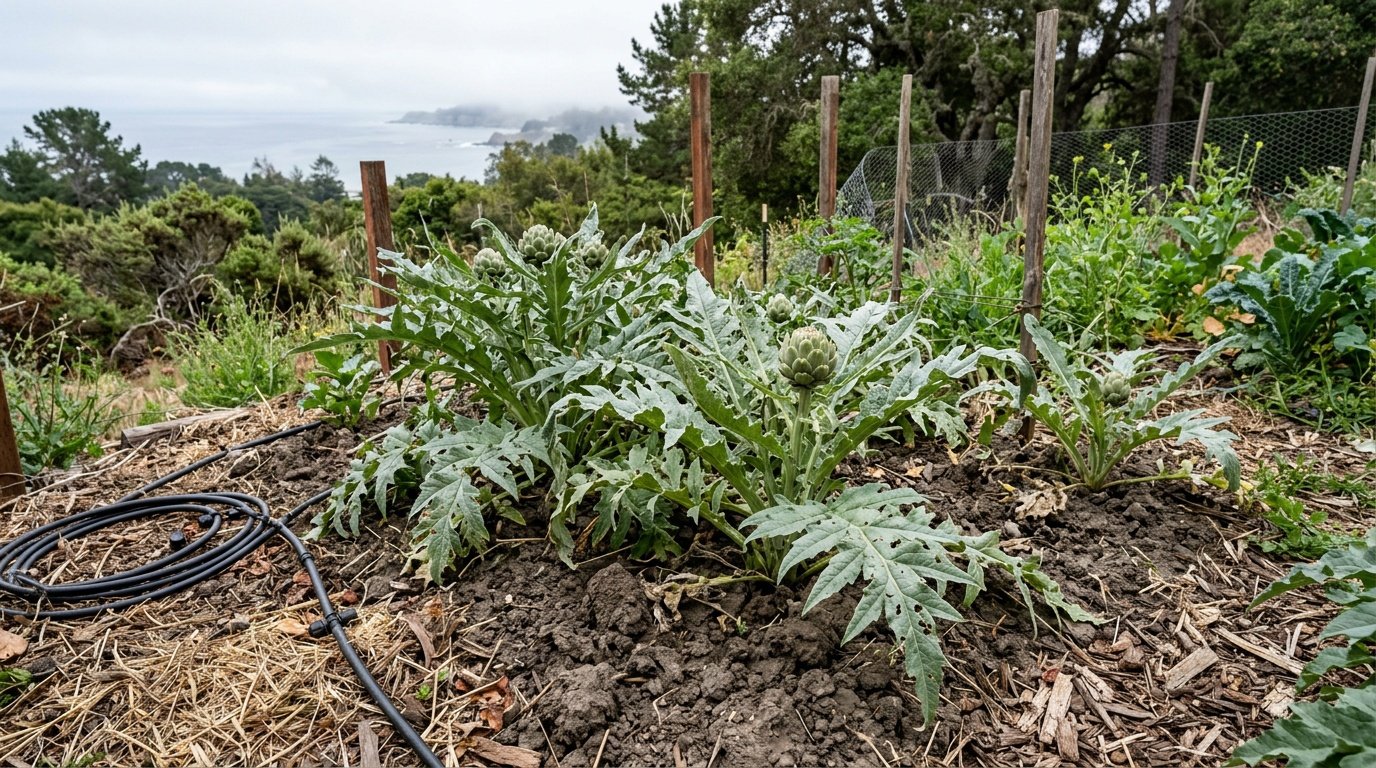
For most Santa Cruz gardeners, artichokes are the more practical choice. They produce the flower buds we all know and love to eat, grow exceptionally well in our coastal climate (Castroville, the "Artichoke Capital of the World," is only 20 miles south), and give you a harvest every spring. According to UC Cooperative Extension, the Monterey Bay area is the premier artichoke-growing region in the United States, with coastal fog and mild temperatures creating ideal conditions. Cardoon is a fascinating plant with its own culinary uses, but it requires more preparation in the kitchen and less people know what to do with it.
When to Choose Artichokes
Artichokes are a no-brainer for Santa Cruz gardens. We live in quite literally the best artichoke-growing climate on Earth. The Green Globe variety is the commercial standard grown just down the road in Castroville, and it produces reliably with almost no pest or disease problems here. Imperial Star is another excellent variety that can produce buds in its first year from seed.
A single artichoke plant will produce 6-12 buds per season, starting in early spring and sometimes giving a second, smaller flush in fall. The silvery-green foliage is beautiful in its own right, making artichokes as ornamental as many landscape plants. They are perennial here (lasting 4-5 years with good care), drought-tolerant once established, and one of the few vegetables that practically grows itself in our climate. If you have a sunny spot with 4-6 feet of room, plant an artichoke.
When to Choose Cardoon
Cardoon is for the adventurous gardener or someone who loves Italian and Mediterranean cooking. The edible parts are the thick leaf stalks (similar to celery in shape, but with a nutty, artichoke-like flavor), which need to be blanched in the garden (wrapped in burlap or cardboard for 3-4 weeks before harvest to reduce bitterness) and then peeled and braised, fried, or used in soups.
Where cardoon really excels is as a dramatic ornamental. It grows taller than artichokes (6-8 feet), produces spectacular purple thistle flowers that pollinators love, and creates an architectural statement in the garden that few other plants can match. If you grow it for ornamental purposes and treat the cooking as a bonus, you will never be disappointed. Just be aware that cardoon can self-seed aggressively in our climate, and it is considered invasive in some parts of California.
The Bottom Line for Santa Cruz Gardeners
Grow artichokes. We have the perfect climate, the harvest is universally appealing, and the plants practically take care of themselves. Plant Green Globe or Imperial Star in a sunny, well-drained spot and enjoy fresh artichokes every spring. Add a cardoon only if you have the space for a dramatic ornamental, enjoy Italian cooking, and are willing to manage its self-seeding habit. Both plants are drought-tolerant perennials that thrive in our clay soil, so either one is a smart, low-maintenance addition.
This week: Plant artichoke starts from a local nursery in a full-sun location. Space them 4 feet apart and mulch well. They will reward you with buds by next spring.
For more on growing edible perennials, check out our free Seasonal Planting Guide at Your Garden Toolkit.
Keep Reading
- How to Grow Artichokes in the Monterey Bay Area
- Best Edible Perennials for Santa Cruz Gardens
- Drought-Tolerant Vegetables for California Gardens
- California Natives vs. Mediterranean Plants
Frequently Asked Questions
What is the main difference between artichokes and cardoon?
You eat the flower buds of an artichoke with very little prep, while cardoon is grown for its edible leaf stalks, which need about three to four weeks of blanching and a fair amount of processing before cooking. Cardoon also grows much taller, reaching 6 to 8 feet with dramatic purple flowers.
Do artichokes grow well in Santa Cruz County?
Yes, exceptionally well. The Monterey Bay area is the premier artichoke growing region in the country, thanks to coastal fog and mild temperatures, and Castroville sits just about 20 miles south. Both plants tolerate drought and clay soil.
Should I be cautious about planting cardoon?
Cardoon self-seeds aggressively and is considered invasive in some parts of California, so plant it where you can keep volunteers in check. Removing spent flowers before they set seed helps prevent it from spreading.
