

How to Find the Sunniest Spot in Your Yard
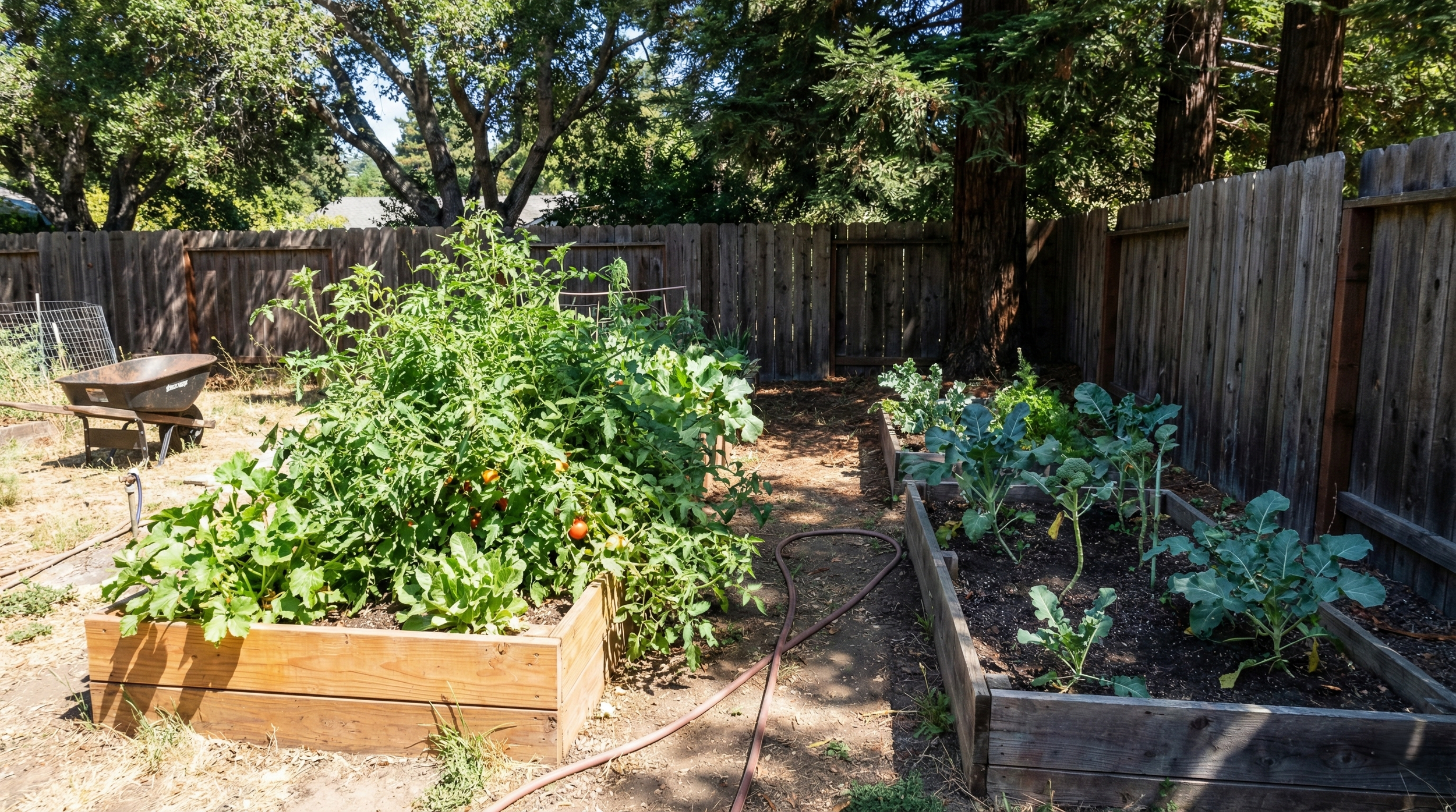
Why Is Sun Everything?
Sun is the most important factor in vegetable garden success. Without adequate sunlight, even perfect soil, consistent watering, and ideal timing won't save your crops. Most vegetables need at least 6 to 8 hours of direct sun daily to thrive.
In Santa Cruz County, finding sun can be surprisingly challenging. Coastal fog, towering redwoods, neighboring buildings, and changing sun angles throughout the year all affect how much light your garden receives. A spot that looks sunny in July may be shaded by your neighbor's oak tree in January. A location that seems bright on a clear day may be fogbound until noon most summer mornings.
But with some observation and basic understanding of sun patterns, you can identify the best spots in your yard for growing food. This guide walks you through the process of tracking sun in your space and making smart placement decisions for your garden. The UC Master Gardeners recommend observing your garden during different times of year to understand sun and shade patterns, as exposure varies greatly between seasons.
Why Does Sunlight Matter So Much?
Plants photosynthesize, converting sunlight into energy. More sun equals more energy, which translates to:
Faster growth
Higher yields
Better fruit development (tomatoes actually ripen, peppers set fruit)
Stronger, healthier plants
Improved disease resistance (plants dry faster, reducing fungal problems)
Sun Requirements by Crop Type
Vegetables fall into three sun categories:
Full sun (6+ hours): Tomatoes, peppers, eggplant, squash, cucumbers, melons, beans, corn, basil. These crops won't produce well without significant sun. A tomato plant in shade will grow tall and leggy but set little fruit.
Partial sun (4 to 6 hours): Leafy greens (lettuce, spinach, kale, chard), peas, radishes, beets, carrots, herbs like cilantro and parsley. These crops tolerate less light and may actually prefer some afternoon shade in hot microclimates.
Shade tolerant (3 to 4 hours): Limited options. Lettuce, spinach, arugula, and some Asian greens can handle shade, but yields drop significantly. You're growing food, but less of it.
Most gardens aim for full sun so you have the widest range of crops to choose from. If you can only find partial sun, you can still grow plenty of food, just different food than you might have imagined.
What Are Santa Cruz's Unique Sun Challenges?
Finding sun in Santa Cruz County is different from most places. Several factors complicate the picture, and understanding them helps you work with your specific conditions.
Coastal Fog
If you live in Aptos, Capitola, Live Oak, Seabright, or anywhere near the Santa Cruz beaches, summer fog is your reality. The marine layer often blankets the coast until 10 AM, 11 AM, or even noon, cutting your effective sunlight hours by 2 to 4 hours daily.
This doesn't mean you can't garden. It means you need to adjust your expectations and strategies:
Choose fog-tolerant varieties (especially for tomatoes and peppers)
Focus on cool-season crops that thrive with less intense sun
Maximize afternoon sun, which is more reliable than morning
Embrace crops that struggle in hot inland areas but thrive in your cooler conditions
The fog that frustrates your tomatoes is perfect for lettuce, peas, and cool-season brassicas that bolt quickly in hotter microclimates.
Inland areas like Scotts Valley, the sunny ridges of the San Lorenzo Valley, and Watsonville get much more consistent sun. Fog rarely reaches these locations, giving you 8 or more hours of sun in summer. You have different challenges (heat, drought) but sun isn't one of them.
Redwood and Tree Canopy
Properties under redwoods or surrounded by large oaks, bays, madrones, or other trees face significant shade challenges. Redwoods are particularly difficult because:
They create dense, year-round shade (no deciduous leaf drop)
Acidic needle fall alters soil pH
Shallow, extensive roots compete aggressively for water and nutrients
They block not just direct sun but ambient light
If you live in Felton, the canyons of Ben Lomond, shaded parts of Scotts Valley, or wooded areas throughout the county, finding even 4 hours of direct sun may be difficult. This is a real constraint that no amount of optimism will overcome. Some properties simply don't have enough sun for a productive vegetable garden in the ground.
But that doesn't mean you can't garden. It means you need to get creative: containers that can be moved to follow the sun, a community garden plot in a sunnier location, or embracing shade-tolerant crops.
Changing Sun Angles
The sun's path across the sky changes dramatically between summer and winter, and this affects your garden more than you might expect.
Summer sun (June, July, August) rises in the northeast and sets in the northwest, traveling high overhead at midday. This creates the longest days and most direct light. Shadows are short because the sun is so high.
Winter sun (December, January, February) rises in the southeast and sets in the southwest, staying low in the southern sky all day. Days are shorter, and shadows are much longer. A tree or building that doesn't shade your garden in July may cast a shadow across it all day in December.
This matters enormously for year-round growing. A spot that gets 8 hours of summer sun might get only 3 hours in winter. Ideally, you want a location that receives sun in both summer and winter so you can grow cool-season and warm-season crops in the same beds.
When you do your sun audit (described below), consider doing it twice: once in summer and once in winter. The results may be surprisingly different.
Buildings, Fences, and Structures
Anything solid casts a shadow. Your house, garage, shed, fences, and even large shrubs all block sunlight, and the shadows they cast move throughout the day and year.
South-facing walls get the most sun year-round and radiate absorbed heat back onto nearby plants. These are warm microclimates perfect for tomatoes, peppers, and other heat-lovers. A bed against a south-facing wall can be 5 to 10 degrees warmer than an exposed location.
North-facing areas stay shady and cool most of the day, especially in winter when the sun is low in the southern sky. Reserve these for shade-tolerant crops or non-garden uses.
East-facing spots get morning sun, which is cooler and gentler. Good for lettuce and greens that may bolt in hot afternoon sun.
West-facing spots get hot afternoon sun. Excellent for heat-loving crops but can stress cool-season vegetables in summer.
How Do You Track Sun in Your Yard?
Tracking sun takes a full day of observation, but it's worth the investment. Do this before you build beds, buy plants, or commit to a garden location. A few hours of observation now saves months of frustration later.
The Sun Audit Method
Choose the right day. Pick a clear day in the season you're planning to grow. If you're planting summer vegetables, do your audit in May or June. For winter vegetables, audit in October or November. If you want year-round growing, audit in both seasons.
Overcast or foggy days don't work for this exercise. You need to see where direct sunlight actually falls. (Though if fog is typical for your area, note that reality too.)
Check your yard at regular intervals throughout the day:
8:00 AM
10:00 AM
12:00 PM (noon)
2:00 PM
4:00 PM
6:00 PM (during summer growing season)
At each time, walk your yard and note which areas are in full sun, dappled shade, or full shade.
Mark a simple map. Sketch your yard on paper. At each time interval, shade in areas that are currently in shadow. By the end of the day, you'll see which spots received sun consistently and which were shaded during parts of the day.
The Photo Method (More Accurate)
Take a photo of your yard from the same spot every hour from 8 AM to 6 PM. Use the same angle each time (mark where you stand). Later, review the photos and count how many hours each potential garden spot received direct sun.
This creates a visual record you can refer back to and is especially helpful if you need to compare summer and winter sun patterns.
What counts as direct sun: Unobstructed sunlight hitting the ground. Dappled shade through tree leaves, light filtered through fog, or reflected light from buildings doesn't count as full sun for gardening purposes.
Stake Method for Specific Spots
If you've already identified a potential garden location and want to confirm its sun hours:
Place a stake, flag, or bright marker in the spot
Check it every hour throughout the day and note whether it's in direct sun or shade
Add up the hours of direct sun
If your marker was in direct sun for 7 hours, that spot qualifies as full sun
This is the most accurate method for evaluating a specific location.
What Should You Look For?
6 to 8 hours of direct sun is the gold standard for vegetable gardening. This supports the widest variety of crops and maximizes production. If you find a spot with this much sun, that's where your garden should go.
4 to 6 hours works for leafy greens, root vegetables, and many herbs. Not ideal for tomatoes, peppers, or squash, but you can still grow plenty of food. Many gardeners in shaded areas grow excellent salad gardens and cool-season vegetables.
Less than 4 hours severely limits your options. Focus on lettuce, spinach, arugula, and shade-tolerant greens. Consider container gardening where you can move pots to catch available sun. Or explore community garden options where you can access a sunnier plot.
Morning Sun vs. Afternoon Sun
Not all sun hours are equal:
Morning sun is gentler and cooler. It dries dew from leaves (reducing disease) but doesn't create intense heat. Good for lettuce and greens in microclimates that get hot in the afternoon. Morning sun in foggy coastal areas is often blocked by marine layer, making it unreliable.
Afternoon sun is more intense and hotter. Essential for tomatoes, peppers, eggplant, melons, and other heat-loving crops. In coastal Santa Cruz, afternoon sun is typically more reliable than morning sun because fog has usually burned off.
Ideally, your garden spot gets both morning and afternoon sun for the full 6 to 8 hours. But if you have to choose, afternoon sun is usually more valuable for vegetable production, especially in foggy areas.
How Do You Read Sun Patterns in Different Microclimates?
Coastal Properties (Aptos, Capitola, Live Oak, Santa Cruz Beaches)
Your biggest challenge is fog, not lack of theoretical sun. Once the marine layer burns off (usually between 10 AM and noon, depending on the day and season), you may have excellent sun through the afternoon.
What to look for:
Spots that get afternoon sun (noon to 6 PM)
South or west-facing areas that catch sun as fog clears
Locations slightly uphill or away from the immediate coast (fog settles in low areas)
Protected spots away from ocean breezes (wind cools plants and slows growth)
What to avoid:
East-facing areas that only get morning sun (fog blocks it most days)
Low-lying areas where fog lingers longer
Exposed locations with constant wind
Important: Do your sun audit on a typical foggy morning, not on the rare crystal-clear day. You need to know your average conditions, not best-case scenarios. If fog usually clears by 11 AM, that's your effective sunrise for sun-tracking purposes.
San Lorenzo Valley Sunny Exposures (Boulder Creek, Ben Lomond Ridges)
The sunny ridges and south-facing slopes of the San Lorenzo Valley get abundant sun, often 8 or more hours daily in summer. Your challenges are different: intense heat in summer, frost pockets in winter, and fire risk.
What to look for:
South-facing slopes and clearings
Some afternoon shade for lettuce and cool-season crops (to prevent bolting)
Spots with good air drainage (cold air flows downhill, so avoid low spots for frost-sensitive plants)
What to avoid:
North-facing slopes (much less sun, especially in winter)
Low spots where cold air pools on frosty nights
Heavily wooded areas where canopy blocks light
Under Redwoods or Heavy Tree Cover (Felton, Ben Lomond Canyons, Wooded Scotts Valley)
Sun is genuinely scarce in these locations. Every hour of light counts, and you may need to accept that traditional vegetable gardening isn't feasible in your current space.
What to look for:
Any opening in the canopy, however small
South-facing clearings or gaps between trees
Areas on the edge of tree cover where sun can angle in
Spots where seasonal deciduous trees (not evergreen redwoods) allow winter light through
Consider:
Removing lower branches from trees to let in more low-angle sun (consult an arborist)
Growing in containers you can move to follow the sun through the day
Focusing on shade-tolerant crops (lettuce, kale, chard, Asian greens)
Joining a community garden with a sunnier plot
Reality check: If you have less than 4 hours of direct sun anywhere in your yard, tomatoes and peppers simply won't produce well. No variety selection or gardening technique overcomes insufficient light. Embrace shade gardening, grow what you can, and consider other options for sun-loving crops.
Scotts Valley, Soquel Hills, and Inland Valley Areas
These transitional zones get more sun than the immediate coast but may still have tree cover or building shade to contend with.
What to look for:
South and west-facing areas
Spots away from buildings and large trees
Locations that get both morning and afternoon sun
What to avoid:
Areas shaded by your house or neighboring structures
North-facing slopes or areas behind buildings
Small Urban Yards (Santa Cruz City, Capitola, Aptos Village)
Buildings, fences, neighbors' trees, and small lot sizes all create shade challenges.
What to look for:
Any spot away from tall structures
Rooftops, balconies, or upper decks (often sunnier than ground level)
South-facing walls that reflect light
The center of your yard, away from fence-line shadows
Container gardening is your friend. You can place pots wherever sun hits and move them seasonally or even throughout the day if you're motivated. Even a small sunny corner can support several large containers producing tomatoes, peppers, and herbs.
How Do You Deal with Partial Shade?
If your sunniest spot only gets 4 to 6 hours of direct sun, you can absolutely still garden. You just need to adjust expectations and choose appropriate crops.
Best Crops for Partial Shade
These crops tolerate less light and may actually prefer some afternoon shade in hot microclimates:
Lettuce and salad greens (all types)
Spinach
Kale and chard
Asian greens (bok choy, mizuna, tatsoi, komatsuna)
Arugula
Peas (especially in warm weather)
Radishes
Beets
Carrots
Herbs: cilantro, parsley, chives, mint, chervil
Marginally Successful in Partial Shade
These crops will grow but produce less than they would in full sun:
Bush beans (they'll produce, just not heavily)
Broccoli and cauliflower (slower growth, smaller heads)
Cabbage
Potatoes (lower yields but still worthwhile)
Don't Bother in Partial Shade
These crops need full sun to produce and will disappoint you in shade:
Tomatoes (they'll grow tall and leggy but set little fruit)
Peppers
Eggplant
Squash (all types)
Cucumbers
Melons
Corn
Basil (needs heat and sun to develop full flavor)
How Do You Maximize the Sun You Have?
Even if sun is limited, you can make the most of what's available.
Reflective Surfaces
Light-colored walls, fences, or surfaces reflect sunlight back onto plants, effectively increasing light intensity.
White or light-colored paint on a south-facing fence can add significant reflected light
Light-colored mulch (straw, light gravel) reflects more light than dark mulch
Avoid dark fences or walls in shady areas; they absorb light instead of reflecting it
Pruning and Thinning
If trees on your property are blocking sun, you may be able to improve conditions:
Thin the canopy by removing select branches. This lets dappled light through while maintaining the tree's health and structure.
Limb up trees by removing lower branches. This raises the canopy and allows low-angle sun to reach the ground beneath and beside the tree.
Hire a certified arborist for large trees. Improper pruning can harm trees, create safety hazards, and even kill valuable specimens. Contact local tree services or check the International Society of Arboriculture website for certified arborists in Santa Cruz County.
Note that you cannot prune neighbors' trees without permission, and heritage or protected trees may have restrictions. Check local ordinances before making changes.
Raised Beds and Vertical Growing
Raised beds lift plants slightly higher, sometimes above the shadow line cast by low fences or structures. Even 12 to 18 inches of height can make a difference.
Vertical trellises for cucumbers, beans, and peas maximize sun exposure on all sides of the plant and create less shade on neighboring crops than sprawling plants would.
Seasonal Rotation
If one area gets sun in summer but not winter, grow warm-season crops there in summer, then shift to a different bed or use containers for winter greens.
If another area is shady in summer (under a deciduous tree) but sunny in winter when leaves drop, plant it with cool-season crops only.
Working with seasonal sun patterns rather than fighting them helps you maximize production across the year.
What Are Your Alternatives When Sun Is Not Enough?
If you simply don't have adequate sun in your yard, you still have options.
Community Gardens
Community gardens often occupy sunny plots in parks or open spaces. Santa Cruz County options include:
Santa Cruz Community Orchard (santacruzorchard.org) for opportunities and information
Various neighborhood and church gardens throughout the county
Contact the Santa Cruz County Parks Department for information about plots in county parks
Wait lists can be long, but a sunny community plot can be worth the wait if your home garden is too shaded for the crops you want to grow.
Rent or Borrow Space
If a neighbor, friend, or family member has a sunny spot they're not using, offer to share the harvest in exchange for garden space. Many people with sunny yards don't garden themselves but would love fresh vegetables from their property.
Container Gardening
Even if you only have a small sunny area, 4 to 6 large containers can produce a surprising amount of food. Containers can go on patios, driveways, decks, or any spot that catches sun. You can also move them as sun patterns change through the seasons.
Embrace Shade Crops
A garden of lettuce, kale, chard, Asian greens, and herbs in partial shade still provides fresh food you grew yourself. Just because you can't grow tomatoes doesn't mean you can't garden. Some of the most productive and satisfying gardens focus entirely on salad greens and cool-season vegetables.
How Should You Record Your Findings?
Once you've identified your sunniest spot, write down what you learned. Note:
Hours of direct sun in summer
Hours of direct sun in winter (if you tracked both seasons)
Direction the spot faces (south, west, etc.)
Any obstructions or seasonal changes to watch for
Morning vs. afternoon sun breakdown
Fog patterns if applicable
This information guides every decision you make about garden placement, bed size, and crop selection. Save it somewhere you can reference when planning each season.
What Sun Tracking Tools Are Available?
Several apps and websites can help if you want a more technical approach or need to predict future sun patterns:
Sun Seeker (smartphone app): Uses your phone's camera and GPS to show the sun's path across your yard at any time of year. Helpful for predicting winter sun when you're doing your assessment in summer.
SunCalc.org (free website): Enter your address and see the sun's arc for any date. Useful for understanding seasonal changes without waiting for winter to arrive.
Sun Surveyor (smartphone app): Similar to Sun Seeker with additional features for photography and detailed analysis.
These tools are helpful supplements but not substitutes for direct observation. Actually watching where sun falls throughout a real day in your yard remains the most accurate method.
Frequently Asked Questions About Finding Garden Sun
How accurate do I need to be when counting sun hours?
Reasonably accurate is fine. You don't need a stopwatch. If you check your yard every hour or two throughout a day and a spot is in sun each time you check from 10 AM to 5 PM, you have approximately 7 hours of sun. That's full sun and suitable for any vegetables. Precision matters less than the general category: full sun (6+), partial (4 to 6), or shade (under 4).
My yard gets 6 hours of sun, but it's broken up (morning, then shade, then afternoon). Does that count?
Yes, it counts. Plants don't care whether their 6 hours of sun are continuous or split by a midday shadow. What matters is the total direct sun hours over the course of the day. Broken sun patterns are common in yards with multiple trees or structures, and plants do fine with them.
Is bright shade the same as partial sun?
No. Bright shade (open sky but no direct sun, or light filtered through tree canopy) provides much less energy for plants than even 4 hours of direct sun. Plants can tell the difference. If direct sun never hits a spot, it's shade for gardening purposes, regardless of how bright it seems to your eyes. Grow shade-tolerant crops there or use it for something other than vegetables.
Should I track sun in winter even if I'm planning a summer garden?
If you want to grow year-round (and you should, given Santa Cruz's climate), yes. A spot that's sunny in summer but shaded in winter limits you to warm-season crops only in that location. Knowing winter sun patterns helps you plan for cool-season vegetables and avoid the frustration of winter crops that fail due to insufficient light.
The fog in my neighborhood is unpredictable. How do I track sun accurately?
Track on a day with typical conditions, not ideal conditions. If fog usually burns off by 11 AM but occasionally clears by 9 AM and occasionally lingers until 1 PM, do your tracking on an average day. Plan your garden for average conditions. You can also track on multiple days to get a better sense of variability.
Can I get a professional to assess my yard's sun?
You can hire a landscape designer or garden consultant who will evaluate your property's sun patterns as part of a design consultation. This might be worthwhile if you're planning significant landscaping changes or want expert guidance on garden placement. However, the DIY methods described above work perfectly well and cost nothing but your time.
My neighbor's tree shades my sunniest spot. What can I do?
Talk to your neighbor. They may be willing to trim lower branches if you explain the situation. Be diplomatic: most people don't realize their tree affects neighboring properties. If they're not willing to prune, you're limited to what you can grow in the available sun. In California, you can legally trim branches that hang over your property line (at your expense), but this may not significantly improve sun if the main canopy is on their side.
Is south-facing always best?
In the northern hemisphere, south-facing areas receive the most consistent sun year-round. However, in Santa Cruz's foggy coastal areas, a west-facing location that catches afternoon sun after fog clears may actually be better than a south-facing spot that's foggy until noon. Context matters more than compass direction.
How much sun do vegetables actually need?
Most fruiting crops like tomatoes, peppers, and squash want at least six to eight hours of direct sun a day to produce well. Leafy greens, peas, and many herbs get by on three to four hours, which suits shadier or foggy coastal yards. Match the crop to the light you actually have rather than fighting for more. UC Master Gardeners cover sun needs at mg.ucanr.edu.
Free Gardening Resources
Download these guides to help plan your garden:
Know Your Microclimate Worksheet - Document your garden's specific conditions, including sun, wind, and temperature patterns.
Seasonal Planting Calendar - Month-by-month planting guide for Santa Cruz County.
Vegetables by Season Guide - Which crops to grow in each season based on sun and temperature needs.
Garden Planning Checklist - Step-by-step checklist for planning your new garden.
Related Articles
Why Is Sun the Foundation of Everything?
Finding the sunniest spot in your yard is the single most important step in planning a productive vegetable garden. Everything else, including soil improvement, irrigation, variety selection, and planting timing, builds on this foundation. A well-designed garden in inadequate sun will always struggle, while even a simple garden in a good sunny spot will produce.
Take the time to track sun carefully. Don't guess, don't assume, and don't let optimism override observation. A full day of tracking saves months of frustration when your shaded tomatoes refuse to ripen or your lettuce bolts because it's getting too much afternoon heat.
Once you know where your sun is, you can make informed decisions about everything that follows. Sun is the starting point. Find it first, then build your garden around it.
