

Your June Garden Checklist for Santa Cruz County
A few of the product links in this guide are affiliate links. If you buy through one, Ambitious Harvest may earn a small commission at no extra cost to you, which helps keep these guides free. We only point to gear we would use in our own Santa Cruz garden. As an Amazon Associate, we earn from Read our full disclosure.
June brings the famous coastal fog to Santa Cruz, and it changes everything about how your garden grows. While inland valleys bake in the 80s and 90s, the Westside and Aptos may not break 65F for days at a time. A 2021 study in the Journal of Geophysical Research: Biogeosciences, co-authored by UC Santa Cruz environmental studies professor Michael Loik, measured a strawberry farm in the Salinas Valley fog belt and found that fog buffers drought stress and raises water-use and light-use efficiency, though the same marine layer frustrates tomato growers waiting for fruit to ripen.
What to Plant in June
The main planting rush is behind you, but June is prime time for succession planting. Sow another round of bush beans, summer squash, and cucumbers for a late-summer harvest. Direct-sow sunflowers, zinnias, and cosmos for late-summer cut flowers.
Start fall brassica seeds indoors: broccoli (Waltham 29, Green Magic), cauliflower (Snowball, Amazing), and Brussels sprouts (Long Island Improved). These need 10 to 12 weeks before fall transplanting, so starting them now is not too early.
Inland valley and mountain gardeners can still plant a final round of corn, melons, and winter squash if they get them in by mid-June. Coastal gardeners should skip melons entirely unless growing in a greenhouse or against a south-facing wall. The fog belt simply does not provide enough heat units.
Plant heat-loving herbs: lemongrass, rosemary (if you need to fill a gap), and Mexican oregano.
What to Harvest in June
Garlic is ready when the bottom three or four leaves have browned but the top leaves are still green. Dig one test bulb first. Cure garlic in a shaded, well-ventilated area for two to three weeks before storing.
Summer squash and zucchini are producing heavily. Harvest at 6 to 8 inches for the best flavor and texture, and never let them become baseball bats on the vine (it slows future production). Strawberries continue producing on everbearing varieties like Seascape.
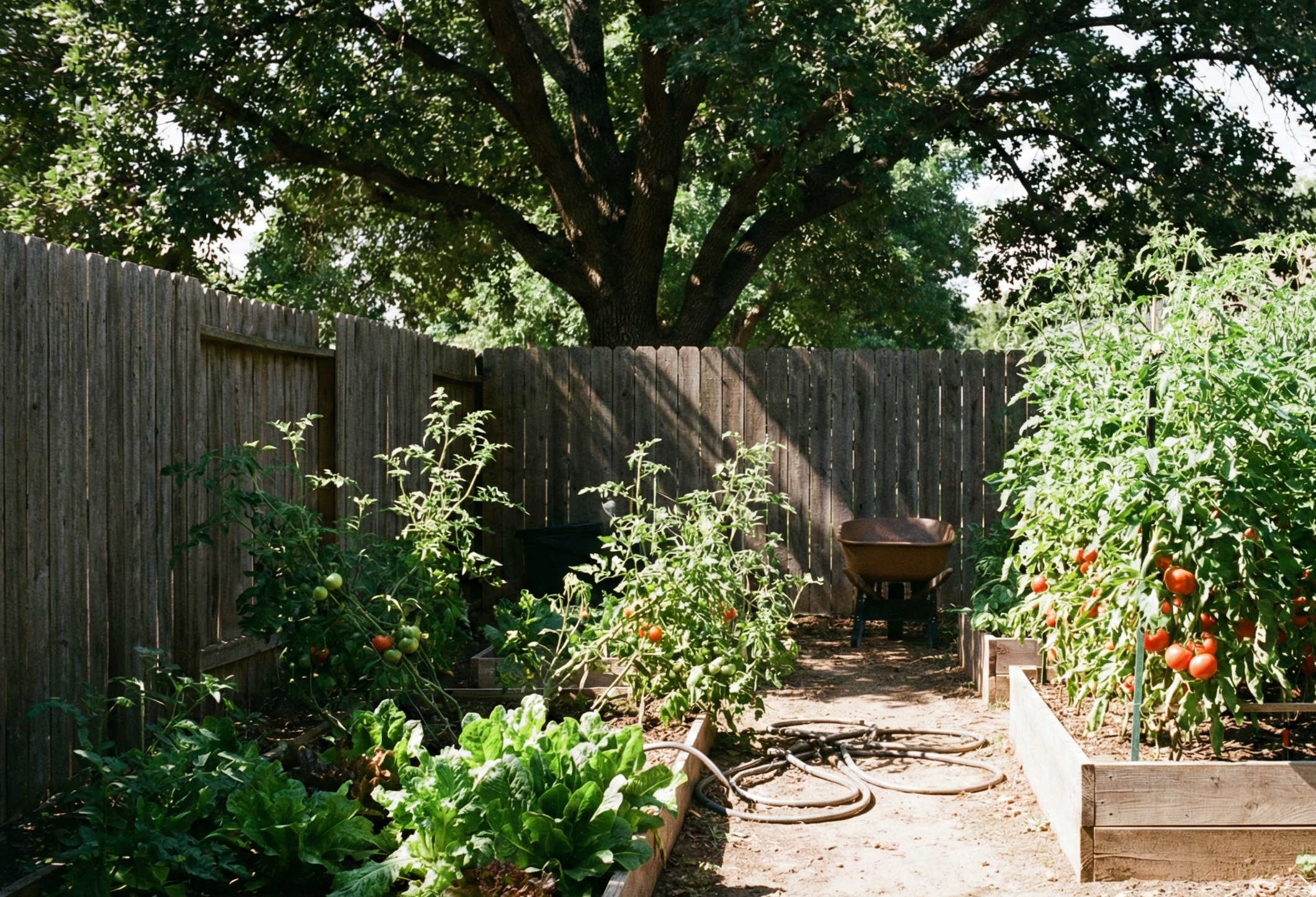
The first cherry tomatoes ripen in warm inland spots by late June. Blueberries begin their harvest season. Pick when berries are fully blue with no red at the stem end.
What to Maintain and Protect
Deep water consistently. Tomatoes need 1 to 1.5 inches of water per week, delivered at the base of the plant through drip irrigation. Inconsistent watering causes blossom end rot, cracking, and catfacing. If you see dark, leathery patches on the bottom of green tomatoes, that is blossom end rot, and it is a calcium uptake problem caused by irregular watering, not a calcium deficiency in the soil.
Remove spent pea and fava bean plants. Chop them and add them to the compost pile or lay them as mulch (the nitrogen-rich foliage breaks down quickly).
Pinch back basil flower buds to keep the plant bushy and productive. Once basil flowers, leaf production slows dramatically.
Feed tomatoes and peppers with a low-nitrogen, high-phosphorus fertilizer (like fish bone meal or a 4-8-4 blend) to encourage fruiting over foliage growth.
What to Watch Out For
June is when powdery mildew explodes on squash, cucumbers, and melons, especially in coastal areas where fog creates humid mornings followed by warm afternoons. UC IPM recommends preventive applications of potassium bicarbonate or neem oil starting when you first see white powdery patches on lower leaves. Remove and dispose of heavily infected leaves.
Whiteflies cluster on the undersides of tomato and bean leaves. Yellow sticky traps help monitor populations. Encourage natural predators by planting sweet alyssum and yarrow near your vegetable beds.
Fruit flies target ripening stone fruit and berries. Harvest promptly and do not leave fallen fruit on the ground.
This month: Harvest your garlic, get it curing, and use the freed-up bed space for a succession planting of beans or a cover crop.
For more help with summer pest management, check out our free California Garden Pest ID Guide at Your Garden Toolkit.
Keep Reading
- How to Harvest and Cure Garlic in California
- Managing Powdery Mildew in California Gardens
- Growing Blueberries in Santa Cruz County
- Blossom End Rot: Causes and Prevention
Frequently Asked Questions
What can I plant in June in Santa Cruz County?
Succession-sow bush beans, summer squash, and cucumbers, and direct-sow sunflowers, zinnias, and cosmos. It is also time to start broccoli, cauliflower, and Brussels sprouts indoors for fall transplanting.
Why are my coastal tomatoes slow to ripen this month?
June fog keeps coastal temperatures cool, sometimes below 65 degrees, which slows ripening even as inland areas warm up. Cherry tomatoes in warmer inland spots usually start ripening by late June.
How much should I water tomatoes in June?
Aim for one to one and a half inches of water per week, delivered at the base of the plant, ideally through drip irrigation. Consistent watering helps prevent blossom end rot, cracking, and catfacing.
