

What Is "June Gloom" and How Does It Affect My Garden?
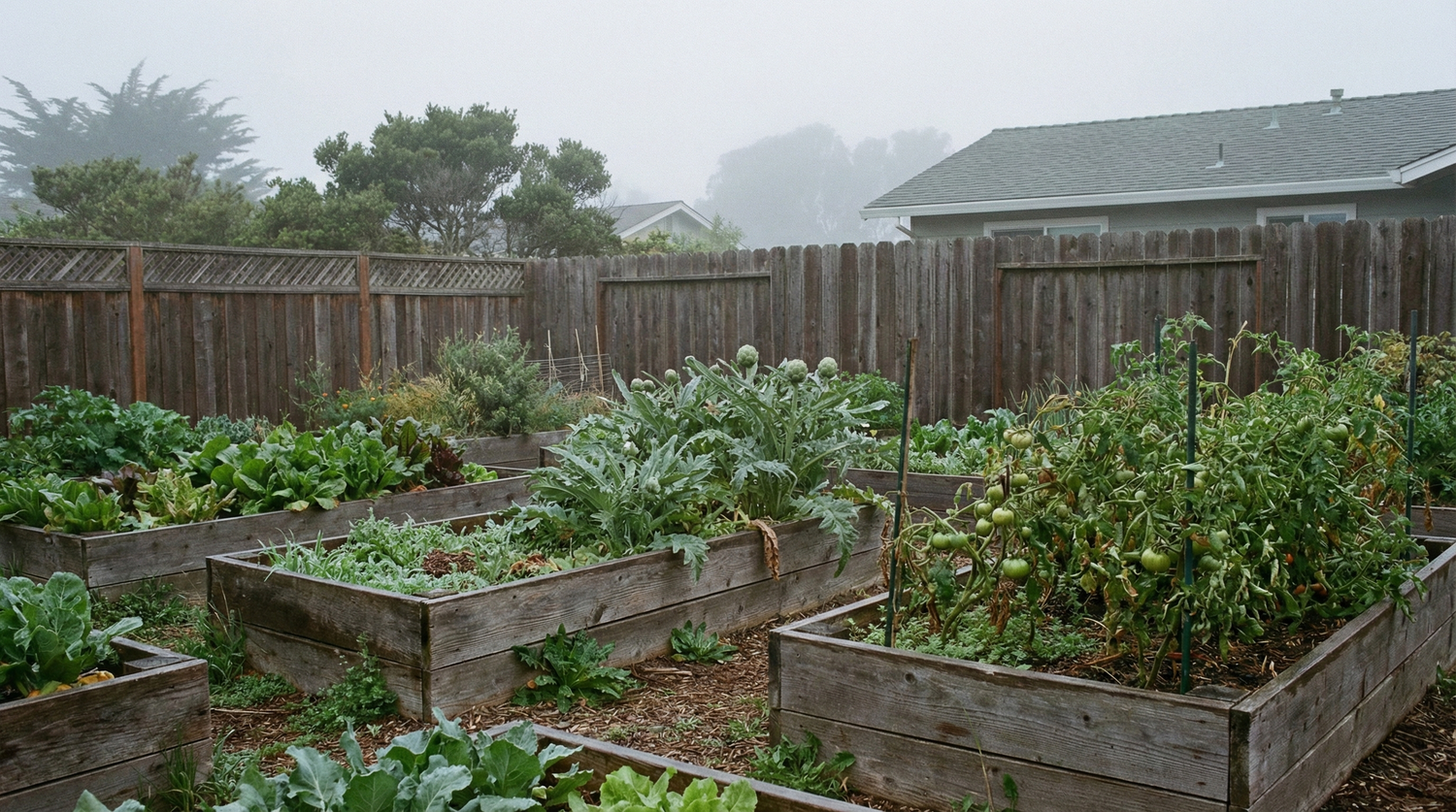
June gloom is the thick marine layer that blankets coastal Santa Cruz for much of late May through early July. It keeps mornings cool and overcast, frustrates tomato growers, and gives lettuce an extra month of good growing conditions.
The fog forms when warm inland air rises and pulls cold ocean water to the surface, creating a low cloud layer that sits over the coast. In Santa Cruz, June gloom can keep temperatures in the low 60s well into afternoon on the Westside, while gardeners just a few miles inland in Scotts Valley or the San Lorenzo Valley may be in full sun by 10 a.m. UC Agriculture and Natural Resources notes that coastal fog significantly moderates temperatures and affects crop selection and timing in California's fog belt.
For warm-season crops like tomatoes, peppers, and squash, June gloom slows everything down. Fruit set is delayed because flowers need warmth to pollinate well, and ripening stalls when nighttime temperatures drop below 55F. This is why cherry tomatoes and early varieties (Stupice, Early Girl) are so important on the coast: they mature faster and tolerate cool conditions better than large-fruited heirlooms.
But June gloom has real benefits. The fog drip that collects on leaves and structures is essentially free irrigation. Cool-season crops like lettuce, peas, cilantro, and spinach keep producing well past their normal spring window. Roses and hydrangeas thrive. And your water bill is lower because evaporation drops significantly on foggy days.
The practical adjustment: don't fight the fog. Plan your warm-season crops for the sunniest microclimate in your yard and extend your cool-season harvests in the shadier spots. Both strategies work with the fog instead of against it.
This week: Identify the warmest, most sheltered spot in your garden (south-facing wall, heat-absorbing hardscape nearby). Reserve that spot for your tomatoes, peppers, and basil. Let the foggier areas produce greens into summer.
Our free Microclimate Worksheet helps you map sun, fog, and temperature patterns in your specific yard, so you can place crops where they'll actually thrive. For more on growing warm-season crops on the coast, see our summer vegetable guide.
Keep Reading
- Understanding Microclimates in Santa Cruz Gardens
- What Vegetables Can I Grow in Partial Shade in Coastal California?
- Best Tomato Varieties for Fog Belt Gardens
- How to Extend Your Growing Season on the California Coast
Frequently Asked Questions
How long does June gloom usually last in Santa Cruz?
The marine layer typically settles in from late May through early July along the coast. How much of each day it claims depends on where you garden. Coastal neighborhoods can stay in the low 60s into the afternoon, while spots like Scotts Valley often burn off to full sun by 10 a.m.
Which tomato varieties handle the fog best?
Short-season, cool-tolerant varieties like Stupice and Early Girl are the safest bets because they mature faster and set fruit in cooler conditions. Give them your warmest, most sheltered spot, such as a south-facing wall or a bed near heat-absorbing hardscape. Long-season beefsteaks struggle when nights drop below 55°F and flowers miss their pollination window.
Should I water less during June gloom?
Usually, yes. Cool, overcast days slow evaporation, and fog drip collecting on leaves and structures acts as free irrigation. Check the top few inches of soil before you water instead of running your usual summer schedule, and expect your water bill to reflect the savings.
