

What Vegetables Can I Grow in Partial Shade in Coastal California?
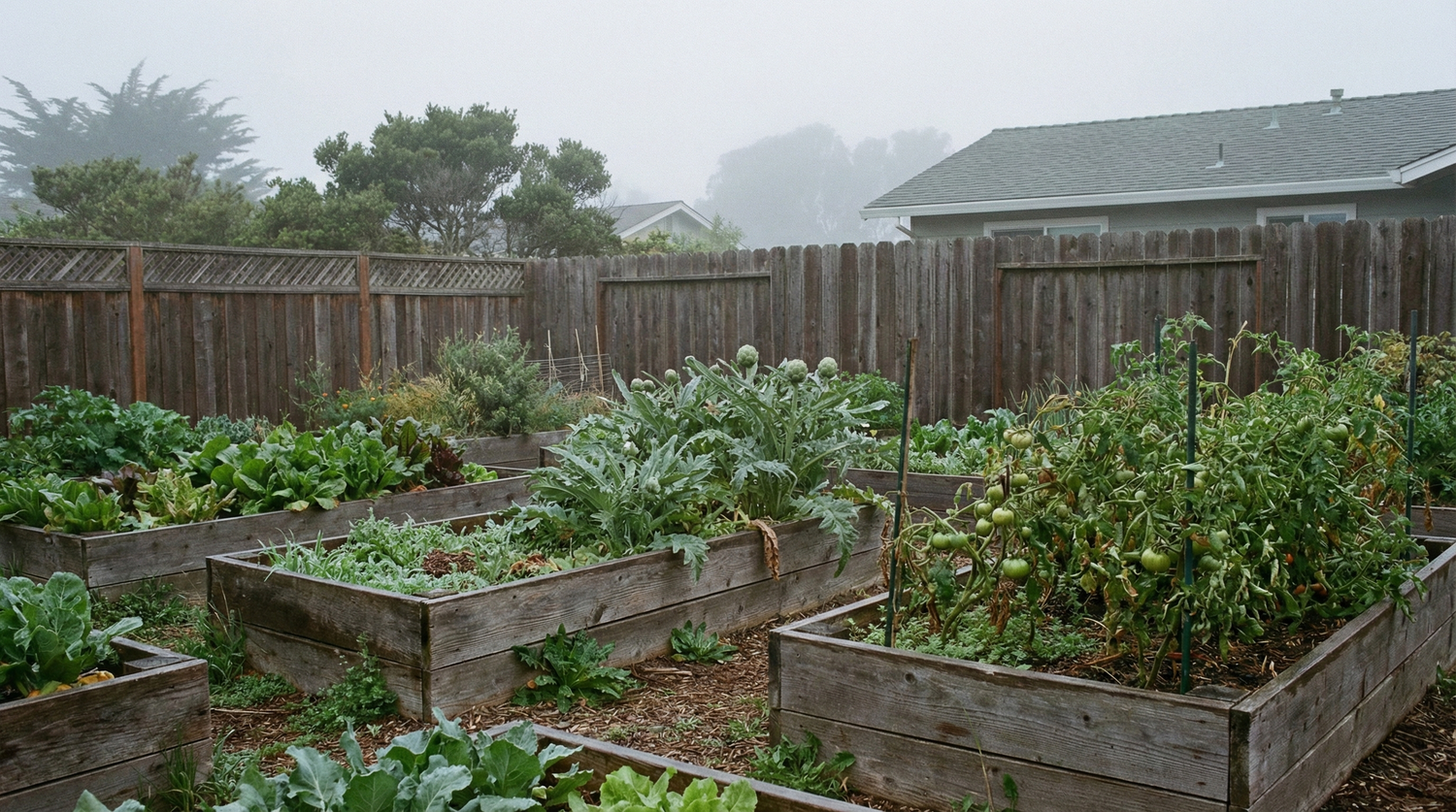
Leafy greens, root vegetables, and most herbs do well with just 3 to 4 hours of direct sun. If your garden gets partial shade (especially afternoon shade), you actually have an advantage for cool-season crops on the California coast.
Lettuce, spinach, kale, chard, arugula, and Asian greens all prefer some shade, especially in summer. Full sun causes these crops to bolt (go to seed) faster, and the afternoon shade that frustrates tomato growers is exactly what keeps lettuce producing well into June and July. UC Master Gardeners of Santa Clara County note that leafy greens tolerate far less sun than fruiting crops and actually perform better with protection from intense afternoon sun.
Root crops are more flexible than most people expect. Beets, radishes, and turnips do fine in 4 to 5 hours of sun. Carrots need slightly more light to size up properly but still tolerate partial shade. Herbs like cilantro, parsley, chives, and mint thrive in dappled light. Cilantro, in particular, bolts much more slowly with afternoon shade, which is a real benefit in Santa Cruz's warmer inland areas like Scotts Valley and Watsonville.
What won't work in shade: tomatoes, peppers, squash, and corn need 6 to 8 hours of direct sun minimum. Don't waste your time planting these in a shady spot. If you have a partially shaded yard, dedicate the sunniest corner to warm-season crops and use the rest for greens and root vegetables.
One trick for low-light gardens: paint a fence or wall white or use a light-colored mulch to reflect additional light toward your plants. It won't replace full sun, but it helps in borderline spots.
This week: Map the sun exposure in your garden by checking which areas get direct sun at 9 a.m., noon, and 3 p.m. Any area with sun at all three checks is full sun. Two out of three is partial shade and perfect for greens.
Our free Microclimate Worksheet includes a sun-mapping exercise for your specific yard. See our Vegetables by Season Chart for a full list of what grows when.
Keep Reading
- Understanding Microclimates in Santa Cruz Gardens
- What Is June Gloom and How Does It Affect My Garden?
- Best Cool-Season Crops for Coastal California
- How to Grow Lettuce Year-Round in Santa Cruz
Frequently Asked Questions
How much sun do shade-tolerant vegetables actually need?
Most leafy greens and many herbs do well with about 3 to 4 hours of direct sun, and some root vegetables tolerate 4 to 5 hours. Afternoon shade can even help by slowing bolting and extending the harvest.
Which vegetables will not grow in partial shade?
Warm-season crops like tomatoes, peppers, squash, and corn need 6 to 8 hours of direct sun minimum. Reserve your sunniest corners for these and use shaded areas for greens and roots.
How do I figure out how much sun my garden gets?
Map your sun exposure by checking each area at 9 a.m., noon, and 3 p.m. on a clear day. In warmer inland spots like Scotts Valley and Watsonville, that midday and afternoon shade becomes especially valuable for cool-season crops.
