

How Do I Keep Rats Out of My Chicken Feed?
A few of the product links in this guide are affiliate links. If you buy through one, Ambitious Harvest may earn a small commission at no extra cost to you, which helps keep these guides free. We only point to gear we would use in our own Santa Cruz garden. As an Amazon Associate, we earn from qualifying purchases. Read our full disclosure.
How Do I Keep Rats Out of My Chicken Feed?
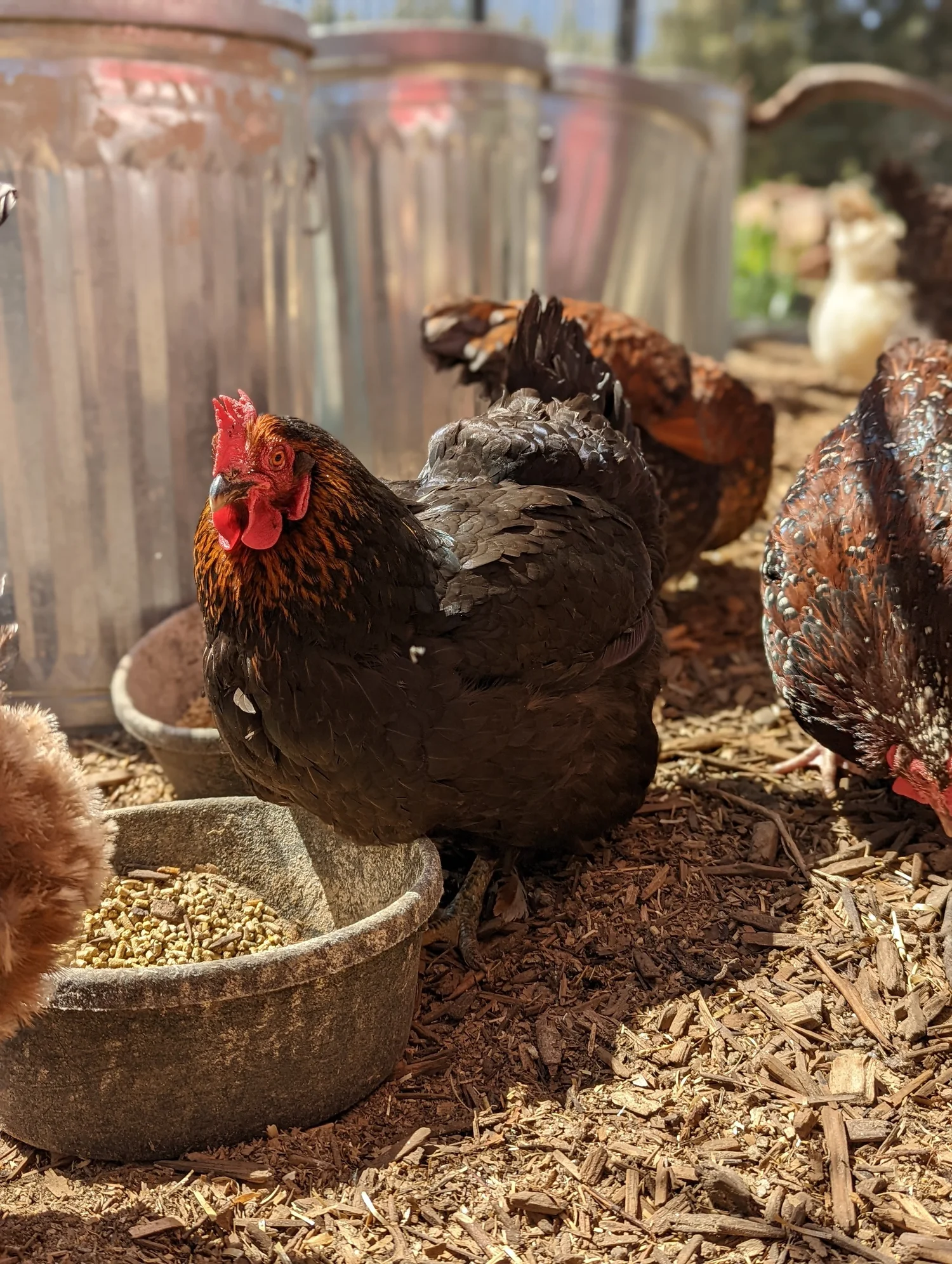
Removing feed overnight is a practical first step, but rat control usually requires more than one measure. UC IPM recommends sanitation, tight-lidded food storage, structural exclusion, and population control; it also notes that rats are mostly active at night. Store flock feed in rodent-resistant containers, clean spills, and remove accessible feed after birds finish eating.
Rats are a fact of life in Santa Cruz County. The combination of mild weather, nearby wild areas, and accessible food makes backyard chicken setups a magnet for Norway rats and roof rats. I deal with this in my Boulder Creek run constantly, and I have found that no single trick solves the problem. It takes a layered approach.
Start with feed storage. Keep all feed in metal containers with tight-fitting lids. Plastic bins, even heavy-duty ones, will eventually get chewed through. A metal trash can with a bungee cord across the lid works well and costs very little. Store it in a shed or garage rather than next to the coop.
Next, look at your feeder design. Treadle feeders (the kind that open when a chicken steps on a plate) are effective at keeping rats out during the day. They are an investment, usually $50 to $100, but they pay for themselves in reduced feed waste. If you use an open feeder, only put out what your flock will eat in a few hours, and bring it inside at dusk.
Your run construction matters too. Hardware cloth with 1/2-inch openings will keep rats from entering through the walls. Bury the cloth at least 12 inches below ground level or bend it outward in an L-shape along the base to prevent digging. Chicken wire does not stop rats. They chew through it easily.
Avoid poison bait stations near your flock. UC IPM warns that chickens sometimes eat rodent carcasses or catch live mice, so restricting their access to rodents that may have eaten an anticoagulant rodenticide matters; the poison accumulates in the rodent and can cause secondary toxicosis in the bird. Snap traps placed in secured bait stations that chickens cannot access are a safer option. Place them along walls and known rat paths, which you can identify by the dark grease marks rats leave along their regular routes.
This week: Switch to bringing your feeder inside every evening at dusk, and move your feed storage into a metal container if it is not in one already.
Keep Reading
- What to Feed Your Backyard Flock Year-Round in California
- Designing a Predator-Proof Run for Your Garden Flock
- Hardware Cloth, Coop Locks, and Night Safety
Frequently Asked Questions
What is the single most effective step against rats?
Bring the feeders inside each evening before dark. Rats feed mainly at night, so removing their overnight food source cuts activity dramatically.
How should I store feed so rats cannot reach it?
Keep feed in metal containers with tight-fitting lids, since rats eventually chew through plastic bins. Store those containers in a shed or garage rather than next to the coop.
Is rat poison safe to use around a flock?
No. Poison baits carry a serious risk of secondary poisoning for your chickens and local wildlife. Use snap traps inside secured stations placed along walls and known rat routes instead.
