

Bare-Root vs. Container Fruit Trees: Best Value?
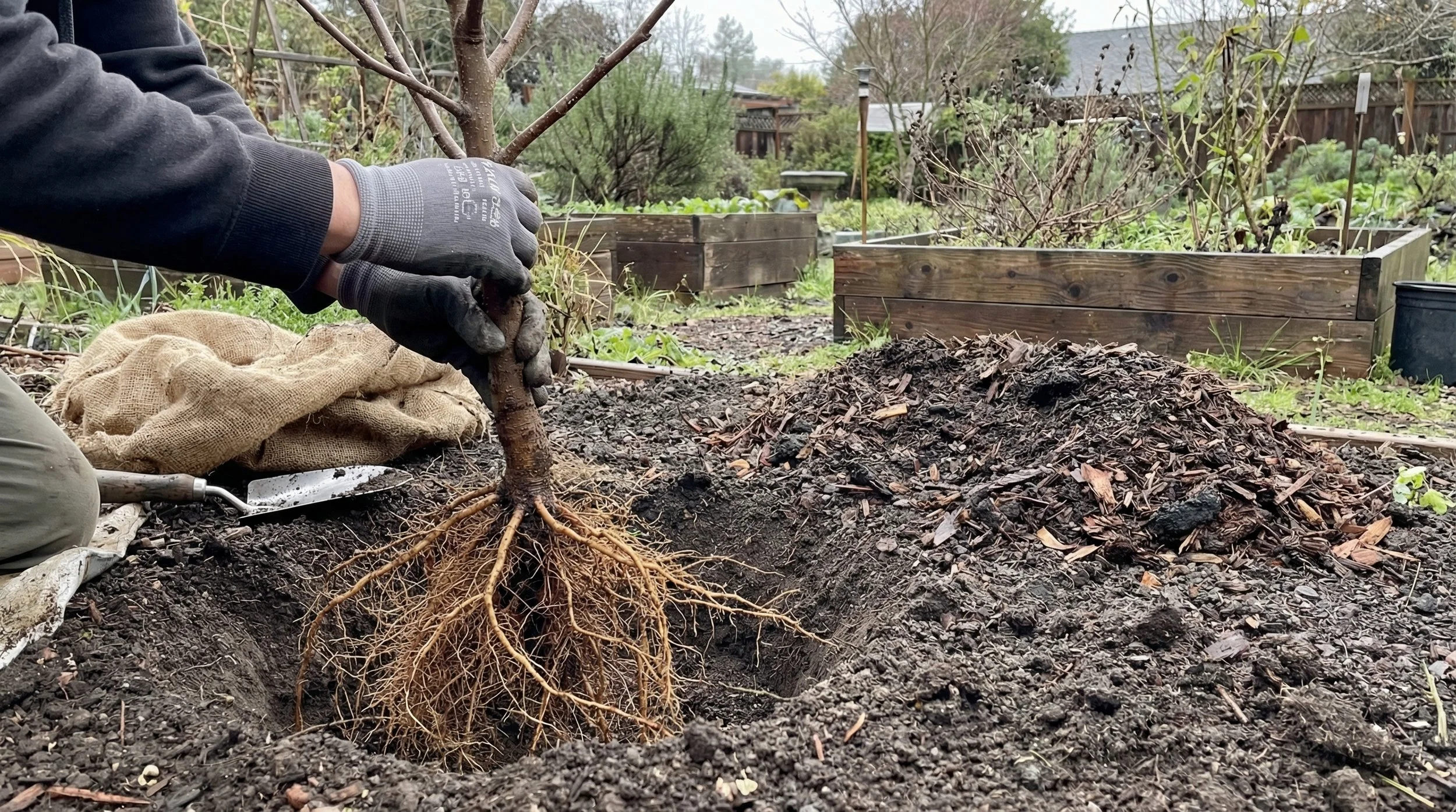
Bare-root fruit trees are the better buy for most home gardeners. They cost 30-50% less than container-grown trees, establish faster, and give you access to a much wider selection of varieties. According to UC Agriculture and Natural Resources, bare-root trees often outperform container trees in the first few years because their roots grow directly into native soil without the circling root problems that plague container stock. The catch is timing: bare-root trees are only available during the dormant season (December through February in Santa Cruz), so you need to plan ahead.
When to Choose Bare-Root
Choose bare-root trees when you are planning ahead and want the best value. Local nurseries like San Lorenzo Garden Center and Sierra Azul stock bare-root fruit trees from December through mid-February. This is when you will find the best selection of apple, pear, plum, peach, and cherry varieties, including low-chill types bred specifically for our mild winters.
The other advantage of bare-root is that you can inspect the entire root system before you buy. Look for roots that spread evenly in multiple directions, with no signs of circling or damage. Plant bare-root trees within a day or two of purchase (soak the roots in water for 12-24 hours first), and they will settle into our Santa Cruz clay soil during the rainy season without any supplemental watering. By spring, they are already established and ready to grow.
When to Choose Container Fruit Trees
Container trees are the right choice when you missed the bare-root season or when you want a specific tree you can see in leaf before buying. Citrus, avocado, and other evergreen fruit trees are almost always sold in containers because they do not go fully dormant and cannot be shipped bare-root.
Container trees also make sense if you are a first-time fruit tree grower and want the flexibility to plant whenever your schedule allows. Just be sure to score or loosen circling roots when you plant (cut an X across the bottom of the root ball with a sharp knife), and avoid planting container trees during the heat of summer. Spring and fall are the best times for container planting in Santa Cruz, when soil is moist and temperatures are moderate.
The Bottom Line for Santa Cruz Gardeners
Buy bare-root fruit trees whenever possible. Mark your calendar for mid-January and visit a local nursery during bare-root season. You will pay less, get better variety selection, and your trees will establish faster in our clay soil. Save container buying for citrus and avocado trees (which are only sold in pots), for impulse purchases at the nursery in spring, or for when you missed the dormant-season window. Either way, dig a wide, shallow hole (twice the width of the root spread) and resist the urge to add amendments. Let the roots grow into native soil.
This week: If it is bare-root season (December through February), visit your local nursery this weekend. Bring a list of low-chill fruit tree varieties suited to our climate. If it is not bare-root season, set a January reminder to shop early.
For more on growing fruit trees in California, check out our free Fruit Tree Guide at Your Garden Toolkit.
Keep Reading
- Grafted vs. Own-Root Fruit Trees: When Does Grafting Matter?
- Best Low-Chill Fruit Trees for Santa Cruz
- How to Plant a Fruit Tree in Clay Soil
- Meyer Lemon vs. Eureka Lemon: Which to Grow?
Frequently Asked Questions
When can I buy bare-root fruit trees in Santa Cruz?
Bare-root trees are available during the dormant season, roughly December through mid-February, with January being a reliable window at local nurseries. They cost 30 to 50 percent less than container trees and establish faster.
Are there trees I should buy in containers instead of bare root?
Yes. Citrus, avocado, and other evergreen fruit trees are sold in containers because they are not dormant in winter. Containers are also the practical choice if you miss the bare-root window.
How do I plant a container tree so the roots establish well?
Dig a wide, shallow hole about twice the width of the root spread, and score or loosen any circling roots (cut an X across the bottom of the root ball with a sharp knife). Skip soil amendments in the hole so roots grow out into the native soil, and avoid planting in summer heat.
