

Fertilizing Citrus in Santa Cruz County
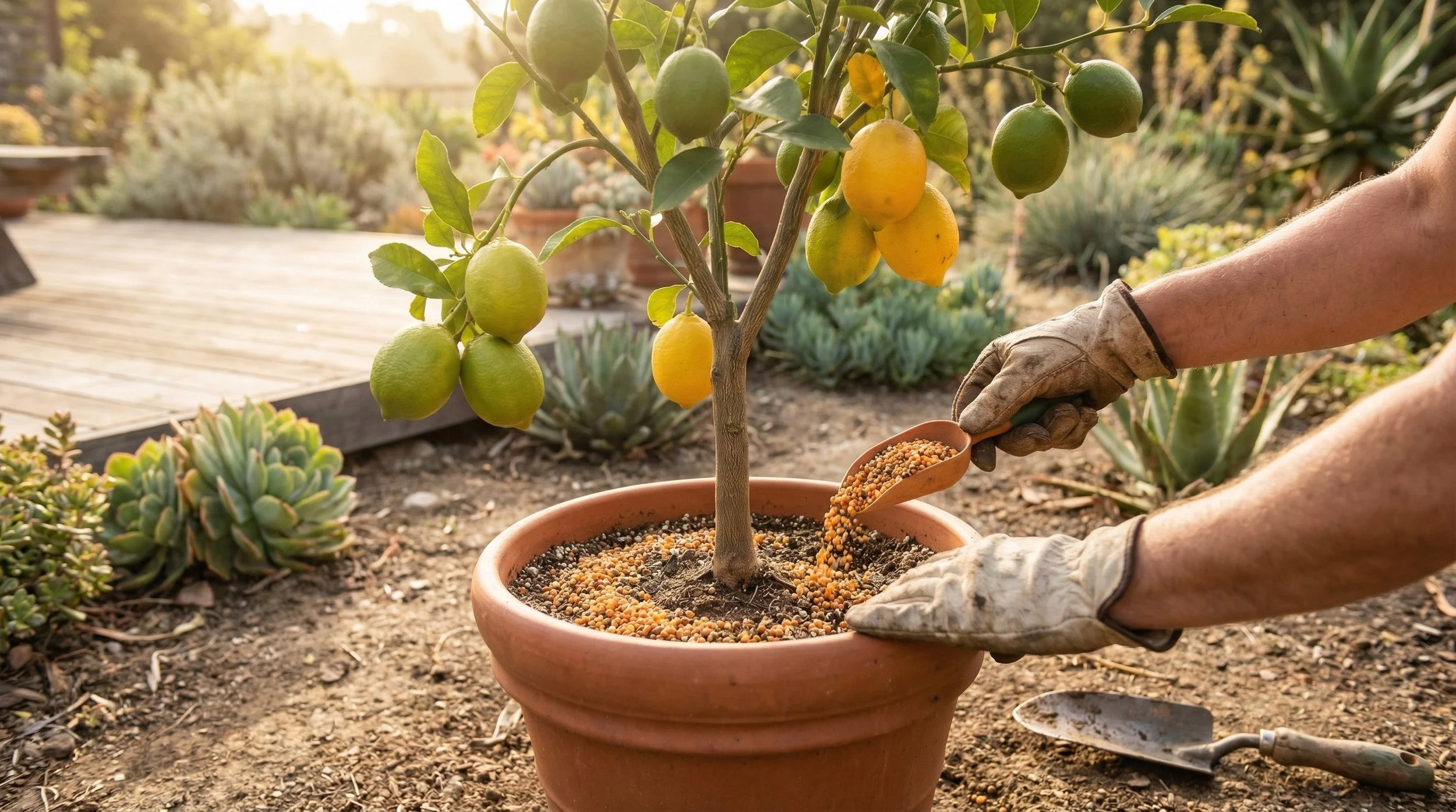
Citrus trees are heavy feeders that require regular fertilization for healthy foliage, abundant fruit, and overall vigor. But knowing when, what, and how much to apply can be confusing, especially when generic fertilizer recommendations don't account for our specific soil conditions and climate. This guide covers citrus fertilization tailored to Santa Cruz County growing conditions.
Why Citrus Needs Regular Feeding
Citrus trees produce year-round and expend significant energy on flower production, fruit development, and maintaining their evergreen foliage. Without adequate nutrition, trees become weak, produce less fruit, and are more susceptible to pests and diseases.
Citrus are heavy feeders of both nitrogen and phosphorus. An abundant supply of nitrogen and micronutrients helps them maintain a rich green color and produce to their potential.
Citrus Nutrient Needs
Nitrogen (N): The most important nutrient for citrus. Promotes leafy growth and overall tree vigor. Deficiency causes uniform yellowing of older leaves and slow growth. However, high nitrogen applications produce excessive vegetative growth at the expense of fruit production.
Phosphorus (P): Supports root development and fruit production. Deficiency is uncommon in established gardens but can occur in new plantings on uncultivated land.
Potassium (K): Essential for fruit quality, disease resistance, and overall health. Deficiency may cause smaller fruit with thinner rinds.
Iron: Critical for chlorophyll production. Iron deficiency is common on alkaline soils, making it the most frequent micronutrient problem for Santa Cruz citrus. Symptoms are yellow leaves with green veins on new growth.
Zinc and Manganese: Also important micronutrients often lacking in our soils. Deficiencies cause various leaf yellowing patterns.
Santa Cruz Soil Challenges
Our local soils create specific fertilization challenges.
Alkaline pH: Much of Santa Cruz County has neutral to slightly alkaline soil, and years of irrigation with alkaline municipal water compound the problem. Iron becomes decreasingly available when soil pH is above 6.0 and is mostly unavailable at pH 7.0 and above. This is why iron chlorosis is so common here even when iron is present in the soil.
Variable drainage: From heavy clay in some areas to sandy loam in others, drainage varies significantly. Poor drainage exacerbates nutrient uptake problems.
Solutions:
Use fertilizers that include micronutrients (especially iron)
Supplement with chelated iron when chlorosis appears
Add organic matter (compost) annually to help moderate soil pH over time
Ensure good drainage to support root function
Fertilizer Timing
Timing fertilizer applications to match the tree's growth cycle maximizes effectiveness.
For young trees (1-3 years): Start fertilizing when the weather warms up in March, just prior to bloom, then continue every six weeks until the end of August. This provides consistent nutrition during the active growing season.
For mature trees (3+ years): After trees are three years old, fertilize only in February, May, and August. Three well-timed applications provide adequate nutrition without excess.
When to stop: Stop fertilizing by late August or early September. Pruning and fertilizing should occur in spring and early summer to give new vegetation time to mature and harden off before cold weather. Late fertilizing stimulates tender growth that's vulnerable to frost damage.
What Fertilizer to Use
Several options work well for citrus, each with advantages.
Citrus-specific fertilizers: Products labeled for citrus contain appropriate N-P-K ratios plus the micronutrients citrus needs. Citrus Food (12-8-4) by Master Nursery and similar products are formulated for citrus requirements.
Organic options: E.B. Stone Organics Citrus & Fruit Tree Food (7-3-3) provides organic nutrition. Important note: Organic fertilizers do not include iron, so you'll need to maintain a regular supplement of iron when using organic products.
For container citrus: Maxsea (14-18-14) is an excellent fertilizer for container citrus. Container plants benefit from more frequent, lighter applications because nutrients wash out with regular watering.
Iron supplements: When chlorosis (yellow leaves with green veins) appears, apply chelated iron. Iron chelates are the most reliable means of correcting citrus iron chlorosis. Foliar iron sprays are less effective and can burn leaves.
How to Apply Fertilizer
Proper application ensures nutrients reach the roots where they're needed.
Location: Spread fertilizer evenly along the edge of the tree's leaf canopy, not near the trunk. This is called the drip line. Feeder roots are concentrated in this zone.
After application: Water the tree thoroughly after the application of fertilizer. This moves nutrients into the root zone and prevents fertilizer burn.
Amount: Follow package directions for your tree's size. More is not better; excess fertilizer can burn roots and push vegetative growth at the expense of fruit.
Container plants: Apply fertilizer more frequently at reduced rates. Monthly applications during the growing season work well for containers, with amounts reduced proportionally.
Adjusting for Common Problems
Yellow leaves with green veins (iron chlorosis): The most common nutrient issue for Santa Cruz citrus. Apply chelated iron to the soil. Also address underlying causes: improve drainage, reduce overwatering, and add organic matter to gradually lower soil pH.
Uniformly pale or yellow older leaves (nitrogen deficiency): Increase nitrogen fertilization. Apply citrus fertilizer with adequate nitrogen, or supplement with a nitrogen-rich product like blood meal or composted chicken manure.
Small, mottled yellow new leaves (zinc deficiency): Apply zinc as a foliar spray during spring growth flush, or use a citrus fertilizer that includes zinc.
Lush growth but poor fruit production: You may be over-fertilizing with nitrogen. Reduce nitrogen applications and ensure you're using balanced citrus fertilizer rather than high-nitrogen lawn fertilizer.
Container Citrus Fertilization
Container plants need more frequent feeding because nutrients wash out with regular watering.
Frequency: Feed monthly during the growing season (March through August) with citrus fertilizer or Maxsea.
Reduced amounts: Some elect to fertilize monthly by applying a proportionally reduced amount. If package directions specify amounts for every six weeks, reduce by about one-third for monthly applications.
Micronutrients: Container citrus is particularly prone to micronutrient deficiencies. Use fertilizers that include iron, zinc, and manganese, or supplement regularly.
Winter: Reduce or stop fertilizing during winter months when growth slows.
Annual Fertilization Calendar
February: First application for mature trees (end of dormancy)
March: First application for young trees (before bloom). Apply chelated iron if chlorosis is present.
April-May: Second application for young trees. Second application for mature trees in May.
June-July: Third application for young trees.
August: Final application for all trees. Last chance before fall hardening.
September-January: No fertilization. Allow trees to harden off for winter.
Frequently Asked Questions
How often should I fertilize my citrus tree?
Young trees (1-3 years): every six weeks from March through August. Mature trees (3+ years): three times per year in February, May, and August. Container plants: monthly during the growing season.
What's the best fertilizer for citrus in Santa Cruz?
Citrus-specific fertilizers like Master Nursery Citrus Food (12-8-4) or E.B. Stone Organics Citrus & Fruit Tree Food (7-3-3) work well. Include iron supplements, especially with organic fertilizers that don't contain iron.
Why are my citrus leaves yellow even though I fertilize?
Yellow leaves with green veins indicate iron deficiency, which is common even in well-fertilized trees due to our alkaline soils. Apply chelated iron to the soil. Uniformly yellow older leaves indicate nitrogen deficiency; increase nitrogen fertilization.
Can I use regular garden fertilizer on citrus?
General-purpose fertilizers can work but may lack the micronutrients citrus needs. Citrus-specific fertilizers are formulated with appropriate ratios and include iron, zinc, and other micronutrients. Avoid high-nitrogen lawn fertilizers, which push leafy growth at the expense of fruit.
Should I fertilize my citrus in winter?
No. Stop fertilizing by late August or early September. Late fertilization stimulates tender new growth that's vulnerable to frost damage. Resume in late winter (February for mature trees, March for young trees).
How do I fertilize citrus in containers?
Feed monthly during the growing season with citrus fertilizer or Maxsea at reduced rates (about one-third less than the package recommends for less frequent applications). Container plants lose nutrients faster through watering.
Do I need to add iron separately?
If your citrus shows yellow leaves with green veins (iron chlorosis), yes. This is very common in Santa Cruz County due to our alkaline soils. Apply chelated iron to the soil. Organic fertilizers don't contain iron, so iron supplementation is essential when using organic products.
What happens if I over-fertilize?
Excess nitrogen causes lush vegetative growth but poor fruit production. Too much fertilizer can also burn roots, causing leaf drop and decline. Follow package directions and remember that more is not better.
Free Downloadable Resources
Related Articles
Growing Citrus in Santa Cruz County: What Actually Works
Citrus Problems: Yellow Leaves, Leaf Drop, and No Fruit
Growing Meyer Lemons in Santa Cruz County
