

Bare Root Fruit Trees: A Santa Cruz County Planting Guide
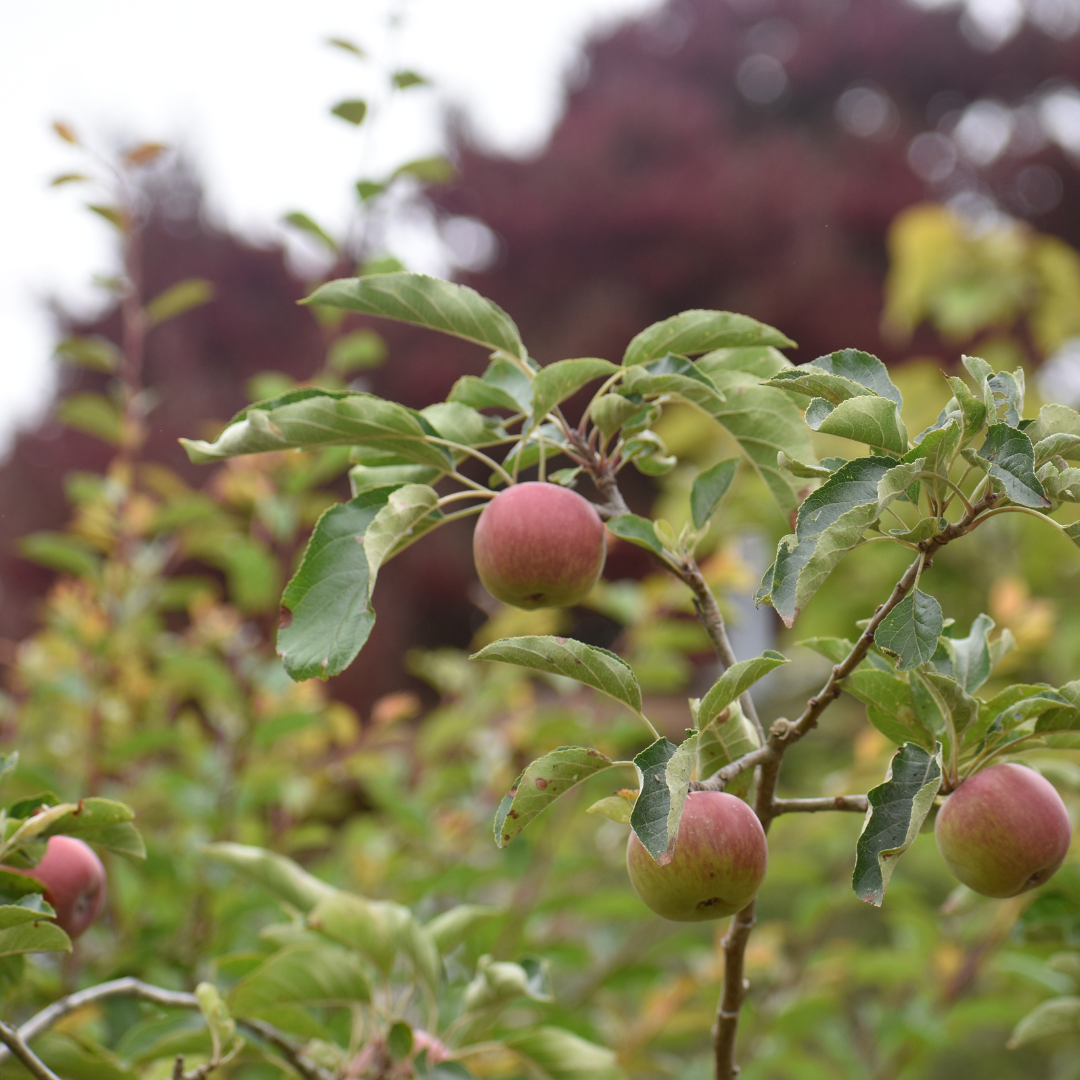
Every winter, a brief window opens for fruit tree shopping that most gardeners miss. From December through early March, nurseries stock bare root trees: dormant fruit trees sold without soil, roots wrapped in damp material, looking more like bundles of sticks than future orchards. These unassuming packages are actually the smartest way to start a fruit tree.
Bare root trees cost less than potted ones, establish faster, and offer variety choices you won't find the rest of the year. That unusual apple cultivar you've been wanting, the specific low-chill peach for your coastal garden, the fig variety your neighbor raves about: if you're going to find them, bare root season is when.
This guide covers everything you need to know about buying, evaluating, and planting bare root fruit trees in Santa Cruz County. For help choosing specific varieties for your microclimate, see our complete Guide to Growing Fruit Trees in Santa Cruz County. You can also explore how Santa Cruz microclimates affect what thrives in your specific neighborhood.
Why Choose Bare Root?
Bare root trees offer real advantages over container-grown trees, which is why experienced orchardists prefer them.
| Feature | Bare Root Tree | Potted Tree |
|---|---|---|
| Cost | Typically lower purchase price | Higher |
| Root establishment | Grows directly into native soil; strong, wide root system | Higher risk of circling roots or pot-bound issues if not corrected |
| Planting window | Dormant season (December through March) | Almost any time with consistent irrigation |
The main trade-off is timing. Bare root trees must be planted during dormancy, which means planning ahead and acting when trees become available. Miss the window, and you'll wait another year.
When Should You Shop for and Plant Bare Root Trees?
The Bare Root Calendar
Bare root season in Santa Cruz County typically runs from late December through early March, with peak availability in January and February.
| Timing | What’s Happening |
|---|---|
| Late December | First bare-root stock arrives at nurseries; typically the best selection |
| January | Prime shopping and planting month with the widest variety available |
| February | Still a good selection; planting conditions remain ideal in most areas |
| Early March | Season winding down; remaining stock may be limited or picked over |
| Mid-March onward | Trees begin breaking dormancy; generally too late for bare-root planting |
Shop early for best selection. Popular varieties and unusual cultivars sell out quickly. If you want a specific tree, call nurseries in late December to ask when their shipments arrive, then shop within the first week or two.
Plant promptly after purchase. Bare root trees are perishable. Once you bring a tree home, plant it within a few days. If you can't plant immediately, you'll need to "heel in" the tree (see below).
What If You Can't Plant Right Away?
Sometimes weather, scheduling, or unfinished garden prep delays planting. If you need to hold a bare root tree for more than a day or two, heel it in:
Find a shaded spot protected from wind
Dig a shallow trench at an angle
Lay the tree in the trench with roots in the low end
Cover roots completely with moist soil, sawdust, or wood chips
Water to settle material around roots
Keep moist until you can plant permanently
Heeled-in trees can wait several weeks if necessary, though planting sooner is always better. Check moisture regularly and don't let roots dry out.
How Do You Evaluate Bare Root Trees at the Nursery?
Not all bare root trees are equal. Learning to evaluate quality helps you choose trees that will establish well and produce for years.
What to Look For
Healthy roots:
Moist, not dried out or shriveled
Fibrous with many small feeder roots, not just a few thick roots
No signs of rot, mushiness, or off odors
Flexible, not brittle
Sound trunk and branches:
Smooth bark without cracks, wounds, or sunken areas
Healthy buds along branches (slightly swollen but not actively growing)
No signs of disease or insect damage
Sturdy main trunk
Proper graft union:
Visible graft union (slight bulge where fruiting variety meets rootstock) a few inches above the root crown
Healed and healthy-looking, not cracked or oozing
Clearly above where the soil line will be when planted
Appropriate size:
Most bare root trees are sold as one-year or two-year whips (single stems) or branched trees
Whips are fine and often establish faster than larger trees
Very large bare root trees may struggle more than smaller ones
What to Avoid
Dry, shriveled roots: Indicates poor storage; tree may not survive
Circling or kinked roots: Will cause problems as tree matures
Moldy or rotten-smelling roots: Sign of disease or decay
Cracked or damaged bark: Entry points for disease
Green growth or open buds: Tree is breaking dormancy too early; planting success decreases
Dried-out packaging: Roots should be kept moist; dry packaging suggests poor handling
Don't hesitate to unwrap and inspect roots before purchasing. Reputable nurseries expect this and want you to choose healthy stock.
How Should You Choose the Right Tree for Your Site?
Before shopping, know your site conditions and what will actually thrive there. The best-looking tree at the nursery means nothing if it won't perform in your garden.
| Fruit Type | Typical Chill Band | Notes for Santa Cruz and Bay Area |
|---|---|---|
| Figs, pomegranates, persimmons | Often under 300 hours | Very reliable in coastal and Banana Belt zones |
| Peaches and nectarines | Many between 300–700 hours | Choose low- to mid-chill varieties for coast; mid-chill for SLV ridges and Pajaro |
| Apricots | Often 300–800 hours | Best in well-drained, slightly warmer inland and foothill sites |
| Apples and pears | 300–900+ hours, depending on cultivar | Choose low- to mid-chill types for coast; more options inland |
| Citrus | No chill requirement | Focus on frost protection and microclimate, not chill hours |
| Microclimate | Chill Hour Tendencies | Best Fruit Choices |
|---|---|---|
| Foggy coast (Aptos, Capitola) | Lower chill accumulation | Favor low- and mid-chill varieties: figs, pomegranates, persimmons, low-chill peaches |
| Banana Belt and Santa Cruz city | Moderate chill | Wide variety of 300–700 hour trees |
| SLV ridges and inland valleys | Often enough chill for most varieties | Most 500–800 hour varieties work well |
For detailed variety recommendations, see our Guide to Growing Fruit Trees in Santa Cruz County.
Questions to Ask at the Nursery
Before purchasing, get answers to these questions:
What are the chill hour requirements? Make sure they match your microclimate.
Is this variety self-fertile, or does it need a pollinator? If it needs a pollinator, which varieties are compatible?
What rootstock is this grafted onto? Rootstock affects mature size, drought tolerance, and soil adaptability.
What's the expected mature size? Make sure it fits your space.
Any known disease susceptibilities? Some varieties are prone to specific problems in our climate.
Good nursery staff are happy to answer these questions. If they can't, consider shopping elsewhere.
How Do You Plant a Bare Root Tree Step by Step?
Proper planting technique gives your bare root tree the best start. Take your time and do it right.
Before You Dig
Soak the roots: Place roots in a bucket of water for 2 to 4 hours before planting. This rehydrates them after storage and transport. Don't soak longer than 24 hours.
Prepare your site: Clear the planting area of weeds and debris. Have mulch, a hose, and any amendments ready.
Check the weather: Avoid planting during hard freezes or when soil is waterlogged. Ideal conditions are cool, overcast days with moist (but not soggy) soil.
Digging the Hole
Dig a hole that accommodates the roots without cramping or bending them:
Width: 2 to 3 times wider than the root spread
Depth: Only as deep as the longest root; the tree should sit at the same depth it grew in the nursery
Shape: Sloped sides rather than straight walls help roots grow outward
Create a small cone of soil in the center of the hole. The tree will sit on top of this cone with roots draping down the sides.
Placing the Tree
Position the tree on the soil cone so the graft union sits 2 to 4 inches above the finished soil line. This is critical: burying the graft can cause the fruiting variety to root independently (losing the benefits of the rootstock) or lead to rot.
Spread roots evenly over the cone, pointing outward and slightly downward. Don't let roots circle, bunch up, or point upward.
Check depth by laying a shovel handle across the hole. The graft union should be above the handle.
Backfilling
Use mostly native soil for backfilling. Contrary to old advice, heavily amending the planting hole can create drainage problems and discourage roots from growing into surrounding soil.
Add soil gradually, gently working it around roots to eliminate air pockets. Lightly firm the soil as you go, but don't compact it heavily.
Build a watering basin around the tree: a raised ring of soil about 2 feet in diameter to hold water over the root zone.
Water deeply immediately after planting. Fill the basin, let it drain, fill again. This settles soil around roots and eliminates air pockets.
Mulching
Apply 3 to 4 inches of organic mulch (wood chips, bark, or straw) over the root zone:
Keep mulch 4 to 6 inches away from the trunk to prevent rot
Extend mulch to the edge of the watering basin or beyond
Mulch conserves moisture, moderates soil temperature, and suppresses weeds
Initial Pruning
Bare root trees benefit from light pruning at planting to balance the top growth with the reduced root system:
For unbranched whips:
Cut the main stem to about 24 to 30 inches above the graft union
This encourages branching at a manageable height
For branched trees:
Select 3 to 4 well-spaced branches to keep as your main scaffold
Remove competing or poorly positioned branches
Shorten remaining branches by about one-third
This feels drastic, but it helps the tree establish. The root system doesn't have to support excessive top growth while it's getting established.
What Does First-Year Care Look Like?
The first year after planting determines long-term success. Focus on consistent care while roots establish.
| Timeframe | Priority Tasks |
|---|---|
| Week 1 | Check soil moisture every few days; water if soil is dry about 2 inches below the surface |
| Weeks 2 to 4 | Water deeply once or twice weekly during dry weather; monitor and maintain mulch coverage |
| Month 2 | Watch for new bud growth; continue consistent, deep watering |
| Month 3 | Visible growth should be present; reduce watering slightly if weather cools or rains increase |
Watering
Frequency: Water deeply once or twice per week during dry weather for the entire first growing season. The goal is to keep soil consistently moist (not soggy) in the root zone.
Method: Fill the watering basin slowly, allowing water to soak in deeply. Deep, infrequent watering encourages roots to grow downward rather than staying shallow.
Adjustments: Water more during hot spells, less during cool or rainy periods. Check soil moisture by digging down a few inches: if it's dry 2 to 3 inches down, it's time to water.
Transition: By the second year, established trees need less frequent watering. Gradually taper off, encouraging drought tolerance.
What to Expect
First weeks: Nothing visible will happen. The tree is growing roots, not top growth.
Spring: Buds will swell and open. Leaves will emerge. This is when you'll know the tree survived transplanting.
First summer: Expect modest growth, typically 12 to 24 inches of new shoots. The tree is investing in roots.
First fall: Leaves drop normally. The tree enters dormancy having established its root system.
Years 2 to 3: More vigorous top growth. Some trees may flower, but many gardeners remove first-year flowers to direct energy toward establishment.
Years 3 to 5: Most trees begin producing meaningful crops.
Staking (Usually Unnecessary)
Contrary to common practice, most bare root trees don't need staking. Trees that move slightly in wind develop stronger trunks and root systems.
Stake only if:
Your site is extremely windy
The tree is top-heavy and falls over
You're training a specific form
If you do stake:
Use two stakes on opposite sides, outside the root zone
Attach tree loosely with soft ties that allow movement
Remove stakes after one growing season
What If Something Goes Wrong?
Tree Doesn't Leaf Out in Spring
If your tree shows no growth by late April or early May:
Check for life: Scratch a small area of bark with your fingernail. Green underneath means the tree is alive. Brown or tan means that branch (or the whole tree) is dead.
Be patient: Some trees, especially those planted late in the season, are slow to wake up. Give it a few more weeks.
Check roots: If the trunk is dead, dig carefully to inspect roots. Healthy roots may send up new growth.
Contact the nursery: Many nurseries guarantee bare root trees for a season. If yours didn't survive, you may be able to get a replacement.
Leaves Appear Then Wilt
This often indicates watering problems:
Underwatering: Roots can't yet reach moisture beyond the immediate planting area. Water more frequently.
Overwatering: Soggy soil suffocates roots. Improve drainage or reduce watering.
Late frost damage: New growth is frost-sensitive. Damaged leaves often recover as the tree pushes new growth.
Slow Growth First Year
Normal. First-year trees invest in roots, not visible growth. As long as the tree is alive and producing some leaves, it's probably fine. Focus on consistent watering and be patient.
Where Can You Buy Bare Root Trees?
Santa Cruz County Nurseries
San Lorenzo Garden Center (Santa Cruz). Wide variety of bare root trees; knowledgeable staff who understand local conditions
Mountain Feed & Farm Supply (Ben Lomond). Specializes in edible plants; can often source specific varieties on request
Sierra Azul Nursery (Watsonville). Large selection suited to local conditions
Bay Area Nurseries Worth the Drive
Yamagami's Nursery (Cupertino). Well-curated selection including unusual varieties
Alden Lane Nursery (Livermore). Family-owned since 1955; extensive fruit tree selection
Online Sources
Bay Laurel Nursery (Atascadero). Excellent selection of low-chill varieties; ships bare root
Raintree Nursery (Washington). Vast selection; respected mail-order source
Dave Wilson Nursery. Wholesale, but their website lists retail sources and has excellent variety information
Tip: Call local nurseries in late December to ask when bare root stock arrives. Get on notification lists if available. Popular varieties sell out within days of arriving.
Frequently Asked Questions
When exactly should I plant a bare root tree in Santa Cruz County?
Anytime from late December through early March while trees are dormant. January and February are ideal: trees are fully dormant, nursery selection is good, and soil is usually workable between rains. Plant before buds begin swelling in late winter or early spring. Once you see green growth emerging, the planting window has closed.
Can I plant a bare root tree in the rain?
Light rain is fine and can even be ideal (less transplant stress). Avoid planting in waterlogged soil that won't drain, or during heavy storms that make working conditions miserable. If soil sticks to your shoes in thick clumps, it's too wet.
How long can I keep a bare root tree before planting?
Plant within a few days of purchase if possible. If you must wait longer, heel in the tree (cover roots with moist soil or mulch in a shaded spot) to keep roots from drying out. Heeled-in trees can wait several weeks, but sooner is always better.
Why does my bare root tree look dead?
Because it's dormant. Bare root trees are supposed to look like sticks with roots attached. As long as the bark is smooth (not shriveled), buds are present, and roots are moist and pliable, the tree is fine. You won't see signs of life until spring.
Should I fertilize when planting?
No. Fertilizing at planting can burn tender new roots. Wait until the tree has established and is actively growing (usually the following spring) before fertilizing. The first year, focus on water, not fertilizer.
How much should I prune at planting?
For unbranched whips, cut the main stem to about 24 to 30 inches above the graft. For branched trees, select 3 to 4 well-placed branches and remove the rest; shorten the keepers by about one-third. This balances top growth with the reduced root system.
My bare root tree has some broken roots. Is it okay to plant?
Minor root damage is fine. Trim any broken or damaged roots cleanly with sharp pruners, removing the damaged portion. Avoid planting trees with severely damaged or dried-out root systems.
When will my tree produce fruit?
Most fruit trees take 3 to 5 years to produce meaningful crops. Some (like figs and certain stone fruits) may bear a few fruits sooner; others (like apples and pears) take longer. Removing flowers the first year or two directs energy toward establishment and can improve long-term production.
Free Bare Root Resources
Seasonal Planting Calendar. Month-by-month planting guide including bare root tree timing and care tasks.
Know Your Microclimate Worksheet. Assess your garden's conditions including sun exposure, frost risk, and chill hour accumulation.
Seasonal Tasks Checklist. Year-round garden maintenance including fruit tree care by season.
Guide to Growing Fruit Trees in Santa Cruz County. Comprehensive variety recommendations and long-term care information.
Additional Resources
Planting Bare Root Fruit Trees (UC Master Gardeners of Sonoma County)
The Backyard Orchard (UC ANR)
UC Master Gardeners of Monterey and Santa Cruz Counties. Classes, resources, and local advice
Why Is Bare Root Season Worth the Effort?
A bare root tree costs less than a nice dinner out. With a few hours of work planting and a season of attentive watering, that modest investment becomes a fruit-producing tree that can feed your family for decades. The Mission fig or Meyer lemon you plant this January could still be producing when your grandchildren visit.
For ideas on what to grow alongside your new trees, see our companion planting guide. The window is short. Bare root season lasts only a few months each year, and the best trees sell fast. If you've been thinking about adding fruit trees to your garden, now is the time to act. Visit your local nursery, choose healthy stock, plant with care, and water faithfully through that first summer.
By this time next year, you'll have an established tree putting on its first real growth. In a few more years, you'll be picking fruit. And every harvest after that, you'll be glad you took advantage of bare root season.
