

Growing Kale in Santa Cruz County
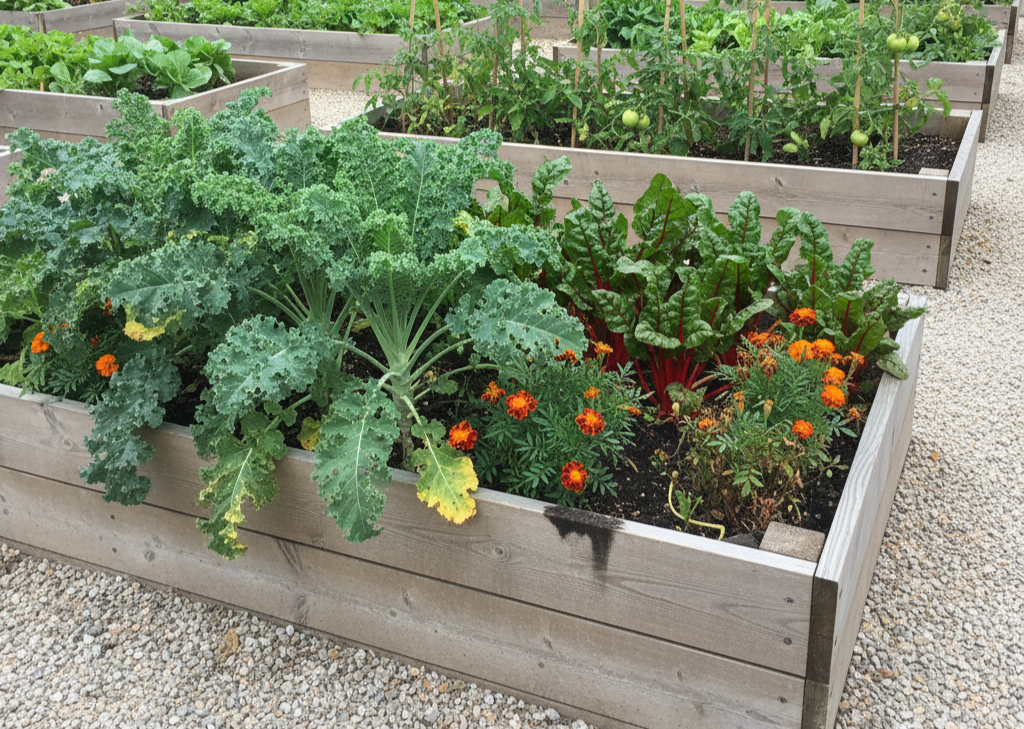
A few of the product links in this guide are affiliate links. If you buy through one, Ambitious Harvest may earn a small commission at no extra cost to you, which helps keep these guides free. We only point to gear we would use in our own Santa Cruz garden. As an Amazon Associate, we earn from qualifying purchases. Read our full disclosure.
If you could only grow one leafy green in Santa Cruz County, kale would be the wise choice. While lettuce sulks in summer heat and spinach bolts at the first sign of warm weather, kale powers through nearly every condition our climate throws at it. Coastal fog, inland heat waves, winter chill, and even light frost only make it sweeter. No other green delivers such consistent harvests with so little fuss.
Kale has earned its superfood reputation, but local gardeners appreciate it for a more practical reason: it just keeps producing. A single well-tended kale plant can supply your kitchen for six months or more. And unlike the kale shipped to grocery stores from distant farms, homegrown kale harvested fresh tastes remarkably different. The leaves are tender rather than tough, sweet rather than bitter, and they actually taste good raw.
This guide covers everything you need to grow outstanding kale in Santa Cruz County, from variety selection to harvest techniques that keep plants producing through multiple seasons.
Why Does Kale Thrive in Santa Cruz?
Santa Cruz County's climate could have been designed specifically for kale production. The plant originated in the coastal regions of the Mediterranean and northern Europe, where cool, moist conditions prevail. According to UC Agriculture and Natural Resources, kale grows best between 60°F and 70°F but tolerates temperatures from the mid-20s to the low 80s without complaint.
Our region delivers these ideal conditions for much of the year. Cool coastal fog keeps summer temperatures moderate. Winter nights rarely drop into the damaging range. The long growing season means kale planted in late summer can produce well into the following spring.
Kale actually improves after exposure to light frost, and post-frost kale is noticeably sweeter than kale harvested before cold weather arrives. UC Master Gardeners of Sonoma County note the same effect in cold-hardy crops such as cabbage and Brussels sprouts. This is why fall-planted kale often tastes better than spring-planted kale, even though the plants may look identical.
The main challenge for kale in Santa Cruz isn't weather but pests. Aphids and cabbage worms can decimate plants quickly if you're not paying attention. We'll cover pest management strategies in detail below.
How Should You Choose the Right Kale Varieties?
Kale comes in several distinct types, each with different characteristics and culinary uses.
Lacinato Kale (Dinosaur Kale, Tuscan Kale, Cavolo Nero)
This is the kale for serious cooks. The long, narrow, deeply textured leaves have a blue-green color and a sweeter, more delicate flavor than curly kale. Lacinato holds up well to cooking and becomes silky-tender when sautéed or braised. It's also excellent raw in salads when cut into thin ribbons.
'Lacinato' (also sold as 'Dinosaur' or 'Nero di Toscana') is the standard variety and an excellent choice for Santa Cruz gardens. Renee's Garden Seeds recommends it as one of the most reliable varieties for coastal California.
'Black Magic' is a slightly more compact lacinato with very dark leaves. It's said to be a bit sweeter than standard lacinato.
'Toscano' is virtually identical to standard lacinato and the names are often used interchangeably.
Curly Kale
The ruffled, frilly leaves of curly kale are what most people picture when they think of kale. The texture that makes it visually appealing also makes it more challenging to clean (bugs love hiding in those curls) and gives a slightly tougher texture when raw. Curly kale is best cooked or massaged with oil and salt for raw salads.
'Winterbor' is an exceptionally cold-hardy curly kale that maintains good flavor even after multiple frosts. It's an excellent choice for winter harvests in any Santa Cruz microclimate.
'Redbor' produces stunning burgundy-purple leaves that add color to the garden and the plate. The color intensifies in cold weather. Note that cooking changes the color to dark green, so use raw for maximum visual impact.
'Vates Dwarf Blue Curled' is a compact, early-maturing variety that works well in containers or small spaces. It's been a reliable home garden variety for decades.
Red Russian Kale
Red Russian is actually more closely related to Siberian kale than to the curly or lacinato types. It has flat, oak-leaf shaped leaves with purple stems and veins. The leaves are notably tender compared to other kales, making it excellent for raw preparations.
'Red Russian' is widely available and performs beautifully in Santa Cruz. The color becomes more vibrant in cool weather.
'Scarlet' is a selected strain with more intense red coloring.
Other Types Worth Growing
'White Russian' is similar to Red Russian but with gray-green leaves and white stems. It's very cold-hardy and tender.
'Premier' is a smooth-leaved kale (sometimes called Siberian type) that matures quickly and is particularly tender. Good for baby kale production.
'Walking Stick' or 'Jersey Kale' is a curiosity that can grow 6 feet tall or more with a trunk-like stem. It's not the best choice for eating (too tough) but makes an interesting ornamental.
| Variety | Type | Days to Harvest | Best Use | Notes for Santa Cruz |
|---|---|---|---|---|
| Lacinato | Dinosaur | 60-65 | Cooking, raw ribbons | Local favorite. Sweet, tender, versatile. |
| Winterbor | Curly | 60 | Cooking, smoothies | Best cold tolerance. Great for winter. |
| Red Russian | Russian/Siberian | 50-60 | Raw salads, light cooking | Most tender variety. Beautiful color. |
| Redbor | Curly | 55-60 | Ornamental, cooking | Stunning purple. Color fades when cooked. |
| Vates Dwarf | Curly | 55 | Containers, small spaces | Compact size. Reliable producer. |
| White Russian | Russian/Siberian | 50-55 | Raw salads, baby kale | Very tender. Excellent cold hardiness. |
When Should You Plant Kale in Santa Cruz?
The best planting windows depend on your microclimate and goals.
Late summer planting (August to early September) is ideal for most Santa Cruz gardeners. Plants establish before short days slow growth, produce through fall and winter, and often continue into the following spring before finally bolting. This timing gives you six months or more of harvest from a single planting.
Spring planting (February through April) works well but typically produces for a shorter period. Plants mature as days lengthen and temperatures rise, triggering bolting by early summer in most areas. Spring-planted kale is still worthwhile, especially if you want to succession plant with fall crops.
Winter planting (November through January) is possible in coastal areas and worth trying in protected spots inland. Growth will be slow, but plants will be well-established for a spring growth surge.
| Planting Window | Coastal Areas | Inland Areas | Expected Harvest Period |
|---|---|---|---|
| Aug - Sept (Best) | Excellent. Plants thrive in cooling temps. | Excellent. Wait for late Aug if still hot. | October through April (6+ months) |
| Feb - April | Good. May last into early summer. | Good. Will bolt by June in warm spots. | April through June (2-3 months) |
| Nov - Jan | Possible. Slow growth until spring. | Challenging. Protect from hard frost. | March through June (spring harvest) |
How Should You Plant and Grow Kale?
Starting from Seed
Kale seeds germinate reliably in a wide temperature range, from about 45°F to 85°F. Direct sowing works well from late summer through early spring. Plant seeds a quarter to half inch deep, about 1 inch apart, then thin to final spacing once seedlings have several true leaves.
For transplants, start seeds indoors four to six weeks before your intended planting date. Use cell trays or small pots with good seed starting mix. Transplant seedlings when they have four to six true leaves and are about 3 to 4 inches tall.
Spacing
Final spacing depends on how you plan to harvest. For full-sized plants that you'll harvest over many months, space 18 to 24 inches apart in all directions. This seems like a lot when plants are small, but mature kale can spread 2 to 3 feet wide.
For baby kale or more intensive production, space 6 to 12 inches apart and harvest entire plants young. This works well in raised beds where you plan to replant the space after harvest.
Soil and Fertilizer
Kale is a heavy feeder that appreciates rich, well-amended soil. Work two to three inches of compost into the planting area before setting out transplants. The UC Master Gardeners recommend maintaining soil pH between 6.0 and 7.5 for best results with brassicas like kale.
Side-dress established plants with compost or balanced organic fertilizer every four to six weeks during active growth. As a leafy green, kale benefits from nitrogen, but avoid excessive fertilization which can attract aphids and produce rank-tasting leaves.
Watering
Keep soil consistently moist but not waterlogged. Kale's shallow to medium root depth means it can't access deep water reserves during dry spells. Water deeply two to three times per week during dry weather, more often in hot periods or for container-grown plants. Mulch around plants to maintain soil moisture and moderate soil temperature.
Inconsistent watering stresses plants and can lead to tough, bitter leaves. The goal is steady, even moisture throughout the growing season.
When and How Should You Harvest Kale?
How you harvest determines how long your kale plants remain productive. Done correctly, a single plant can feed you for six months or more.
Harvest from the bottom up. Always pick the lowest, oldest leaves first. This allows the plant to keep growing from the central growing point at the top. Leave the top cluster of young leaves intact.
Take only what you need. Removing too many leaves at once stresses the plant and slows regrowth. A good rule is to never harvest more than one-third of the plant's leaves at any one time.
Remove yellowing leaves. Old leaves that are yellowing no longer contribute much to the plant and drain energy. Remove them even if you won't eat them.
Don't harvest the growing tip until you're ready to remove the plant entirely. The central growing point produces all new leaves. Once it's gone, the plant is done.
Harvest in the morning. Leaves are most crisp and hydrated in the morning hours. Afternoon-harvested kale wilts faster.
According to UC Cooperative Extension, you can begin harvesting kale when plants have at least ten leaves and continue for months with proper technique.
How Do You Manage Pests?
Pest pressure is the main challenge for kale in Santa Cruz. Our mild, moist climate is perfect for aphids and cabbage family caterpillars. Vigilance and early intervention are key.
Aphids
Aphids are the most common kale pest in Santa Cruz. These small, soft-bodied insects cluster on leaf undersides and new growth, sucking sap and leaving sticky honeydew behind. Heavy infestations weaken plants and can transmit diseases.
Check plants weekly by examining leaf undersides. Catching infestations early makes control much easier. For light infestations, a strong spray of water knocks aphids off plants. Many won't make it back. For heavier pressure, insecticidal soap (applied to contact aphids directly) works well. Repeat applications every few days until the population is controlled.
Encourage beneficial insects that prey on aphids. Ladybugs, lacewings, and parasitic wasps all help control aphid populations naturally. Avoid broad-spectrum insecticides that kill these helpful predators.
According to UC IPM, healthy plants tolerate moderate aphid populations without significant damage. Good growing conditions and proper fertilization (avoid excess nitrogen) help plants resist and recover from aphid pressure.
Cabbage Worms and Loopers
Several caterpillar species attack kale: imported cabbage worms (velvety green), cabbage loopers (move like inchworms), and occasionally diamondback moth larvae (tiny, pale green). All chew ragged holes in leaves and leave dark droppings behind.
The white butterflies you see fluttering around brassica plants are likely imported cabbage whites laying eggs. The eggs hatch into hungry caterpillars.
Row cover is the most effective prevention. Cover plants with lightweight fabric immediately after planting, securing edges to prevent adult moths and butterflies from reaching plants to lay eggs. Remove covers only to harvest.
Handpicking works well for small plantings. Check plants regularly and remove any caterpillars you find. Crush egg clusters (small yellow or pale ovals) on leaf undersides.
Bacillus thuringiensis (Bt) is an organic bacterial spray that kills caterpillars but doesn't harm other insects or wildlife. Apply when caterpillars are small for best results. Follow label directions and reapply after rain.
Other Potential Problems
Flea beetles create tiny shot-hole damage in leaves. Usually more cosmetic than serious. Row cover prevents them.
Slugs and snails attack young plants and can devour seedlings overnight. Handpick, use beer traps, or apply iron phosphate baits.
Clubroot is a soil-borne disease that causes stunted growth and wilting. It's more common in poorly drained, acidic soils. Rotate crops (don't plant brassicas in the same spot more than once every three years), maintain proper soil pH, and improve drainage.
| Pest | Signs | Prevention | Treatment |
|---|---|---|---|
| Aphids | Clusters on undersides, sticky leaves, distorted growth | Avoid excess nitrogen, encourage beneficials | Strong water spray, insecticidal soap |
| Cabbage worms | Holes in leaves, green caterpillars, dark droppings | Row cover, crush eggs | Handpick, Bt spray |
| Flea beetles | Tiny round holes, jumping insects | Row cover | Usually tolerable; row cover if severe |
| Slugs/Snails | Ragged holes, slime trails, damaged seedlings | Remove hiding spots, copper barriers | Handpick at night, beer traps, Sluggo |
How Do You Use Kale in the Kitchen?
Fresh-picked kale tastes remarkably different from store-bought. It's worth experimenting with preparations you might not have enjoyed before.
Raw preparations work best with tender varieties like Red Russian and White Russian. Even lacinato becomes palatable raw when sliced into thin ribbons (a technique called chiffonade), massaged with olive oil and a pinch of salt for a few minutes (this breaks down tough cell walls), and dressed with a bright vinaigrette.
Sautéed kale is a simple side dish. Remove tough stems, chop leaves, and sauté in olive oil with garlic until wilted. Season with salt, a squeeze of lemon, and a pinch of red pepper flakes.
Braised kale takes longer but develops deep flavor. Simmer chopped kale in broth with aromatics (onion, garlic, a bay leaf) until very tender, 20 to 30 minutes. This works especially well with curly varieties.
Kale chips are easy: toss torn leaves with oil and salt, spread on a baking sheet, and bake at 275°F until crisp, about 20 minutes. Watch carefully as they burn quickly at the end.
Smoothies are a good way to use kale if you're not a fan of the texture. The flavor blends into fruity smoothies, and you get all the nutritional benefits.
Where Can You Buy Kale Seeds and Starts?
For seeds, Renee's Garden offers several excellent kale varieties suited to our climate. Kitazawa Seed Company is a good source for Asian brassicas and unusual varieties. Johnny's Selected Seeds has an extensive selection including commercial varieties with good disease resistance.
Local nurseries typically carry kale starts in both spring and fall. San Lorenzo Garden Center, Scarborough Gardens, and Mountain Feed and Farm Supply all stock transplants seasonally.
The Felton Seed Lending Library often has locally saved kale seed available for free.
Kale benefits from good companion planting. See our companion planting guide for the best pairings. Understanding your microclimate will also help you choose the right planting window.
Frequently Asked Questions
Why is my kale bitter?
Bitterness typically indicates stress from heat, inconsistent watering, or harvesting after the plant has begun bolting. Kale grown in hot weather or under water stress produces more bitter compounds. Harvest in the morning, keep plants well-watered, and plant heat-tolerant varieties in warm microclimates. Cold weather actually reduces bitterness and sweetens the leaves.
When should I expect my kale to bolt?
Kale typically bolts (sends up a flower stalk) in response to lengthening days and warming temperatures, usually in late spring. Fall-planted kale may not bolt until May or June. Spring-planted kale often bolts sooner. Once the flower stalk appears, leaves become tough and bitter. You can eat the flower buds (similar to broccoli raab) before they open.
Can I grow kale in containers?
Absolutely. Choose compact varieties like 'Vates Dwarf' or grow any variety in a container at least 12 inches deep and wide. Use quality potting mix, water consistently (containers dry out faster than garden beds), and fertilize regularly since nutrients wash through quickly.
Should I remove the lower leaves that are yellowing?
Yes. Yellowing lower leaves are natural as the plant ages, but they no longer contribute much to the plant and can harbor pests and diseases. Remove them even if you won't eat them.
How do I know if the holes in my kale are from caterpillars or slugs?
Caterpillars leave dark droppings (frass) on and around the plant and create irregularly shaped holes. Slugs leave slime trails and tend to create more ragged damage, often working at night. Check plants after dark with a flashlight to catch slugs in the act.
Is ornamental kale edible?
Technically yes, but it's been bred for appearance rather than flavor. Ornamental kale is tougher and less flavorful than culinary varieties. Grow it for color in the garden, but stick to culinary varieties for eating.
Can I keep the same kale plants going for multiple years?
Kale is technically a biennial, living for two years before setting seed and dying. In practice, most gardeners replant annually because productivity declines after the plant bolts. However, in mild coastal areas, some gardeners do maintain plants for 18 months or more with careful management.
My kale has white powdery spots. What is it?
This is likely powdery mildew, a fungal disease common in mild, humid conditions. Improve air circulation by proper spacing, water at soil level rather than overhead, and remove affected leaves. Severe cases can be treated with organic fungicides.
Free Resources
Download these guides from our Garden Toolkit:
Seasonal Planting Calendar includes the best timing for kale plantings in each Santa Cruz microclimate.
Garden Troubleshooting Guide covers pest identification and organic control methods in detail.
Companion Planting Chart shows what to plant near kale for best results.
