

Growing Cosmos in Santa Cruz County: Effortless Color from Summer to Fall




A few of the product links in this guide are affiliate links. If you buy through one, Ambitious Harvest may earn a small commission at no extra cost to you, which helps keep these guides free. We only point to gear we would use in our own Santa Cruz garden. As an Amazon Associate, we earn from qualifying purchases. Read our full disclosure.
Cosmos are the flowers that make gardening look easy. Scatter seeds in spring, and by midsummer you'll have masses of delicate, daisy-like blooms dancing on slender stems, attracting butterflies and bees while asking almost nothing in return. For Santa Cruz County gardeners looking to fill gaps, create cutting gardens, or simply add months of color with minimal effort, cosmos deliver.
These Mexican natives thrive in our Mediterranean climate, tolerating our dry summers, poor soils, and variable conditions with grace. In fact, cosmos often perform better with neglect than with care. Rich soil and regular fertilizer produce lush foliage but fewer flowers. Lean conditions and a bit of drought stress encourage the prolific blooming that makes cosmos so beloved.
This guide covers everything you need to know to grow cosmos successfully in Santa Cruz County, from variety selection and planting timing to seed saving and troubleshooting. New to gardening or after reliable summer color, cosmos are an excellent choice.
Why Do Cosmos Work So Well in Santa Cruz County?
Cosmos originated in the scrubby, dry landscapes of Mexico and Central America, which means they're pre-adapted to conditions similar to our summer gardens. They handle our dry season gracefully, don't need rich soil, and bloom continuously from early summer through fall frost (which, in our mild climate, may not arrive until December).
Our moderate temperatures actually extend cosmos season compared to hotter inland areas. While gardens in the Central Valley see cosmos fade in August heat, Santa Cruz County's coastal influence keeps them blooming well into autumn. In sheltered spots, cosmos can flower for five months or more.
The main challenge for cosmos here is our cool, foggy coastal areas, where they may bloom later and less prolifically than in sunnier inland locations. Gardeners in Aptos, Capitola, and coastal Santa Cruz should choose sunny, warm microclimates for best results. Inland gardeners in Scotts Valley, Boulder Creek, and Watsonville will find cosmos thriving with minimal attention.
Which Cosmos Varieties Are Worth Growing?
With dozens of varieties available, choosing cosmos can feel overwhelming. Here's what works well in Santa Cruz County gardens, organized by the two main species.
| Species | Growth Habit | Flower Colors | Heat / Drought Tolerance | Annual or Perennial Here |
|---|---|---|---|---|
| Cosmos bipinnatus | Airy annual, typically 3 to 6 feet tall with fine, ferny foliage | White, pink, rose, and some red shades | Prefers warm weather but not extreme heat; moderately drought tolerant once established | Annual; self-seeds readily |
| Cosmos sulphureus | Bushy annual, usually 1 to 6 feet tall depending on variety | Yellow, orange, and red | Very tolerant of heat, drought, and poor soils | Annual; self-seeds readily |
| Cosmos atrosanguineus | Tuberous perennial, typically 2 to 3 feet tall | Deep burgundy to brown, often described as chocolate-scented | Prefers full sun and moderate moisture; tolerates some drought once established | Perennial from tubers in our mild climate |


Cosmos bipinnatus (Garden Cosmos)
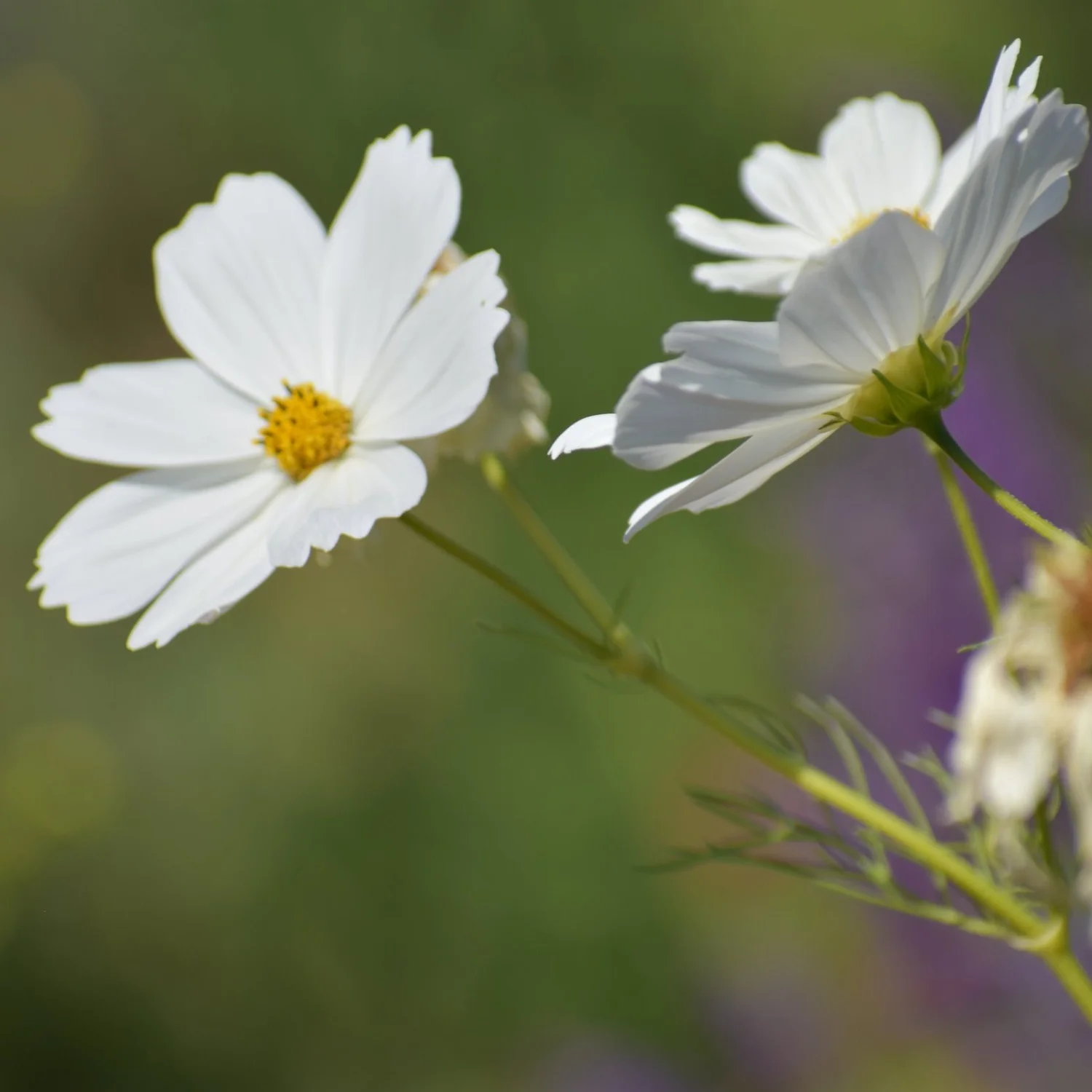
This is the classic cosmos most gardeners picture: ferny foliage, tall stems (3 to 6 feet), and daisy-like flowers in whites, pinks, and magentas. They prefer cooler conditions, making them well-suited to our coastal climate.
Recommended varieties:
Sensation Mix: The classic tall cosmos (4 to 5 feet) with large flowers in white, pink, and magenta. Reliable, vigorous, and widely available.
Versailles Mix: Bred specifically for cutting, with strong, long stems and large flowers. Excellent vase life.
Double Click: Fully double flowers that look like small dahlias. Adds sophistication and unusual texture. Some flowers may revert to single form.
Apricotta: Unusual peachy-pink to apricot tones that shift as flowers age. A favorite for its warm, subtle color.
Purity: Pure white flowers on tall plants. Elegant in moon gardens or mixed with other colors.
Cupcakes: Fused petals create cup-shaped blooms rather than the typical daisy form. Unusual and eye-catching.
Rubenza: Deep ruby-red flowers that mature to burgundy. One of the darkest cosmos available.
Cosmos sulphureus (Sulphur Cosmos)
Shorter and more heat-tolerant than garden cosmos, sulphur cosmos produce warm-toned flowers in yellows, oranges, and reds. They handle hot, dry conditions exceptionally well, making them ideal for Santa Cruz County's inland valleys.
Recommended varieties:
Bright Lights Mix: The standard sulphur cosmos mix with yellow, orange, and red flowers on 3-foot plants. Easy and reliable.
Cosmic Orange: Compact plants (12 to 18 inches) covered in vivid orange blooms. Great for containers and borders.
Diablo: Intense orange-red flowers on 2 to 3 foot plants. Striking color that stands out.
Xanthos: Soft, pale yellow flowers on compact plants. More refined color than typical sulphur cosmos.
Ladybird Mix: Dwarf plants (12 inches) with semi-double flowers in mixed warm colors. Perfect for containers.
Cosmos atrosanguineus (Chocolate Cosmos)
This perennial species produces deep burgundy-brown flowers with a chocolate or vanilla scent. Unlike annual cosmos, chocolate cosmos grows from tubers and returns year after year in our mild climate. It's harder to find and more expensive, but worth seeking out for its unique fragrance and color.
Growing notes: Chocolate cosmos needs more water than annual types and appreciates afternoon shade in hot inland areas. It may go dormant in winter but returns reliably in spring. Hardy in zones 7 to 11, it should overwinter successfully in most of Santa Cruz County where soil rarely freezes.
| Location | Best Cosmos Choices | Notes |
|---|---|---|
| Coastal (Aptos, Capitola, Santa Cruz beaches) | Cosmos bipinnatus varieties | Cooler, foggier summers can delay bloom; choose the warmest, sunniest sites available |
| San Lorenzo Valley (Boulder Creek, Ben Lomond) | Both species; Cosmos sulphureus excels in sunny spots | Warm days and cool nights suit both types; deer may browse young plants |
| Inland (Scotts Valley, Soquel hills) | Both species; Cosmos sulphureus for hottest exposures | Excellent cosmos territory; lean soils encourage heavy bloom |
| Pajaro Valley (Watsonville) | Cosmos sulphureus especially; Cosmos bipinnatus also good | Warm valley conditions strongly favor sulphur cosmos |
| Urban & suburban gardens (countywide) | Most annual cosmos; chocolate cosmos in protected spots | Long frost-free season allows 4 to 5+ months of bloom |
When Should You Plant Cosmos?
Timing matters for cosmos success. Plant too early in cold soil and seeds rot or seedlings struggle. Plant too late and you'll miss peak summer bloom.
Direct Sowing (Recommended)
Cosmos grow quickly and transplant poorly due to their taproot, making direct sowing the preferred method. Wait until soil has warmed and frost danger has passed.
Santa Cruz County timing:
Coastal areas: Mid-April through May
Inland areas: Early April through May
Succession planting: Sow additional seeds every 3 to 4 weeks through early July for continuous bloom into fall
Check our Garden Conditions Dashboard for current soil temperatures. Cosmos germinate best when soil is at least 60°F, with optimal germination around 70 to 75°F.
Starting Indoors
If you want earlier blooms or are growing specific varieties, start seeds indoors 4 to 6 weeks before your planned transplant date. Use biodegradable pots (peat pots, paper pots, or soil blocks) to minimize root disturbance when transplanting.
Indoor starting timeline:
For coastal areas: Start indoors mid-March, transplant mid-May
For inland areas: Start indoors early March, transplant mid-April
Cosmos seedlings grow fast and can become leggy indoors. Provide strong light and don't start too early. Pinching seedlings when they have 3 to 4 sets of leaves encourages bushier growth.
| Method | Coastal Areas | Inland Areas | Notes |
|---|---|---|---|
| Direct sow outdoors | Mid-April through May | Early April through May | Sow after last frost when soil temperatures reach at least 60°F |
| Start indoors | Start mid-March; transplant mid-May | Start early March; transplant mid-April | Use biodegradable pots to minimize disturbance to taproots |
| Succession sowing | Through early July | Through early July | Sow every 3 to 4 weeks to extend bloom into fall |
| Expected first bloom | Mid-June to July | Early to mid-June | First flowers typically appear 60 to 90 days from seed |
| Seed germination | 7 to 21 days | 7 to 21 days | Best germination occurs around 70 to 75°F |


How Do You Plant Cosmos?
Site Selection
Sun: Full sun (at least 6 hours daily) produces the most flowers. Cosmos in partial shade grow taller and leggier with fewer blooms. In our coolest coastal areas, the sunniest spot available is essential.
Soil: Average to poor soil is actually ideal. Cosmos in rich, amended soil produce lush foliage but fewer flowers. If your vegetable garden soil is well-fertilized, cosmos may not be the best choice for that space. Sandy, lean soil or spots you haven't amended work well.
Drainage: Good drainage is important. Cosmos tolerate drought but rot in waterlogged soil.
Wind: Tall cosmos varieties (4 to 6 feet) may need staking or a sheltered location in windy areas. Coastal gardeners should consider shorter varieties or plan for support.
Direct Sowing Instructions
Prepare the site: Clear weeds and rake soil smooth. Don't add compost or fertilizer.
Scatter seeds: Broadcast seeds over the prepared area, or plant in rows about 1/4 inch deep. Space seeds roughly 6 to 12 inches apart (you'll thin later).
Cover lightly: Cosmos seeds need darkness to germinate. Cover with a thin layer of soil or rake gently.
Water in: Water gently to settle seeds. Keep soil moist (not wet) until germination, typically 7 to 21 days.
Thin seedlings: When plants are a few inches tall, thin to 12 to 18 inches apart for tall varieties, 8 to 12 inches for dwarf types. Crowded cosmos become leggy and prone to disease.
Transplanting Seedlings
If you started seeds indoors or purchased transplants:
Harden off: Gradually expose indoor-grown seedlings to outdoor conditions over 7 to 10 days before transplanting.
Choose overcast weather: Transplant on a cloudy day or in evening to reduce stress.
Handle gently: Cosmos have taproots that resent disturbance. Keep root ball intact.
Plant at same depth: Set transplants at the same level they were growing in their pots.
Water well: Water immediately after transplanting and keep soil moist for the first week.
What Care Do Cosmos Need After Planting?
One of cosmos' greatest virtues is their low maintenance requirements. Once established, they need remarkably little attention.
Watering
Established plants: Cosmos are drought-tolerant once their roots are developed (usually 3 to 4 weeks after transplanting or when direct-sown plants are 6 inches tall). In Santa Cruz County's dry summers, established cosmos typically need watering only during extended hot spells or if they show obvious stress (wilting that doesn't recover by morning). Water deeply but infrequently when you do water.
Young plants: Keep soil consistently moist (not soggy) until plants are established. This is the only time cosmos need regular water.
Overwatering risks: Too much water produces weak, floppy growth and increases disease risk. When in doubt, don't water. Slightly stressed cosmos often bloom more prolifically.
Fertilizing
The surprising truth: Cosmos bloom best in poor soil. Fertilizing usually produces more leaves and fewer flowers.
When fertilizer helps: If your soil is extremely poor (pure sand with zero organic matter) or plants appear stunted with pale leaves, a single light application of balanced fertilizer early in the season may help. Otherwise, skip it entirely.
What to avoid: High-nitrogen fertilizers, fresh compost, and locations recently amended for vegetables. All of these encourage foliage over flowers.
Supporting Tall Varieties
Cosmos bipinnatus varieties can reach 5 to 6 feet tall, and their slender stems sometimes need support, especially in windy locations or after heavy rain.
Support options:
Grow-through supports: Place grid-style supports over young plants and let them grow through. The foliage hides the support structure.
Individual stakes: Tie tall stems loosely to bamboo stakes as needed.
Plant in groups: Dense plantings allow cosmos to support each other.
Pinch for bushier growth: Pinching the growing tip when plants are 12 to 18 inches tall encourages branching and shorter, sturdier plants (though it may delay flowering slightly).
Deadheading and Pruning
Deadheading: Removing spent flowers encourages continuous bloom. Cosmos produce flowers so prolifically that keeping up can be challenging, but even occasional deadheading extends the flowering season. Cut just above a leaf node to encourage new flowering stems.
Mid-season pruning: If plants become leggy or flowering slows in midsummer, cut back by one-third to one-half. This sacrifices flowers temporarily but stimulates fresh growth and renewed blooming.
End of season options: You can either:
Remove plants after flowering to tidy the garden (but lose self-seeding)
Leave plants to complete their life cycle and drop seeds for next year's volunteers
How Do You Use Cosmos as Cut Flowers?
Cosmos make excellent, long-lasting cut flowers with proper handling.
Cutting for Arrangements
When to cut: Early morning, when stems are fully hydrated and flowers have just opened (not fully mature).
How to cut: Use sharp, clean shears. Cut at a 45-degree angle just above a leaf node (this encourages the plant to produce more flowering stems). Choose stems of varying lengths for interesting arrangements.
Stem treatment: Immediately place cut stems in water. Some florists sear stem ends briefly with a flame or dip in boiling water for a few seconds to extend vase life.
Maximizing Vase Life
Remove all foliage that would be below the waterline
Use clean vases and fresh, room-temperature water
Add floral preservative if available (or a drop of bleach and a pinch of sugar)
Re-cut stems and change water every 2 to 3 days
Keep arrangements away from direct sunlight, heat sources, and ripening fruit
Expect 5 to 7 days of vase life with good care
Best Varieties for Cutting
Versailles series: Bred specifically for cutting with strong stems
Click series: Long-stemmed with double flowers
Sensation Mix: Classic choice with good stem length
Any tall Cosmos bipinnatus variety: Generally better than shorter sulphur cosmos for arrangements
How Do Cosmos Support Pollinators and Wildlife?
Cosmos are exceptional pollinator-friendly garden plants, and their benefits extend beyond bees and butterflies.
| Visitor | What They Get from Cosmos | How It Helps Your Garden |
|---|---|---|
| Honey bees & native bees | Nectar and pollen from simple, open flowers | Improves pollination of nearby vegetables and fruit crops throughout summer |
| Butterflies | Easily accessed nectar on flat flower disks | Supports butterflies such as painted ladies and swallowtails through the season |
| Hoverflies | Nectar for adults; habitat near aphid colonies | Adult hoverflies pollinate; larvae help control aphids and other soft-bodied pests |
| Seed-eating birds | Dry cosmos seed heads in late summer and fall | Provides a seasonal food source and encourages bird activity in the garden |
The simple, open flower structure makes pollen and nectar easily accessible to a wide range of pollinators, including small native bees that can't access more complex flowers. UC ANR's Bug Squad specifically documents honey bees, bumble bees, sweat bees, and butterflies working cosmos blooms.
Good Companions for Cosmos
Visual pairings:
Zinnias: Similar growing requirements and complementary colors; both attract butterflies
Sunflowers: Cosmos soften the boldness of sunflowers and fill in at their feet
Black-eyed Susans: Yellow and orange tones contrast beautifully with pink cosmos
Dahlias: Different flower forms create textural interest
Grasses: Ornamental grasses add movement and texture to cosmos plantings
Beneficial companion planting combinations:
Herbs (lavender, rosemary, sage): May help deter some pests while attracting pollinators
Tomatoes: Cosmos attract beneficial insects that prey on tomato pests
Squash: Cosmos draw pollinators that also visit squash flowers
How Do You Save Seeds and Encourage Self-Seeding?
One of cosmos' delights is their eagerness to perpetuate themselves. With minimal effort, you can have cosmos returning year after year.
Allowing Self-Seeding
How it works: Stop deadheading in late summer and let some flowers mature, form seeds, and drop naturally. Seeds that fall in bare or lightly mulched soil often germinate the following spring.
To encourage self-seeding:
Leave spent flowers on plants from August onward
Ensure some bare or lightly covered soil around plants (thick mulch prevents germination)
Don't clean up cosmos plants until spring
Watch for seedlings in March through May; thin as needed
What to expect: Self-sown cosmos may appear near parent plants or several feet away (birds and wind distribute seeds). Mixed varieties will cross-pollinate, so flower colors may shift over generations, typically toward the more dominant pink and magenta shades.
Saving Seeds Intentionally
For more control, save seeds to plant exactly where and when you want them.
Selecting seeds:
Choose flowers from your healthiest, most attractive plants
Let selected flowers fade completely on the plant
Wait until petals drop and seed heads turn brown and papery
Seeds are mature when they detach easily from the seed head
Harvesting:
Cut or snap off dried seed heads
Place in a paper bag or container
Let dry completely in a warm, airy location for 1 to 2 weeks
Separate seeds from chaff (cosmos seeds are elongated, dark brown, with a pointed end)
Storage:
Ensure seeds are completely dry before storing
Place in paper envelopes or glass jars
Label with variety and date
Store in a cool, dry, dark location
Propagating from Cuttings
Cosmos can be propagated from stem cuttings, though this is rarely necessary given how easy they are from seed. Cuttings can be useful for preserving a specific plant's characteristics or extending the season.
Method:
Take 4 to 6 inch cuttings from healthy, non-flowering stems
Remove lower leaves, leaving 2 to 3 sets at the top
Insert cutting into moist potting mix
Keep consistently moist and in bright, indirect light
Roots typically form in 2 to 3 weeks
What Are the Most Common Cosmos Problems?
Cosmos are generally trouble-free, but a few issues occasionally arise.
| Problem | Likely Cause | Solution |
|---|---|---|
| Lots of foliage, few flowers | Soil too rich; over-fertilized | Stop fertilizing; choose leaner soil next season |
| Tall, floppy stems | Too much shade; soil too rich | Provide more sun; use supports; pinch young plants to encourage branching |
| Plants wilting despite watering | Root rot from overwatering; soil staying too wet | Reduce watering; improve drainage; allow soil to dry slightly between waterings |
| Few flowers on self-sown plants | Natural variation in seedlings | Thin heavily; keep and encourage the strongest, best-performing plants |
| Seeds not germinating | Soil too cold; seeds planted too deep; old seeds | Wait for warmer soil; plant more shallowly; use fresh seeds |
Pests
Aphids: These small sap-sucking insects sometimes colonize cosmos stems and buds, particularly in spring. Control with a strong spray of water, or let natural predators (ladybugs, lacewings, hoverfly larvae) handle them. Serious infestations can be treated with insecticidal soap.
Slugs and snails: May damage young seedlings, especially in cool, moist coastal areas. Handpick, use barriers, or apply iron phosphate bait.
Spider mites: Occasionally a problem in hot, dry conditions. Look for fine webbing on undersides of leaves. Spray with water; improve air circulation.
Diseases
Powdery mildew: White, powdery coating on leaves, usually appearing late in the season. Prevent by spacing plants for good air circulation and avoiding overhead watering. Remove affected leaves. Rarely fatal to established plants.
Aster yellows: A serious disease spread by leafhoppers. Symptoms include yellowed, deformed growth and green flowers. No cure; remove and dispose of affected plants immediately to prevent spread. Not common but worth recognizing.
Stem rot: Usually caused by overwatering or poor drainage. Plants wilt and collapse at soil level. Prevent by watering appropriately and ensuring good drainage.
Deer and Gophers
Deer: Cosmos are not deer favorites, but hungry deer will eat almost anything. In high-deer-pressure areas of the San Lorenzo Valley and rural zones, protection may be needed for young plants. Once established and blooming, cosmos are usually left alone.
Gophers: Typically not a problem for cosmos, as the plants grow quickly and aren't a preferred food source.
Where Can You Find Cosmos Seeds and Supplies Locally?
Seeds and plants:
Renee's Garden Seeds (Felton): excellent cosmos varieties bred for home gardens
Mountain Feed & Farm Supply (Ben Lomond): flower seeds and organic supplies
San Lorenzo Garden Center (Santa Cruz): seeds and transplants seasonally
Peaceful Valley Farm Supply: extensive seed selection, ships to Santa Cruz
Supplies:
Central Home Supply (Scotts Valley): stakes, supports, garden supplies
Local hardware stores carry basic flower-growing supplies
Education:
UC Master Gardeners of Monterey and Santa Cruz Counties: flower-growing workshops and advice
Check our Garden Events Calendar for local plant sales, garden tours, and flower-growing workshops.
Where to get flower seeds: For cut-flower and pollinator varieties that do well here, we like Botanical Interests, a California company selling non-GMO, open-pollinated, and heirloom seed. (Affiliate link, see our disclosure.)
Frequently Asked Questions About Growing Cosmos
When should I plant cosmos seeds in Santa Cruz County?
Direct sow cosmos seeds from early April (inland areas) through May (coastal areas) when soil has warmed to at least 60°F. You can succession plant through early July for extended fall bloom. Starting seeds indoors 4 to 6 weeks before transplanting is also an option, but direct sowing usually works better since cosmos have taproots that dislike disturbance. Check our Garden Conditions Dashboard for current soil temperatures.
Why are my cosmos all leaves with very few flowers?
This almost always indicates soil that's too rich or recent fertilization. Cosmos evolved in poor soils and bloom best when slightly stressed. Stop fertilizing, and next year, plant cosmos in leaner soil that hasn't been heavily amended. High-nitrogen fertilizers are especially problematic, producing lush foliage at the expense of flowers.
Do cosmos come back every year?
Cosmos bipinnatus and Cosmos sulphureus are annuals that complete their life cycle in one season. However, they self-sow readily if you allow some flowers to go to seed. You'll often find volunteer seedlings appearing the following spring. Cosmos atrosanguineus (chocolate cosmos) is a tender perennial that returns from tubers in our mild climate.
How do I keep tall cosmos from falling over?
Several strategies help: pinch growing tips when plants are 12 to 18 inches tall to encourage bushier, shorter growth; use grow-through supports placed over young plants; stake individual stems; plant in groups so plants support each other; or choose shorter varieties like Cosmic Orange or Ladybird for windy locations.
Can I grow cosmos in containers?
Yes, especially dwarf varieties like Cosmic Orange, Ladybird, and Xanthos. Use containers at least 12 inches deep with good drainage. Container cosmos need more regular watering than in-ground plants but should still not be overwatered. Tall varieties can be grown in containers but may need staking.
How long do cosmos bloom?
In Santa Cruz County's mild climate, cosmos typically bloom from about 10 weeks after sowing until frost, potentially five months or more in ideal conditions. Regular deadheading extends bloom, while allowing plants to set seed may shorten the flowering season. Our coastal areas often see longer bloom seasons than hotter inland regions because cosmos prefer moderate temperatures.
Do cosmos attract bees and butterflies?
Yes, cosmos are excellent pollinator plants. Their simple, open flower structure makes pollen and nectar accessible to a wide range of bees (both native species and honeybees), butterflies, and beneficial insects like hoverflies. Planting cosmos near vegetable gardens can help attract pollinators to your food crops as well.
Can I save seeds from my cosmos to plant next year?
Absolutely. Let some flowers mature fully on the plant until petals drop and seed heads turn brown and papery. Collect dried seed heads, separate seeds from chaff, dry completely, and store in paper envelopes in a cool, dry place. Cosmos seeds remain viable for 3 to 5 years. Note that mixed varieties may cross-pollinate, so saved seeds might produce different colors than the parent plants.
What Free Resources Are Available for Cosmos Growers?
Seasonal Planting Calendar: Month-by-month guide showing optimal planting times for flowers and vegetables in Santa Cruz County.
Know Your Microclimate Worksheet: Identify your garden's specific conditions for better plant selection.
Companion Planting Guide: Learn which plants grow well together for healthier, more productive gardens.
Garden Troubleshooting Guide: Diagnose common plant problems including pests and diseases.
Why Are Cosmos Worth Growing in Every Garden?
Cosmos embody what many gardeners love most about growing flowers: spectacular results from minimal effort. Scatter seeds, stand back, and watch months of color unfold. Cut armfuls for indoor bouquets without making a dent in the display. Let a few flowers go to seed and enjoy surprise volunteers next spring.
In Santa Cruz County's gardens, cosmos bridge the gap between spring's last bulbs and fall's chrysanthemums, providing continuous color through our long, dry summer. They bring butterflies and bees into the garden, soften vegetable beds with their ferny foliage, and remind us that some of the best garden plants are the ones that ask the least.
This spring, tuck some cosmos seeds into a sunny corner. By July, you'll wonder why you didn't plant more.
