

How to Start a Backyard Flock in Santa Cruz County
A few of the product links in this guide are affiliate links. If you buy through one, Ambitious Harvest may earn a small commission at no extra cost to you, which helps keep these guides free. We only point to gear we would use in our own Santa Cruz garden. As an Amazon Associate, we earn from qualifying purchases. Read our full disclosure.
How to Start a Backyard Flock in Santa Cruz County
Starting a backyard flock in Santa Cruz County is legal for most residents, with unincorporated areas allowing chickens, ducks, and geese on parcels as small as 6,000 square feet under Santa Cruz County municipal code Chapter 13.10. Many coastal flock owners keep birds as much for pest control and soil improvement as for eggs, which makes garden poultry a practical fit for our mild, foggy climate.
What Are the Local Ordinances for Keeping Poultry in Santa Cruz County?
Before you buy a single chick, you need to understand what your local rules actually say. The regulations differ depending on whether you live in unincorporated Santa Cruz County, the City of Santa Cruz, Watsonville, Scotts Valley, or Capitola.
In unincorporated Santa Cruz County, where I keep my flock in Boulder Creek, the zoning code generally permits poultry on residential parcels without a special permit, provided your lot meets minimum size requirements and birds are housed in enclosures set back from property lines. The standard setback is 40 feet from neighboring dwellings for poultry housing on parcels of 15,000 square feet or more, and 25 feet on smaller parcels (Santa Cruz County Code 13.10.645-648).
The City of Santa Cruz allows hens on residential properties, with the number permitted depending on lot size and zoning (no roosters within city limits). Watsonville has similar restrictions. Scotts Valley and Capitola each have their own rules, so check with your city clerk before committing.
A few universal guidelines apply across jurisdictions:
- Roosters are typically restricted or prohibited in urban zones due to noise
- Setback requirements from property lines and neighboring structures apply to coops and runs
- Slaughter regulations vary; many areas prohibit visible slaughter from public view
- All areas require that poultry housing be maintained in a sanitary condition
Contact the Santa Cruz County Planning Department at (831) 454-2580 or visit their online zoning portal to confirm your parcel's specific allowances. A quick call can save you months of frustration.
How Should You Talk to Your Neighbors Before Getting Birds?
Even when the law is on your side, good neighbor relations make flock keeping far more sustainable. I learned this firsthand when I started my mixed flock in Boulder Creek. A conversation before the birds arrive prevents complaints after.
Start by letting adjacent neighbors know your plans. Be specific about what you intend to keep (hens only, or mixed species), how many birds, and where the coop will sit. Bring up potential concerns before they do: noise, smell, predator attraction, and property values.
Offer something tangible. A standing offer of fresh eggs goes a long way. One of my neighbors who was initially skeptical became my biggest supporter after a few dozen eggs and the realization that my ducks were eating the slugs that had been destroying her hostas.
Be upfront about noise. Hens are relatively quiet, but they do announce their eggs. Ducks can be chatty, especially Runner ducks (mine have opinions about everything). Geese are the loudest of all and serve as excellent alarm systems, which is a polite way of saying they honk at everything. If you plan to keep geese or ducks, the neighbor conversation is especially important.
If a neighbor expresses genuine concern, listen. You may be able to adjust coop placement, add sound-dampening vegetation, or modify your plans. A flock that creates neighborhood conflict is a flock you will eventually lose.
What Type of Birds Should You Start With?
The single most common mistake new flock keepers make is starting with too many species at once. If you have never kept poultry, begin with chickens. They are the most forgiving, the best documented, and the easiest to house and feed.
A starter flock of three to four hens is ideal. This gives you enough birds for a social group (chickens are flock animals and should never be kept alone) without overwhelming you with care requirements or egg production. Three good layers will produce roughly a dozen eggs per week during peak season, which is plenty for a household and enough to share.
For Santa Cruz County specifically, look for breeds that handle our cool, foggy mornings and mild summers well. Barred Plymouth Rocks, Australorps, and Orpingtons are all solid choices for coastal California. They lay consistently, tolerate our temperature swings, and have calm temperaments that make them good garden companions. For more on breed selection, see Choosing the Right Breeds for Coastal California Gardens.
If you are interested in ducks or geese, I recommend keeping chickens for at least six months first. Waterfowl have different housing needs (they need water access for bill cleaning at minimum), different feed requirements, and different predator vulnerabilities. Once you understand the daily rhythm of flock care with chickens, adding waterfowl becomes much more manageable.
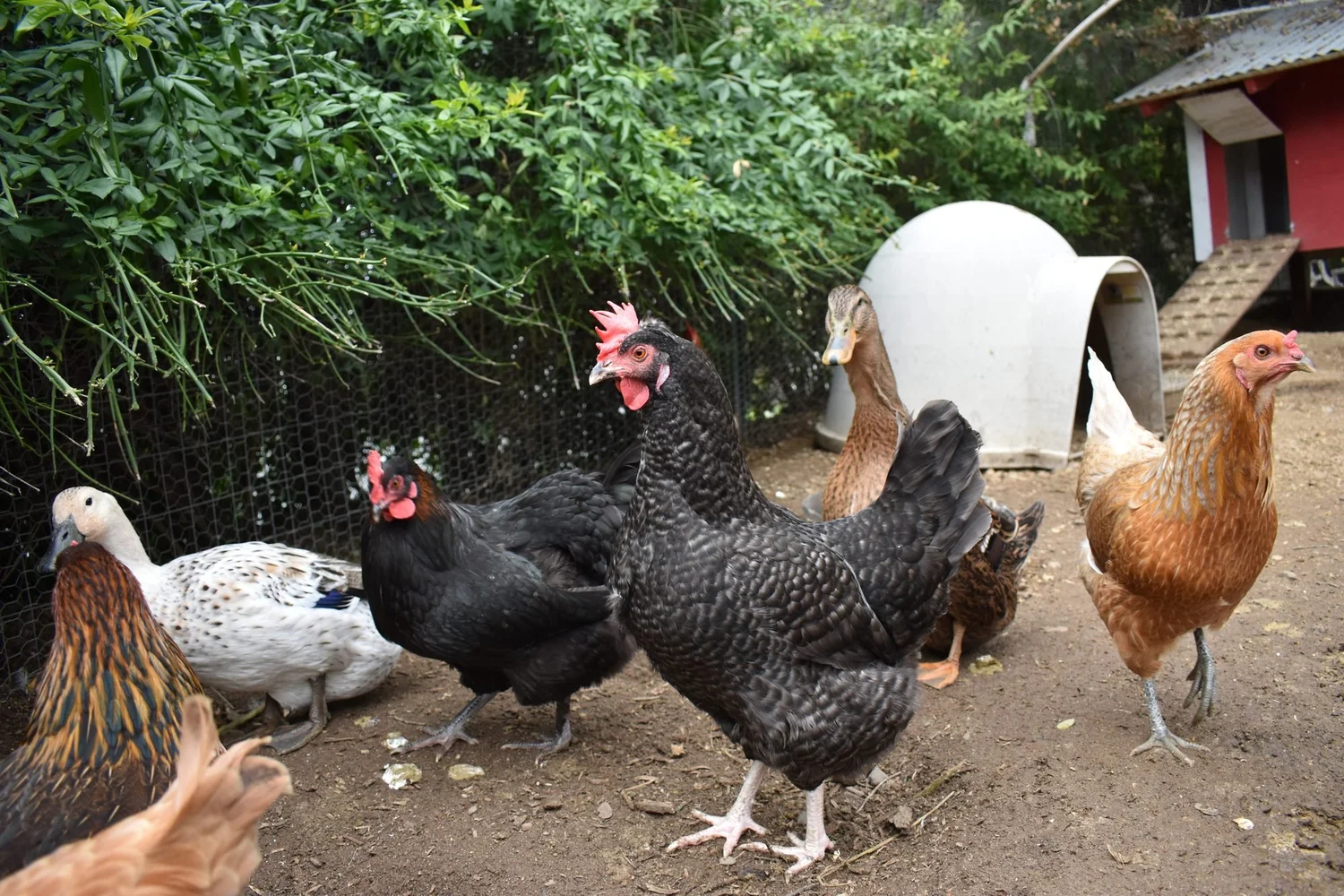
My own flock evolved over time. I started with chickens, added ducks the following year, and eventually adopted a Toulouse goose. Each species brought something different to the garden, but I was glad I did not try to learn everything at once.
Where Can You Buy Chicks and Poultry Locally?
Santa Cruz County has several reliable sources for starter birds. Your choice of source affects the health, temperament, and sometimes the breed quality of your flock.
Local feed stores: Scotts Valley Feed, Westside Farm and Feed (Santa Cruz), and Corralitos Feed (Watsonville) carry chicks seasonally, typically from February through May. This is the most accessible option for beginners. You can see the birds before buying, and the staff can answer basic care questions. Breeds vary by shipment, so call ahead if you want something specific.
Local breeders: Check Craigslist (Santa Cruz section), the Santa Cruz County Poultry Fanciers group, and local farm listings for breeders selling started pullets (young hens that are past the fragile chick stage). Started pullets cost more but skip the brooder phase entirely, which is a significant advantage for first-timers.
Santa Cruz County Animal Shelter: This is a source many people overlook. The shelter occasionally takes in chickens and other poultry from situations involving neglect, overpopulation, or owners who can no longer care for them. Several of my chickens are shelter rescues. Adopting rescue birds is rewarding, but they may need quarantine and veterinary attention before joining an existing flock. The adoption fees are nominal.
Mail-order hatcheries: Companies like Murray McMurray, Cackle Hatchery, and Meyer Hatchery ship day-old chicks nationwide. This gives you the widest breed selection, but shipping is stressful for the birds and minimum orders (usually 3 to 15 depending on the hatchery) can be larger than you need. Some hatcheries offer smaller shipments with heat packs during cooler months.
I recommend buying locally whenever possible. You support the local agricultural community, you reduce shipping stress on the birds, and you can often get breeds that are already adapted to our coastal climate.
What Is the Minimum Setup You Need Before Birds Arrive?
Your setup requirements depend on whether you are starting with day-old chicks (which need a brooder) or started pullets (which can go directly into an outdoor coop). Either way, you need the following essentials ready before your birds come home.
For day-old chicks, you need a brooder. This can be as simple as a large plastic storage tub, a cardboard box, or a stock tank with a heat source, bedding, a chick feeder, and a chick waterer. The brooder needs to maintain 95 degrees Fahrenheit during the first week, decreasing by 5 degrees each week until the chicks are fully feathered at roughly six weeks. See Raising Chicks and Ducklings in Santa Cruz: A First-Timer's Guide for the complete brooder walkthrough.
For all birds, you need a secure coop and run. At minimum, plan for about 4 square feet of coop space per standard-size chicken and 10 square feet of run space per bird, the space widely recommended in poultry extension guides. The coop needs roosts, nest boxes (one per three to four hens), ventilation, and a door that closes securely at night.
The run is where your birds will spend most of their daylight hours, and in Santa Cruz County, it needs to be fully enclosed. We have raccoons, foxes, coyotes, bobcats, hawks, and in the mountains, ringtail cats and weasels. A run with only chicken wire on top is an invitation to predators. Hardware cloth (1/2-inch welded wire) on all sides and the top is the standard. For complete design guidance, see Designing a Predator-Proof Run for Your Garden Flock.
Feed and water. You need a feeder designed for poultry (to minimize waste and contamination), a waterer that holds at least a gallon, and a bag of age-appropriate feed. Chick starter for young birds, layer feed for hens in production. A 50-pound bag of layer feed runs roughly $20 to $30 at local feed stores.
Bedding. Pine shavings are the most common choice for coops and brooders. Use pine shavings for bedding, since the eXtension small-flock poultry guide names softwood shavings, with pine preferred, as the best litter. Straw works in nest boxes but compacts quickly on coop floors.
How Much Does It Cost to Start a Backyard Flock?
Realistic budgeting prevents the sticker shock that causes some new flock keepers to cut corners on housing, which inevitably leads to predator losses. Here is a realistic breakdown based on Santa Cruz County prices as of 2025.
Coop and run: This is your biggest expense. A prefabricated coop adequate for 4 to 6 hens costs $300 to $800. A DIY coop built from lumber and hardware cloth runs $200 to $500 in materials, depending on size and design. A fully enclosed run (which you need here) adds $200 to $600 in hardware cloth and framing. Total housing: $400 to $1,400.
Birds: Day-old chicks cost $3 to $8 each for common breeds at feed stores, or $5 to $15 each for specialty breeds from breeders or hatcheries. Started pullets (16 to 20 weeks old) cost $20 to $40 each. For a starter flock of four hens: $12 to $160 depending on source and age.
Brooder setup (if starting with chicks): Heat lamp or brooder plate ($25 to $60), bedding ($10), chick feeder and waterer ($15), container (often free). Total: $50 to $85.
Feed: Budget $15 to $25 per month for four hens. Layer feed at about $25 per 50-pound bag lasts roughly 6 weeks for a small flock.
Miscellaneous: Oyster shell for calcium ($8), poultry grit ($8), first aid supplies ($20), and treats add roughly $40 to $60 upfront.
Total startup cost for a basic flock of four hens: $500 to $1,700, with the wide range reflecting coop quality and whether you build or buy. Ongoing monthly costs run $20 to $40 for feed, bedding, and supplements.
These numbers are real. I have seen blog posts claiming you can start a flock for $100, and while technically possible with free pallets and donated birds, the result is usually a predator-vulnerable setup that costs more in lost birds than you saved on housing.
What Daily and Weekly Routines Should You Expect?
Flock care is not time-intensive once you have a good setup, but it is daily. You cannot skip days. This is the commitment that matters more than any equipment purchase.
Daily tasks (10 to 15 minutes):
- Open the coop in the morning and check that all birds are active and alert
- Refresh water (dump, scrub, and refill at least once daily)
- Check feeder levels and top off as needed
- Collect eggs (once or twice daily to prevent broodiness and egg eating)
- Close and secure the coop at dusk
- Quick visual health check: look for lethargy, limping, discharge, or abnormal droppings
Weekly tasks (30 to 60 minutes):
- Clean and replace coop bedding (or add a fresh layer if using the deep litter method)
- Scrub feeders and waterers thoroughly
- Inspect run fencing for damage or digging
- Check for signs of rodents, which are attracted to spilled feed
- Refill oyster shell and grit containers
Seasonal tasks:
- Deep clean the coop two to four times per year (remove all bedding, scrub surfaces, let dry)
- Check for mites and lice during warm months (inspect under wings and around the vent)
- Adjust ventilation seasonally (more airflow in summer, draft protection in winter)
- Plan for molting season in fall (reduced egg production is normal)
The morning routine becomes automatic within a week. My routine takes about 10 minutes: open the coop, check the waterers, give a quick head count and visual scan, and move on to the garden. The evening lockup takes 2 minutes. It is the consistency that matters, not the time.
How Do You Integrate a Flock with Your Garden?
This is where backyard poultry becomes genuinely valuable for gardeners, and it is the primary reason I keep birds alongside my garden in Boulder Creek.
Chickens are exceptional at turning soil and controlling insects. A supervised session of chickens in a garden bed after harvest will clear remaining crop debris, eat overwintering pests, scratch the top few inches of soil, and deposit manure. I rotate my birds through finished garden beds in fall and early winter, giving each bed a few days of chicken attention before I plant cover crops.
Ducks are the best slug and snail hunters you will ever employ. My Black Runner duck patrols the garden margins with a focus that would impress any professional pest control service. Runner ducks are upright, active foragers that cover ground efficiently, and in a slug-prone climate like ours, they are worth their weight in garden produce. Unlike chickens, ducks do not scratch up beds, so they can work in planted areas with less supervision.
Geese are primarily grass eaters. My Toulouse goose keeps pathways and lawn areas trimmed and is remarkably effective as a living alarm system. Geese were used historically as guard animals for this reason. In the garden context, they are best kept to grassy areas and away from tender seedlings, which they will eat without remorse.
The key to successful garden integration is supervised free-ranging. I do not let my birds loose in the garden unsupervised. Chickens will demolish lettuce, scratch up seedlings, and eat ripe tomatoes if given the chance. The strategy is controlled access: birds in finished beds, birds in pathways, birds in areas you want cleared. Not birds in your productive growing space.
Poultry manure is also a significant garden input. Fresh chicken manure is high in nitrogen and needs to be composted or aged before it touches garden beds; the USDA organic standard is to work raw manure in at least 120 days before harvesting any crop whose edible part meets the soil. I collect coop bedding and add it to my compost pile, where it becomes excellent, balanced amendment within a few months.
What Common Mistakes Should First-Time Flock Keepers Avoid?
After years of keeping birds and talking with other Santa Cruz County flock keepers, I see the same mistakes repeated. Here are the ones that cause the most grief.
Underestimating predators. This is the number one cause of flock loss in our area. Raccoons can open simple latches, hawks strike in broad daylight, and weasels can fit through gaps smaller than you think possible. Build your run for the most determined predator, not the most convenient one. Every flock keeper in the Santa Cruz Mountains has a raccoon story, and most of them are heartbreaking.
Starting with too many birds. Four birds is a good starter flock. Twelve birds is a commitment you may not be ready for. Start small, learn the rhythms, and add birds once you know what you are doing.
Skipping quarantine for new birds. Any bird you add to an existing flock should be isolated for at least 30 days to watch for signs of illness (the USDA Biosecurity for Birds program recommends this as standard practice). I learned this lesson when I adopted rescue chickens from the shelter. Quarantine protects your established flock from diseases and parasites the new birds may carry.
Neglecting ventilation. Coops need airflow even in winter. Our coastal humidity combined with the moisture from poultry droppings creates conditions ripe for respiratory illness if the coop is sealed too tightly. Ventilation at the roofline (above roost level) provides fresh air without creating drafts on the birds.
Feeding kitchen scraps as a primary diet. Scraps are treats, not a complete diet. Laying hens need 16% protein layer feed, calcium supplementation, and clean water. Kitchen scraps should make up no more than 10% of their total diet (Cornell Cooperative Extension). Relying on scraps leads to nutritional deficiencies, poor egg production, and health problems.
Not having an avian vet identified before you need one. When a bird is sick, you need help fast. Not all veterinarians see poultry. Identify an avian-capable vet in the Santa Cruz area before you have an emergency. The UC Davis Veterinary Hospital is the closest veterinary school, and local vets like those at Santa Cruz Veterinary Hospital can handle many common poultry issues.
When Is the Best Time of Year to Start a Flock in Santa Cruz County?
Spring is the ideal time to start. Chicks are widely available at feed stores from February through May, and the warming temperatures make brooder management easier (your garage or shed is already close to the temperatures chicks need). By mid-summer, spring chicks are old enough to move outdoors, and by fall, early breeds may begin laying.
Starting in late spring or early summer with started pullets is even easier. You skip the brooder phase entirely, and the birds can go directly into their coop and run. Many local breeders have started pullets available in May and June.
Avoid starting in late fall or winter unless you have experience with brooders and are prepared for the longer indoor phase that cooler weather requires. It is not impossible, but it adds complexity that first-timers do not need.
Our Santa Cruz County climate is actually one of the easiest in the country for poultry keeping. We rarely see hard freezes, our summers are mild, and the moderate temperatures mean less stress on the birds year-round. The main climate challenge is humidity and fog, which makes ventilation and dry bedding more important than in drier parts of California.
How Do You Prepare for Vacation and Time Away?
This is the question every new flock keeper forgets to ask until they want to leave town. Unlike a garden, which can survive a few days of neglect, poultry need daily care. Water runs out, eggs need collecting, and the coop needs to be opened and closed daily.
You need a reliable flock sitter. This can be a neighbor, friend, or hired pet sitter who is comfortable with poultry. Write out your entire daily routine, including where feed is stored, how to secure the coop at night, and what to do if a bird looks sick. Keep your avian vet's number posted in the coop area.
Automatic coop doors (solar-powered models that open and close on a timer or light sensor) are a worthwhile investment if you travel regularly. They handle the most time-sensitive daily task (securing the coop at dusk) and give your sitter more flexibility.
Large-capacity feeders and waterers (5-gallon) reduce the frequency of refills. For a small flock of four hens, a well-stocked setup can go 2 to 3 days between visits, though daily checks are always preferable.
Plan for this before you get birds. If you cannot arrange reliable care during your absences, poultry may not be the right choice for your current season of life. That is an assessment, not a discouragement.
Frequently Asked Questions
Do I need a permit to keep chickens in Santa Cruz County?
In unincorporated Santa Cruz County, most residential parcels allow poultry without a specific permit, provided you meet setback and lot size requirements under Chapter 13.10 of the county code. The City of Santa Cruz allows hens on residential properties without a specific permit, with the number permitted depending on lot size and zoning. Check your specific jurisdiction, as Scotts Valley, Capitola, and Watsonville each have their own regulations. The Santa Cruz County Planning Department can confirm your parcel's zoning (Santa Cruz County Municipal Code, Chapter 13.10).
How many chickens should a beginner start with?
Three to four hens is the ideal starter flock. This provides a healthy social group (chickens need companions) and produces roughly 8 to 12 eggs per week during peak laying. Starting small lets you learn daily care routines, understand feed consumption, and adjust your coop setup before scaling up. Chickens are social birds, and UC Cooperative Extension advises buying more than one so the flock stays happy and healthy.
Can I keep a rooster in my backyard in Santa Cruz?
Within Santa Cruz city limits, roosters are not permitted on residential properties due to noise ordinances. Unincorporated county areas may allow roosters depending on lot size and zoning, but noise complaints from neighbors can still trigger enforcement action. You do not need a rooster for egg production. Hens lay eggs without a rooster present. The only reason to keep a rooster is for fertilized eggs or flock protection (City of Santa Cruz Municipal Code).
What are the biggest predator threats to backyard flocks in Santa Cruz County?
Raccoons are the most common and persistent predator of backyard flocks in our area. They can open simple latches and reach through standard chicken wire. Hawks, especially Cooper's hawks and red-tailed hawks, hunt during the day. In the Santa Cruz Mountains, add coyotes, bobcats, foxes, ringtail cats, and weasels to the list. A fully enclosed run wrapped on all sides and the top in half-inch hardware cloth is the standard here; ordinary chicken wire holds birds in but will not keep raccoons, foxes, or weasels out.
How much does it cost per month to keep backyard chickens?
For a small flock of four hens, expect to spend $20 to $40 per month on feed, bedding, and supplements. A 50-pound bag of layer feed costs $20 to $30 at Santa Cruz County feed stores and lasts roughly six weeks for four hens. Pine shavings for bedding add $10 to $15 per month. Oyster shell and grit are minimal ongoing costs. Veterinary care, if you need it, is extra and often runs $50 to $200 a visit, and not every clinic in the county sees poultry.
Do backyard chickens attract rats and other pests?
Improperly managed flocks can attract rodents, but the birds themselves are not the problem. Spilled feed and unsecured feed storage are the primary attractants. Store feed in metal bins with tight lids, use feeders designed to minimize spillage, and remove uneaten scraps daily. Elevating the coop and keeping the area around it clear of debris also discourages rodent activity. The UC Integrated Pest Management program gives the same sanitation advice for any property with an outdoor food supply: store feed in rodent-proof containers, put out only what the animals will eat, and collect garbage and garden debris frequently.
Can I let my chickens free-range in my garden?
Yes, but only with supervision and planning. Unsupervised chickens will scratch up seedlings, eat ripe produce, and dust-bathe in your garden beds. The strategy is controlled access: let birds into finished beds for pest cleanup and soil turning, or allow them in pathways and grassy areas while keeping them out of active growing space. Temporary fencing or movable chicken tractors can provide targeted grazing without full garden access (UC ANR Backyard Poultry Management).
How long do backyard chickens live and lay eggs?
Backyard chickens typically live 5 to 10 years, with some heritage breeds reaching 12 years or more. Egg production peaks in the first two years of laying and gradually declines. Most hens produce reliably for 3 to 4 years, after which production drops significantly. Heritage breeds tend to lay fewer eggs per year but maintain production over more years than commercial hybrids. Egg production peaks in the first year or two and then declines each year after, so most backyard hens keep laying usefully for several years before output falls off sharply.
