

Predator-Proofing Your Flock in Santa Cruz County
A few of the product links in this guide are affiliate links. If you buy through one, Ambitious Harvest may earn a small commission at no extra cost to you, which helps keep these guides free. We only point to gear we would use in our own Santa Cruz garden. As an Amazon Associate, we earn from qualifying purchases. Read our full disclosure.
Predator-Proofing Your Flock in Santa Cruz County: Raccoons, Foxes, Weasels, and Ringtail Cats
Santa Cruz County flock keepers face pressure from at least eight common predators, including raccoons, gray foxes, coyotes, bobcats, weasels, ringtail cats, Cooper's hawks, and red-tailed hawks, with raccoons responsible for the majority of backyard poultry losses in suburban and semi-rural areas. Poultry Extension lists raccoons among the common predators of backyard flocks, along with dogs and coyotes, bobcats, foxes, skunks, opossums, hawks, and owls.
Which Predators Threaten Backyard Flocks in Santa Cruz County?
Understanding your local predator community is the first step in effective flock protection. Santa Cruz County sits at the intersection of coastal, valley, and mountain habitats, which means we host a broader range of predators than many areas. Every predator on this list is active in the county, though what you encounter depends on your specific location.
In Boulder Creek, where I keep my mixed flock of chickens, ducks, and a Toulouse goose, I have dealt with most of these predators over the years. Some are obvious threats. Others, like the ringtail cat, are so rarely discussed in poultry resources that many flock keepers do not even know they exist until they lose a bird.
Raccoons
Raccoons are the most persistent and dangerous predator for Santa Cruz County flocks. They are intelligent enough to open simple latches, strong enough to tear through chicken wire, and dexterous enough to reach through gaps to grab birds. They are active year-round but especially problematic in spring when they are feeding young and in fall when they are building fat reserves.
Raccoons typically hunt at night but are sometimes active at dusk and dawn. Their attack pattern is distinctive: they often reach through wire to grab whatever body part is closest, frequently pulling off heads or legs without fully entering the enclosure. A raccoon that successfully enters a coop will often kill multiple birds in a single night, eating only portions of each. According to the USDA Wildlife Services, raccoons are responsible for more backyard poultry losses in urban and suburban California than all other predators combined (USDA Wildlife Services, Managing Predation on Poultry).
Gray Foxes
Gray foxes are common throughout Santa Cruz County, from the city limits to the deep forest. Unlike red foxes, gray foxes can climb trees, which means they can access elevated structures that would stop other canine predators. They are primarily nocturnal but will hunt at dawn and dusk, especially during denning season (March through May) when they need extra food for pups.
A fox attack is often identified by missing birds with few remains. Foxes typically carry prey away from the kill site to eat in safety or to cache for later. If you find a bird missing with a small pile of feathers and no carcass, a fox is the most likely culprit.
Coyotes
Coyotes are present throughout the county, including within city limits. They are bold, adaptable, and increasingly comfortable around human activity. Coyotes can easily jump a 4-foot fence and have been documented scaling 6-foot fences. They are the primary reason that uncovered runs are risky in our area.
Coyotes typically attack during dawn and dusk hours, though urban coyotes may hunt at any time. They are fast and efficient, often grabbing a bird and disappearing within seconds. A single coyote can kill multiple birds in rapid succession if it gets into an enclosure.
Bobcats
Bobcats are present in the rural and semi-rural areas of Santa Cruz County, particularly in the mountains and along the wildland-urban interface. They are solitary, stealthy, and powerful enough to kill adult geese. Bobcat attacks are less frequent than raccoon or fox attacks, but they are devastating when they occur.
Signs of bobcat presence include large cat tracks (about 2 inches wide, no claw marks visible), scrape marks on the ground near your property, and scat containing fur and bone. Bobcats are primarily crepuscular (active at dawn and dusk) but will hunt during the day in quiet areas.
Weasels (Long-Tailed Weasel)
The long-tailed weasel is the species present in Santa Cruz County. Despite weighing less than a pound, weasels are pound-for-pound among the most ferocious predators your flock will face. Their slender body allows them to squeeze through openings as small as one inch in diameter, which means chicken wire and standard hardware cloth with gaps at connection points offer inadequate protection.
Weasels are surplus killers, meaning they will kill every bird they can reach in a single attack, far more than they can eat. A weasel attack is unmistakable: multiple birds dead with small puncture wounds at the base of the skull, minimal feeding on the carcasses. Weasels kill more birds than they can eat, and University of Maryland Extension notes that weasels and their relatives kill for fun, leaving scattered feathers and torn carcasses behind.
Ringtail Cats
This is the predator that most poultry resources miss entirely. Ringtail cats (Bassariscus astutus) are not cats at all but relatives of raccoons, and they are native to the Santa Cruz Mountains. They are nocturnal, arboreal, and remarkably agile. They can climb vertical surfaces, rotate their hind feet 180 degrees for descending headfirst, and squeeze through surprisingly small openings.
Ringtail cats are classified as a Fully Protected species in California under the Fish and Game Code, and the California Department of Fish and Wildlife confirms their presence throughout the Coast Range (CDFW, Ringtail Species Account). Most flock keepers in our area have never seen one because they are strictly nocturnal and extremely shy. However, if you live in the foothills or mountains of Santa Cruz County, ringtails are a real threat to poultry, especially bantams and young birds.
Their attack pattern resembles a small raccoon or large weasel: they target heads and necks and can reach through gaps in enclosures. If you are losing birds at night and the evidence does not quite match raccoon or weasel patterns, a trail camera may reveal a ringtail as the culprit.
Hawks (Cooper's Hawk and Red-Tailed Hawk)
Aerial predators are a constant concern for free-ranging flocks in Santa Cruz County. Cooper's hawks are specialists at hunting in wooded and suburban areas, flying fast through cover to ambush prey. Red-tailed hawks prefer open areas and hunt from soaring height or elevated perches.
Hawks are federally protected under the Migratory Bird Treaty Act, which means lethal control is not an option. Your defenses against hawks must be passive: overhead cover in the run, covered free-range areas, and flock management that limits exposure during peak hawk activity hours. Having a goose or a rooster in the flock helps, as both serve as alarm systems and can deter smaller hawks. My Toulouse goose has sent Cooper's hawks packing on more than one occasion with her aggressive alarm calls and wing displays.
How Does Predator Pressure Change by Season in Santa Cruz County?
Predator activity in Santa Cruz County follows seasonal patterns that affect how you manage flock safety throughout the year. Understanding these patterns lets you anticipate higher-risk periods and tighten your defenses before problems start.
Spring (March through May)
Spring is the highest-risk season for predator attacks. Foxes and coyotes are denning and feeding pups, which dramatically increases their hunting activity. Raccoons are emerging from their less active winter period with young to feed. Hawks are nesting and hunting aggressively to feed nestlings. This is also when you are most likely to have chicks or ducklings, which are especially vulnerable.
During spring, tighten your security. Lock birds in earlier, check perimeter defenses more frequently, and be extra vigilant during supervised free-range time. If you have young birds, keep them in fully enclosed, hardware-cloth-covered brooders or grow-out pens until they are large enough to join the main flock.
Summer (June through August)
Summer brings a slight reduction in pressure from mammalian predators, as natural prey (rabbits, ground squirrels, voles) is abundant. However, hawks remain active, and juvenile hawks fledged in spring are learning to hunt, sometimes targeting poultry as easy practice prey. Hot weather can also make you complacent about leaving coop doors open later for ventilation, which creates opportunities for nocturnal predators.
Fall (September through November)
Predator pressure begins climbing again in fall. Raccoons and foxes are building fat reserves for winter. Natural prey populations are declining. Migrating hawks pass through the area, adding to the resident population temporarily. Shorter days mean you need to adjust lock-up times earlier, as predators become active while there is still enough light for you to forget to close the coop.
Winter (December through February)
Winter brings reduced but persistent predator activity. Cold, rainy nights reduce the frequency of attacks, but hungry predators are more desperate and willing to take risks. Bobcats may become more active around human habitation as natural prey is scarce in the mountains. This is also the season when you are least likely to be out checking on your flock during the critical dusk hours, so automated coop doors become especially valuable.
What Are the Signs of Predator Activity Around Your Coop?
The best predator defense is early detection. If you know a predator is scouting your flock, you can strengthen defenses before an attack occurs. Here are the signs to watch for.
Tracks and Scat
Check the perimeter of your coop and run regularly for tracks, especially after rain when soft ground reveals prints clearly. Raccoon tracks look like small human hands (about 3 inches long). Fox tracks are small and oval with visible claw marks. Coyote tracks are similar but larger (about 2.5 inches long). Bobcat tracks are round with no claw marks visible (cats retract their claws when walking). Weasel tracks are tiny paired prints, often in a bounding pattern.
Scat near the coop is a clear sign of predator interest. Raccoon scat is often found on flat elevated surfaces (log tops, rock ledges). Fox scat is typically twisted at one end and deposited prominently along travel routes.
Behavioral Changes in Your Flock
Your birds are often the first to detect predator presence. Watch for changes in behavior: birds that refuse to leave the coop in the morning, hens that suddenly stop laying, birds that cluster together and refuse to forage in areas they previously used freely, or a goose or rooster that alarm-calls repeatedly in one direction. These behavioral shifts often precede an actual attack by days or weeks.
Physical Evidence
Scratch marks on coop walls or run posts, disturbed soil along the perimeter (digging attempts), damaged hardware cloth, hair or fur caught on fencing, and feathers scattered outside the run (from a predator testing the boundaries) are all signs that something is probing your defenses. A trail camera mounted at the coop is the most reliable way to identify which predator you are dealing with.
What Is the Foundation of a Predator-Proof Defense System?
Effective predator proofing is not about any single product or technique. It is a layered system where multiple defenses work together so that a failure in one layer does not result in a dead bird. The three essential layers are physical barriers (the coop and run structure), management practices (locking birds in, maintaining fences, supervising free-range time), and deterrents (lighting, noise, and guardian animals).
Physical Barriers
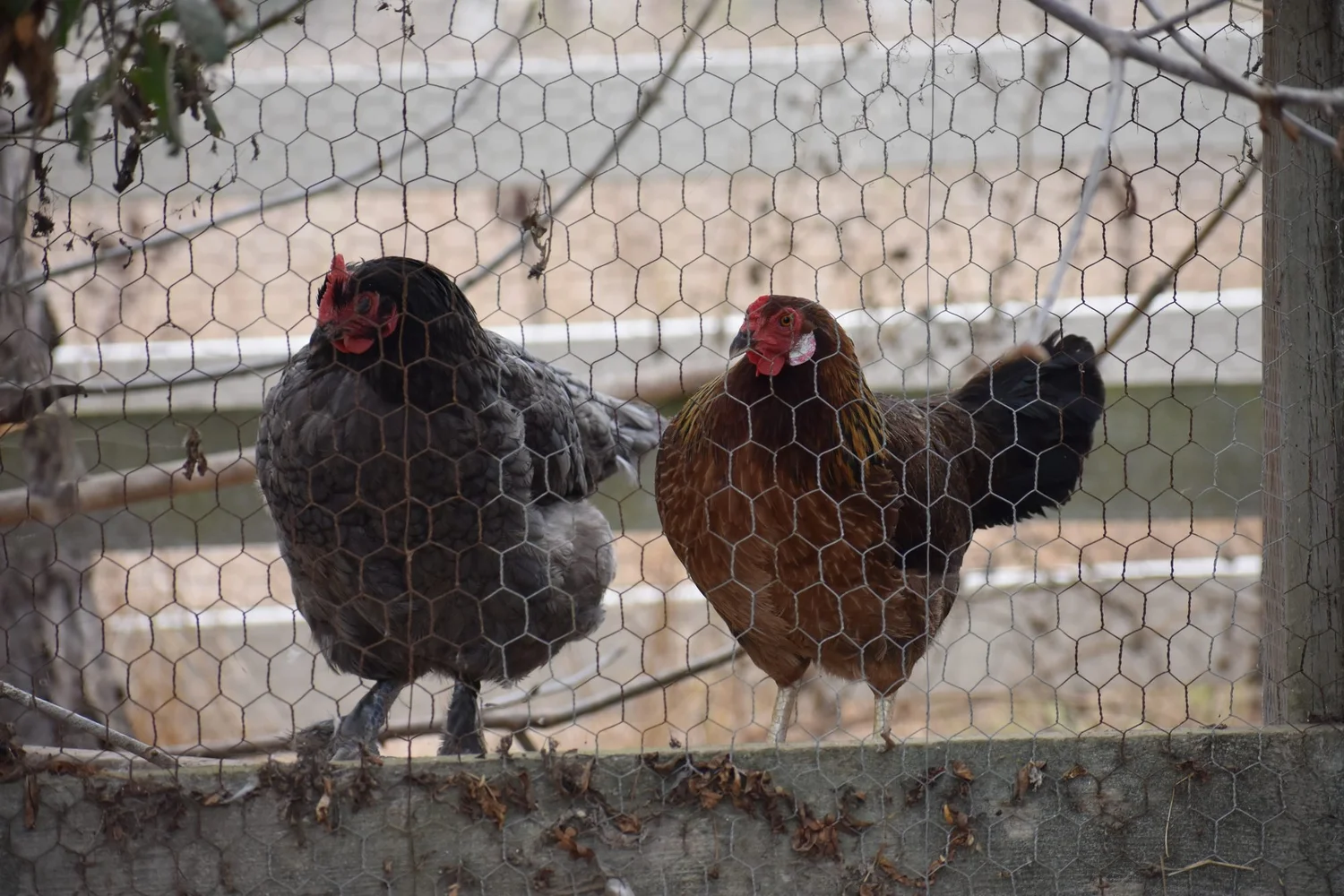
Your coop and run are the primary defense. Every surface must be covered with half-inch hardware cloth, not chicken wire. Chicken wire keeps chickens in but does not keep predators out. Raccoons can tear through it, and weasels can slip through its gaps. Half-inch hardware cloth, secured with screws and washers (not staples, which raccoons can pull), is the minimum standard for predator resistance.
The run should have a buried apron or skirt of hardware cloth extending at least 18 inches outward from the base to prevent digging predators from tunneling under. An overhead cover of hardware cloth or welded wire prevents climbing predators and hawks from entering from above. For detailed specifications on hardware and materials, see Hardware Cloth, Coop Locks, and Night Safety.
Management Practices
The best-built coop in the world fails if you forget to close the door. Consistent management is the most important layer of defense. Lock birds in the coop every evening before dusk. Check all latches and doors. Collect eggs daily so they do not attract predators. Clean up spilled feed. Secure feed storage to prevent rodents, which attract secondary predators.
An automatic coop door is one of the best investments you can make. These solar or battery-powered doors close at a set time or at dusk using a light sensor, ensuring your birds are locked in even if you are running late. For a full guide to run design that incorporates these principles, see Designing a Predator-Proof Run for Your Garden Flock.
Deterrents
Motion-activated lights and sprinklers deter opportunistic predators but should never be relied upon as a primary defense. A determined raccoon will ignore a light after a few exposures. Guardian animals (dogs, geese, llamas) provide active deterrence but are most effective as supplements to strong physical barriers, not replacements.
My Toulouse goose serves as both an alarm system and a deterrent. She challenges anything that approaches the run, and her size and aggressive posture have discouraged smaller predators. However, I would never trust her safety to her own aggression alone. The hardware cloth and locks are what actually keep her safe at night.
How Should You Respond When You Suspect Predator Activity?
If you see signs of predator scouting or experience an actual attack, act immediately. The same predator will return, typically within 24 to 48 hours. For a complete emergency response guide, including injured bird first aid and post-attack security upgrades, see What to Do When a Predator Gets In.
In the short term, take these steps. Inspect your entire coop and run perimeter for any weakness the predator may have tested. Reinforce any gaps or weak points immediately. Set up a trail camera to identify the predator species if you have not already. Lock birds in earlier and let them out later to reduce exposure during crepuscular hours. And keep your birds in the fully enclosed run (no free-ranging) until you have identified and addressed the threat.
Do not attempt to trap or relocate predators without checking California regulations. The California Department of Fish and Wildlife regulates trapping, and most predator species have specific legal protections. In many cases, improving your defenses is more effective and legally straightforward than trying to remove the predator.
Frequently Asked Questions
What is the most dangerous predator for backyard chickens in Santa Cruz County?
Raccoons cause the most backyard poultry losses in Santa Cruz County due to their intelligence, dexterity, and comfort in human environments. They can open simple latches, tear through chicken wire, and reach through gaps to kill birds without fully entering an enclosure. Raccoons are a common backyard flock predator, and Poultry Extension notes that a bird found dead and uneaten but missing its head points to a raccoon, a hawk, or an owl.
Can chicken wire protect my flock from predators?
No. Chicken wire is designed to contain chickens, not to exclude predators. Raccoons can tear through standard chicken wire with their hands, and weasels can fit through the gaps. Half-inch hardware cloth secured with screws and washers is the minimum standard for predator-resistant enclosures. Chicken wire is not enough on its own: the eXtension poultry program notes that least weasels can squeeze through holes as small as a quarter inch and typically get through chicken wire, and it recommends burying hardware cloth at least 12 inches deep to stop diggers.
What is a ringtail cat and should I worry about it?
The ringtail (Bassariscus astutus) is a raccoon relative native to the Santa Cruz Mountains, classified as a Fully Protected species in California under the Fish and Game Code. They are nocturnal, arboreal, and can climb vertical surfaces and squeeze through small openings. In its ringtail life history account, the California Department of Fish and Wildlife describes the ringtail as a widely distributed permanent resident of riparian habitats and of brush stands in most forest and shrub habitats at low to middle elevations, which is a fair description of the Santa Cruz Mountains. If you live in foothill or mountain areas of Santa Cruz County, ringtails are a genuine threat to poultry, especially small breeds and young birds.
Do automatic coop doors really help prevent predator attacks?
Automatic coop doors are one of the most effective single investments for predator prevention because they eliminate human error. A door programmed to close at dusk ensures your birds are locked in even when you are late, distracted, or away. Choose a model with a strong closing mechanism that a raccoon cannot pry open, and test it regularly. Pair it with predator-proof latches on any secondary access points.
Will a rooster protect my hens from predators?
A rooster provides vigilant predator detection and will alert the flock to danger, giving hens time to seek cover. Some roosters will physically confront smaller predators like hawks. However, no rooster can defend against a determined raccoon, fox, or coyote. A rooster is a valuable alarm system and can reduce hawk losses during free-range time, but he is not a substitute for proper physical barriers and secure housing.
Is it legal to trap or kill predators threatening my flock in California?
California law regulates predator management through the Department of Fish and Wildlife. Some species can be taken by property owners when actively depredating livestock under specific conditions, while others are fully protected. Hawks and all raptors are federally protected under the Migratory Bird Treaty Act. Before taking any action against a predator, contact CDFW or USDA Wildlife Services for current regulations applicable to your situation and species.
How do I know which predator attacked my flock?
Different predators leave distinct evidence. Raccoons often kill through wire, leaving birds with head or leg injuries near fence lines. Foxes carry prey away entirely, leaving only a scattering of feathers. Weasels kill multiple birds with small puncture wounds at the skull base. Hawks pluck feathers and eat on site. A trail camera is the most reliable identification tool, and understanding the specific predator helps you target your defensive improvements effectively.
Does a motion-activated light keep predators away?
Motion-activated lights deter some opportunistic predators temporarily but should never be your primary defense. Most predators, especially raccoons, habituate to lights within a few exposures and will ignore them. Lights work best as one layer in a multi-layered defense system that includes hardware cloth barriers, secure locks, and consistent management practices. Pair lights with motion-activated sprinklers for stronger deterrent effect.
How do I protect my chickens from predators like raccoons and hawks?
Cover every opening with half-inch hardware cloth rather than chicken wire, which raccoons can tear or reach through; the University of California notes raccoons are dexterous enough to work simple latches, so use two-step or locking closures. Bury a wire apron a foot out to stop diggers, and roof or net the run against hawks, which hunt our Santa Cruz hills by day. Close birds in a solid coop before dusk.
