

Can I Grow Tomatoes in the Fog Belt?
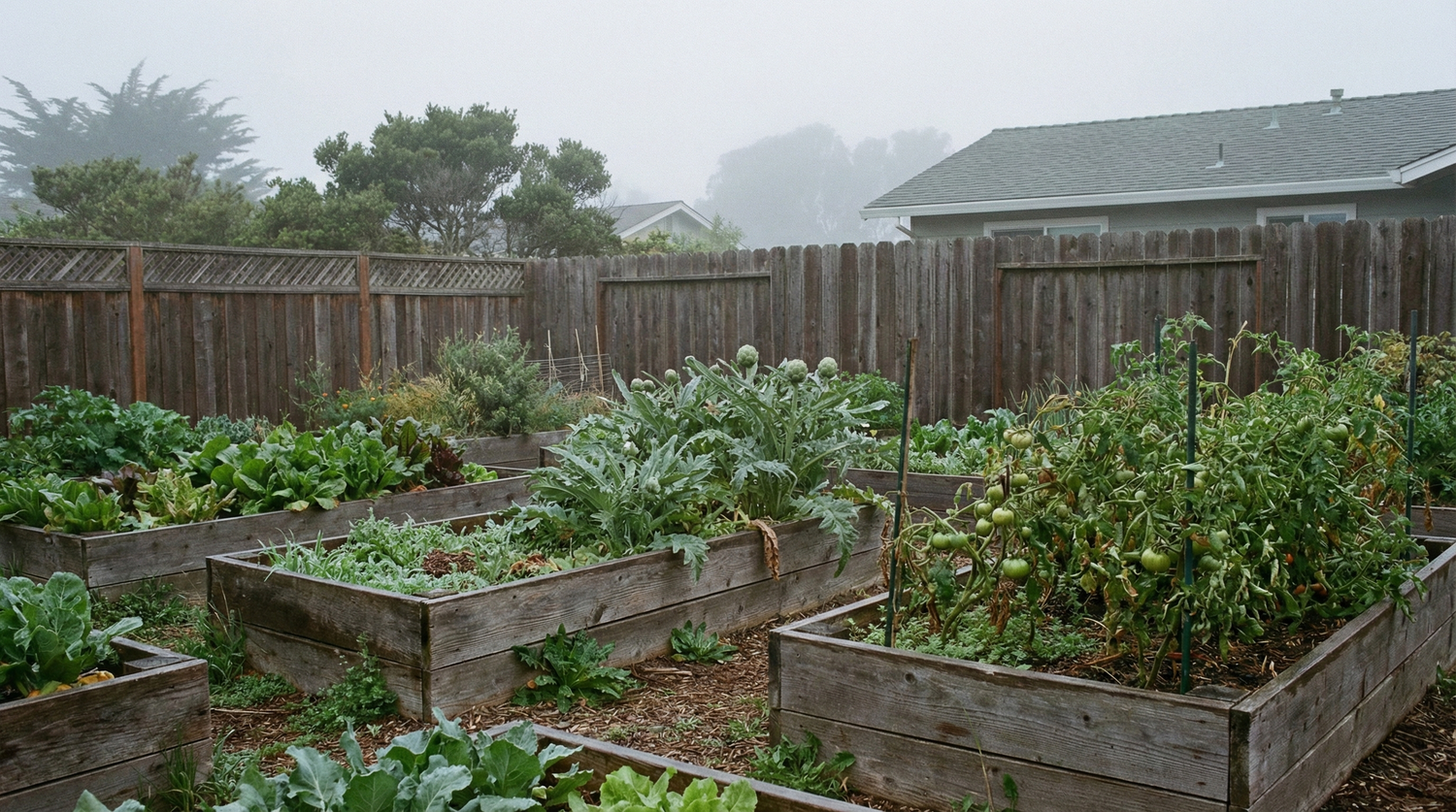
A tomato sandwich is still a reasonable ambition when the morning starts gray. Yes, you can grow tomatoes in the Santa Cruz fog belt. Give an early, coast-suited variety your sunniest sheltered spot, and let local temperatures set the planting date. A bright afternoon corner can offer a very different growing season from an exposed bed a few yards away.
Choose for ripening, then for flavor
The UC Master Gardeners of San Mateo and San Francisco Counties recommend shorter days to maturity for coastal gardens. Their list includes Sun Gold cherry tomatoes, Stupice and Bush Early Girl. Those give you useful starting points for a bowl of snacks or a small slicing tomato.
Days to maturity usually count from transplanting to the first ripe fruit. Treat the number as a comparison between varieties; a cool stretch can lengthen the wait. If Sun Sugar or Sweet 100 catches your eye at the nursery, ask how it has performed in gardens with similar afternoon sun and wind exposure.
Large tomatoes deserve a little more thought, rather than an automatic rejection. The same UC coastal list includes Big Beef and Pruden's Purple, as well as the fog-adapted San Francisco Sunrise. If you want to try Brandywine or Cherokee Purple, give an early variety space alongside it so your whole tomato season doesn't depend on one experiment.
Find the warmth your garden already offers
Look for a site with at least six hours of direct sun and protection from persistent wind. A sunny south-facing wall or fence can add warmth, a technique also described in UC's tomato-growing guidance. Leave room to support the plant and reach it for watering and harvest.
A raised bed or large container may help you use that favorable spot. UC's San Francisco container guide discusses coast-suited varieties, drainage and support. Check moisture regularly in pots, which have a smaller water reserve than garden ground.
Watch the actual site through several days before deciding. Our guides to finding your microclimate and June Gloom in the garden can help you make sense of the pattern. Westside, Live Oak and Aptos addresses each contain a range of exposures.
Help young plants through cool weather
Wait for settled warmth before transplanting. A cloche or water-wall season extender can shelter a young plant during cool spells. UC's cloche guidance explains why ventilation matters: trapped heat can damage a seedling once the sun comes out. Check temperatures inside, ventilate and remove the cover as conditions warm.
Once plants are growing, keep them supported and water the root zone consistently. If fruit is taking its time, read why coastal tomatoes stay green. For the rest of the bed, our tomato companion-plant guide considers neighboring crops.
This week: note when direct sun reaches and leaves your proposed tomato spot. Take that information shopping with one early variety in mind. Browse Your Garden Toolkit for planning resources, and use our coastal tomato-growing guide to plan planting and care.
