

Your May Garden Checklist for Santa Cruz County
A few of the product links in this guide are affiliate links. If you buy through one, Ambitious Harvest may earn a small commission at no extra cost to you, which helps keep these guides free. We only point to gear we would use in our own Santa Cruz garden. As an Amazon Associate, we earn from qualifying purchases. Read our full disclosure.
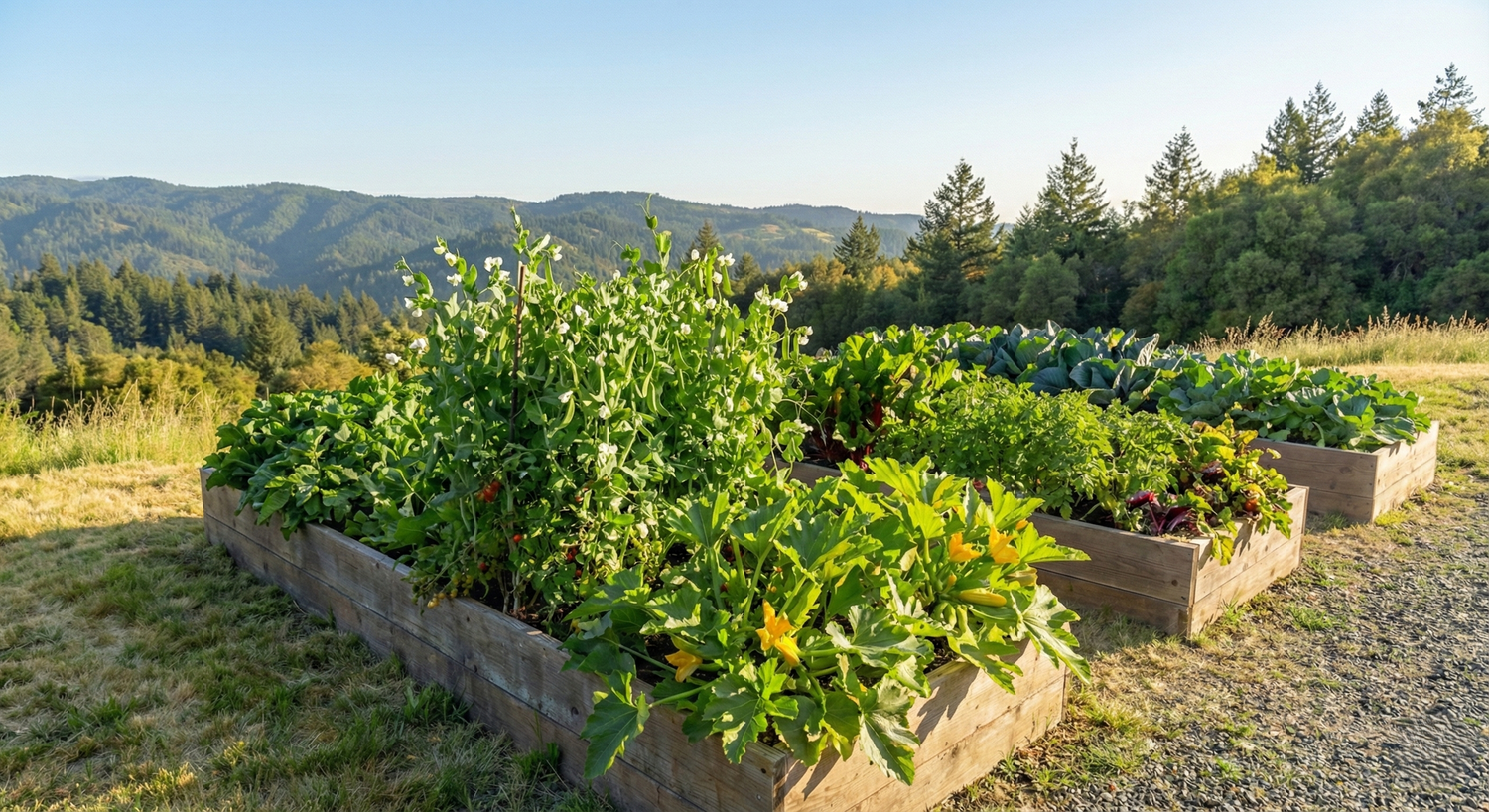
May marks the beginning of the dry season in Santa Cruz County, and your garden shifts from rain-fed to irrigation-dependent. Average rainfall drops to under half an inch, daytime highs reach the low 70s along the coast and mid-80s in the Pajaro Valley, and the garden enters its most productive growth phase. UC ANR puts the best conditions for warm-season crops at 65 to 80 degree soil and 65 to 95 degree air, and along our coast those numbers usually arrive in May.
What to Plant in May
This is the last good window for transplanting tomatoes, peppers, and eggplant if you have not done so already. Coastal gardeners who waited for warmer soil can plant now with good results.
Direct-sow or transplant summer squash, cucumbers, and melons in all zones. Pumpkins (Small Sugar, Jack O' Lantern) can go in now for a fall harvest. Succession-sow bush beans (Contender, Royal Burgundy) and corn. Plant basil, cilantro (slow-bolt varieties like Calypso), and summer herbs in full sun.
Coastal gardeners: this is your month for planting winter squash (Butternut, Delicata) and dry beans (Cannellini, Black Turtle). They need the full length of our growing season to mature.
Mountain gardeners in Summit and Boulder Creek can now safely transplant warm-season crops outdoors. Use black plastic mulch and row cover for the first two weeks to buffer cool nights.
What to Harvest in May
Strawberries are at peak production. Pick every other day to prevent overripe fruit from attracting pests. Spring peas finish their run as temperatures climb. Harvest the last of them and pull the plants (leave the nitrogen-fixing roots in the soil).
Fava beans are fully mature. Shell and blanch them, or let pods dry on the plant for dry storage. Garlic planted last fall begins to show browning lower leaves, but it is not quite ready. Wait until June for the best bulb size.
Spring lettuce bolts quickly now. Harvest full heads and succession-sow heat-tolerant varieties (Jericho, Muir) in afternoon shade.
What to Maintain and Protect
Turn on your irrigation system if you have not already. Check every emitter and fix leaks before plants are stressed. Deep, infrequent watering (two to three times per week for most vegetables) encourages deep root growth. Shallow daily watering creates shallow, vulnerable roots.
Pinch suckers on indeterminate tomato plants when they are small (under 3 inches). This directs energy to fruit production and improves air circulation. UC Master Gardeners recommend removing all suckers below the first flower cluster.
Fertilize citrus, avocado, and fruit trees. Container plants need more frequent feeding since nutrients wash through faster. Feed container citrus monthly with a citrus-specific fertilizer through September.
Refresh mulch to the full 3-inch depth. As the dry season intensifies, mulch is your best tool for conserving water.
What to Watch Out For
Tomato hornworms (the fat green caterpillars with a horn on their tail end) begin appearing on tomato and pepper plants. Hand-pick them in the evening. If you see white cocoons on a hornworm, leave it alone: those are parasitic braconid wasp eggs, and the wasps are your allies.
Spider mites thrive in hot, dry, dusty conditions and attack beans, tomatoes, and strawberries. Look for stippled, yellowing leaves and fine webbing on the undersides. A strong spray of water every few days disrupts their colonies. UC IPM recommends avoiding pesticides, which often make mite problems worse by killing natural predators.
Squash vine borers are not common in our area, but squash bugs are. Check the undersides of squash leaves for clusters of copper-colored eggs and scrape them off.
This month: Set your irrigation schedule and verify every zone is working properly. One missed emitter in May means a dead plant by July.
For more help with summer watering, check out our free California Irrigation Planning Guide at Your Garden Toolkit.
Keep Reading
- How to Water Your California Vegetable Garden
- Growing Summer Squash in Santa Cruz County
- Tomato Pest and Disease Guide for California
- When to Harvest Garlic in California
Frequently Asked Questions
What can I still plant in Santa Cruz in May?
May is your last reliable window to transplant tomatoes, peppers, and eggplant, and a good time to direct-sow summer squash, cucumbers, melons, and beans. You can also plant basil and other heat-tolerant herbs.
How should I water as the dry season begins?
Switch to deep, infrequent watering, generally two to three times per week for most vegetables, to encourage deep root growth. Set your irrigation correctly now, because one missed emitter in May can mean a dead plant by July.
Which pests should I watch for this month?
Keep an eye out for tomato hornworms (hand-pick them), spider mites (a strong water spray disrupts colonies), and squash bugs (remove their egg clusters). Protect beneficial insects like parasitic wasps while you do.
