

How Gardening Shapes Kids' Eating Habits: What the Research Shows (and How to Make It Work)
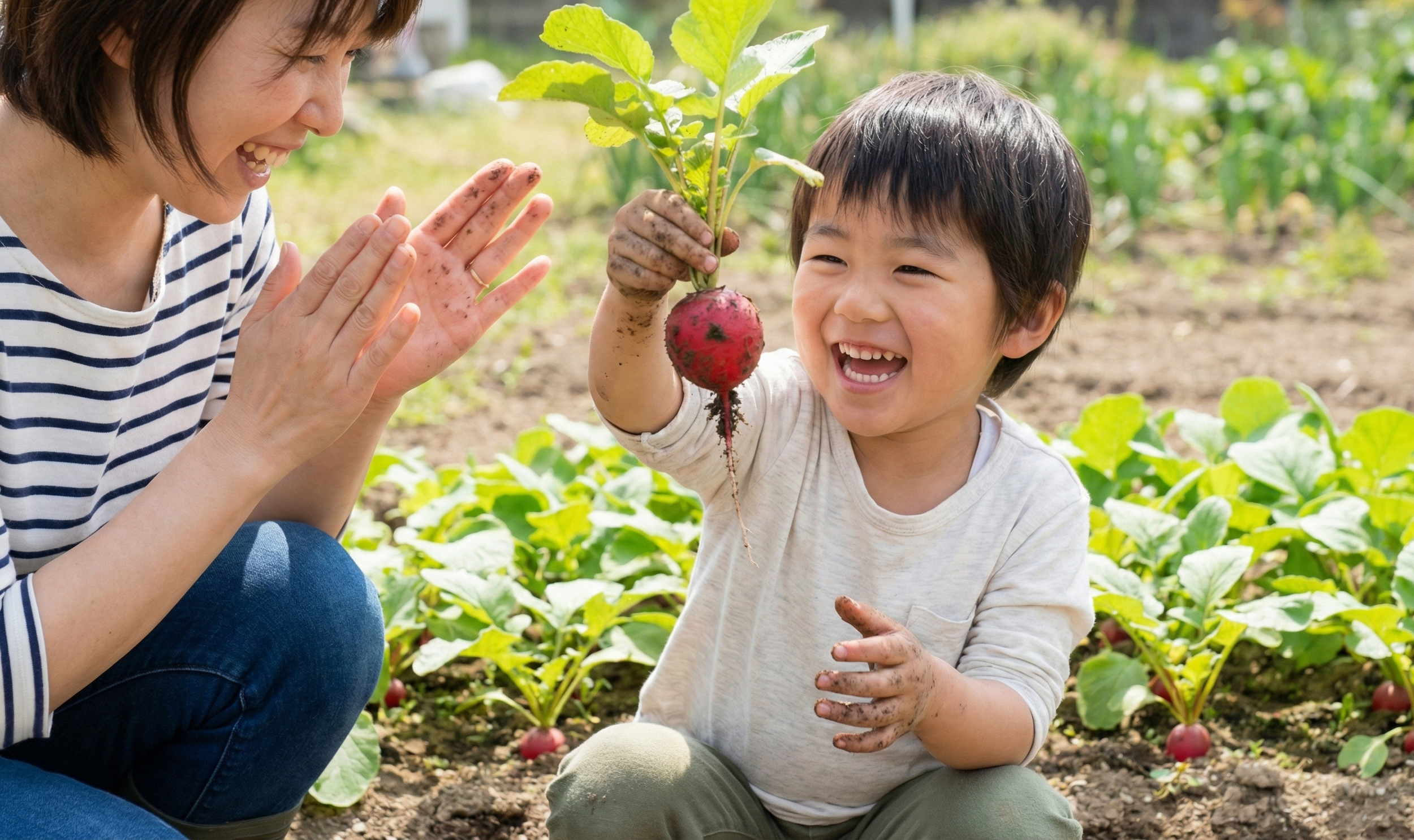
If you've ever watched a child who "hates vegetables" enthusiastically munch on a sugar snap pea they just picked, you've seen this phenomenon in action. Kids who help grow food are dramatically more likely to taste it, enjoy it, and ask for more.
This isn't just anecdotal. A growing body of research confirms what gardening parents have long suspected: getting kids involved in growing food genuinely changes their relationship with fruits and vegetables. And here in Santa Cruz County, where our mild climate lets us garden year-round, families have an exceptional opportunity to build these habits across all four seasons.
Why Gardening Changes What Kids Eat
The connection between gardening and healthier eating isn't complicated, but it is powerful. When children have a direct role in planting, caring for, and harvesting crops, several things shift in their relationship with food.
Familiarity replaces fear. Many kids reject vegetables simply because they're unfamiliar. A pepper is just a weird thing on a plate. But a pepper that a child watched grow from a tiny flower, checked on daily, and finally picked when it turned red? That's an entirely different experience. The vegetable has a story, and the child is part of it.
Ownership creates investment. There's a reason "I grew this" carries so much weight. When kids feel ownership over their food, they're more motivated to try it. This is their accomplishment, and tasting it is part of celebrating that success.
Curiosity overtakes resistance. Gardens are full of questions. Why is this tomato yellow? What happens if we pick it now versus next week? Can we eat the flowers? This natural curiosity extends to tasting, especially when trying food is framed as an experiment rather than an obligation.
Repetition normalizes vegetables. Kids who garden encounter vegetables constantly, in various stages of growth, in different preparations. This repeated, low-pressure exposure is exactly what child feeding experts recommend for expanding food acceptance.
What the Research Shows
The link between gardening and improved eating habits has been studied extensively, and the findings are remarkably consistent.
A systematic review of gardening interventions examined multiple studies on children and youth who participated in garden programs. The researchers found that most studies reported increased fruit and vegetable intake, better nutrition knowledge, and more positive attitudes toward produce among kids who gardened compared to those who didn't.
The Community Preventive Services Task Force, which evaluates public health interventions, concluded that gardening programs can effectively increase vegetable consumption among children, particularly when gardening is combined with nutrition education.
A randomized controlled trial in childcare settings found that preschoolers who participated in a garden intervention ate more fruits and vegetables at snack time and could identify more types of produce than children in the control group. The hands-on experience translated directly to the lunch table.
Research summarized by Michigan State University Extension describes how garden education increases vegetable consumption, nutrition knowledge, and willingness to try new foods among young people. The effects appear across different ages and program types.
The takeaway is clear: gardening works. Not as a magic solution that instantly transforms picky eaters, but as a consistent, evidence-backed way to shift kids' relationships with healthy food over time.
How Much Difference Does Gardening Make?
To put some numbers to this, research on garden-enhanced nutrition programs shows meaningful differences in daily fruit and vegetable consumption. Studies compiled by the School Nutrition Association found that children in garden programs increased their fruit intake by roughly one additional serving per day and their vegetable intake by about 1.5 additional servings per day compared to children who only received classroom nutrition education.
That's a substantial difference, especially considering how difficult it can be to shift children's eating habits through other approaches.
Garden Activities That Support Healthy Eating
Not all garden involvement is equal when it comes to building eating habits. Certain activities create stronger connections between growing and eating.
| Garden activity | What kids do | How it supports healthy eating |
|---|---|---|
| Planting and labeling | Choose varieties, sow seeds, and create simple plant markers | Builds familiarity with vegetable names and how foods look at different growth stages |
| Daily care and observation | Water, weed, and watch for changes | Increases curiosity and a sense of ownership over the food they help grow |
| Harvesting | Pick ripe produce directly from plants | Makes tasting feel natural and celebratory rather than obligatory |
| Garden-to-table preparation | Wash, prep, and eat simple snacks from the harvest | Creates a direct link between “I grew this” and “I eat this” |
The key is involvement across the entire cycle, not just the fun parts. Kids who only show up for harvest miss the investment that makes eating meaningful. Kids who only plant but never taste miss the payoff that reinforces the whole process.
Research on garden-based learning confirms that programs incorporating planting, caring, harvesting, and tasting show stronger effects on eating behavior than those focusing on just one or two activities.
Making It Work at Home: Practical Strategies
You don't need a school garden program to capture these benefits. Home gardens can be even more effective because the connection between growing and eating happens naturally, without the logistical challenges of feeding 30 kids from one raised bed.
Give kids genuine choices. Let them pick which varieties to grow. Rainbow carrots, purple beans, yellow cherry tomatoes, and other colorful options are especially appealing. When kids choose what goes in the ground, they're more invested in what comes out.
Renee's Garden Seeds (based right here in Felton) specifically recommends involving children in variety selection and offers kid-friendly seed collections designed for small hands and short attention spans.
Link gardening directly with tasting. Make it completely normal that new garden produce gets tasted, even if just a tiny bite. The best moment is often right at harvest, when excitement is high and the food is at its freshest. A cherry tomato eaten warm from the vine tastes nothing like one from the refrigerator.
Practical guides for growing with kids emphasize this garden-to-mouth connection as the single most important factor in building positive food associations.
Involve kids in simple preparation. Washing radishes, tearing lettuce, snipping herbs with child-safe scissors, or mixing cherry tomatoes into pasta all help kids "own" what they're about to eat. The more they participate in getting food from garden to plate, the more likely they are to taste it.
Michigan State University's guidance on gardening with young children highlights food preparation as a key bridge between growing and eating, particularly for children under six.
Keep pressure low. The goal is positive associations, not clean plates. Offer tastes without requiring them. Celebrate trying something new regardless of whether the child likes it. Research on child feeding consistently shows that pressure backfires, while repeated low-pressure exposure gradually expands acceptance.
Be patient with the timeline. Don't expect one season of gardening to transform a picky eater. The research shows cumulative effects over time. Think of gardening as one consistent input that, season after season, gradually shifts your child's comfort with and interest in vegetables.
Best Crops for Building Eating Habits in Santa Cruz County
Certain crops work especially well for the garden-to-table connection, and our local growing conditions make many of them easy to succeed with.
Sugar snap peas and snow peas. Sweet, crunchy, and ready to eat straight from the vine. Plant in fall (October through November) for a late winter and spring harvest, or in very early spring for a late spring crop before the heat arrives. Coastal gardens can grow peas longer into the season than inland areas.
Cherry tomatoes. The classic gateway vegetable. (See our complete tomato growing guide.) Kids can pick and eat them without any preparation at all. Sungold, Sweet 100, and Black Cherry are reliable producers here. Wait until soil warms in May (coastal) or late April (inland) to plant.
Strawberries. Technically a fruit, but the same principles apply. Kids love checking for ripe berries, and our climate supports nearly year-round production with the right varieties. Plant in fall for the strongest spring harvest.
Carrots. Pulling carrots from the ground is genuinely exciting for kids. Rainbow varieties add visual appeal. Direct sow in early spring or fall; our mild winters allow fall-planted carrots to size up slowly for spring harvest.
Snap beans. Fast-growing and satisfying to pick. Bush varieties produce quickly and don't require trellising. Plant after last frost (typically March inland, April at the coast) and again in late summer for fall harvest.
Cucumbers. Prolific producers that kids enjoy finding under the leaves. Lemon cucumbers and small pickling types are especially kid-friendly sizes. Plant in late spring when soil is warm.
Herbs (especially basil and mint). Letting kids add fresh herbs to food gives them a role at the table without requiring them to eat an entire vegetable serving. Basil grows enthusiastically in our summer warmth; mint thrives almost anywhere but should be contained.
From Soil to Snack: A Simple Framework
Think of the garden-to-eating connection as a cycle with four stages:
Plant , Kids choose varieties and put seeds or starts in the ground
Care , Regular watering, weeding, and observation build investment
Harvest , The exciting payoff that kids look forward to
Taste , Low-pressure sampling that completes the cycle
This framework, adapted from UC Davis garden education resources, can guide how you structure garden time. Try to touch each stage regularly rather than concentrating all the activity in planting season.
Local Resources for Garden-Based Eating Education
Santa Cruz County has excellent resources for families wanting to deepen the connection between gardening and healthy eating.
UCSC Center for Agroecology runs the certified-organic UCSC Farm and the Alan Chadwick Garden, both open to the public daily from 8am to 6pm with no admission fee. Their plant sales are excellent sources for locally-adapted vegetable starts.
Life Lab Science Program (on the UCSC campus) pioneered garden-based education and offers resources for bringing their curriculum approaches home. Their "Garden Song" and "Eating from the Garden" programs specifically focus on the food connection.
Santa Cruz County 4-H includes gardening projects that combine growing with nutrition education. Programs are available throughout the county and welcome kids from various backgrounds.
School gardens at many Santa Cruz County schools (including those supported by the Santa Cruz City Schools Foundation's garden program) use similar approaches. If your child's school has a garden, ask how you can reinforce at home what they're learning at school.
Local nurseries can help you select kid-friendly varieties. San Lorenzo Garden Center, Sierra Azul Nursery, and Dig Gardens are three local nurseries worth asking about easy starts for a children's garden.
Managing Expectations
While the research is encouraging, it's important to have realistic expectations.
Gardening is not a quick fix for picky eating. It's one positive influence among many, and it works gradually over time. Some children will eagerly eat everything they grow; others will still be hesitant. Both responses are normal.
The goal isn't to force vegetables but to create conditions where trying them feels natural and positive. Some children need many, many exposures to a food before they accept it. Gardening provides those exposures in a low-pressure way.
Focus on the process rather than outcomes. A child who grows tomatoes, picks tomatoes, helps prepare tomatoes, and then decides they don't like tomatoes has still gained valuable experience. Their comfort with tomatoes has likely increased even if their consumption hasn't, and that comfort may translate to acceptance later.
And remember that modeling matters enormously. If you're eating and enjoying garden vegetables, your children are watching. Your enthusiasm is contagious in ways that pressure never is.
Frequently Asked Questions About Kids, Gardening, and Eating Habits
At what age can children start gardening in ways that affect their eating habits?
Children as young as two can participate in simple garden tasks like watering, digging, and picking ripe produce. Research shows positive effects on eating attitudes even in preschool-aged children. The key is matching tasks to developmental abilities. Toddlers can water and harvest; older children can take on planting and more complex care. Start whenever your child shows interest, and keep initial sessions short (10 to 15 minutes) to maintain positive associations.
My child helps in the garden but still won't eat vegetables. What am I doing wrong?
Nothing, necessarily. Some children need many exposures over extended periods before accepting new foods. Continue gardening without making eating the explicit goal. Focus on the experience itself, offer tastes without pressure, and trust that repeated positive exposure is building comfort even when consumption doesn't immediately follow. Research shows effects are cumulative over time rather than immediate.
Which vegetables are most likely to get picky eaters to try them?
Sweet, mild vegetables tend to have the highest acceptance rates. Cherry tomatoes, sugar snap peas, carrots, and cucumbers are reliably popular. Letting children pick unusual varieties (purple carrots, yellow tomatoes, rainbow chard) can spark curiosity. In Santa Cruz County, our mild climate makes sweet peas and strawberries especially easy gateway crops because they taste noticeably better fresh from the garden than from the store.
Does container gardening work as well as in-ground gardens for building eating habits?
Yes. The research on garden-based nutrition focuses on the growing and harvesting experience, not the garden's size or format. Container gardens on patios, balconies, or small yards provide the same hands-on involvement that builds food connections. Cherry tomatoes, herbs, lettuce, and strawberries all grow well in containers and are excellent choices for building positive eating associations.
How much time in the garden is needed to see effects on eating?
Most research involves programs with regular garden sessions over several months. For home gardens, consistent involvement matters more than duration. Brief daily check-ins (five to ten minutes of watering, observing, and harvesting) may be more effective than occasional long sessions. The goal is making garden time a normal, regular part of life rather than a special event.
Should I require my child to taste everything they grow?
No. Pressure consistently backfires in child feeding research. Instead, make tasting normal and expected while keeping it low-pressure. "Let's see how these taste!" is different from "You have to eat this because you grew it." Offer opportunities to taste, model enthusiasm yourself, and accept that some days your child will try things and some days they won't.
Can gardening help with more serious feeding challenges or eating disorders?
Gardening can be one component of a healthy relationship with food, but serious feeding challenges typically require professional support. If your child has significant food restrictions, anxiety around eating, or symptoms of an eating disorder, work with a pediatrician or feeding specialist. Gardening is a complement to, not a replacement for, appropriate professional care.
What if I don't have space for a vegetable garden?
Even a single pot of herbs on a windowsill provides opportunities for the grow-care-harvest-taste cycle. Community garden plots are available in several Santa Cruz County locations if you want more space than your home allows. School gardens, if your child attends a school with one, also provide gardening experiences that can be reinforced through conversations and cooking at home.
How do I get my kids interested in gardening and eating vegetables?
Give them ownership. UC ANR notes that children who help grow vegetables are more likely to eat them, so let each child pick a plant that is theirs to water and harvest. A simple watering chart on the fridge turns care into a proud routine, and picking a cherry tomato they raised themselves often beats any dinner-table negotiation. Start with fast, tasty crops and let their curiosity lead.
Free Gardening with Kids Resources
Seasonal Planting Calendar , Month-by-month guide to what to plant in Santa Cruz County, so you can plan kid-friendly crops year-round.
Seed Starting Guide , Step-by-step instructions for starting seeds indoors, a great rainy-day activity that lets kids watch the entire growing process from the very beginning.
Companion Planting Guide (also available as our detailed online guide) , Learn which vegetables grow well together, helpful for planning a diverse garden that offers multiple crops for tasting.
Garden Troubleshooting Guide , When things go wrong in the garden, this guide helps you diagnose and address common problems, keeping the growing experience positive.
How Do You Grow Healthy Eaters One Season at a Time?
The research is clear: kids who garden eat more fruits and vegetables. But perhaps more importantly, they develop a fundamentally different relationship with food, one built on familiarity, curiosity, and positive experiences rather than rules and requirements.
Here in Santa Cruz County, our year-round growing season means you can maintain this connection across all four seasons. Fall peas lead to winter greens lead to spring strawberries lead to summer tomatoes, with something to plant, care for, harvest, and taste in every month of the year.
Start small. A few pots of cherry tomatoes. A row of snap peas along a fence. A strawberry patch that becomes the "kids' corner" of the garden. Let your children lead where they show interest, and don't worry about perfect execution or maximum yields.
The goal isn't a picture-perfect garden or children who eat every vegetable with enthusiasm. The goal is building positive associations that accumulate over time, creating a foundation for healthy eating that lasts well beyond childhood.
Plant something this week. Let your kids help. And see what grows.
