

Grafted vs. Own-Root Fruit Trees: When It Matters
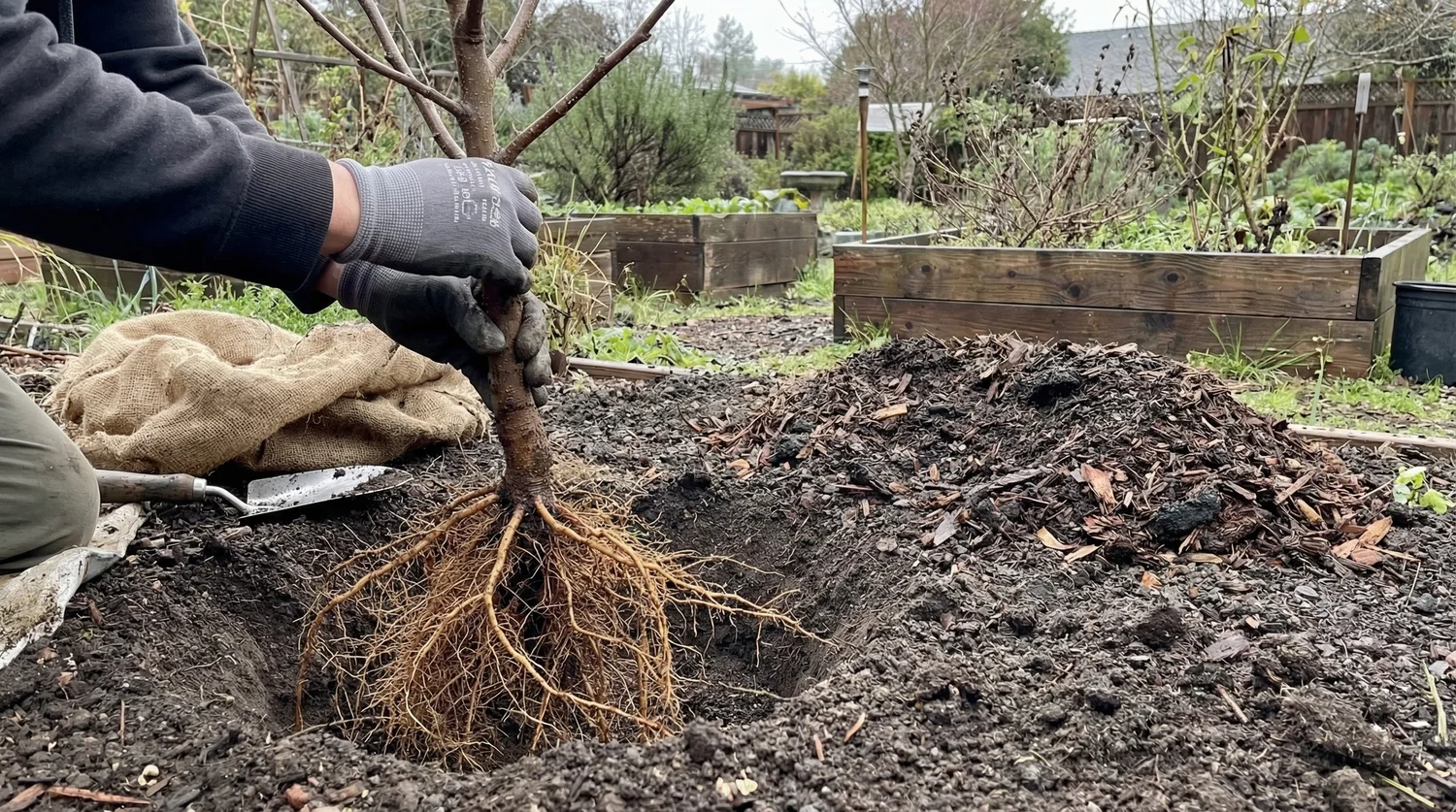
For most home fruit trees in Santa Cruz, grafted trees are the better choice. Grafting gives you a proven, named variety on top of a rootstock selected for disease resistance, size control, and soil adaptability. Grafted fruit trees on dwarfing or semi-dwarfing rootstocks typically bear fruit one to three years sooner than own-root seedlings, a trait horticulturists call precocity and are better adapted to heavy clay soils common in our area. Own-root trees have their place (especially for figs and some stone fruits), but grafted trees give you more predictable results.
When to Choose Grafted Trees
Grafting matters most for apples, pears, citrus, cherries, and most stone fruits (peaches, plums, apricots). These trees benefit enormously from carefully selected rootstocks. For example, an apple on M111 rootstock tolerates our heavy clay soil far better than an own-root apple would. A citrus tree on trifoliate orange rootstock gains cold hardiness and phytophthora resistance that the scion variety lacks on its own.
Grafted trees also give you size control, which is critical in smaller Santa Cruz yards. A semi-dwarf apple on M26 or G11 rootstock stays manageable at 10-12 feet, while an own-root apple seedling can grow to 30 feet or more. For any fruit tree where you want a specific named variety (Fuji apple, Blenheim apricot, Santa Rosa plum), grafting is how you guarantee you get that exact variety. Seedlings are a genetic lottery.
When to Choose Own-Root Trees
Some fruit trees do perfectly well on their own roots and do not benefit from grafting. Figs are the best example: varieties like Brown Turkey, Black Mission, and Kadota root easily from cuttings, produce fruit quickly, and thrive in Santa Cruz without any rootstock advantage. Pomegranates, olives, and mulberries are similarly easy to grow from cuttings or on their own roots.
Own-root trees also have one major long-term advantage: longevity. A fig tree on its own roots can live for a century or more. Some grafted trees develop graft incompatibility over time, where the union between rootstock and scion weakens. If you are planting a legacy tree that you want to last for generations, an own-root species like fig or olive is the better bet. You can also propagate own-root trees easily by taking cuttings, which is a nice way to share with neighbors.
The Bottom Line for Santa Cruz Gardeners
Buy grafted trees for apples, pears, citrus, and stone fruits. The rootstock benefits (disease resistance, size control, faster fruiting) are too significant to skip. For figs, pomegranates, and olives, own-root trees are perfectly fine and often preferred. When buying grafted trees, ask about the rootstock, not just the variety. For our clay soils, look for rootstocks labeled as tolerant of heavy or wet soil. And always make sure the graft union stays above the soil line when planting.
This week: Check the graft union on any fruit trees you already have. It is the bumpy knob near the base of the trunk. Make sure soil or mulch has not piled up above it, which can cause the scion to root and bypass the rootstock's benefits.
For more on choosing and planting fruit trees, check out our free Fruit Tree Guide in Your Garden Toolkit.
Frequently Asked Questions
Are grafted or own-root fruit trees better for most home gardens?
For most Santa Cruz home fruit trees, grafted trees are the better choice because the rootstock adds disease resistance, size control, and soil adaptability, and grafted trees on dwarfing rootstocks fruit 1 to 3 years sooner than own-root seedlings.
Which fruit trees benefit most from grafting?
Grafting matters most for apples, pears, citrus, cherries, and most stone fruits. For example, an apple on M111 rootstock tolerates heavy clay better, and citrus on trifoliate orange rootstock gains cold hardiness and phytophthora resistance.
Are there fruit trees that do fine on their own roots?
Yes. Figs such as Brown Turkey, Black Mission, and Kadota root easily from cuttings and thrive without a rootstock advantage, and pomegranates, olives, and mulberries are similarly easy on their own roots, with greater longevity.
What should I check when planting a grafted tree?
Always keep the graft union, the bumpy knob near the base of the trunk, above the soil line, and make sure soil or mulch does not pile up above it, which can cause the scion to root and bypass the rootstock's benefits.
Keep Reading
- Bare-Root vs. Container Fruit Trees: Which Is Better?
- Best Low-Chill Fruit Trees for Santa Cruz
- How to Grow Fig Trees in Santa Cruz County
- Understanding Rootstocks for Home Orchards
