

Best Apple Varieties for Santa Cruz Microclimates
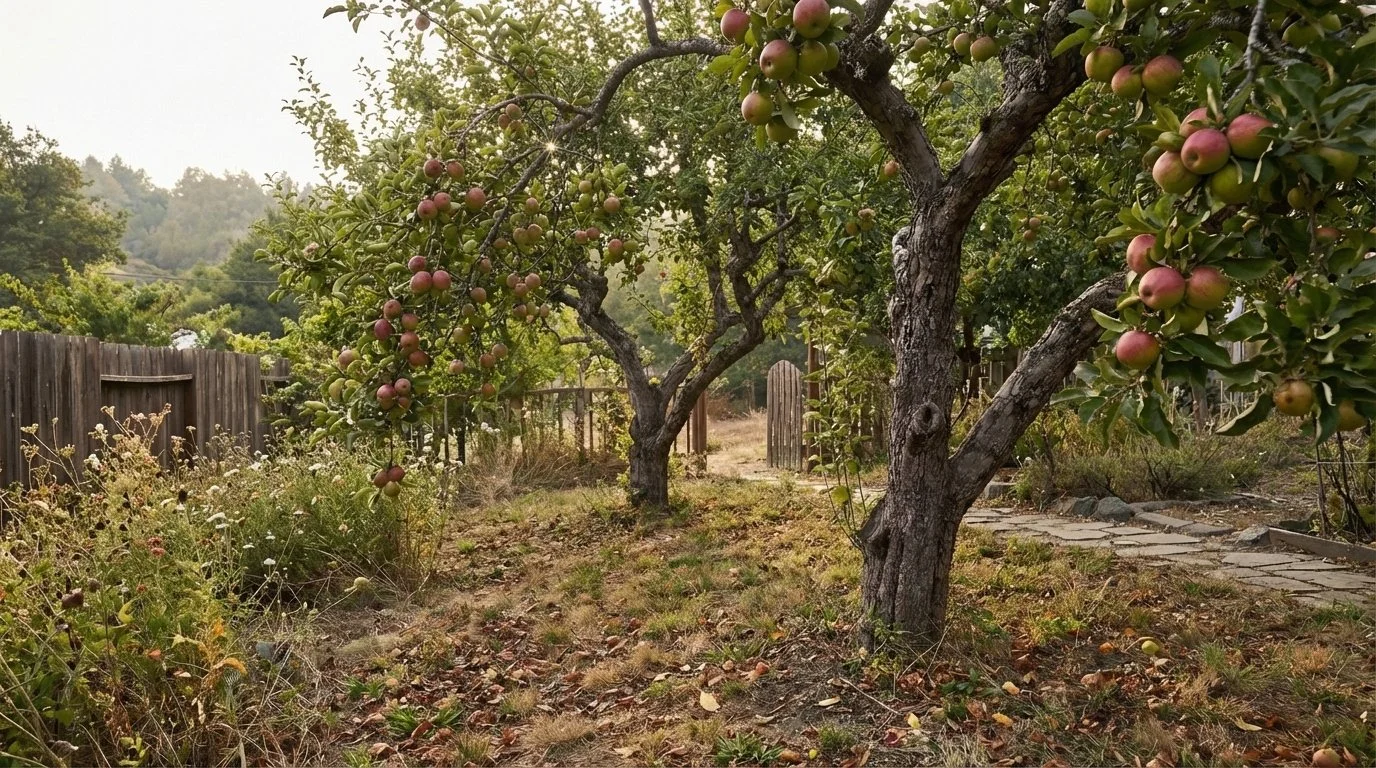
Growing apples in Santa Cruz County requires a different approach than what you will find in most gardening books. While apple trees have been cultivated here since the mission era, our Mediterranean climate with mild winters and cool, foggy summers creates unique challenges that make variety selection critical to success.
The key factor is chill hours, the number of hours below 45°F that deciduous fruit trees need during winter dormancy to produce fruit the following season. Most apple varieties developed in traditional apple-growing regions require 800 to 1,200 chill hours annually. Santa Cruz County coastal areas typically receive only 200 to 400 chill hours, while inland valleys and mountain areas may see 400 to 800. Choosing varieties bred for low-chill conditions (or at least moderate chill requirements) is the single most important decision you will make when planning an apple orchard here.
This guide covers proven apple varieties for each of Santa Cruz County's distinct microclimates, from the fog belt of Aptos and Capitola to the warmer inland valleys of Scotts Valley and the Pajaro Valley.
What Is Chill Hours in Santa Cruz County?
UC Davis explains that chill hours accumulate when temperatures fall between 32°F and 45°F during winter dormancy. When trees do not receive adequate chill, they exhibit delayed and uneven leafing, reduced fruit set, and poor fruit quality. Some trees may fail to wake from dormancy at all.
Santa Cruz County's chill hour accumulation varies dramatically by location. Coastal areas like Live Oak, Aptos, and Capitola rarely drop below 50°F at night during winter, resulting in minimal chill accumulation. The fog belt's marine influence keeps temperatures mild year-round, which is wonderful for comfortable gardening weather but challenging for traditional apples.
Move a few miles inland to Scotts Valley or up into the San Lorenzo Valley, and the picture changes. These areas experience more pronounced temperature swings, with cold air pooling in valleys on clear winter nights. Boulder Creek and Ben Lomond's sunny ridges typically accumulate enough chill hours for moderate-chill varieties, though they still fall short of what classic New England apples require.
The Pajaro Valley around Watsonville represents a middle ground. While warmer than the mountains, it receives more chill than the immediate coast. Commercial orchards in this region have historically grown apples successfully by selecting appropriate varieties.
Low-Chill Apple Varieties for Coastal Santa Cruz (200-400 Chill Hours)
Coastal gardeners from Santa Cruz's west side through Live Oak, Aptos, and Capitola need varieties specifically bred for subtropical and Mediterranean climates. These low-chill apples were developed for regions like Southern California, Israel, and Australia where traditional apples struggle.
Anna is the gold standard for low-chill apple growing, requiring only 200 to 300 chill hours. Developed in Israel in the 1960s, Anna produces crisp, mildly sweet fruit with a slight tang. The apples ripen early (late June through July in our climate), making it one of the first fruits of summer. Anna is partially self-fertile but produces better crops when pollinated by Dorsett Golden or Ein Shemer. The fruit does not store well, so plan to eat or process it quickly.
Dorsett Golden needs just 100 to 200 chill hours, making it perhaps the most reliable apple for foggy coastal gardens. This variety originated as a chance seedling in the Bahamas and produces sweet, yellow fruit with a flavor profile somewhere between Golden Delicious and Gala. Dorsett Golden ripens in late June and serves as an excellent pollinator for Anna. The two are often planted together and are sometimes sold as a two-in-one grafted tree.
Ein Shemer is another Israeli variety requiring 250 to 350 chill hours. It produces medium-sized, golden-green fruit with a sweet-tart flavor excellent for fresh eating or cooking. Ein Shemer ripens slightly later than Anna (July into August) and provides good pollination compatibility with both Anna and Dorsett Golden.
Tropical Beauty lives up to its name, requiring only 150 to 200 chill hours. This variety produces red-blushed fruit with a sweet flavor and ripens early (June through July). It is a good choice for gardeners who want red apples in low-chill conditions, though the flavor tends toward mild sweetness rather than complex apple character.
For coastal gardeners, I recommend planting at least two of these varieties together for cross-pollination. A common combination is Anna with Dorsett Golden, which provides both pollination compatibility and a slightly extended harvest window.
Moderate-Chill Varieties for Inland and Mountain Areas (400-700 Chill Hours)
Gardeners in Scotts Valley, Soquel hills, and the warmer exposures of the San Lorenzo Valley have more options. With 400 to 700 chill hours typically available, moderate-chill varieties become viable choices that offer better flavor complexity than the low-chill options.
Fuji requires 400 to 500 chill hours and produces the sweet, crunchy apples familiar from grocery stores. In our climate, Fuji ripens in September and October, storing well for several months. While Fuji originated in Japan, it has become one of California's most widely planted apple varieties due to its moderate chill requirement and excellent flavor. Fuji needs a pollinator (Gala or Granny Smith work well).
Gala needs 400 to 500 chill hours and produces sweet, aromatic apples that ripen in late August through September. This New Zealand variety has become popular in California home orchards due to its reliable production and kid-friendly sweetness. Gala pollinates well with Fuji, making the two a logical pairing for inland gardens.
Pink Lady (Cripps Pink) requires 400 to 600 chill hours, pushing the limit for all but the coldest inland locations. If your garden accumulates sufficient chill, Pink Lady rewards you with uniquely flavored fruit that balances sweetness with a distinctive tartness. The apples ripen late (October through November) and store exceptionally well. Pink Lady needs significant heat during its growing season to develop full sugar content, so it performs best in Scotts Valley, Soquel, and similar warm but adequately chilled locations.
Granny Smith surprisingly needs only 400 to 500 chill hours despite its association with cooler climates. This Australian variety produces reliably in our inland valleys, though the fruit may be less tart than in colder regions. Granny Smith ripens late (October through November) and stores well. It serves as an excellent pollinator for Fuji.
Gordon is a lesser-known variety requiring 350 to 450 chill hours that deserves more attention from Santa Cruz County gardeners. This green apple has a complex sweet-tart flavor and produces reliably in moderate-chill areas. Gordon makes an excellent addition to cider blends.
Apple Varieties for the San Lorenzo Valley and Mountain Areas (600-800+ Chill Hours)
In the coldest parts of Santa Cruz County (Boulder Creek, Ben Lomond's shaded canyons, and high-elevation areas of the mountains), gardeners can attempt a wider range of traditional apple varieties. However, even here, the warmest years may not provide adequate chill for high-chill varieties.
Gravenstein is a beloved Northern California heirloom requiring 700 to 800 chill hours. While this pushes the limit even for mountain gardens, Gravenstein has been grown successfully in the Santa Cruz Mountains for generations. Sebastopol's famous Gravenstein Apple Fair celebrates this variety, and trees in our mountain areas can produce excellent crops in good years. Gravenstein apples ripen early (July through August) with an exceptional sweet-tart flavor ideal for both eating fresh and making applesauce. Be aware that in warm winters, Gravenstein may underperform or fail to fruit.
Honeycrisp requires 800 to 1,000 chill hours, making it a risky choice even in our coldest locations. If you are determined to try Honeycrisp, plant it in a north-facing location where cold air pools in winter. Some mountain gardeners have reported success, but this variety remains challenging in our region.
For mountain gardeners, I recommend hedging your bets by planting at least one reliable moderate-chill variety alongside any high-chill experiments. This ensures some apple harvest even in warm winters when traditional varieties underperform.
Apple Variety Quick Reference by Microclimate
VarietyChill HoursBest MicroclimateHarvestNotesDorsett Golden100-200Coastal fog beltJune-JulyMost reliable for foggy areas; pollinates AnnaAnna200-300Coastal fog beltJune-JulyCrisp and mildly sweet; pair with Dorsett GoldenEin Shemer250-350Coastal to inland transitionJuly-AugustSweet-tart; good cooking appleFuji400-500Inland valleys, SLV sunny slopesSeptember-OctoberExcellent sweet flavor; stores wellGala400-500Inland valleys, SLV sunny slopesAugust-SeptemberSweet and aromatic; pollinates FujiPink Lady400-600Warmest inland areas onlyOctober-NovemberComplex flavor; needs heat to ripen fullyGravenstein700-800Mountain areas onlyJuly-AugustExceptional flavor; risky in warm winters
Pollination Requirements and Planning
Most apple varieties require cross-pollination from a different variety to produce fruit. This means you need at least two compatible varieties planted within 50 feet of each other (closer is better). Flowering times must overlap for successful pollination, which is why recommended pairings matter.
Some apple varieties are partially self-fertile (Anna, Golden Dorsett) but still produce better crops with a pollinator present. A few varieties, including Gravenstein, are triploid and cannot serve as pollinators for other trees, though they can receive pollen.
For small gardens, multi-graft or "fruit salad" trees offer a solution by combining several varieties on one rootstock. Bay Laurel Nursery in Atascadero offers multi-graft apple trees that work well in limited space.
Bees are the primary pollinators for apple trees. If you notice poor fruit set despite having compatible varieties, consider whether your garden provides adequate pollinator habitat. Native bees (particularly mason bees) are often more effective apple pollinators than honeybees, so maintaining some native flowering plants near your orchard supports pollination.
Rootstock Selection for Santa Cruz County
The rootstock (the root system onto which fruiting varieties are grafted) affects tree size, disease resistance, and productivity. For Santa Cruz County conditions, consider these options:
M111 (Semi-dwarf to Semi-standard) produces trees 15 to 20 feet tall and is well-suited to our climate. M111 tolerates both heavy clay soils and drought better than many rootstocks, making it a good choice for diverse Santa Cruz County conditions. Trees on M111 begin bearing fruit in 3 to 4 years.
M7 (Semi-dwarf) produces trees 12 to 15 feet tall and offers good disease resistance. M7 works well in fertile soils but may struggle in heavy clay. Trees on M7 bear fruit in 2 to 3 years.
M26 (Dwarf) produces trees 8 to 12 feet tall, suitable for small spaces and container growing. M26 requires staking throughout its life and needs well-drained soil. This rootstock is a good choice for coastal gardens with limited space.
G.935 (Semi-dwarf) is a newer Geneva series rootstock resistant to fire blight and apple replant disease. Trees reach 12 to 15 feet and adapt well to various soil types. If fire blight has been a problem in your area, G.935 offers improved disease resistance.
Local nurseries like San Lorenzo Garden Center can advise on rootstock availability and help you choose appropriate options for your specific conditions.
Site Selection and Planting
Apple trees need at least 6 hours of direct sun daily to produce fruit reliably. In coastal areas, this typically means a south-facing location away from shade from buildings or large trees. In the fog belt, maximize sun exposure by avoiding locations where morning fog lingers.
Soil drainage matters more than soil fertility for apples. Trees in waterlogged soil develop root rot and decline quickly. If your soil drains poorly, consider planting in raised mounds or large containers rather than fighting nature.
For complete planting instructions, including bare root timing and technique, see our guide to Bare Root Fruit Trees: A Santa Cruz County Planting Guide.
Space standard and semi-standard trees 20 to 25 feet apart. Semi-dwarf trees need 12 to 18 feet between them, while true dwarf trees can be planted 8 to 10 feet apart. Closer spacing works for espalier or high-density plantings.
Ongoing Care for Apple Trees
Watering: Young apple trees need regular water during their first two years to establish strong root systems. Water deeply (soaking the entire root zone) rather than frequently and shallowly. Established trees in most of Santa Cruz County benefit from deep watering every 2 to 3 weeks during dry months, though trees in heavy clay may need less frequent irrigation. For current conditions and watering guidance, check our Garden Conditions Dashboard.
Fertilizing: Apply a balanced organic fertilizer (such as 10-10-10 or a fruit tree blend) in late winter before bloom begins. Avoid heavy nitrogen applications, which promote leaf growth at the expense of fruit production. In established orchards, a light application of compost around the drip line each spring often provides adequate nutrition.
Pruning: Prune apple trees in late winter while dormant but after the coldest temperatures have passed (late January through February in most of Santa Cruz County). Remove crossing branches, water sprouts, and dead wood. Shape young trees to an open vase or central leader form depending on variety. For detailed pruning guidance, see our article on Pruning and Training Fruit Trees in Santa Cruz County.
Thinning: When fruitlets reach marble size (typically May), thin clusters to leave one apple per cluster, spaced 6 to 8 inches apart. This seems drastic but produces larger, better-quality fruit and prevents branches from breaking under heavy loads.
What Are the Most Common Problems and Solutions?
Poor fruit set despite healthy blooms usually indicates pollination problems. Ensure you have compatible varieties with overlapping bloom times. Cold, rainy weather during bloom reduces bee activity, leading to poor pollination. In bad years, hand pollination using a small paintbrush can improve fruit set.
Small, bitter, or poorly colored fruit often results from inadequate thinning. Trees that set too much fruit cannot direct sufficient energy to each apple. Thin aggressively for better quality.
Codling moth is the primary apple pest in California, producing the classic "wormy apple." UC IPM recommends bagging individual fruit in June, applying kaolin clay, or using pheromone-based mating disruption for organic control. Commercial orchards use spinosad or other approved organic sprays. Good sanitation (removing fallen fruit promptly) reduces pest pressure over time.
Fire blight is a bacterial disease that can devastate apple trees, causing branches to appear burnt and shepherd's-crook shaped. UC ANR describes fire blight as spreading rapidly during warm, wet spring weather. Prune out infected branches 12 inches below visible damage, sterilizing tools between cuts. Some rootstocks (Geneva series) offer improved fire blight resistance.
Powdery mildew appears as white, powdery coating on leaves and shoots. Improve air circulation through proper pruning and spacing. Sulfur sprays provide organic control if applied before infection becomes severe.
Whichever variety you plant, our apple growth stages guide explains what a young tree is doing in the years before it bears.
Tasting an apple before you plant the tree saves years of quiet regret. Our guide to the u-pick farms around Santa Cruz covers Gizdich Ranch and the other orchards where you can try local varieties in season.
Frequently Asked Questions
Can I grow Honeycrisp apples in Santa Cruz County? Honeycrisp requires 800 to 1,000 chill hours, which exceeds what most Santa Cruz County locations receive. Mountain areas (Boulder Creek, high-elevation Ben Lomond) may accumulate enough chill in some years, but expect inconsistent performance. For reliable harvests, choose lower-chill varieties like Fuji or Gala.
Why didn't my apple tree produce fruit this year even though it bloomed? Several factors cause bloom without fruit: inadequate pollination (no compatible variety nearby or poor bee activity during bloom), insufficient chill hours (tree bloomed weakly and unevenly), late frost damage to blossoms, or the tree may be too young (most apples need 3 to 5 years before bearing).
How many chill hours does my specific location receive? Chill hour accumulation varies significantly within short distances. The UC Davis Farm Advisor system tracks chill hours at monitoring stations throughout California. For Santa Cruz County, check the UC ANR Fruit and Nut Center chill calculator using data from nearby stations. Coastal stations typically show 200 to 400 hours, while inland and mountain stations range from 400 to 800.
Should I plant a multi-graft apple tree or separate trees? Multi-graft trees work well for small gardens, providing multiple varieties and built-in pollination on one trunk. However, managing a multi-graft tree requires more attention since vigorous varieties can outcompete others. If space permits, separate trees are easier to maintain and often produce better overall harvests.
When should I plant apple trees in Santa Cruz County? Plant bare root apple trees from December through February when nurseries stock them and trees are dormant. Container-grown trees can be planted year-round but establish best when planted in fall or early winter, allowing roots to develop before summer heat.
Do I need to spray my apple trees to get good fruit? Many home gardeners in Santa Cruz County grow acceptable apples without spraying by combining resistant varieties, good sanitation practices, and physical barriers like fruit bags for codling moth. Commercial-quality fruit without blemishes typically requires some intervention, but perfectly edible (if cosmetically imperfect) apples are achievable organically.
How long until my apple tree produces fruit? Dwarf trees on precocious rootstocks may produce a few apples in their second year. Semi-dwarf trees typically begin bearing in years 3 to 4, while standard trees may take 5 to 7 years. Avoid letting very young trees carry fruit, as this delays root establishment.
Can I grow apples in containers? Yes, dwarf apple trees on M26 or similar compact rootstocks grow well in large containers (minimum 25 gallons). Container growing allows you to move trees to optimal sun exposure and even roll them into a garage during brief cold snaps to artificially accumulate chill hours. Container trees need more frequent watering and annual fertilizing than in-ground trees.
Download these guides to help plan your apple orchard:
Seasonal Planting Calendar for timing bare root planting windows
For all downloadable resources, visit Your Garden Toolkit.
