

Why Is My Duck Not Laying Eggs in Winter?
A few of the product links in this guide are affiliate links. If you buy through one, Ambitious Harvest may earn a small commission at no extra cost to you, which helps keep these guides free. We only point to gear we would use in our own Santa Cruz garden. As an Amazon Associate, we earn from qualifying purchases. Read our full disclosure.
Why Is My Duck Not Laying Eggs in Winter?
Shorter daylight is one common reason ducks slow or stop laying in winter. Cornell’s Duck Research Laboratory says egg production can be seasonal when supplemental light is not provided and describes 14 to 17 hours of light for managed continuous production. Breed, age, molt, nutrition, stress, hidden nests, and health can also affect laying.
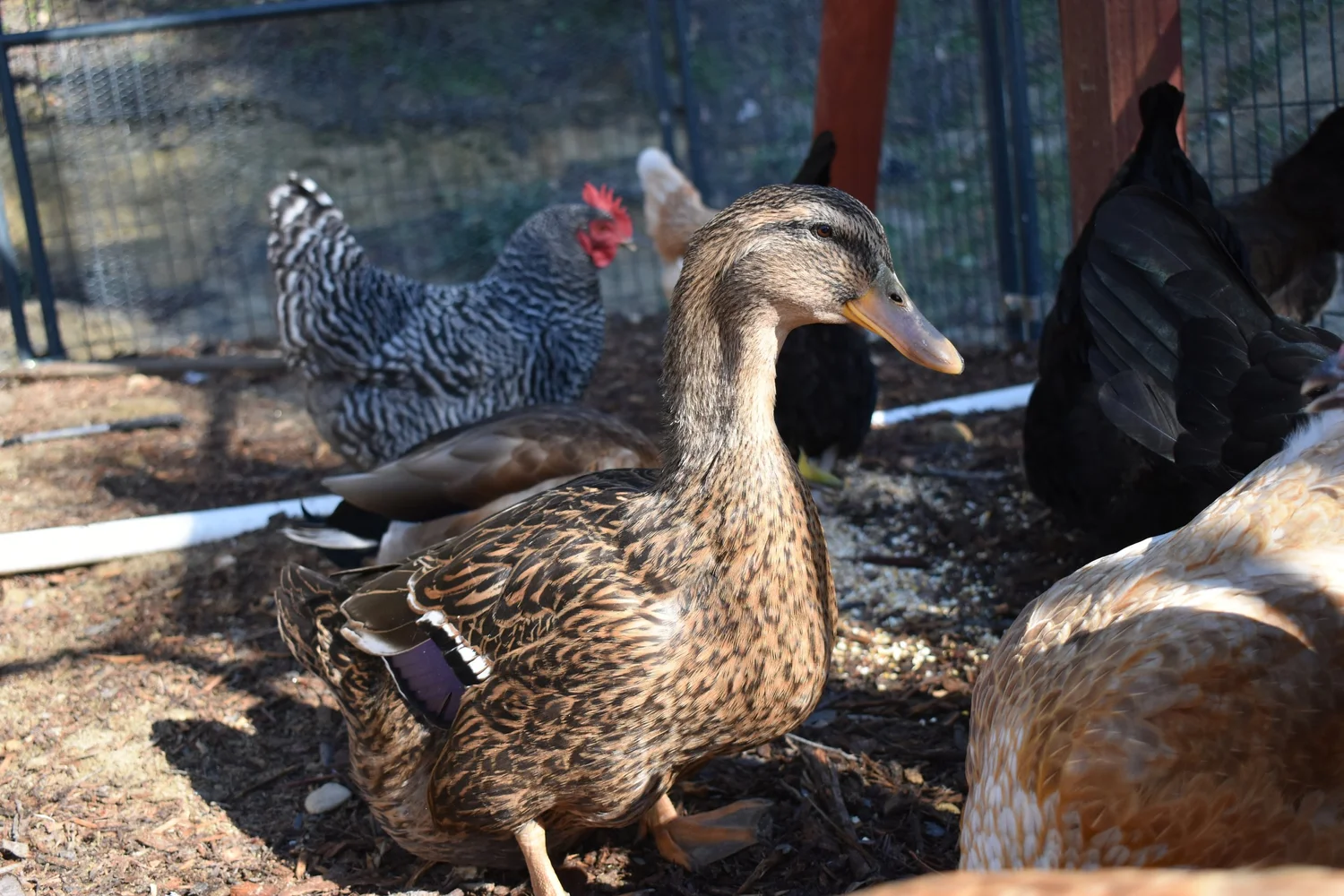
Here in Santa Cruz County, our shortest days in December offer only about 9.5 hours of daylight. That is well below the minimum most laying ducks need. Even prolific breeds like Khaki Campbells and Runner ducks, which can produce over 300 eggs per year under ideal conditions, will taper off significantly once the days shorten. My own Black Runner duck stops laying entirely by mid-November and does not resume until late January or early February.
A seasonal pause can be normal, but do not assume every pause is harmless. Check body condition, appetite, molt, housing, predator stress, and nest locations. Seek veterinary advice for illness signs, marked weight change, straining, abdominal swelling, or other abnormal behavior.
Age and nutrition can also affect production, but there is no universal three-to-four-year cutoff or one protein percentage for every laying duck. Cornell explains that ducks need all required nutrients in available form and that a nutritionally complete ration supports maintenance, growth, and reproduction. Use a duck-appropriate complete feed and ask a veterinarian or poultry nutrition source about calcium for your flock.
Stress from predators can also suppress laying. In Boulder Creek, where we deal with ringtail cats, raccoons, foxes, and the occasional bobcat, even a nighttime visit that does not result in an attack can rattle your birds enough to pause production for days or weeks. Make sure your coop and run are secure, especially at night.
Hidden nests are another possibility. Ducks are notorious for laying in unexpected spots. If your duck free-ranges at all, check under bushes, behind structures, and in any sheltered corner she can reach.
This week: Check that your ducks have free-choice oyster shell available and confirm your run is fully secured at night. If your duck is under three years old and healthy, a winter pause is normal, and she will start laying again as the days lengthen in late January.
Keep Reading
- Keeping Ducks in Your California Garden
- Why Did My Chickens Stop Laying Eggs?
- Seasonal Flock Care: Fall and Winter in Coastal California
Frequently Asked Questions
Why do ducks stop laying in winter?
Reduced daylight is a common reason for winter slowdown. Cornell says laying can be seasonal without supplemental light and describes managed schedules of about 14 to 17 hours, while breed, molt, age, nutrition, stress, and health also influence production.
Is it normal for my duck to stop laying for months?
Yes, it is a healthy seasonal pause. Many ducks stop by mid-November and resume in late January or early February, using the rest to maintain feathers and rebuild reserves.
Besides daylight, what else can reduce laying?
Age, molt, stress, and nutrition can affect laying, but avoid a universal age cutoff or protein target. Cornell recommends supplying the nutrients needed for maintenance and reproduction through an appropriate complete ration; get species-specific advice if production changes are accompanied by health concerns.
