

Growing Asian Greens in Santa Cruz
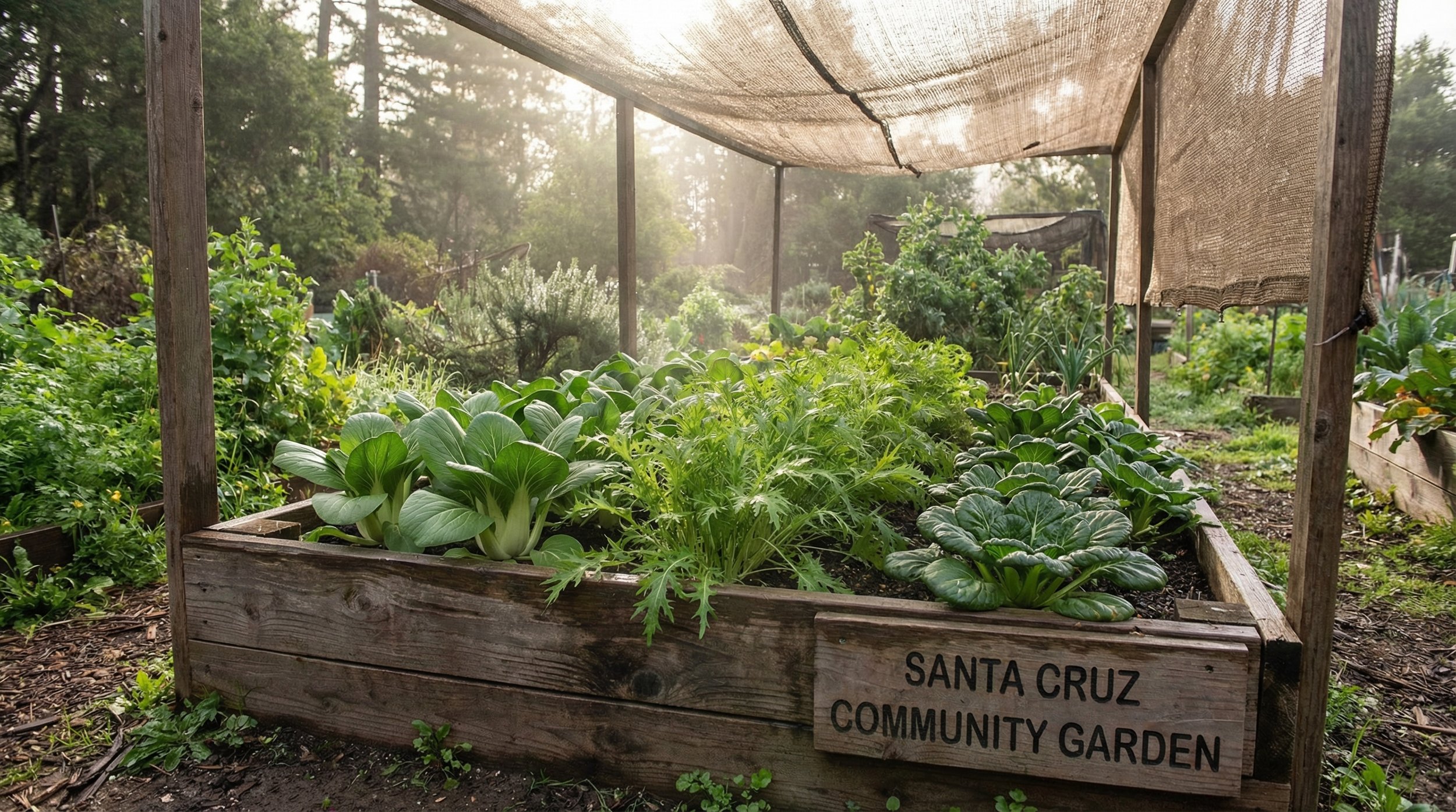
If you've never grown Asian greens, you're missing out on some of the easiest, fastest, and most versatile vegetables for Santa Cruz gardens. These cool-season crops mature in weeks rather than months, tolerate our mild winters without complaint, and offer flavors ranging from mild and buttery to sharp and spicy. Most can be harvested as baby greens for salads or grown to full size for cooking.
Asian greens encompass a diverse family of brassicas developed over centuries in China, Japan, and other parts of Asia. They share many characteristics with familiar Western crops like cabbage and broccoli but mature faster, handle mild weather better, and offer different culinary possibilities. In Santa Cruz's Mediterranean climate, they fill the garden during the cool season when summer crops have finished and serve as quick-growing fillers between slower crops year-round.
This guide covers the most rewarding Asian greens for Santa Cruz gardens, from familiar bok choy to lesser-known gems like tatsoi and mizuna.
Why Asian Greens Work So Well Here
Santa Cruz County's climate matches the conditions where these crops evolved: mild winters, moderate summers, and consistent moisture. According to Cornell University Extension, most Asian greens prefer temperatures between 60°F and 70°F and bolt quickly when temperatures exceed 75°F or days lengthen beyond 14 hours. Sound familiar? These are almost exactly the conditions that favor spinach and lettuce here.
Our advantages for Asian greens include cool temperatures for much of the year (keeping plants mild-flavored and bolt-free), year-round growing potential in coastal areas, fast maturity that allows multiple successions per season, and the relatively short days of fall through spring.
The main challenges are pest pressure (aphids and flea beetles love these crops) and summer heat in inland areas. Both are manageable with good timing and basic care.
The Essential Asian Greens for Santa Cruz
Bok Choy (Pak Choi)
Bok choy is probably the most familiar Asian green and an excellent starting point. It forms a vase-shaped rosette with thick, white or green stems and dark green leaves. The stems are crisp and juicy; the leaves are tender with a mild, slightly sweet flavor.
Standard bok choy takes 45 to 60 days to mature and forms plants 8 to 12 inches tall. Varieties include 'Joi Choi' (very bolt-resistant, thick white stems), 'Win Win Choi' (quick-maturing, good for fall), and 'Prize Choi' (vigorous, bolt-resistant).
Baby bok choy (also called Shanghai bok choy) is smaller, more tender, and faster-maturing. Harvest at 4 to 6 inches tall, typically 30 to 40 days from sowing. The stems are often pale green rather than white. Popular varieties include 'Shanghai Green' and 'Mei Qing Choi' (very bolt-resistant and widely adapted).
Growing tips: Bok choy is relatively bolt-resistant compared to other Asian greens but still responds to long days and heat. Plant from September through April in coastal areas, September through March inland. Space 6 to 8 inches apart for baby types, 10 to 12 inches for full-size varieties.
Tatsoi
Tatsoi forms a flat, circular rosette of spoon-shaped dark green leaves that looks stunning in the garden. It's one of the most cold-tolerant Asian greens, surviving temperatures into the low 20s with minimal protection. The flavor is mild and versatile, somewhere between spinach and bok choy.
Growing tips: Tatsoi is slower to bolt than bok choy and handles cold better. Plant from September through March. Space 6 to 8 inches apart for full-size plants or plant densely and harvest as baby greens. This is an excellent choice for winter gardens in all Santa Cruz microclimates.
According to Kitazawa Seed Company, tatsoi is sometimes called "spoon mustard" or "spinach mustard" despite having a milder flavor than true mustard greens.
Mizuna
Mizuna has delicate, deeply serrated leaves that add visual interest and a mild, slightly peppery flavor to salads. It's one of the fastest-growing Asian greens and among the most bolt-resistant, making it beginner-friendly and forgiving of imperfect timing.
Growing tips: Mizuna handles heat better than most Asian greens and has excellent bolt resistance. It can be planted almost year-round in coastal Santa Cruz, with only the warmest summer weeks being problematic. Harvest individual leaves for cut-and-come-again production or grow densely for baby salad mix. Space 6 inches apart for cut-and-come-again harvesting, or scatter seeds thickly for baby greens.
Varieties include 'Early Mizuna' (standard green type) and 'Purple Mizuna' or 'Red Mizuna' (purple-veined leaves for visual interest).
Komatsuna (Japanese Mustard Spinach)
Komatsuna occupies a middle ground between mild spinach and spicy mustard greens. The dark green, upright leaves have a subtle mustard undertone that's more interesting than spinach but not as sharp as true mustard greens. It's extremely cold-hardy and more heat-tolerant than many Asian greens.
Growing tips: Komatsuna is remarkably adaptable and somewhat bolt-resistant. Plant from September through April. It tolerates both cold and moderate heat better than most Asian greens. Space 6 to 8 inches apart. Excellent for late fall and winter planting.
Choy Sum (Chinese Flowering Cabbage)
Choy sum is grown for its tender flowering stems and yellow flowers as much as its leaves. When the plant begins to send up flower stalks, harvest the stems, leaves, and flowers together before blooms fully open. The flavor is sweet and mild.
Growing tips: Unlike most greens where bolting signals the end, with choy sum you're waiting for it to bolt so you can harvest the flowering stems. Plant in fall for winter harvest or early spring for spring harvest. The 40- to 50-day maturity is to flowering stage, not leaf harvest. Space 6 to 8 inches apart.
Chinese Cabbage (Napa Cabbage)
Chinese cabbage forms tall, cylindrical heads with crinkled leaves that are essential for kimchi, stir-fries, and fresh eating. It's slower to mature than other Asian greens (60 to 90 days) but produces substantial heads.
Growing tips: Chinese cabbage is very bolt-prone and must be planted in fall for best results. Spring plantings usually bolt before heading. Plant transplants in late August or September for fall harvest. Space 12 to 15 inches apart. Look for bolt-resistant varieties like ''Blues' or 'Bilko' for the best results.
Mibuna
A close relative of mizuna, mibuna has long, slender, strap-shaped leaves instead of serrated ones. The flavor is similar but slightly more peppery. It's an excellent choice for adding bulk to salad mixes.
Growing tips: Mibuna has similar bolt resistance to mizuna and can be planted almost year-round in coastal areas. It regrows well after cutting, making it ideal for cut-and-come-again harvesting. Space 6 inches apart.
Gai Lan (Chinese Broccoli)
Gai Lan is grown for its thick, succulent stems and small broccoli-like florets. The flavor is more complex than regular broccoli, with slight bitterness that balances beautifully with garlic and oyster sauce. It's a staple in Cantonese cooking.
Growing tips: Plant in fall or early spring. Harvest when flower buds appear but before they open, cutting the main stem and any side shoots that develop. Unlike heading broccoli, gai lan matures quickly (45 to 60 days) and produces multiple harvests from side shoots. Space 8 to 10 inches apart.
| Green | Days to Harvest | Flavor Profile | Bolt Resistance | Best Season |
|---|---|---|---|---|
| Bok Choy (standard) | 45-60 | Mild, slightly sweet | Moderate to Good | Fall, Winter, Early Spring |
| Baby Bok Choy | 30-40 | Tender, sweet | Good | Fall through Spring |
| Tatsoi | 40-50 | Mild, buttery | Good | Fall, Winter (cold-hardy) |
| Mizuna | 35-45 | Mild, slightly peppery | Excellent | Nearly year-round (coastal) |
| Komatsuna | 35-45 | Mild mustard | Good | Fall through Spring |
| Choy Sum | 40-50 | Sweet, mild | N/A (harvest at bolt) | Fall, Winter |
| Chinese Cabbage | 60-90 | Mild, crisp | Poor (fall only) | Fall (plant Aug-Sept) |
| Gai Lan | 45-60 | Complex, slight bitterness | Moderate | Fall, Early Spring |
Planting and Growing Asian Greens
Timing
Fall is the prime season for Asian greens in Santa Cruz. Planting from September through November produces crops that mature during cool weather with shortening days, minimizing bolting risk. Winter plantings (December through February) work in coastal and protected areas but grow slowly. Spring plantings (February through March) are possible with bolt-resistant varieties but require good timing to harvest before long days trigger bolting.
Avoid planting most Asian greens from April through August except for mizuna and mibuna, which may tolerate late spring planting in coastal areas.
Starting Seeds
Direct sowing works well for all Asian greens. Plant seeds one-quarter to one-half inch deep, about one inch apart in rows or scattered in wide bands. Thin to final spacing once seedlings have several true leaves. The thinnings make excellent baby greens for salads.
Transplants are useful for extending the season or when soil conditions make direct sowing difficult. Start seeds indoors three to four weeks before transplanting. Handle seedlings gently because brassicas can be sensitive to root disturbance.
Soil and Fertilizer
Asian greens prefer rich, well-drained soil with plenty of organic matter. Work in two to three inches of compost before planting. A soil pH between 6.0 and 7.0 is ideal according to the UC Master Gardeners.
These crops are moderate feeders. Side-dress with compost or balanced organic fertilizer every three to four weeks during active growth. Nitrogen supports leafy growth, but avoid excessive nitrogen close to harvest.
Watering
Consistent moisture is essential for tender, mild-flavored greens. Water stress leads to tough texture and sharper flavor. Water deeply two to three times per week during dry weather, keeping soil evenly moist but not waterlogged. Mulch helps maintain soil moisture and keeps leaves clean.
Harvesting Strategies
Most Asian greens can be harvested multiple ways depending on your needs.
Baby greens: Harvest entire plants when 3 to 5 inches tall, typically 25 to 35 days from sowing. This works well for salad mix production. Plant densely (1 to 2 inches apart) and harvest in patches.
Cut-and-come-again: Harvest outer leaves individually while leaving the central growing point intact. The plant regrows for multiple harvests. This works especially well for mizuna, mibuna, komatsuna, and tatsoi.
Whole plant harvest: Allow plants to reach full size and harvest the entire plant by cutting at soil level. This is typical for bok choy, Chinese cabbage, and when you need large quantities.
Flowering stems: For choy sum and bolting plants of other types, harvest the tender flowering stems before flowers fully open.
| Harvest Method | Best For | Timing | Notes |
|---|---|---|---|
| Baby Greens | Mizuna, tatsoi, komatsuna, bok choy | 25-35 days | Plant densely, harvest entire young plants |
| Cut-and-Come-Again | Mizuna, mibuna, komatsuna, tatsoi | Ongoing | Harvest outer leaves, leave center growing |
| Whole Plant | Bok choy, Chinese cabbage | 45-90 days | Allow full maturity, cut at base |
| Flowering Stems | Choy sum, gai lan, bolting plants | At bud stage | Harvest before flowers open |
Pest Management
Asian greens face the same pest pressures as other brassicas, sometimes more intensely because of their tender leaves.
Flea Beetles
These tiny jumping beetles create distinctive shot-hole damage in leaves. They're most active in warm weather and can devastate young seedlings. Mature plants tolerate some damage without significant harm.
Prevention: Floating row cover is the most effective prevention, keeping adult beetles away from plants. Apply immediately after planting.
Treatment: Established plants often outgrow damage. For severe infestations on young plants, diatomaceous earth or spinosad sprays can help.
Aphids
Aphids cluster on new growth and leaf undersides, sucking sap and distorting leaves. They're particularly problematic in the dense heads of bok choy where they hide in the inner leaves.
Prevention: Avoid excess nitrogen fertilization. Encourage beneficial insects by planting flowers nearby.
Treatment: Strong water spray dislodges many aphids. Insecticidal soap kills on contact. Check inner leaves of heading types before harvesting.
Cabbage Worms and Loopers
The same caterpillars that attack kale attack Asian greens. Watch for white butterflies laying eggs and the green caterpillars that hatch from them.
Prevention: Row cover prevents egg-laying. Inspect plants regularly and crush eggs or remove small caterpillars.
Treatment: Bt (Bacillus thuringiensis) spray kills caterpillars effectively and is safe for organic gardens.
Slugs and Snails
Our moist climate is perfect for these mollusks, which love tender Asian greens.
Prevention: Water in the morning so soil surface dries by evening. Remove hiding spots near the garden.
Treatment: Handpick after dark. Beer traps. Iron phosphate bait (Sluggo).
Cooking with Asian Greens
The quick maturity of Asian greens means you can experiment freely in the kitchen, growing more of what you enjoy.
Raw in salads: Mizuna, mibuna, baby bok choy, baby tatsoi, and young komatsuna all work well raw. They add variety and subtle flavors to salad mixes.
Quick stir-fry: High heat and fast cooking preserves crunch and color. Cut larger greens into pieces, leave baby greens whole. Add garlic, ginger, soy sauce, and a splash of rice wine or dry sherry.
Soups: Add bok choy, tatsoi, or komatsuna to soups in the last few minutes of cooking. They wilt quickly and add fresh green color and flavor.
Steamed: Baby bok choy steamed whole for 3 to 4 minutes and drizzled with oyster sauce is a classic preparation.
Braised: Larger bok choy or Chinese cabbage braised in broth with aromatics becomes silky and flavorful.
Grilled: Halved bok choy brushed with oil and quickly grilled develops delicious charred edges while staying crisp.
Where to Find Asian Greens Seeds
Kitazawa Seed Company specializes in Asian vegetable seeds and offers the widest selection available. Their Oakland location means varieties are suited to California conditions.
Renee's Garden Seeds carries a curated selection of Asian greens tested in their Felton trial gardens.
Johnny's Selected Seeds offers many Asian greens with detailed growing information.
Evergreen Seeds in Anaheim specializes in Asian vegetable seeds with varieties you won't find elsewhere.
Locally, Mountain Feed and Farm Supply and San Lorenzo Garden Center carry basic Asian greens seeds seasonally.
Frequently Asked Questions
What's the easiest Asian green for beginners?
Mizuna is probably the most forgiving. It germinates quickly, has excellent bolt resistance, regrows well after cutting, and tolerates a wider range of conditions than most Asian greens. Baby bok choy is another good starting point because it matures quickly and is familiar to most cooks.
Can I grow Asian greens in containers?
Absolutely. Their relatively shallow root systems and compact size make them well-suited to container growing. Use containers at least 6 inches deep, keep soil consistently moist, and choose a spot with morning sun and afternoon shade during warmer months. Baby varieties work especially well in pots.
Why do my Asian greens taste bitter?
Bitterness usually indicates stress from heat, irregular watering, or the plant beginning to bolt. Harvest during cooler weather, keep soil consistently moist, and plant at appropriate times to avoid hot weather. Some bitterness is also natural in certain greens like gai lan.
How do I prevent bolting?
Plant in fall when days are shortening. Choose bolt-resistant varieties for spring planting. Avoid transplant shock by hardening off seedlings properly. Keep plants consistently watered. Provide afternoon shade in late spring. Accept that some greens will bolt in spring no matter what you do.
What's the difference between bok choy and baby bok choy?
Standard bok choy has thick white stems and grows 8 to 12 inches tall. Baby bok choy (Shanghai type) is smaller (4 to 6 inches), has pale green stems, and matures faster. Baby bok choy isn't just young regular bok choy but a different variety with distinct characteristics.
Can I eat Asian greens that have bolted?
Yes, though quality declines. The flowering stems of most Asian greens are edible and taste similar to choy sum. Harvest before flowers fully open. Leaves become tougher and sharper in flavor but remain edible, especially cooked.
Which Asian greens are most cold-hardy?
Tatsoi is exceptionally cold-hardy, tolerating temperatures into the low 20s. Komatsuna, mizuna, and mibuna also handle cold well. Bok choy is moderately cold-tolerant. Chinese cabbage is least cold-hardy of the common types.
How often should I succession plant?
For continuous harvest, plant every two to three weeks during the main growing season (September through March). Fast-growing greens like mizuna can be succession planted more frequently. Slower crops like Chinese cabbage need only one or two fall plantings.
Free Resources
Download these guides from our Garden Toolkit:
Seasonal Planting Calendar includes timing for Asian greens in each Santa Cruz microclimate.
Succession Planting Guide helps you plan continuous harvests.
Companion Planting Chart shows what to plant near brassicas for best results.
Related Articles
Growing Kale in Santa Cruz County covers another brassica family member with similar growing requirements.
Cut-and-Come-Again Greens: Maximizing Your Harvest explains the technique that keeps Asian greens producing for months.
Succession Planting Greens for Continuous Salads helps you plan a year-round planting schedule.
Greens Troubleshooting: Bolting, Bitterness, and Pests provides detailed solutions to common problems.
