

Growing Sweet Peas in Santa Cruz County: Fragrant Favorites for Cool Season Bouquets
A few of the product links in this guide are affiliate links. If you buy through one, Ambitious Harvest may earn a small commission at no extra cost to you, which helps keep these guides free. We only point to gear we would use in our own Santa Cruz garden. As an Amazon Associate, we earn from Read our full disclosure.
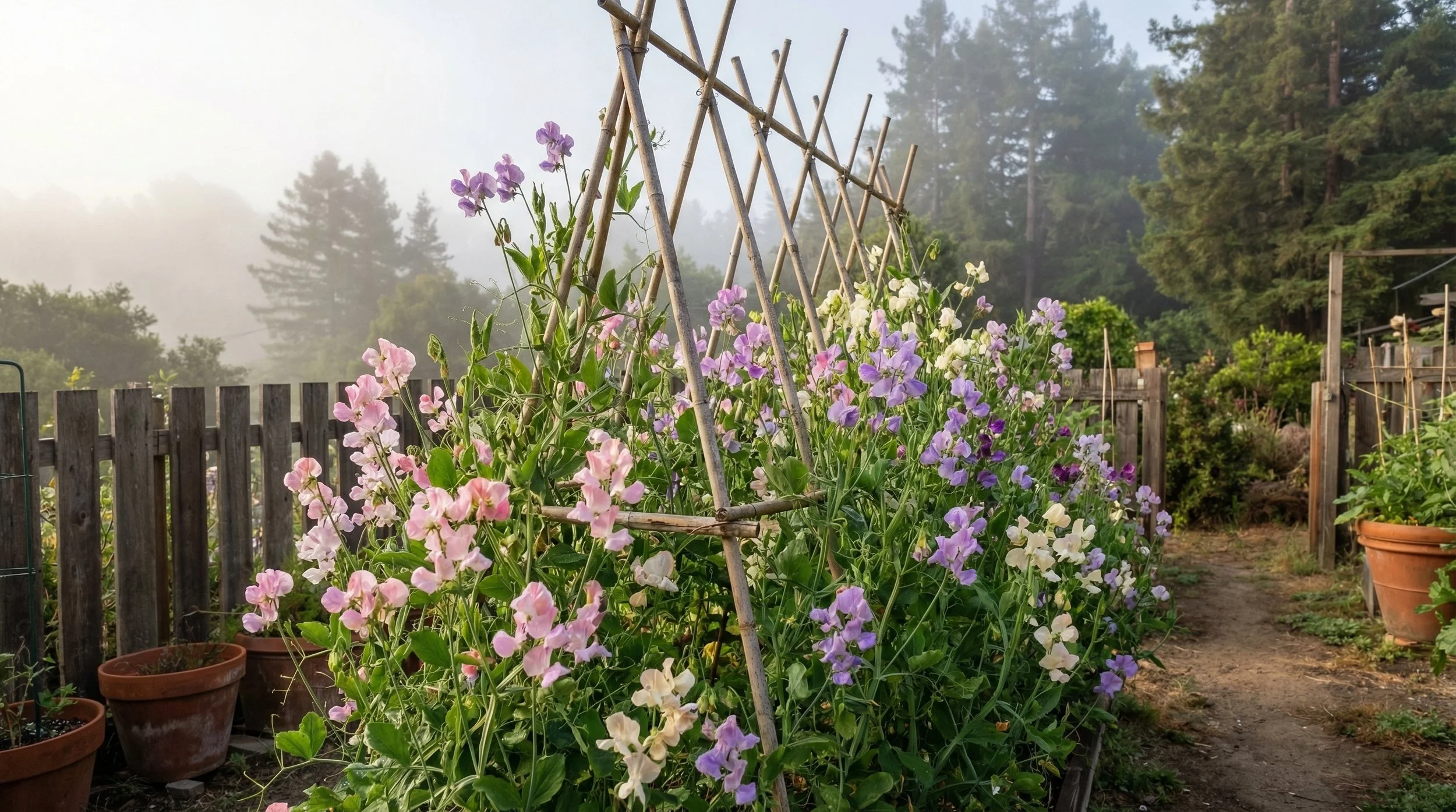
If you could capture the scent of spring in a flower, it would be a sweet pea. These old-fashioned favorites produce some of the most fragrant blooms in the garden, and Santa Cruz County's cool, foggy springs create ideal conditions for growing them.
While sweet peas can be finicky in hot climates, our coastal influence extends their bloom season and intensifies their legendary fragrance. With proper timing and a simple trellis, you can enjoy armloads of ruffled, perfumed flowers from late winter through early summer.
This guide covers everything you need to know to grow exceptional sweet peas in Santa Cruz County, from fall planting for the earliest blooms to extending your harvest into the warmer months.
Why Sweet Peas Excel in Santa Cruz County
Sweet peas (Lathyrus odoratus) are native to Sicily and the eastern Mediterranean, where they evolved in conditions remarkably similar to our own: mild, wet winters followed by warm, dry summers. This makes our region one of the best places in North America to grow these beloved flowers.
Our climate advantages include:
Cool springs. Sweet peas thrive when temperatures stay between 55-65°F. They stop flowering when temperatures consistently exceed 75-80°F. Our fog-cooled springs, particularly in coastal areas, extend the bloom season far beyond what's possible in warmer climates.
Mild winters. In most Santa Cruz County locations, winters are mild enough to plant sweet peas in fall for the earliest spring blooms. Fall-planted sweet peas develop strong root systems over winter and begin flowering as early as February or March.
Foggy mornings. The marine layer that rolls in most mornings increases humidity and reduces heat stress on sweet pea plants. This translates to more flowers, longer stems, and more intense fragrance.
Long growing window. Unlike gardeners in cold climates who can only grow sweet peas in a narrow spring window, we can plant from October through February and enjoy blooms from late winter through June (or longer in the coolest microclimates).
Choosing Sweet Pea Varieties
Sweet peas come in hundreds of named varieties, from heirloom grandifloras prized for fragrance to modern spencers bred for long stems and large flowers. Understanding the different types helps you choose the best varieties for your goals.
By flower type:
Grandiflora (heirloom): The original sweet pea type, grown since the 1800s. Smaller flowers than modern varieties but intensely fragrant. More heat-tolerant than spencers. Excellent for perfume lovers. Varieties include 'Cupani' (the original bicolor), 'Matucana,' and 'Painted Lady.'
Spencer: Developed in the early 1900s, these have large, ruffled flowers with long stems. The standard for cutting and exhibition. Less fragrant than grandifloras but showier. Most named varieties fall into this category.
Modern grandiflora: Newer varieties that combine the fragrance of heirlooms with larger flowers and longer stems. Look for varieties described as "fragrant" or "highly scented."
By growing habit:
Tall/climbing (6-8 feet): Need trellising but produce the longest stems for cutting. Standard for serious sweet pea growers.
Intermediate (3-4 feet): Need some support but more manageable than tall types.
Dwarf/bush (1-2 feet): No support needed. Good for containers and borders but shorter stems and fewer flowers for cutting.
Best varieties for Santa Cruz County:
VarietyTypeHeightFragranceNotes'Cupani'Heirloom6-8 ftIntenseThe original 1699 sweet pea, maroon and purple bicolor'Matucana'Heirloom6-8 ftIntenseSimilar to Cupani, excellent fragrance'April in Paris'Spencer6-8 ftGoodCream with lavender edge, large flowers'Erewhon'Modern6-8 ftVery goodReverse bicolor, purple on white'Charlie's Angel'Spencer6-8 ftGoodClear lavender-blue, vigorous'Mollie Rilstone'Spencer6-8 ftGoodCream flushed pink, exhibition quality'Midnight Blues' MixSpencer6-8 ftModerateDeep purples and blues'Mammoth Mix'Spencer6-8 ftModerateLarge flowers, good color range
For the best fragrance, prioritize heirloom and grandiflora types. For the most impressive stems and flowers, choose spencers. Many gardeners plant both for fragrance and show.
Local seed sources:
Renee's Garden Seeds in Felton offers excellent sweet pea selections suited to our climate. Floret Flowers and Johnny's Selected Seeds carry professional-quality varieties for serious growers.
When to Plant Sweet Peas
Timing is crucial for sweet pea success. In Santa Cruz County, you have two main planting windows:
Fall planting (recommended): October through November
Fall-planted sweet peas develop strong root systems during winter's cool, wet weather. They begin blooming in late February or March (coastal areas) to April (inland), producing the longest stems and most abundant flowers.
This is the method used by commercial sweet pea growers and dedicated hobbyists. The plants may look small or even dormant through winter, but underground root development is happening.
Late winter planting: January through February
If you missed fall planting, you can still plant in late winter. These plants will bloom later (April through May) and produce fewer flowers than fall-planted sweet peas, but you'll still get a harvest.
Spring planting (challenging): March
Plants started in March may bloom briefly before heat shuts them down. Only recommended for the coolest coastal microclimates. In inland areas, spring-planted sweet peas often struggle.
How to Plant Sweet Peas
Seed preparation. Sweet pea seeds have hard coats that benefit from soaking:
Place seeds in room-temperature water for 12-24 hours
Seeds that swell are ready to plant
For stubborn seeds that don't swell, nick the seed coat gently with a nail file (opposite the "eye") and soak again
Some gardeners skip soaking without problems, but it typically improves germination rates, especially with older seed.
Direct sowing vs. transplanting.
Direct sowing: The simplest method. Plant seeds 1 inch deep where they'll grow. Works well for fall planting when you have time for slow germination.
Transplanting: Start seeds in deep pots (4 inches or root trainers) 4-6 weeks before planting out. Sweet peas develop long taproots and resent root disturbance, so use deep containers and transplant carefully.
Site selection. Choose a spot with:
Full sun (minimum 6 hours, more in foggy areas)
Good air circulation (prevents powdery mildew)
Rich, well-draining soil
Room for a trellis (6-8 feet tall for climbing types)
Soil preparation. Sweet peas are heavy feeders that appreciate rich soil:
Dig a trench 12-18 inches deep
Work in generous amounts of compost
Add a balanced fertilizer or bone meal to the bottom
Backfill and plant seeds 1 inch deep
This "trench method" was developed by Victorian gardeners who competed to grow the longest sweet pea stems. It provides deep, rich soil for the vigorous root systems.
Spacing:
Plant seeds 3-4 inches apart
Thin to 6 inches apart once seedlings are established
For maximum production, some growers plant in double rows 12 inches apart on either side of a central trellis
Trellising. Sweet peas need support. Options include:
Netting stretched between posts
Bamboo teepees
Wire fence panels
String or twine systems
Existing fences
Install trellising at planting time. Young sweet peas grab onto support with tendrils and begin climbing immediately.
Caring for Sweet Peas
Watering. Sweet peas need consistent moisture:
Water deeply once or twice weekly, more during dry spells
Mulch to conserve moisture and keep roots cool
Avoid overhead watering, which promotes powdery mildew
Don't let plants dry out completely, especially during bloom
Feeding. Sweet peas are hungry plants:
Side-dress with balanced fertilizer (10-10-10) monthly during active growth
Some growers switch to high-potassium fertilizer (like tomato food) once buds form
Avoid excessive nitrogen, which produces foliage at the expense of flowers
Pinching. This technique is optional but increases flower production:
When seedlings have 4-6 pairs of leaves, pinch out the growing tip. This encourages side shoots and more flowering stems. You'll delay first blooms by a week or two but get more flowers overall.
Commercial growers often pinch; home gardeners can skip it if they prefer earlier blooms.
Training. Guide wandering tendrils toward support. Sweet peas naturally climb, but occasional guidance prevents tangling and keeps plants tidy.
Deadheading. This is the most important sweet pea maintenance:
Remove spent flowers religiously. If sweet peas set seed pods, they stop blooming. Pick flowers daily during peak season, even if you don't need them for bouquets. The more you pick, the more they produce.
Harvesting Sweet Peas
Sweet peas are one of the most rewarding cut flowers because picking them directly encourages more blooms.
When to harvest:
Cut when 2-3 flowers on the stem are open and the top buds are showing color
Harvest in early morning or evening when flowers are fully hydrated
Never let flowers go to seed on the plant
How to harvest:
Use clean, sharp scissors or snips
Cut stems as long as possible (follow the stem back to where it joins the main vine)
Place immediately in cool water
Vase life. Sweet peas typically last 4-7 days in a vase. To maximize longevity:
Re-cut stems at an angle under water
Use a clean vase with fresh water and floral preservative
Keep arrangements away from heat and direct sun
Change water every 2 days
Fragrance note: Sweet pea fragrance is strongest in the morning and on cooler days. Arrange sweet peas where you'll appreciate their scent, like a breakfast nook or bedroom.
Extending the Sweet Pea Season
Sweet peas naturally decline as temperatures warm. Here's how to extend your harvest:
Plant in the coolest spot. An east-facing location that gets morning sun but afternoon shade stays cooler longer than a south-facing hot spot.
Mulch heavily. 3-4 inches of mulch keeps roots cool and extends bloom.
Water consistently. Heat stress accelerates the end of bloom. Keep plants well-watered during warm spells.
Grow heat-tolerant varieties. Heirloom grandifloras like 'Cupani' and 'Matucana' tolerate heat better than modern spencers. They may continue blooming after spencers fade.
Succession plant. If space allows, plant a second batch in January/February. These will begin blooming as fall-planted sweet peas decline.
Accept seasonal limits. Eventually, summer heat will end sweet pea season. Enjoy them fully during their peak and look forward to next year.
Sweet Peas by Microclimate
Coastal fog belt (Westside Santa Cruz, Live Oak, Aptos, Capitola)
This is premium sweet pea territory. Expect:
Longest bloom season (potentially February through June)
Strongest fragrance (cool temps preserve aromatic compounds)
Excellent stem length
Reduced heat stress
Recommendations: Grow any variety you like. Fall planting is ideal. This microclimate allows you to grow sweet peas like the famous Lompoc and Half Moon Bay commercial flower farms.
San Lorenzo Valley and sunny inland areas (Boulder Creek, Scotts Valley, Ben Lomond ridges)
Warmer conditions shorten the sweet pea season but they still perform well:
Bloom April through May (possibly into June in cool years)
Plant in the coolest spot available
Fall planting is especially important for root establishment
Recommendations: Focus on heat-tolerant heirloom varieties for longest bloom. Choose a site with some afternoon shade if possible.
Under the redwoods (Felton, Ben Lomond canyons)
Mixed conditions for sweet peas:
Cool temperatures are ideal
Reduced light may limit flower production
Powdery mildew can be problematic in humid, shady spots
Recommendations: Only plant if you have a sunny clearing with good air circulation. The shade and humidity may promote disease despite cool temperatures.
Pajaro Valley / Watsonville
The warmest microclimate shortens sweet pea season:
Bloom March through April/early May
Heat arrives earlier than coastal areas
May need additional shade and water
Recommendations: Focus on fall planting and heat-tolerant varieties. Enjoy a shorter but still rewarding season.
Common Problems and Solutions
Bud drop. Buds form but fall off before opening.
Cause: Usually heat stress or inconsistent watering
Solution: Mulch, water consistently, provide afternoon shade if possible
Few flowers, lots of foliage. Plants are vigorous but not blooming.
Cause: Too much nitrogen fertilizer or planting too late
Solution: Switch to low-nitrogen, high-potassium fertilizer; plant earlier next year
Powdery mildew. White powder on leaves.
Cause: Fungal disease favored by humid conditions and poor air circulation
Solution: Space plants properly, avoid overhead watering, remove affected leaves, apply sulfur spray preventively. UC IPM notes that good air circulation is the best prevention.
Short stems. Flowers are beautiful but stems are too short for arranging.
Cause: Usually insufficient root depth or late planting
Solution: Use the trench planting method next year; plant in fall
Plants collapse suddenly. Healthy plants wilt and die quickly.
Cause: Often root rot from overwatering or poor drainage
Solution: Improve drainage; don't water until top inch of soil is dry
Aphids. Green or black insects cluster on new growth.
Cause: These pests love the tender new growth of sweet peas
Solution: Spray with water to dislodge; use insecticidal soap if severe; encourage beneficial insects
Frequently Asked Questions
Are sweet peas edible? No. Despite the name, sweet peas are toxic if eaten. They're grown only for ornamental purposes. The edible garden pea is a different plant entirely (Pisum sativum).
Do sweet peas come back every year? Standard sweet peas are annuals that complete their lifecycle in one season. However, there are perennial sweet peas (Lathyrus latifolius) that return each year. These are lovely but lack the fragrance of annual sweet peas.
Can I save sweet pea seeds? Yes. Allow a few pods to mature and dry on the vine, then harvest and store seeds in a cool, dry place. Named varieties will come reasonably true from seed, though colors may vary slightly.
Why don't my sweet peas smell? Some modern varieties have been bred for appearance rather than fragrance. For the strongest scent, grow heirloom grandiflora types like 'Cupani' or 'Matucana.' Also note that fragrance is strongest in morning and on cool days.
How long do sweet peas bloom? In Santa Cruz County's coastal areas, fall-planted sweet peas can bloom for 3-4 months (late February through May or June). Inland gardens have a shorter window, typically 6-10 weeks.
Can I grow sweet peas in containers? Yes, but choose dwarf or intermediate varieties and use large containers (at least 5 gallons). Provide support with a small trellis or obelisk. Container plants need more frequent watering than in-ground plants.
What can I plant after sweet peas finish? After pulling spent sweet pea vines in early summer, the space is perfect for warm-season crops. Beans are ideal since they're also legumes and benefit from the nitrogen sweet peas added to the soil.
Free Resources
Download these guides to support your sweet pea growing:
Seasonal Planting Calendar: Month-by-month timing for Santa Cruz County
Seed Starting Guide: Tips for starting seeds successfully
Visit our Garden Toolkit for more downloadable resources.
Related Articles
Growing a Cut Flower Garden in Santa Cruz County: A Complete Guide
Cool-Season Cut Flowers for Santa Cruz County
What to Plant in Santa Cruz & the Bay Area in October
What to Plant in Santa Cruz & the Bay Area in February
